Santoku vs Chef’s Knife: Which One First
The santoku suits straight chopping and small boards, while the chef knife rocks and handles large jobs. See which fits your hands and kitchen.
 By BuyOnceChoice Editorial Team
Updated November 16, 2026
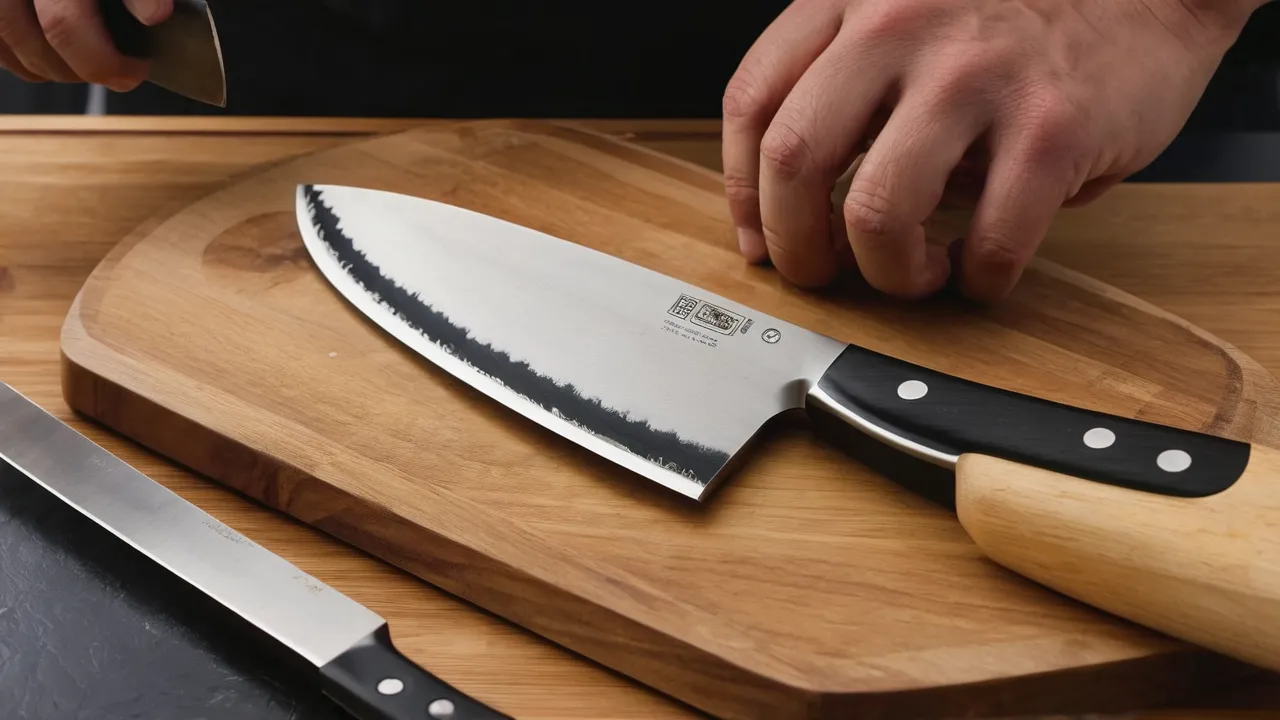
Santoku vs chef’s knife: buy the chef’s knife first if you want one all-purpose blade that rocks through herbs, handles meat, and cuts large vegetables, and buy a santoku first if you have smaller hands, a smaller board, and mostly cut vegetables, fish, and boneless proteins with a straight up-and-down motion. Neither is wrong, and many cooks eventually own both.
What Each Knife Is
A chef’s knife is the Western general-purpose knife, usually 8 inches long, with a pointed tip and a belly that curves up toward the tip. That curve allows a rocking cut, where the tip stays on the board and the heel lifts and drops. It is a workhorse for slicing, dicing, mincing, and light chopping.
A santoku is a Japanese-style knife, with a name often translated as three virtues or three uses, referring to slicing, dicing, and mincing. It is typically 5 to 7 inches, with a flatter edge, a rounded or sheepsfoot-style tip, and a blade that is often thinner and lighter. Many santokus have hollow dimples on the side, called a Granton edge, which help release food from the blade, though results vary by knife.
Both knives do the same jobs, but they feel different in the hand and favor different cutting styles.
Cutting Style: Rock or Chop
How you cut is the best guide to which to buy.
- Rocking cut: the tip stays on the board and the blade pivots. The chef’s knife’s curve suits this, and it is efficient for mincing herbs and onions.
- Push or chop cut: the whole edge meets the board and the knife moves straight down or pushes forward. The santoku’s flatter edge suits this, and it gives clean, even slices of vegetables.
- Slicing: both work, with the chef’s knife offering more length and the santoku offering a thin, precise blade.
If you tend to rock the knife, the chef’s knife will feel natural. If you tend to chop up and down or push through food, the santoku will feel efficient.
Size, Weight, and Control
Santoku knives are usually shorter and lighter, which suits cooks with small hands, small boards, and limited counter space. The short length gives control and is less intimidating to beginners. The tradeoff is reach: a santoku can struggle with a large melon, a big cabbage, or a roast.
Chef’s knives come in a wider range, from 6 to 10 inches, and often have more heft. A longer blade makes it easier to cut large items in a single stroke and gives more room for the knuckles above the board. The tip gives a point for detail work like trimming and scoring.
Weight preference is personal. Some cooks like the heft of a German-style chef’s knife for tougher work, while others prefer a lighter Japanese-style knife for repetitive cutting.
Where Each Knife Shines
| Task | Chef’s knife | Santoku |
|---|---|---|
| Mincing herbs and garlic | Excellent, rocking motion | Good, push cut |
| Dicing onions | Excellent | Excellent |
| Slicing vegetables thinly | Very good | Excellent |
| Breaking down chicken | Good | Fair |
| Slicing raw fish | Good | Very good |
| Large squash, melon | Excellent | Limited by blade length |
| Detail work with the tip | Very good | Limited, tip is blunt |
| Small boards and small hands | Fair | Excellent |
Steel and Maintenance
The two shapes do not dictate steel. You can find chef’s knives and santokus in soft German-style stainless, harder Japanese-style stainless, and carbon steel. Santokus are often thinner and harder, which gives a keen edge that can chip if abused, and many chef’s knives are thicker and tougher. Check the product page for steel and care instructions rather than assuming from the shape.
Both knives need honing before use and sharpening a few times a year. Their flat edges and curves require slightly different sharpening technique: a santoku’s flatter profile is easy to sharpen on a stone, and a chef’s knife’s curve requires you to follow the belly. Hand wash both, and avoid the dishwasher.
Which Should You Buy First?
- Beginner with limited kitchen experience: a chef’s knife, because it is more versatile and the skills transfer to any kitchen.
- Small hands or small boards: a santoku, or a short 6 or 7 inch chef’s knife.
- Vegetarian or vegetable-heavy cook: a santoku, if you chop rather than rock.
- Cooks who cut a lot of meat: a chef’s knife with more heft.
- Cooks who want a single knife: an 8-inch chef’s knife.
- Cooks who already have a chef’s knife: a santoku can be a nice second, but do not feel you need it.
If you are unsure, buy the 8-inch chef’s knife, and add a santoku only after you notice what your chef’s knife does not do for you. Our chef’s knife guides explain steel, size, and handle choices. Our How We Review page explains how we evaluate products using research and specifications rather than claims of our own trials. For related gear, see the cookware and kitchen tools section.
Do You Need Both?
Most home cooks do not. The two knives overlap heavily, so owning both is a luxury. A better second purchase for most kitchens is a serrated bread knife and a paring knife, which cover tasks neither knife does well. If you enjoy knives or do a lot of prep, a santoku and a chef’s knife can share the work, with the chef’s knife for large items and the santoku for fine vegetable work.
A Worked Example
A cook with a 12-inch cutting board and small hands cooks mostly stir-fries and salads. A 6.5-inch santoku fits her board, lets her chop vegetables with a clean up-and-down motion, and feels light. Another cook with a large board cooks roasts and soups and often cuts squash and chicken. An 8-inch chef’s knife gives him reach and weight. Neither is making a mistake. The knife matches the kitchen.
Edge Geometry and Sharpening Differences
Santokus are often ground with a finer edge angle than classic German-style chef’s knives, and many are sharpened on one or both sides depending on the maker. A finer angle cuts with less force and feels precise on soft foods, but it is more delicate against bones, frozen items, and hard seeds. Chef’s knives in the Western style often have a slightly wider angle, which tolerates heavier work and keeps the edge longer under rough use. Check the maker’s stated angle and sharpening guidance for each knife, and make sure any pull-through sharpener you own matches it. If you sharpen on a whetstone, you can follow the factory angle and keep it consistent, which matters more than the exact number.
Food Safety and Technique Notes
A shorter knife demands that you keep your guiding hand tucked, with fingertips curled behind the knuckles and the flat of the blade resting against them. Always cut on a stable board, and place a damp towel under it if it slides. Do not use the flat of a santoku to scoop food off the board with the edge facing you, and do not catch a falling knife. Wash raw meat and fish knives with hot soapy water before cutting vegetables, and use separate boards for raw proteins when you can. These habits matter more than the shape of the blade, and a sharp knife is safer than a dull one in either shape.
What Experienced Cooks Often Say They Miss
Cooks who start with a santoku often say they miss the tip of a chef’s knife for scoring, trimming, and fine mincing. Cooks who start with a chef’s knife sometimes say they wish they had a lighter, thinner blade for cutting a mountain of vegetables. Both observations point to the same conclusion: the second knife you add should fill the gap the first one leaves. Think about what you struggle with before you buy, and do not purchase a second knife just because it looks appealing. When the gap is clear, a santoku or a chef’s knife makes a good second choice, and when the gap is a bread loaf or a small fruit, a serrated knife or a paring knife is the better buy.
Frequently Asked Questions
Is a santoku or a chef’s knife better?
Neither is better overall. A chef’s knife is more versatile and suits rocking cuts, large items, and meat. A santoku is lighter and shorter, and suits push cuts, vegetables, and small boards. Pick the one that matches your cutting style and hand size.
Can a santoku replace a chef’s knife?
For many cooks, yes. A santoku handles slicing, dicing, and mincing very well. It is less suited to large squash, big roasts, and rocking cuts. If your cooking is mostly vegetables and boneless proteins, a santoku can serve as your main knife.
What size santoku should I buy?
Most santokus are 5 to 7 inches, and 6.5 to 7 inches is a common all-purpose length. Choose a shorter blade for small hands and boards. Longer blades give more reach, but they lose some of the control that makes a santoku appealing.
Are Granton edge dimples worth it?
They can help release sticky food, like cucumbers or potatoes, from the blade, though results vary. They do not replace a sharp edge. Choose a santoku based on steel, balance, and handle fit, and treat dimples as a minor feature.
Final Thoughts: Start With the Chef’s Knife Unless Your Hands Say Otherwise
The 8-inch chef’s knife is the safest first pick for most kitchens. Choose a santoku if you have a small board, small hands, or chop vegetables in a push-cut style. Either way, keep the edge sharp, and hand wash.
Related buying guides
- Whetstone vs Pull Through Sharpener: Which to Own
- Best Cutting Board for Your Knives: Material Rules
- Carbon vs Stainless Steel Knives: Care and Edge
About the author

The BuyOnceChoice Editorial Team researches durable products worth buying once. Our guides compare published specifications, warranty terms, expert review consensus, and verified owner feedback. We do not conduct our own product trials. See How We Review and our Editorial Policy for our standards.