Honing vs Sharpening a Knife: What Each Does
Honing and sharpening are not the same job. Learn what each does, how often to do it and how use patterns change the schedule.
 By BuyOnceChoice Editorial Team
Updated November 16, 2026
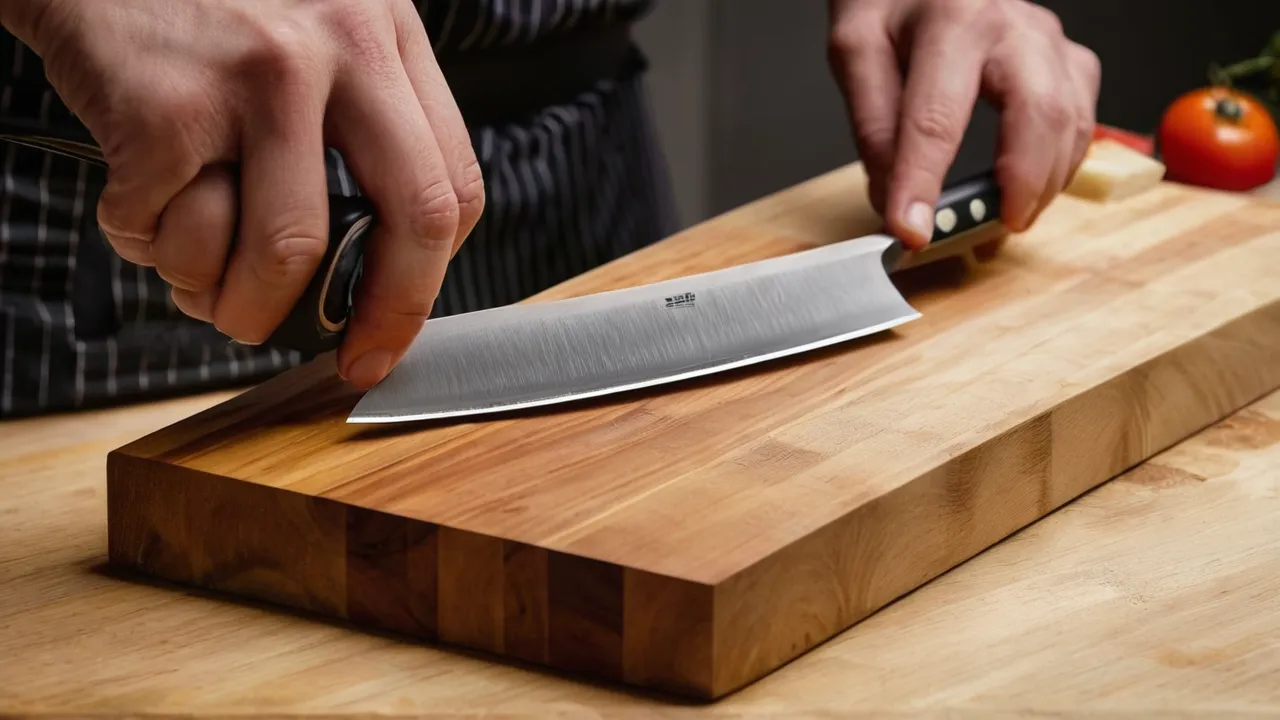
Honing realigns a knife’s edge that has rolled or bent slightly during use, without removing much metal, while sharpening grinds away steel to create a new edge once the old one is truly dull. Hone often, even weekly, to keep an edge straight, and sharpen only when honing no longer restores the cut, which for most home cooks means a few times a year.
What Happens to an Edge in Use
A knife edge is very thin, and every cut puts tiny forces on it. Cutting on a board, twisting in a cut and hitting hard foods can bend the edge to one side, making it feel dull even though most of the metal is intact. This is a rolled or deflected edge, and it can often be pushed back into line.
Over time, some metal also wears away, and the edge becomes thicker and rounded. No amount of straightening will bring back the keen cut, because the metal that made the point is gone. At that stage the edge needs sharpening, which removes steel to expose a fresh edge. Understanding the difference saves both knives and money, and our chef’s knives category covers the blades that benefit.
Think of honing as maintenance and sharpening as restoration. Honing keeps a good edge good, and sharpening brings back a lost edge.
Honing: Tools and Technique
A honing rod, sometimes called a honing steel, is a long rod made of steel, ceramic or diamond-coated material. Steel rods are the classic choice and realign an edge. Ceramic rods are slightly abrasive and can remove a little metal as well, and fine ones are popular for harder knives. Diamond rods are abrasive and act more like a light sharpener.
To hone, follow these steps.
- Hold the rod firmly, tip down on a stable surface such as a towel-covered counter, or hold it out at a safe angle with the guard in front of your hand.
- Place the heel of the blade against the rod, at the angle the edge was made for, often about 15 to 20 degrees per side for many kitchen knives. Check your maker’s guidance, since Japanese-style knives often use a shallower angle.
- Draw the blade down the rod toward the tip with light pressure, keeping the angle steady.
- Alternate sides, using five or so strokes on each.
- Wipe the blade, and check the edge on a piece of paper or a tomato skin.
Use light pressure. Heavy pressure does not help and can damage the edge. If you feel unsure about the angle, a guided honing tool can help. Always keep your fingers behind the guard, and handle blades with care.
Sharpening: When and How
Sharpening removes metal. Signs you need it include a knife that slips on a tomato skin, crushes soft foods instead of slicing them, needs more force than before or does not improve after honing. A dull knife is more dangerous than a sharp one, since it slips.
Common sharpening tools include whetstones, guided sharpening systems, electric sharpeners and pull-through sharpeners. Whetstones give the most control and the best edge, but take practice. Guided systems hold the angle for you and are good for beginners. Electric sharpeners are fast but can remove a lot of metal, and pull-through sharpeners are quick but often rough on the edge. Professional sharpening is a good option if you do not want to learn, and many hardware and kitchen shops offer it.
When you sharpen at home, follow the stone’s instructions, keep the angle steady and use light pressure. Start with a medium grit if the edge is dull, finish with a finer grit and then hone. Clean the blade before use, and keep your hands away from the edge. Wear cut-resistant gloves if you are not experienced. Be especially careful with a freshly sharpened knife, which is sharper than you may expect.
Choosing a Sharpening Method
Pick the method that matches your patience and your knives. If you enjoy learning a craft and own good knives, a set of whetstones in a medium and a fine grit gives the best results and the lowest long-term cost. If you want a repeatable angle without practice, a guided system with clamps and fixed angle guides is easier. If you own only a few ordinary knives and want speed, an electric sharpener may be acceptable, but check that it suits your knife steel and angle, because some remove more metal than needed. If you own expensive or very hard knives, a professional sharpener or a careful whetstone approach protects them.
Ask the maker what angle your knife was made for, and keep to it. Changing the angle drastically means removing a lot of metal. After sharpening, you will often see a slight burr, a thin wire of metal on the opposite side of the edge. Remove it with a few light strokes on a fine stone or a honing rod, and wipe the blade clean. Check the edge by slicing a sheet of paper or a soft tomato, and look for a clean cut without snagging.
Edge Care Between Sessions
Good habits stretch the time between sharpenings. Use a wood or soft plastic board, and avoid hard surfaces. Cut food, not bones or frozen items, with your chef knife. Do not scrape food off the board with the edge, and use the spine or the flat of the blade instead. Wash and dry the knife right after use, because acidic foods and moisture dull and corrode some steels. Store knives so that the edges do not knock against other metal, in a block, a sheath or on a magnetic strip placed away from where hands reach in blindly.
Notice how the knife feels as you use it. A knife that begins to need more pressure, tears tomato skin or drags through herbs is telling you something. Responding early, with a few honing strokes, keeps the job quick and the knife safe. Waiting until the edge is badly dull means a longer sharpening and more metal removed.
A Schedule That Fits Your Use
| How you cook | Hone | Sharpen |
|---|---|---|
| — | — | — |
| Daily, with a good knife | Every few uses or weekly | Two to four times a year |
| A few times a week | Weekly or before big prep | One to two times a year |
| Occasionally | Before use | About once a year, or when dull |
| Heavy professional-style use | Every session | Monthly or more, as needed |
These are rough guides. Hard Japanese-style steels may need less frequent honing and more careful sharpening, and softer German-style steels may need more frequent honing. If the knife feels dull, hone first, and if that does not help, sharpen.
A Worked Example
A cook uses an 8 inch chef knife nightly. After a month, tomatoes begin to slip under the blade. The cook hones with a few strokes on each side, and the knife bites into the skin again. After four months the same trick no longer works, and the knife crushes onions. The cook sends it for sharpening, or sharpens it on a stone, and the knife is like new. Going forward, the cook hones weekly and sharpens twice a year. The knife has never gone from sharp to dull overnight, and the habit of honing has stretched the time between sharpenings.
Common Mistakes
- Using a honing rod when the knife needs sharpening, and expecting it to restore a worn edge.
- Using too much pressure or the wrong angle on the rod.
- Sharpening too often, which removes metal needlessly and shortens the knife’s life.
- Using a harsh pull-through sharpener on a fine, hard knife.
- Cutting on glass, stone or ceramic, which dulls the edge quickly.
- Putting knives in the dishwasher, where they knock around and dull.
- Skipping safety: sharpening or honing without a stable surface and without watching your hands.
- Not cleaning the blade after sharpening, leaving metal dust on it.
Who Needs What
If you cook daily, plan to hone weekly and sharpen a few times a year. If you cook occasionally, hone before big meals and sharpen once a year. If you own a very hard Japanese knife, use a fine ceramic rod and a whetstone and avoid coarse sharpeners. If you do not want to learn sharpening, find a reliable professional and drop off your knives on a schedule.
Whatever you do, handle knives with care. Hone and sharpen on a stable surface, keep fingers behind the guard, cut away from your body and store knives safely. For how we weigh such advice, see how we review, and browse the cookware and kitchen tools hub for related guides.
Frequently Asked Questions
What is the difference between honing and sharpening a knife?
Honing realigns a rolled edge and removes very little metal, while sharpening grinds away steel to create a new edge. Hone often to maintain the edge, and sharpen when honing no longer restores cutting performance.
How often should I hone my knife?
For regular home cooking, a few strokes on each side before each use or once a week is enough for most knives. Harder knives may need less frequent honing. If the knife slips or feels dull, try honing first.
How often should I sharpen my kitchen knife?
Most home cooks sharpen once or twice a year, and daily cooks may sharpen three or four times. Sharpen when honing no longer works, or when the knife crushes soft foods. Avoid over-sharpening, which removes metal unnecessarily.
Can I sharpen a knife with a honing rod?
Not really. A steel honing rod realigns the edge but removes almost no metal. Ceramic and diamond rods are more abrasive and can remove some metal, but a true sharpening needs a stone or a sharpener. Check the rod’s description.
Final Thoughts
Hone often to keep an edge straight, and sharpen only when honing stops working. Use the right angle and light pressure, choose tools suited to your knife, handle blades carefully and keep a simple schedule that fits how much you cook.
Related buying guides
- How Many Knives Do You Need: Essential Knife Checklist
- How to Choose a Chef’s Knife: Steel, Size, and Handle
- How to Store Kitchen Knives: Block, Strip, Drawer
About the author

The BuyOnceChoice Editorial Team researches durable products worth buying once. Our guides compare published specifications, warranty terms, expert review consensus, and verified owner feedback. We do not conduct our own product trials. See How We Review and our Editorial Policy for our standards.