How to Stop Food Sticking to Stainless Steel
Sticking is rarely the pan's fault. Preheat correctly, add oil at the right moment and wait for the crust to release. Here is the routine.
 By BuyOnceChoice Editorial Team
Updated November 16, 2026
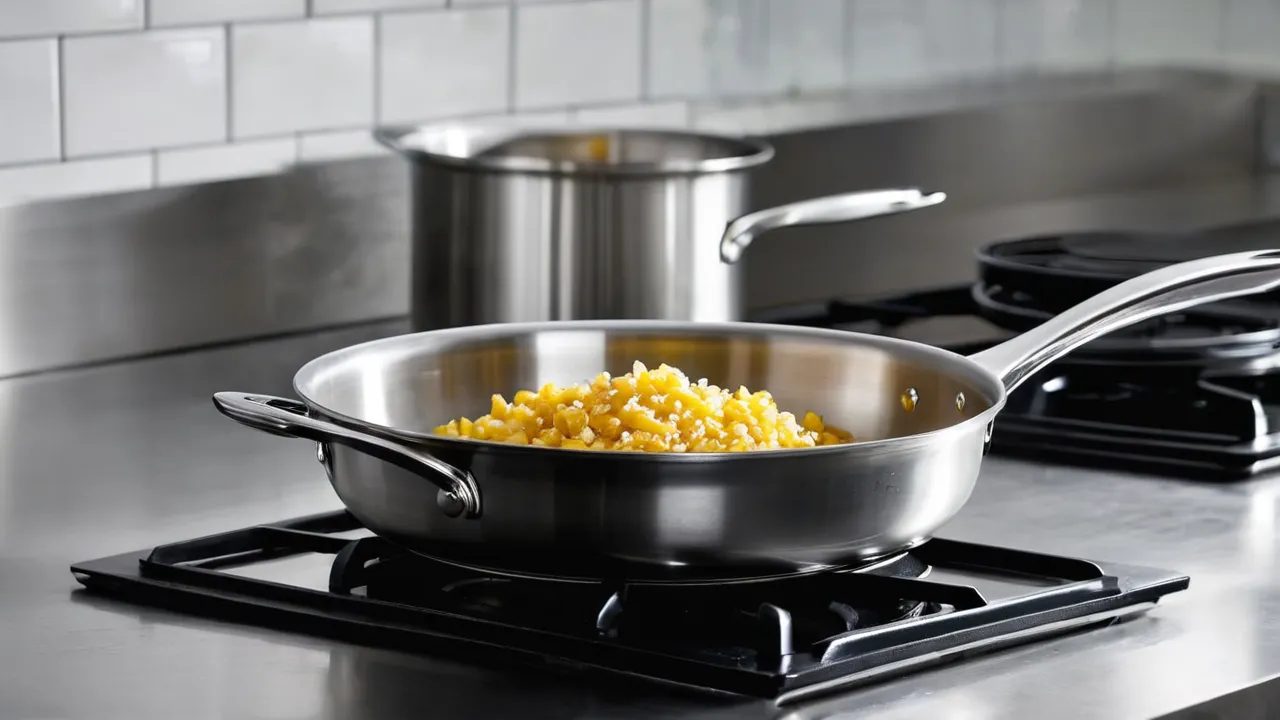
To stop food sticking to stainless steel, preheat the empty pan over medium heat until a drop of water skitters across the surface in a bead, add a thin layer of oil, let the oil shimmer, then add dry food and leave it alone until it releases on its own. Sticking is almost always a heat, moisture, or patience problem, not a defect in the pan.
Why Stainless Steel Sticks
Stainless steel looks smooth but has a microscopic texture, with tiny pits and ridges. When proteins in food meet cold or lukewarm metal, they bond to those ridges. As the food cooks, the bond weakens and the food lets go. Heat is what changes the outcome. A properly preheated pan creates a thin vapor layer under moisture, and hot oil fills the microscopic valleys, so food meets oil and not bare metal.
That is why the same pan can seem nonstick one day and a glue trap the next. Three conditions cause most sticking: a pan that is too cold when the food goes in, food that is wet on the surface, and a cook who moves or flips the food before it has formed a crust. Fixing those three conditions solves most problems.
Safety With Hot Oil and Hot Pans
Preheating a pan and adding oil means working with hot surfaces and fat that can flare or splatter.
- Keep a lid or baking sheet nearby to smother a small flare, and never pour water on burning oil.
- Add food away from you, lowering it toward the pan instead of dropping it from a height.
- Pat food dry to reduce splatter.
- Use dry oven mitts or towels, because the handle can get hot, especially in the oven.
- Stay at the stove while the pan is preheating and never leave hot oil unattended.
- Turn the exhaust fan on, since hot oil smokes.
The Preheat Method Step by Step
1. Dry the pan and place it over medium heat. Do not preheat at high heat, which overheats the base and can warp thin pans. 2. Heat the empty pan for one to two minutes, depending on size and burner. 3. Do a water-bead check: flick a few drops of water into the pan. If they sizzle and evaporate right away, the pan is too cool. If they merge into one or more beads that glide around like mercury, the pan is ready. If the water scatters violently, the pan is too hot, and you can let it cool a moment. 4. Pour off any water, add a thin layer of oil, and swirl it to coat the base. The oil should shimmer and flow easily within a few seconds. 5. Add food and do not touch it until it releases.
Medium heat is the right setting for most pans. Medium-high suits thin cuts that need a hard sear, as long as you watch the oil for smoke.
Choosing and Using the Right Fat
Use an oil with a smoke point suited to your pan temperature, such as canola, avocado, grapeseed, or other refined oils, for searing. Butter adds flavor but burns at high heat, so add it late or use clarified butter. Olive oil works for gentle cooking. Add enough oil to coat the pan with a thin layer, and do not overload it, since too much fat can cause splattering. Oil goes in after preheating, not with the cold pan, because heat thins the oil and makes it spread.
Food Preparation That Prevents Sticking
- Pat proteins dry with paper towels. Surface moisture steams and prevents browning, and wet food sticks.
- Bring meat and fish close to room temperature for a short time, rather than cooking straight from the refrigerator, as long as you follow food safety guidance.
- Season just before cooking. Salt on a wet surface draws out water.
- Do not overcrowd. A crowded pan drops in temperature and releases steam.
- Cut vegetables to even sizes and dry them after washing.
Patience: Let the Food Release
Meat and fish stick at first and release when a crust forms. If you try to lift a steak, chicken breast, or fish fillet after a minute and it resists, wait another minute and try again. When the crust is ready, it lifts easily with a spatula. Flipping too soon tears the surface and leaves the best part behind.
Eggs are the hardest. Use slightly lower heat, plenty of fat, and wait for the whites to set before moving them. Many cooks keep one nonstick pan for eggs and use stainless for everything else.
Stovetop Types and Heat Control
Burners differ, and so does the right setting. On gas, medium heat means a flame that stays under the base of the pan and does not lick up the sides. On a radiant electric or coil burner, the element holds heat after you turn it down, so lower the setting a minute earlier than you think. Induction heats the pan quickly and responds instantly, so use a lower power level than you would on gas and watch the oil closely. Whatever you use, check your cooktop’s manual for pan size guidance and any limits on preheating empty cookware, since some manufacturers advise against heating an empty pan for long. A heavy fully clad pan holds heat steadily, and a thin pan swings more, which is why thin pans stick more often.
Which Foods Need Extra Care
- Eggs: moderate heat, enough fat, and patience.
- Fish: dry the skin, preheat well, and leave the fillet until it releases.
- Chicken breast and thighs: dry well, keep the heat steady, and wait for a crust.
- Potatoes and hash browns: rinse starch off, dry thoroughly, and use enough oil.
- Pancakes and crepes: better in nonstick or cast iron, which are more forgiving.
- Tomato sauce and acidic dishes: stainless handles these without reacting, so they suit this pan well.
Consult a professional resource such as the thermometer guidance from your local health agency for safe internal temperatures, and read your pan’s manual for the maximum heat it recommends.
Cleaning After Sticking
If food sticks anyway, do not scrape hard. Add water to the warm pan, bring it to a simmer for a few minutes, and the stuck bits lift with a wooden spoon. For stubborn residue, simmer water with baking soda, or use a cleanser made for stainless. Avoid steel wool on polished finishes. Cleaning does not harm the pan’s performance, and a tinted or scratched pan still works. Our guide on removing discoloration covers heavier cleaning.
Quick Reference
| Problem | Likely cause | Fix |
|---|---|---|
| Eggs weld to the pan | Too hot or too little fat | Lower the heat, add more fat |
| Meat tears when flipped | Not released yet | Wait for the crust, then flip |
| Vegetables stick and steam | Wet or crowded | Dry them, cook in batches |
| Fish skin sticks | Cold pan or wet skin | Preheat, dry skin, wait |
| Fond burns black | Heat too high | Lower the heat, deglaze early |
If sticking persists on every dish, check that the pan sits flat on the burner so that heat is even. A warped pan creates hot and cold spots. Compare materials in our stainless steel cookware guides, consider enameled Dutch ovens for braising, or look at cast iron cookware if you want a seasoned surface. Our How We Review page explains how we evaluate products using research and specifications, and the cookware and kitchen tools section covers related gear.
A Worked Example: Searing a Chicken Thigh
Pat the thigh dry and season it. Heat a 12-inch stainless skillet over medium heat for about two minutes and do the water-bead check. Add a thin layer of oil and let it shimmer. Lay the thigh in skin side down, away from you, and leave it. At first it sticks. After several minutes a crust forms, and the skin lifts with a spatula. Flip, finish cooking to the safe internal temperature on a thermometer, and use the browned bits for a pan sauce.
Common Mistakes
- Adding oil to a cold pan and letting it heat with the food.
- Starting with food straight from a wash, still wet.
- Cranking the burner to high.
- Moving food around constantly.
- Cooking eggs on a pan that is too hot.
- Overfilling the pan.
Frequently Asked Questions
Why does everything stick to my stainless steel pan?
Most often the pan is too cold when the food goes in, the food is wet, or you move it too soon. Preheat over medium heat until water beads, add oil, dry the food, and wait for a crust to form before turning it.
Should I use oil or butter in stainless steel?
Use a refined oil for searing, since it tolerates higher heat. Butter adds flavor but burns at high temperature, so add it near the end or use clarified butter. In every case, add the fat after the pan is hot and swirl it to coat.
Can I make stainless steel nonstick by seasoning it?
Not in the way cast iron is seasoned. Stainless does not hold a polymerized layer well, though thin oil films from regular cooking can help. Reliable release comes from preheating, enough fat, dry food, and patience, so focus on technique first.
How do I get burnt food off stainless steel?
Fill the pan with water and a spoonful of baking soda, simmer for several minutes, and scrape with a wooden spoon. Let it cool before scrubbing with a soft sponge or a stainless cleanser. Avoid steel wool on polished finishes.
Final Thoughts: Heat, Fat, and Patience
Stainless steel releases food when the pan is properly preheated, the oil is shimmering, and the food is dry and left alone. Control the heat, keep a lid nearby for flares, and let a crust form before you turn it.
Related buying guides
- How to Tell If Cookware Works on Induction
- Is Copper Cookware Worth It? Who Should Skip
- Is Stainless Steel Cookware Safe? Nickel and Chromium
About the author

The BuyOnceChoice Editorial Team researches durable products worth buying once. Our guides compare published specifications, warranty terms, expert review consensus, and verified owner feedback. We do not conduct our own product trials. See How We Review and our Editorial Policy for our standards.