3 Ply vs 5 Ply Stainless Steel Cookware: Does It Matter?
Layer count matters less than total thickness, core metal, and weight. Use this decision rule to choose between three and five bonded layers.
 By BuyOnceChoice Editorial Team
Updated November 16, 2026
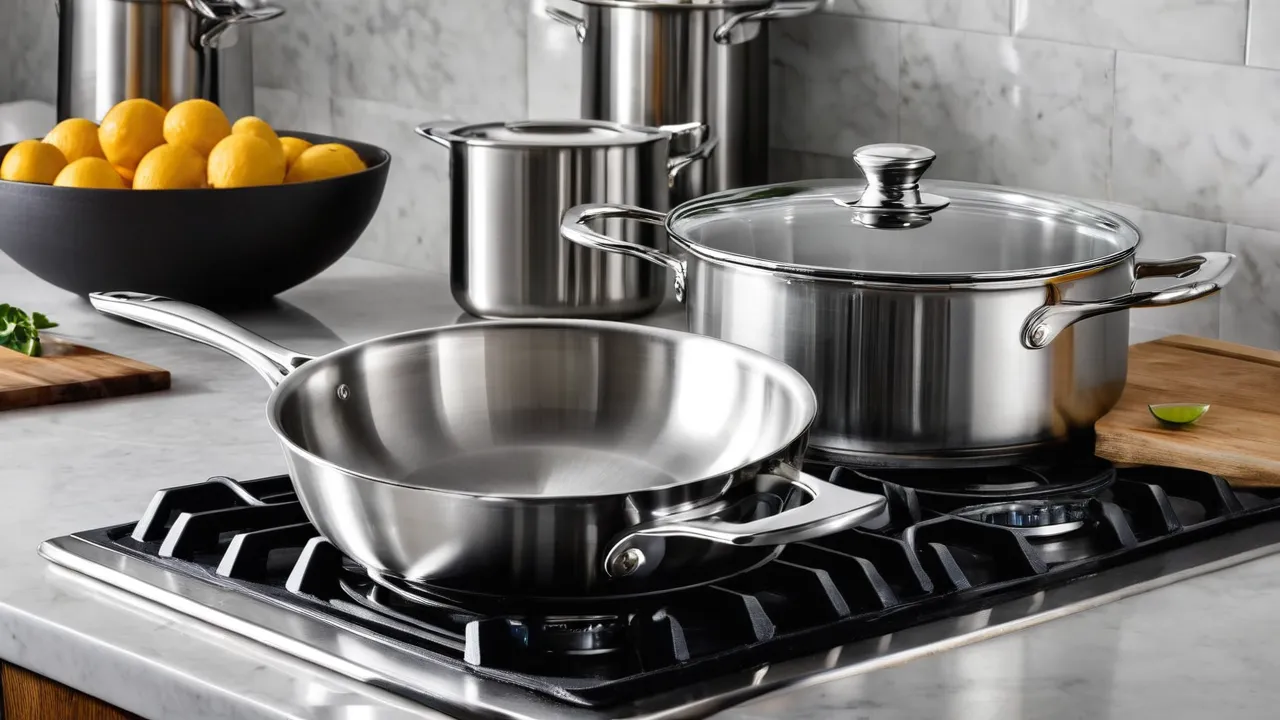
Ply count in stainless steel cookware is the number of bonded metal layers in the pan wall, and a 5-ply pan is not automatically better than a 3-ply pan. What matters more is total thickness, how much aluminum or copper sits in the core, whether the layers run up the sides and how heavy the pan feels in your hand. For many home cooks, a well-built 3-ply pan performs about as well as a 5-ply one at less weight.
What the Ply Count Describes
A ply is a layer of metal bonded to the others. A typical 3-ply pan has a core of aluminum between two layers of stainless steel: stainless on the inside for a safe, non-reactive cooking surface, aluminum in the middle to spread heat and stainless or magnetic steel on the outside for durability and induction use. A 5-ply pan usually adds more layers, such as two aluminum layers with a different metal between them, or aluminum with a thin layer of another alloy in the core.
The label does not tell you the thickness of each layer. Two 5-ply pans can differ a lot in how much aluminum they hold, and a thick 3-ply pan can contain more aluminum than a thin 5-ply one. Makers often do not publish the layer thicknesses, so the ply count is a hint, not a measurement. Our stainless steel cookware page explains the main construction types.
Also check whether the layers run through the whole pan. Fully clad construction carries the layers up the sidewalls, and disc-bottom construction bonds layers only to the base. A 3-ply fully clad pan can heat more evenly up the sides than a pan with a multi-layer disc only on the bottom.
Heat Spreading and Stability
Aluminum conducts heat much faster than stainless steel, so the core is what evens out hot spots. More aluminum generally means more even heating, until the point of diminishing returns. A thin 5-ply pan may not spread heat better than a thick 3-ply pan, and a thick 5-ply pan may heat very steadily but respond slowly when you lower the burner.
Heat retention follows mass. A thicker, heavier pan holds heat longer once hot, which helps with searing and holds temperature when cold food hits the pan. A thinner, lighter pan heats and cools faster, which gives you quicker control for sauces and delicate foods.
Cooks often notice stability on the burner: heavier pans sit flat and do not rattle on a flat-top stove, and a warped pan spins or rocks. A pan with a thick, flat base stays stable and heats evenly, regardless of its ply count.
Weight and Handling
Extra layers add weight. A 5-ply skillet is often noticeably heavier than a 3-ply one of the same diameter. That can be a plus for searing and a drawback for lifting, tossing and pouring. If you have wrist, arm or grip limitations, or cook one-handed often, weight matters a great deal. Hold the pan by the handle, imagine it full of food and consider if you will use it daily.
Handle design matters as much as the pan body. A handle that is balanced and comfortable can make a heavier pan manageable, and a poor handle can make a lighter pan awkward. Check the handle shape, the way it is attached and whether the pan has a helper handle on larger sizes.
Durability and Warping
Cladding reduces warping compared with thin single-layer stainless, because the layers resist uneven expansion. Thicker pans resist warping better than thin ones, but sudden temperature changes can still bend any pan. Avoid putting a hot pan under cold water, and preheat gradually. Check that the pan sits flat on a counter before you buy, and again after a few months of use.
Delamination, where the layers separate, is rare in well-made pans but can happen. Look at the rim for visible layers and clean edges, and read the warranty for what it covers. A pan that shows gaps along the rim or bubbling in the base should be replaced under warranty if it is covered.
Decision Rule: Who Should Choose Which
- Choose 3-ply if you want a lighter pan, quick response and good everyday performance, or if you have limited strength or storage space.
- Choose 5-ply if you value steady heat, like to sear and do not mind the weight, and the extra thickness comes from a thick core.
- Skip 5-ply if the pan is heavy to the point of discomfort, if the price premium buys little extra thickness or if the product page gives no details on thickness.
- Skip the ply comparison and look at total thickness and weight when the page lists them.
A Worked Example
Take two 10 inch skillets. One is 3-ply, weighs about 2 pounds and has a thick aluminum core. The other is 5-ply, weighs about 3 pounds and has a thin core with extra outer layers. The lighter pan heats fast and stays manageable, and the heavier pan holds heat longer. If you sear steaks twice a week and rarely flip food in the pan, the heavier one may suit you. If you cook eggs, vegetables and sauces daily and toss food often, the lighter one will be easier to use. The weights here are illustrative, and the product page should list the weight and the construction.
Matching Pan Type to Ply Count
Different pans benefit differently from extra layers. A skillet and a sauté pan benefit from even heat across the base. A saucepan benefits from sidewall cladding so liquids heat evenly. A stockpot often does well with a thick base and thinner walls, since you want the heat at the bottom and a lighter pot overall. A large, heavy 5-ply stockpot can be hard to lift when full, so 3-ply or a disc base can be the practical choice. A roasting pan needs rigidity, and a fully clad design resists warping in the oven.
What to Check on the Product Page
Look for the total thickness of the wall and base, usually given in millimeters. Compare the number between pans of the same size, since a larger figure usually means a heavier, slower-heating pan, and the layer mix still matters. Look for the weight of the specific pan, the interior and exterior steel grades, whether the cladding runs up the sidewall, the oven safe temperature of the pan, the lid and the handle, and the warranty terms. If a page lists only the ply count, treat the claim as incomplete and ask the seller for thickness and weight.
Price is a weak guide here. A higher ply count often carries a premium, but the premium may reflect branding more than more aluminum. Compare the cost per pan against weight and thickness, and pay attention to what you will actually use. Buying fewer, better pieces of the sizes you cook with most often usually beats a large set of mixed quality.
Common Regrets
- Buying a heavy 5-ply stockpot and finding it hard to lift when full.
- Assuming a 5-ply label guaranteed even heat, then finding a thin base.
- Overlooking a loose or uncomfortable handle.
- Ignoring whether the lid fits and whether the handle is oven safe.
- Not checking that the base is flat and stable on the home cooktop.
Each of these is easy to avoid with the checks above, and none depends on the ply number.
Cooktop Compatibility, Cleaning, and Daily Use
Both 3-ply and 5-ply pans usually work on gas, electric and induction, provided the outer layer is magnetic stainless or the base has a magnetic disc. Check the product page for an induction mark and the oven safe temperature. Handles and lids may have lower limits than the pan itself, so check those too.
For cleaning, stainless is forgiving. Let the pan cool, soak stuck-on food and use a non-scratch scrubber. Many are dishwasher safe, but the maker may recommend hand washing to keep the finish. Preheat, use enough oil and let food release before turning it, and you will get fewer sticking problems regardless of ply. For how we weigh such claims, read how we review, and browse the cookware overview for related guides.
Frequently Asked Questions
Is 5-ply stainless steel cookware better than 3-ply?
Not always. Five layers can improve heat spreading and retention if the extra layers add real thickness, but a thick 3-ply pan can match it, and 5-ply pans are heavier. Compare total thickness, weight and construction, and choose by how you cook.
Does 5-ply cookware heat more evenly?
Often a bit, but it depends on how much aluminum or other conductive metal is in the core. A thin 5-ply pan may not beat a thick 3-ply pan. Look at the base thickness and whether the layers run up the sides.
Is 3-ply cookware good enough for everyday cooking?
For most home cooks, yes. A well-built 3-ply pan heats evenly, is lighter to handle and costs less. If you sear heavily or want steady heat on a thin cooktop, a thicker pan may serve better.
Does ply count affect induction performance?
Not directly. Induction needs a magnetic outer layer or base, and both 3-ply and 5-ply pans can have it. Look for an induction mark and check that a magnet sticks to the bottom. Heat evenness then depends on the core.
Final Thoughts
Ply count is a clue and not a verdict. Judge a pan by total thickness, core material, weight and whether the layers run up the sides, then choose 3-ply for lighter handling or 5-ply for steady heat if you are comfortable with the weight.
Related buying guides
- Cookware Buying Mistakes That Cost You Twice
- Cookware Lifetime Warranty: What It Really Covers
- Cookware Set vs Buying Pieces Individually
About the author

The BuyOnceChoice Editorial Team researches durable products worth buying once. Our guides compare published specifications, warranty terms, expert review consensus, and verified owner feedback. We do not conduct our own product trials. See How We Review and our Editorial Policy for our standards.