How to Choose Stainless Steel Cookware: Clad, Handles, Lids
Cladding gets the attention, but rivets, handle shape, and lid fit decide daily satisfaction. Use this checklist to pick stainless that lasts.
 By BuyOnceChoice Editorial Team
Updated November 16, 2026
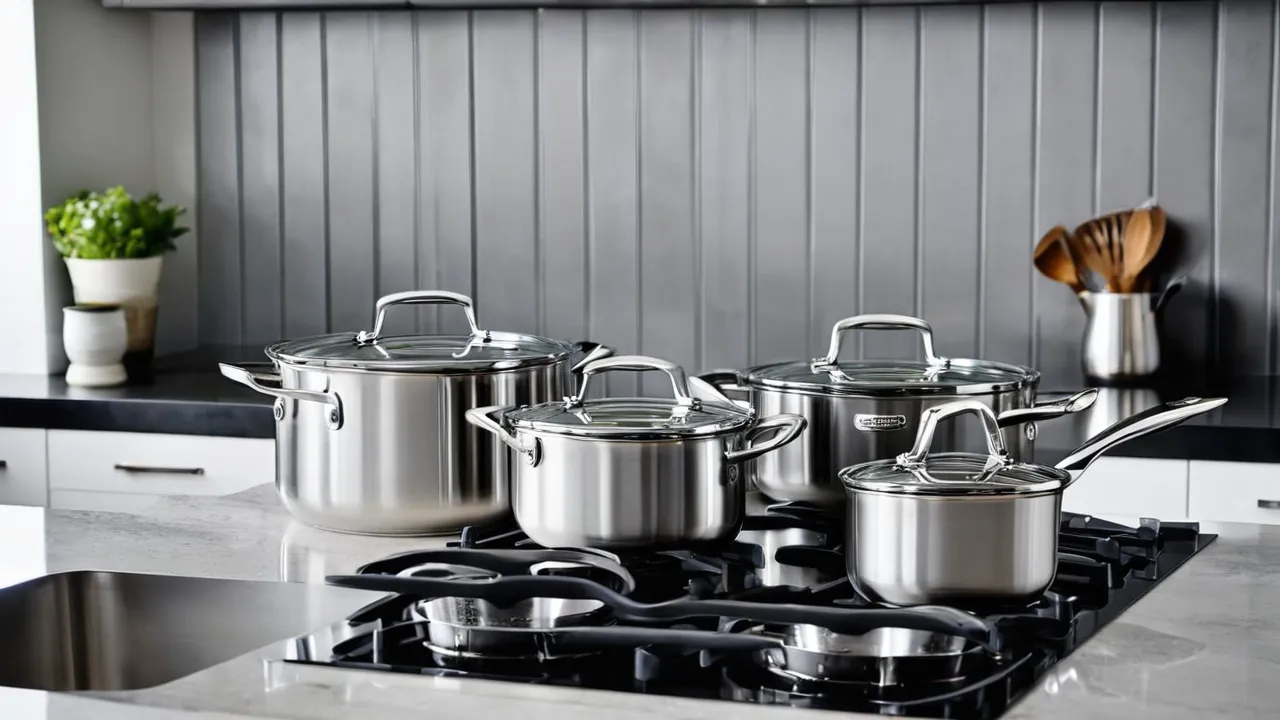
To choose stainless steel cookware, look at four things: how the pan is built (fully clad up the sides versus a disc on the base), the handle design and its oven rating, the lid fit and material, and whether the set matches the pans you actually cook with. Judge each from the product page and manual, and buy fewer, better pieces instead of a large set you will not use.
Start With the Pans You Actually Use
Most home cooks use a small number of pans repeatedly: a 10 to 12 inch skillet, a 2 to 3 quart saucepan, a 3 to 4 quart sauté pan, and a stockpot for pasta and soup. Before you shop, list what you cook in a typical week. Someone who sears chicken, simmers sauces, and boils pasta needs those four shapes. Someone who mostly cooks for one may not need a large stockpot.
Sets look like a bargain because they bundle many pieces, but they often include sizes you will not use and lids that are duplicated. Open stock, which means buying pieces one at a time, lets you put money into the pans you rely on. A common compromise is to buy a core set of three to five pieces and add a specialty pan later.
Also check your cooktop. Gas, radiant electric, and induction each place demands on the pan base. Induction needs a magnetic base, and a flat bottom makes better contact on glass or coil cooktops. The product page should state compatibility.
Construction: Clad, Disc, or Single Layer
This is the single most important feature, because it governs heat spreading and warping.
- Fully clad: layers of stainless and aluminum or copper run from the base up the sidewalls. Heat spreads evenly across the base and up the walls, which helps with sauces and reduces hot spots. It is the most durable and usually the most expensive style.
- Disc-bottom or encapsulated base: a thick aluminum or copper disc is bonded to the base only. It heats the base evenly, but the walls heat less evenly. It works well for stockpots and saucepans where the heat source is at the bottom.
- Single layer thin stainless: inexpensive, heats unevenly, and warps more easily. It suits light use only.
Look for descriptions like three-ply or five-ply. More plies do not automatically mean better cooking, since total thickness, the core metal, and the quality of the bond all matter. The weight of the pan listed on the page is a helpful clue: a very light pan is probably thin.
The cooking surface should be stainless, and the interior should be smooth with no deep seams where food collects. Check whether the maker notes a polished or brushed finish, since brushed finishes hide scratches better.
Handles: Material, Shape, and Heat
Handles carry the pan’s weight and take the most abuse, so read the details.
- Riveted stainless handles are sturdy and oven safe to high temperatures. They tend to stay cooler on the stovetop if the design has a hollow or tapered shape, but they do heat up in the oven.
- Welded handles are smooth with no rivet pockets where food collects, which makes cleaning easier. Check the maker’s claims on strength.
- Handles with silicone or phenolic grips stay cooler, but the grip may limit the oven temperature.
- Shape and angle affect comfort. A handle that is too short or too thin is tiring when the pan is full.
Check the stated oven-safe temperature for the pan and for the handle, and read the manual. For long roasting you want a handle that tolerates high heat without a plastic part. Also look at helper handles on larger pans, which make lifting a full pot safer.
Lids: Glass, Stainless, and Fit
Lids make or break pans because poor fit loses steam and makes simmering unpredictable.
- Glass lids let you watch food without lifting the lid, but they can have lower oven limits than stainless lids, and a rim of tempered glass can crack from impact.
- Stainless lids are durable and oven safe to higher temperatures, but you cannot see inside.
- Fit matters: look for a lid that sits snug on the rim and has a comfortable knob. A knob made of phenolic plastic may limit oven use.
- Some sets share one lid across several pans. That saves space but may fit loosely, so check how the maker describes it.
Verify whether the lid has a vent hole, which prevents boil-overs and pressure build-up. Store lids without stacking hard against each other.
Other Details That Add Up
- Pouring rims: flared rims reduce drips when pouring sauces.
- Measurement marks: etched markings inside a pot help with recipes.
- Cooktop and oven compatibility: check broiler guidance.
- Dishwasher guidance: many stainless pans are dishwasher safe, but hand washing keeps the finish longer.
- Warranty: a clear warranty on defects such as delamination indicates confidence in construction.
- Weight: a heavy pan is steadier on the stove but tiring to lift when full. Pick a weight you can handle.
How to Read the Specifications Without Being Misled
Marketing language around stainless cookware can blur real differences. A few terms are worth decoding. A grade such as 18/10 describes the proportion of chromium and nickel in the stainless used for the cooking surface. It tells you about corrosion resistance and shine, and it is not a direct measure of cooking performance. The grade 18/0 has little or no nickel and is usually magnetic, which matters for induction cooktops and for anyone avoiding nickel. Ply counts describe layers, but a five-ply pan with a thin aluminum core can cook less evenly than a well-made three-ply pan with a thicker core, so look for stated thickness or weight.
Be skeptical of claims that a pan is nonstick or never needs oil. Stainless releases food when it is hot and properly oiled, and it needs technique. Also be careful with claims that a set is dishwasher safe forever, since repeated dishwasher cycles dull polished finishes over time even when they do not harm performance.
Questions to Ask Before You Add to Cart
- Does the pan sit flat on a counter, and is the base stated as flat or slightly concave on cold pans? A pan that is slightly flat when cold can stay flat when hot.
- What is the stated oven-safe temperature for the pan, lid, and handle?
- Is the lid sold separately if it breaks?
- Is the cookware compatible with your cooktop type?
- What does the warranty cover, and what does it exclude?
- Are the sizes listed as capacity or as diameter, and do they match your burners?
Taking ten minutes to find these answers can save you from returning a pan or living with a bad fit.
A Simple Buying Framework
| Priority | What to look for |
|---|---|
| Durability | Fully clad or thick encapsulated base |
| Even heating | Aluminum or copper core, stated ply count |
| Safety in the oven | Stainless handles and lids with stated temperature |
| Comfort | Balanced weight, secure handle shape |
| Value | Buy open stock for core pieces |
| Cooktop fit | Flat base, magnetic base for induction |
Our stainless steel cookware guides compare specific products using published specifications. Our How We Review page explains how we evaluate products using research and specifications rather than claims of our own trials. You can also browse the wider cookware and kitchen tools section.
Common Regrets
Owners often report the same regrets: buying a set with thin pans that warp, picking a pan with handles that get uncomfortably hot on the stove, choosing glass lids that cannot go in a hot oven, and ending up with a pan that is too heavy to lift full. Another common regret is buying cookware that does not work on a new induction cooktop. Reading specifications before purchase avoids most of these problems.
A Worked Example
A cook who makes weeknight meals for a family might choose a fully clad 12-inch skillet with a stainless lid, a 3-quart saucepan, and an 8-quart stockpot with an encapsulated base. The skillet handles searing and pan sauces, the saucepan handles rice and sauces, and the stockpot handles pasta and soup. This three-piece core costs less than a big set and covers nearly everything. A fourth piece, such as a sauté pan, can be added when needed.
Frequently Asked Questions
What makes stainless steel cookware good?
Good stainless cookware has even heating from a clad aluminum or copper core, a thick flat base that resists warping, sturdy handles with a stated oven rating, and lids that fit well. A smooth cooking surface and a clear warranty are also signs of quality.
Is fully clad better than a disc base?
Fully clad pans heat more evenly up the sides, which helps with sauces and shallow cooking, and they are usually more durable. Disc-base pans work well for stockpots and saucepans, where the bottom does most of the heating, and usually cost less.
Is a stainless steel set worth it?
Only if you will use most of the pieces. Many cooks do better buying a few core pans separately. A set can make sense for a new kitchen if the pieces are fully clad, the sizes match your cooking, and the price is lower than buying them individually.
Does stainless steel cookware work on induction?
Often yes, if the base is magnetic. Many clad pans include a magnetic stainless layer, but not all do. Check the product page for an induction label, and hold a magnet to the base if you can. Aluminum and copper alone do not work on induction.
Final Thoughts: Buy the Core Pans, Not the Count
Choose fully clad pans for the skillet and saucepan you use most, check handle and lid oven ratings, and match the base to your cooktop. Add pieces over time, and your stainless cookware will serve for decades.
Related buying guides
- How to Stop Food Sticking to Stainless Steel
- How to Tell If Cookware Works on Induction
- Is Copper Cookware Worth It? Who Should Skip
About the author

The BuyOnceChoice Editorial Team researches durable products worth buying once. Our guides compare published specifications, warranty terms, expert review consensus, and verified owner feedback. We do not conduct our own product trials. See How We Review and our Editorial Policy for our standards.