How to Tell If Cookware Works on Induction
Use a magnet, measure the pan base, and match it to the cooktop zone. These three checks tell you whether cookware will work on induction.
 By BuyOnceChoice Editorial Team
Updated November 16, 2026
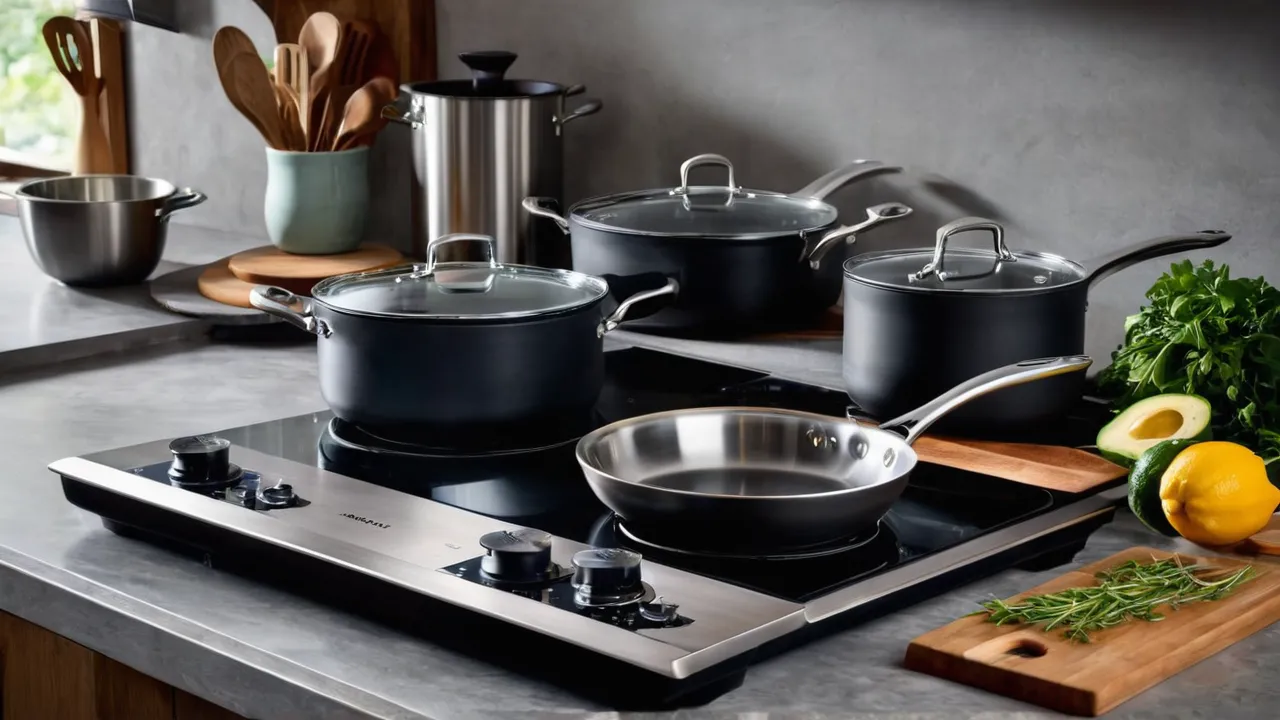
To tell whether cookware works on induction, look for an induction symbol on the base or packaging, or hold a refrigerator magnet to the bottom of the pan. If the magnet clings firmly, the pan will generally work. Induction heats the pan itself by magnetic fields, so the base must be a magnetic metal and sit flat on the glass surface.
How Induction Heating Works, and Why Material Matters
An induction cooktop has copper coils under a glass-ceramic surface. When you turn it on, the coils create a rapidly changing magnetic field. A pan with a magnetic base picks up that field, which makes electric currents in the metal and heats the pan directly. The glass itself stays cooler than a gas flame or a radiant burner, though it warms from the pan.
This explains the rules. Cookware must contain ferromagnetic material, usually iron or magnetic stainless steel, or the field has nothing to work with. A pan that is not magnetic will not heat, or will heat weakly. The base must also sit flat and be wide enough for the cooking zone, since a warped or small base loses contact and the cooktop may refuse to start.
Quick Compatibility Check: The Magnet Method
You do not need special equipment. Use a refrigerator magnet or a small kitchen magnet.
1. Pick up the pan and hold the magnet against the outside of the base, the surface that touches the cooktop. 2. If the magnet snaps on and holds firmly, the pan is very likely induction compatible. 3. If it clings weakly or slides, the pan may heat slowly or unevenly. Check the maker’s guidance. 4. If it does not stick at all, the pan will not work on induction.
Check the base, not the side wall. Some pans have a magnetic disc in the base and a non-magnetic body. Also look for a flat base: set the pan on a counter and look for rocking. Even a magnetic pan performs poorly if it rocks.
A magnet check is a good first screen, but it is not the whole story, since the strength of the magnetic layer and the thickness of the base affect performance. If your cooktop has a manual, check its stated pan size and material guidance.
Which Materials Work
| Material | Induction | Notes |
|---|---|---|
| Cast iron, bare | Yes | Heavy and heat-retaining, can scratch glass if dragged |
| Enameled cast iron | Yes | Lift rather than slide |
| Carbon steel | Yes | Magnetic and responsive |
| Magnetic stainless, such as many clad pans | Usually | Look for an induction mark or magnetic base |
| Non-magnetic stainless, such as some 18/10 pans with no magnetic layer | No | Check with a magnet |
| Aluminum, pure | No | Not magnetic unless it has a steel disc |
| Copper, pure | No | Needs a magnetic layer or a converter disc |
| Glass and ceramic | No | Not magnetic |
| Nonstick on aluminum | Only with a magnetic base | Check the product page |
Aluminum and copper pans can work on induction if they include a bonded magnetic stainless layer in the base. Many clad stainless sets are made this way, with a magnetic outer layer, aluminum core, and stainless cooking surface. Check the product page for a statement of induction compatibility.
Size and Flatness Matter
- Match the pan base to the zone. A very small pan on a large zone may not be detected. Many cooktops state a minimum pan diameter in the manual.
- A base that is wider than the zone wastes edges, but is generally fine.
- A flat base gives the best contact. Warped pans buzz, heat unevenly, and may trigger error codes.
- Rough cast iron can scratch glass, so lift pans instead of sliding them.
Common Surprises
- Buzzing or humming: normal in many pans, especially thin or multi-layer ones, and more audible at high power. It does not usually indicate a fault.
- Pan not detected: wrong material, pan too small, or base not flat.
- Hot spots: thin bases and weak magnetic layers can heat unevenly.
- Heat sensitivity: induction heats fast. Use lower settings than gas and stay near the pan.
- Handles: heat conducts from the pan, so use mitts.
Safety Notes
Induction creates an electromagnetic field. For most people it is safe when used as intended, but follow the cooktop manual. People with pacemakers or other implanted medical devices should read the manufacturer’s guidance and ask their doctor or the device maker before using induction. Keep cards, phones, and other magnetic or electronic items away from the surface while in use. Do not place metal utensils, foil, or lids on the cooktop surface, since they can heat quickly. Never heat an empty pan for long, and keep the surface clean. If the glass cracks, turn the cooktop off at once and call a licensed professional or the manufacturer. Electrical installation of an induction cooktop or range is a job for a licensed electrician.
Buying Cookware for Induction
If you are moving to induction, you may not need to replace everything. Check what you have with a magnet, keep the pans that pass, and replace only those that do not. When shopping:
- Look for an induction symbol or text on the product page.
- Prefer fully clad stainless with a magnetic outer layer, enameled cast iron, or carbon steel.
- Check that the base is thick, flat, and described as warp-resistant.
- Confirm minimum base diameter for your cooktop.
- Check the maker’s guidance on heat limits and handles.
Our stainless steel cookware guides explain cladding and compatibility, and our cast iron cookware guides cover pans that work well on induction. Our How We Review page explains how we evaluate products using research and specifications, and the cookware and kitchen tools section covers related gear.
A Worked Example: Auditing a Kitchen Before You Switch
Take your pans one by one. The cast iron skillet passes with a firm magnet hold. The enameled Dutch oven passes. A clad stainless saucepan passes. An aluminum sauté pan fails, and a copper pot fails. An 18/10 stockpot with a plain stainless base fails because the steel is non-magnetic. The result is three pans keep, three to replace or to use with an induction interface disc, which some people use, though discs heat less efficiently and the maker’s guidance on them should be read. Prioritize replacing the pan you use most.
Reading Labels and Product Pages
Look for the induction coil symbol, which looks like a loop or spiral, or the words induction compatible or induction ready. A product page that lists materials in layers helps, such as stainless steel, aluminum core, magnetic stainless base. Be careful with vague phrases like works on all cooktops, because that can mean the pan works on gas and electric, and induction only if the base is magnetic. If the page says nothing, treat the pan as unconfirmed and use the magnet method once it arrives, keeping the return window in mind.
Some brands publish minimum base diameters or list compatible zone sizes. If your cooktop has a small zone, such as for a small saucepan, read what the cooktop manual says about the smallest pan it will detect. Pans with a concave or convex base can also make poor contact, so choose ones described as flat or warp-resistant.
Getting the Best Results on Induction
Induction responds in seconds, so cooking habits adjust. Start at a lower power level than you would on gas, because pans reach cooking temperature quickly and thin pans can overheat. Use the preheat and boost functions as the manual describes, and avoid running them with an empty pan. Stir sauces more often, because heat concentrates under the pan. For long simmers, use a medium-low setting and a lid. A heavy base holds heat steadily and avoids the on-off cycling that some cooktops use at low power.
Handles and lids stay cooler than on a gas flame, though the pan itself transfers heat, so mitts remain a good habit. Clean spills from the glass right away, since sugar and burnt food can pit it, and use cleaners recommended by the maker.
Frequently Asked Questions
Does stainless steel work on induction?
Often, but not always. Many stainless pans have a magnetic stainless layer in the base and work well. Some pans, especially those made only of non-magnetic stainless, do not. Hold a magnet to the bottom, and look for an induction mark on the product page.
Can I use an induction interface disc with my old pans?
You can, but discs heat the pan indirectly, so they are slower and less efficient, and some makers advise against them. They can help a favorite pan, though. Follow the cooktop maker’s guidance and use only products rated for the temperature you cook at.
Why does my induction pan make noise?
Humming or buzzing is common, especially with multi-layer pans and at high power, and is usually harmless. It comes from vibration of layers in the magnetic field. If it is very loud or accompanied by error codes, check that the base is flat and the pan fits the zone.
Will cast iron scratch an induction cooktop?
It can if you slide a rough pan across the glass or if grit is trapped under the base. Lift the pan instead of dragging it, keep the base and surface clean, and consider smooth-base or enameled pieces if you are concerned.
Final Thoughts: Check the Magnet, Then Check the Base
If a magnet sticks firmly and the pan sits flat, it will almost certainly work on induction. Check the pan size against the cooktop, lift instead of sliding, and follow the manual for safety, especially if anyone nearby uses a medical implant.
Related buying guides
- Is Copper Cookware Worth It? Who Should Skip
- Is Stainless Steel Cookware Safe? Nickel and Chromium
- Nonstick vs Stainless vs Cast Iron: Which Pan First
About the author

The BuyOnceChoice Editorial Team researches durable products worth buying once. Our guides compare published specifications, warranty terms, expert review consensus, and verified owner feedback. We do not conduct our own product trials. See How We Review and our Editorial Policy for our standards.