Nonstick vs Stainless vs Cast Iron: Which Pan First
Your first pan should match what you cook most and how much care you will give it. This decision tree compares nonstick, stainless, and cast iron.
 By BuyOnceChoice Editorial Team
Updated November 16, 2026
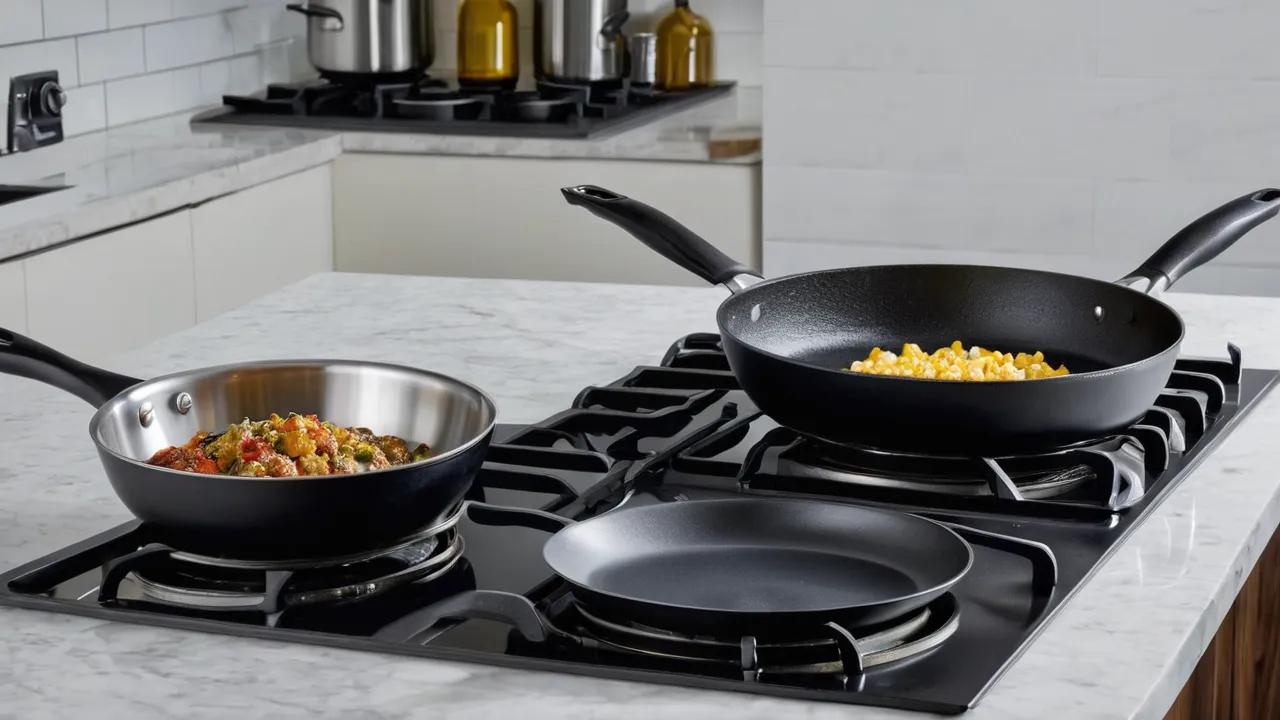
If you can only buy one pan first, buy a 10 to 12 inch stainless steel skillet for the widest range of cooking, a cast iron skillet if you mostly sear and bake and do not mind the weight and care, or a nonstick skillet if eggs, fish, and easy cleanup matter most. The right first pan depends on what you cook weekly, your cooktop, and how much upkeep you will accept.
How the Three Materials Differ
Each material solves a different problem, and each has a weakness that shows up in real kitchens.
Nonstick pans have a slick coating, usually PTFE or a ceramic-based layer, over an aluminum body. Food releases with little fat, cleanup is quick, and the pan is light. The coating wears with use and must be kept below the maker’s heat limit, so the pan is a consumable with a limited lifespan.
Stainless steel pans are usually clad, with an aluminum or copper core between stainless layers. They heat evenly, tolerate high heat and metal utensils, and last for decades. Food sticks unless you preheat and use fat correctly, so there is a learning curve.
Cast iron is a single thick casting. It holds heat extremely well, sears hard, goes from stovetop to oven to campfire, and can last for generations. It is heavy, needs seasoning and drying, and reacts with acidic foods if the seasoning is thin.
Side-by-Side Comparison
| Feature | Nonstick | Stainless steel | Cast iron |
|---|---|---|---|
| Ease for eggs and delicate fish | Excellent | Needs technique | Good once seasoned |
| Searing and browning | Fair, limited by heat limits | Excellent | Excellent |
| Heat evenness | Good, depends on base | Very good if clad | Slow to heat, steady once hot |
| Weight | Light | Medium | Heavy |
| Maintenance | Easy wash, careful with utensils | Easy wash, occasional deeper clean | Seasoning and drying needed |
| Oven use | Limited by coating and handle | Excellent | Excellent |
| Acidic sauces | Fine | Excellent | Better in enameled or well-seasoned |
| Lifespan | Shortest | Decades | Generations |
| Induction | Only with a magnetic base | Often, check the base | Yes |
Verdict by Cook Type
Choose Nonstick First If
You cook eggs, pancakes, and delicate fish often, you cook on moderate heat, and you want fast cleanup. A nonstick pan is the most forgiving for beginners. Accept that it will need replacing every few years, and use wooden or silicone utensils. Never preheat it empty at high heat, since the coating can degrade and release fumes harmful to pet birds.
Choose Stainless Steel First If
You cook a wide mix of meals, want a pan that handles searing, pan sauces, and oven finishing, and prefer a pan that lasts decades. Stainless rewards technique, so be ready to learn preheating and fat management. It is the best single pan for most home cooks.
Choose Cast Iron First If
You love searing steaks, baking cornbread, frying, and cooking over a flame or in the oven, and you are comfortable with seasoning and a heavy pan. Cast iron is inexpensive for what it does and improves with use.
What Each Pan Does Poorly
- Nonstick: high-heat searing, long oven roasting, metal utensils, and stacking without protection.
- Stainless: sticky foods like eggs for novices, and thin or cheap versions that warp.
- Cast iron: quick temperature changes, long acidic simmers, and being lifted with a weak wrist.
Knowing the weakness helps you decide which one you can live with.
A Practical Buying Order
Most kitchens end up with all three, and the order is a matter of priority.
1. Start with the pan that fits your most frequent meal. For many families that is a 12-inch stainless skillet, and the first nonstick is added for eggs. 2. Add a nonstick 8 to 10 inch skillet if you cook eggs and fish often. 3. Add a cast iron skillet when you want a heavy sear, baking, or a durable outdoor pan. 4. Then add a Dutch oven, saucepan, and stockpot as needed.
If your budget allows only one, buy stainless unless you rarely sear and mostly cook eggs, in which case choose nonstick, or you love the ritual of seasoning, in which case choose cast iron.
Cooktop and Lifestyle Fit
- Induction: cast iron and magnetic stainless work. Check nonstick for a magnetic base.
- Glass-top: cast iron can scratch if dragged, and warped pans lose contact.
- Gas: all three work well.
- Small kitchens: nonstick and stainless are lighter and stack easily.
- Limited wrist strength: avoid heavy cast iron skillets in large sizes.
- Camping or grilling: cast iron is hard to beat.
- Dishwasher users: stainless tolerates it best. Nonstick coatings last longer by hand washing, and cast iron should never go in.
Our stainless steel cookware guides and cast iron cookware guides cover how to choose each. Our How We Review page explains how we evaluate products using research and specifications.
Worked Example: Three Households
A couple who cook quick weeknight dinners, eggs at breakfast, and the occasional steak might buy a 12-inch stainless skillet first and add a small nonstick later. A solo cook who mostly fries eggs and reheats leftovers may do best with a nonstick pan and replace it every few years. A family that grills, bakes cornbread, and camps may start with a cast iron skillet, then add stainless for sauces. The right answer follows the weekly menu.
Common Mistakes When Choosing
- Buying a large set instead of one excellent pan.
- Choosing nonstick for high-heat searing.
- Choosing cast iron without wanting to maintain it.
- Buying thin stainless that warps.
- Forgetting cooktop compatibility.
- Ignoring weight when buying large cast iron.
Cost of Ownership Over Time
Think about what each pan costs across years, without needing exact prices. A nonstick pan is usually the cheapest to buy and the most likely to be replaced, so a household that replaces one every few years may spend more over a decade than expected. A stainless pan costs more at the start but is a one-time purchase for most people. A cast iron skillet is often inexpensive for its size and can outlast its owner, though it costs time in care. When you add up purchase price, replacement frequency, and your willingness to maintain, stainless and cast iron usually win on long-term value, and nonstick wins on convenience.
Health and Safety Notes
- Nonstick: follow the maker’s heat limit, never preheat an empty pan on high, and ventilate the kitchen. Fumes from overheated coatings can harm pet birds. Retire pans with flaking coatings.
- Stainless: safe for normal use. People with nickel allergy should check the grade and talk to a doctor.
- Cast iron: adds a small amount of iron to food, which is harmless for most people. Keep it dry to avoid rust, and avoid using rusty pans before restoring them.
- All pans: use oven mitts, because handles get hot, and keep handles turned inward on the stove.
How Heat Behaves in Each Pan
Heat control is the largest practical difference. A thin nonstick pan heats quickly and can overheat if you walk away, which is where coatings get damaged. A clad stainless pan heats evenly and responds quickly when you adjust the burner, and that is why it works for pan sauces and delicate reductions. Cast iron heats slowly and unevenly at first, then holds heat for a long time, which is why it recovers well after you add cold meat but reacts slowly when you turn down the flame. If you cook by reflex and adjust heat constantly, stainless feels natural. If you like to get a pan hot, add food, and leave it, cast iron fits. If you want predictable, gentle heat for eggs, nonstick helps.
When to Replace Each
Replace nonstick when the coating scratches, flakes, or food sticks even with fat. Replace stainless only for a warped base, loose handle, or separated layers. Replace cast iron only for a crack, severe warp, or deep pitting. This difference in replacement triggers is the best summary of lifespan: nonstick wears out through use, while the other two fail only through damage.
Frequently Asked Questions
Which pan should a beginner buy first?
Most beginners are served by a nonstick skillet for eggs and a stainless skillet for everything else. If you can buy only one, a 12-inch stainless pan is the most versatile, though nonstick is more forgiving while you learn heat control.
Is stainless or cast iron better for searing?
Both sear well. Cast iron holds heat more steadily and builds a strong crust but is heavy and slow to adjust. Stainless heats and cools faster, and works well with pan sauces. Choose by weight tolerance and how much care you want to give.
How long does a nonstick pan last?
It depends on use, heat, and utensils, but the coating wears, so expect to replace it more often than stainless or cast iron. Avoid high heat, metal tools, and the dishwasher, and replace the pan when the coating flakes or food sticks despite fat.
Can I use all three on an induction cooktop?
Cast iron works. Stainless works if the base is magnetic, and nonstick works only if the base has a magnetic layer. Check a magnet against the bottom of the pan or look for an induction symbol on the product page.
Final Thoughts: Start With the Pan You Will Use Most
Stainless suits the widest range, nonstick suits eggs and easy cleanup, and cast iron suits searing and durability. Buy for your weekly menu and your cooktop, then add the others as your cooking grows.
Related buying guides
- PTFE vs Ceramic Nonstick: Durability and Safety
- Remove Discoloration and Burnt Residue From Stainless
- 18/10 vs 18/0 Stainless Steel Cookware Explained
About the author

The BuyOnceChoice Editorial Team researches durable products worth buying once. Our guides compare published specifications, warranty terms, expert review consensus, and verified owner feedback. We do not conduct our own product trials. See How We Review and our Editorial Policy for our standards.