PTFE vs Ceramic Nonstick: Durability and Safety
PTFE coatings usually release food longer, while ceramic tolerates different heat but can lose slickness sooner. Compare life, limits, and care.
 By BuyOnceChoice Editorial Team
Updated November 16, 2026
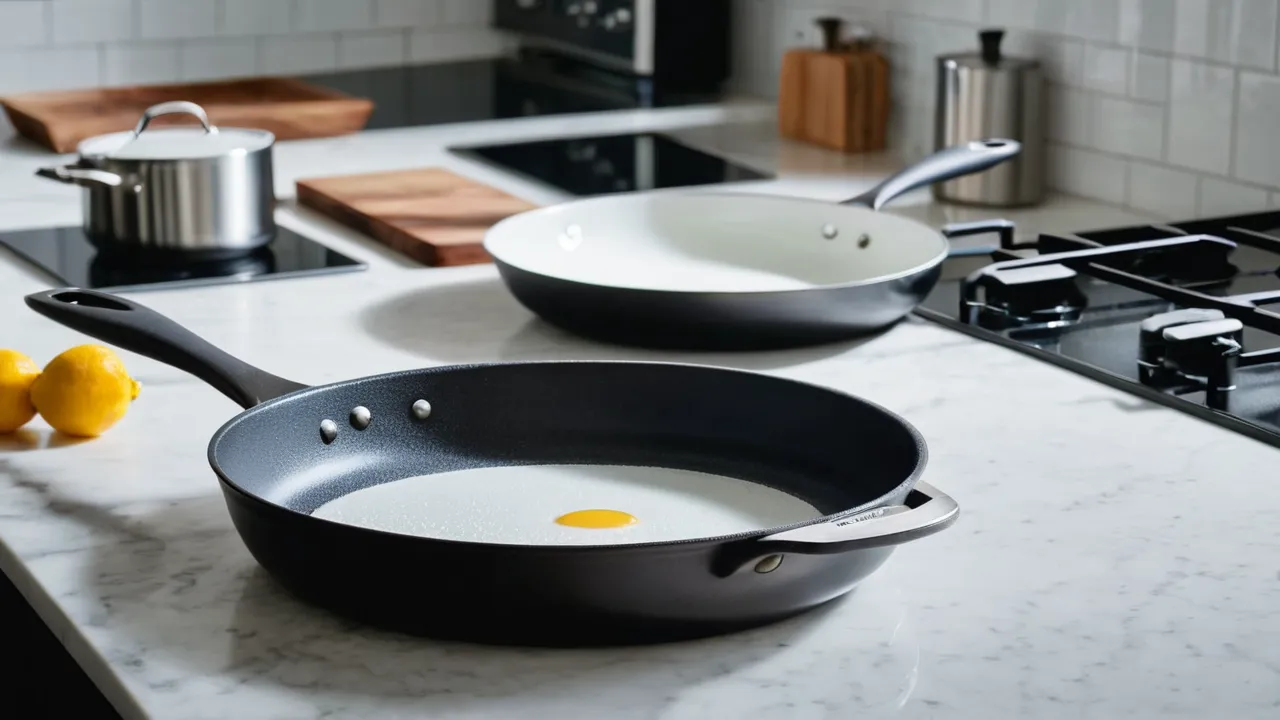
PTFE vs ceramic nonstick comes down to durability versus coating chemistry. PTFE coatings, the classic nonstick, generally keep their slickness longer and release food more reliably, while ceramic coatings are PTFE-free but tend to lose their release faster and need gentler care. Neither is permanent, both should stay below the maker’s heat limit, and the choice depends on how long you want the pan to last and what you want to avoid.
What the Two Coatings Are
PTFE, short for polytetrafluoroethylene, is a fluoropolymer sprayed or rolled onto a pan and baked in place. It is the material behind most traditional nonstick pans, and it gives a very slick surface that needs little oil. Pans may have one to several layers, sometimes reinforced with particles to resist scratches.
Ceramic nonstick is usually a silica-based sol-gel coating applied in a thin layer over an aluminum body. It is marketed as PTFE-free, and it can have a smooth, glassy feel. It is not a solid ceramic pan, so it is still a thin coating over metal, and it behaves differently from PTFE as it ages.
The base metal matters for both: a heavy, flat base heats evenly and helps the coating last, and a thin or warped base creates hot spots that stress the coating.
Durability: Which Lasts Longer
PTFE generally keeps its release properties for longer when used within heat limits. Many cooks find that a good PTFE pan stays slick for several years, while ceramic coatings often lose release performance sooner, sometimes within a year or two of regular use. Results vary widely by brand, thickness, and how the pan is treated, so treat these as typical patterns, not guarantees.
What wears a coating down:
- High heat, especially preheating an empty pan on high.
- Metal utensils, abrasive scrubbers, and stacking pans without protection.
- Cooking sprays that leave a sticky residue, which can build up and cause sticking.
- Dishwasher detergent, which can damage the surface over time.
- Thermal shock, such as running cold water into a hot pan.
Ceramic coatings tend to be more sensitive to these habits. They can also dull and develop a sticky film as oils polymerize on the surface, which is partly cosmetic and partly a loss of release.
Safety: What to Know
Safety is where most questions arise, and the honest answer is that both are generally considered safe when used as directed, with caveats.
- PTFE is chemically stable at normal cooking temperatures. At very high temperatures, around 500 degrees F and above, it can begin to degrade and release fumes that can irritate people and can be harmful to pet birds. Never preheat an empty pan on high, keep to the maker’s heat limit, and ventilate the kitchen.
- Older PTFE manufacturing used PFOA, a chemical that raised health concerns. PFOA has been phased out of US cookware production, and many pans state PFOA-free. Some people remain concerned about the wider family of PFAS chemicals, and policy and labeling on this topic continue to evolve, so check the maker’s statements and current guidance from agencies such as the FDA and EPA.
- Ceramic coatings are PTFE-free, which appeals to people avoiding fluoropolymers. They can still be damaged by heat and scratches, and not every ceramic pan is made the same way. Look for clear statements from the maker.
- Flaking: a pan with a flaking or peeling coating should be retired, whichever coating it has.
If you keep birds, many experts advise avoiding PTFE cookware, or at least using it with strong ventilation and never at high heat. Do not preheat an empty nonstick pan, and keep birds in a different room.
Performance in Daily Cooking
- Eggs and delicate fish: PTFE releases most reliably, especially when new. Ceramic works well when new and with a little fat.
- Searing: both are limited by heat ceilings, so stainless or cast iron is better for hard sears.
- Oven use: limited by the coating, handle, and lid. Check the maker’s temperature limit.
- Cleaning: both wipe clean easily when new. Hand washing extends life.
- Induction: both need a magnetic base to work.
Side-by-Side Table
| Feature | PTFE | Ceramic |
|---|---|---|
| Release when new | Excellent | Very good |
| Typical release life | Longer | Shorter |
| Heat tolerance | Limited, fumes above high heat | Limited, coating can degrade |
| PTFE-free | No | Yes |
| Care | Avoid metal tools and high heat | Even more gentle handling |
| Best for | Everyday eggs, easy cleanup | Cooks who want PTFE-free |
| Replacement | Every few years | Often sooner |
Which Should You Choose?
Choose PTFE if you want the longest-lasting slick surface for eggs, fish, and pancakes, you are willing to keep the heat moderate, and you do not have pet birds. Choose ceramic if you want to avoid PTFE and accept that you may replace the pan sooner. Choose neither if you sear hard or want a pan that lasts for decades. In that case, stainless steel cookware or cast iron is the better material.
Consider how the pan is made. A heavier base, a thicker coating, and a clear warranty point to better durability whatever the coating.
Our How We Review page explains how we evaluate products using research and specifications rather than claims of our own trials. For related gear, see the cookware and kitchen tools section.
How to Make Either Coating Last
- Cook on low to medium heat and add a little fat.
- Use silicone, wood, or nylon utensils.
- Wash by hand with a soft sponge and let the pan cool first.
- Store with a pan protector or a towel between stacked pans.
- Avoid aerosol cooking sprays, which can leave a sticky buildup.
- Do not preheat empty on a high burner.
When to Retire a Nonstick Pan
Retire a pan when the coating flakes, peels, or has deep scratches that expose the metal, when food sticks despite fat and gentle heat, or when the pan is warped and rocks on the burner. A discolored or dull coating alone is cosmetic, but loss of release is a practical reason to replace.
Reading Labels and Marketing Claims
Nonstick packaging is full of claims, and a few are worth decoding. PFOA-free is a statement about one chemical, not about every fluorinated compound, and it is common across the market. PTFE-free means the coating is not a fluoropolymer, which describes ceramic and some other coatings. Free of toxic chemicals is vague, since it does not say which chemicals are meant. Look for specifics: the type of coating, the maximum oven temperature, the base material, whether the pan is induction compatible, and the warranty terms. Be wary of claims like lasts a lifetime or never needs oil, since all nonstick coatings wear, and a warranty that excludes normal wear tells you what the maker expects.
Reinforced PTFE coatings with several layers are commonly advertised as more durable, and thicker coatings generally last longer when used properly. The same marketing language applied to ceramic may refer to the same thin sol-gel layer, so look for thickness or layer-count information before paying more for it.
A Worked Example
A family that makes eggs and pancakes every morning buys a PTFE pan with a heavy base. They use medium heat, silicone tools, and hand washing, and the pan keeps releasing well for several years. A second household chooses a ceramic pan because they prefer a PTFE-free coating. They use it daily and find that after a year the pan needs more oil and sticks sooner, so they treat it as a consumable and replace it when release fades. A third household that sears steaks and roasts vegetables buys neither and uses stainless and cast iron, keeping one small nonstick pan only for eggs.
Ventilation, Birds, and Overheating
Overheating is the main safety risk with nonstick. An empty pan on a high burner can reach very high temperatures in a few minutes, which is when PTFE coatings can degrade. Keep a habit of adding food or oil promptly, avoid leaving a pan unattended on a burner, and run the range hood. If you notice a chemical smell or smoke from a nonstick pan, turn off the burner, ventilate, and move pet birds to a room with fresh air. Stop using a pan that has been badly overheated, and watch for any sign of flaking.
Frequently Asked Questions
Is ceramic nonstick safer than PTFE?
Ceramic is PTFE-free, which appeals to some people, but both are generally considered safe when used within the maker’s heat limits. PTFE can release fumes if badly overheated, and ceramic coatings can degrade from heat and wear. Follow the care instructions for whichever you choose.
Which nonstick coating lasts longer?
PTFE usually keeps its release properties longer than ceramic, though results depend on the brand, coating thickness, and how you treat the pan. Avoid high heat, metal utensils, and the dishwasher to extend the life of either coating, and read the manufacturer’s care guide.
Is PFOA still used in nonstick pans?
PFOA has been phased out of US cookware manufacturing, and many pans are labeled PFOA-free. Concern about other PFAS chemicals continues, so check the maker’s statements and current guidance from US agencies if this matters to you. Labels help, but they do not replace reading the care manual.
Is a scratched nonstick pan dangerous?
A lightly scratched pan is not usually an immediate hazard, but scratches shorten its life and can lead to flaking. If the coating is peeling or the metal is exposed, retire the pan. Avoid metal utensils to prevent scratches, and follow the maker’s manual for care.
Final Thoughts: Pick the Coating You Will Care For
PTFE tends to last longer, and ceramic suits cooks who want to avoid fluoropolymers. Keep heat low, ventilate, avoid metal tools, and retire any pan that flakes. For hard searing and long life, use stainless or cast iron instead.
Related buying guides
- Remove Discoloration and Burnt Residue From Stainless
- 18/10 vs 18/0 Stainless Steel Cookware Explained
- 3 Ply vs 5 Ply Stainless Steel Cookware: Does It Matter?
About the author

The BuyOnceChoice Editorial Team researches durable products worth buying once. Our guides compare published specifications, warranty terms, expert review consensus, and verified owner feedback. We do not conduct our own product trials. See How We Review and our Editorial Policy for our standards.