Inverter vs Conventional Generator: Which to Buy Once
One rule decides most buyers: how much of the load is sensitive electronics versus raw power. Here is the split, plus noise and fuel trade-offs.
 By BuyOnceChoice Editorial Team
Updated November 16, 2026
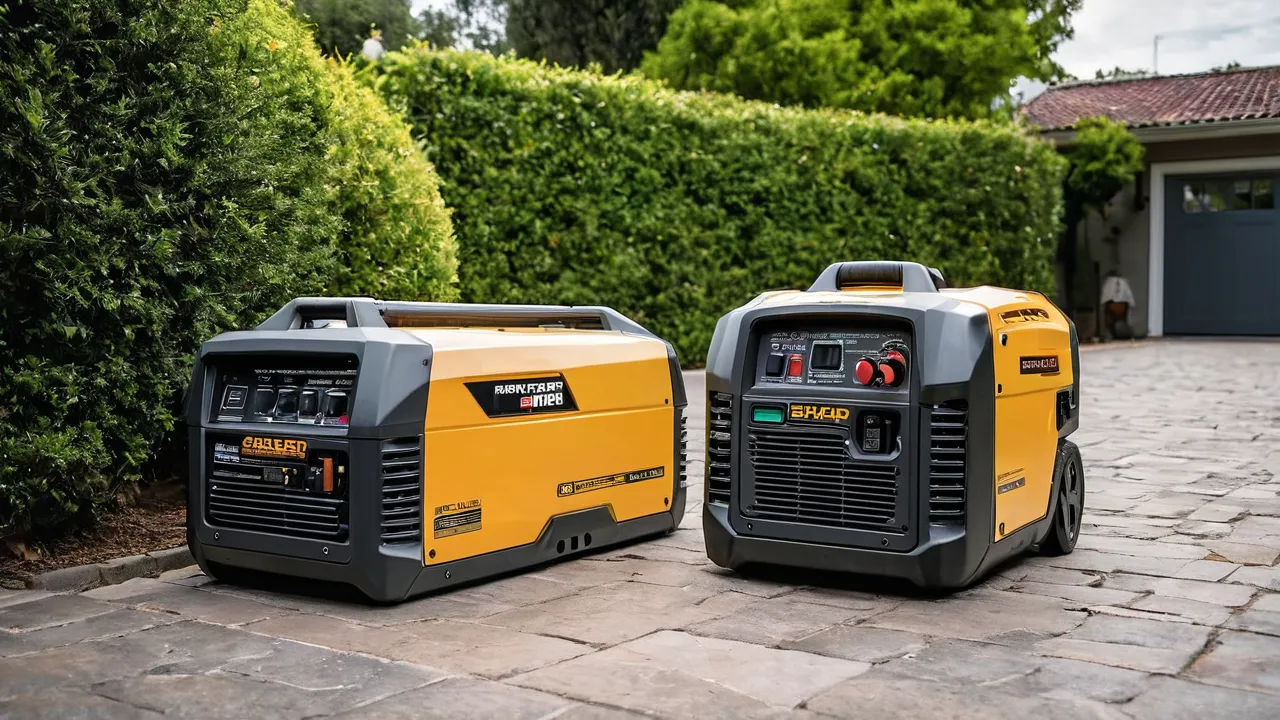
An inverter generator vs conventional generator comparison starts with how each makes power. An inverter generator produces AC electronically, which gives cleaner power, runs quieter and saves fuel at light load. A conventional, or open-frame, generator drives the alternator directly at a fixed engine speed, which costs less per watt and handles large loads, but it is louder and gives rougher power. Choose an inverter for electronics, camping and quiet; choose a conventional unit for heavy loads and the lowest cost per watt.
How each design makes power
A conventional generator spins its alternator at a fixed speed, usually about 3,600 rpm, to hold the correct frequency. The engine must run at that speed whatever the load, so it is noisy and burns fuel even at light load. The output follows the engine and the alternator directly, so its voltage and frequency can drift when the load changes.
An inverter generator makes high-frequency AC, converts it to DC and then converts it back to clean AC at the right frequency. Because the output no longer depends on engine speed, the engine can slow down at light load and speed up when the load rises. That is why inverters idle quietly and use less fuel at part load. The electronics add parts and cost.
Power quality and what it protects
Sensitive electronics such as laptops, phones, televisions, medical devices that plug in and modern appliances with circuit boards prefer a steady sine wave with low distortion. Inverter generators generally produce a cleaner waveform, and many makers state a low total harmonic distortion figure in the manual. Conventional generators can produce more voltage and frequency variation, which usually does not bother simple loads such as lights, heaters and plain motors but can stress electronics.
If you plan to run sensitive electronics, check the generator’s manual for the distortion rating and the maker’s guidance, and consider a surge protector rated for generator use. Some conventional units are also designed for clean power, so check the numbers instead of assuming by design. For medical equipment, follow the device maker’s power requirements and ask your doctor or equipment supplier.
Noise, fuel use and runtime
Inverter generators run quietly at part load, because the engine slows and the enclosure muffles sound. Conventional open-frame generators stay loud at any load. Sound ratings are given at a stated distance and load, so compare them only when those match. Our quiet generator advice applies here: placement and load size change what you hear.
Fuel use favors inverters at light and medium load, since the engine speed follows demand. At heavy load, the fuel advantage shrinks. Runtime on a tank is often longer for an inverter at a light load, but check the maker’s figure and its stated load. A conventional unit has the advantage at sustained heavy loads, where it works near its rated output and the engine is built for long duty.
Size, weight and where the limits sit
Inverters dominate the small and mid-size range, from compact camping units to mid-size units that power a few household circuits. Wattage ranges vary widely by maker, so compare the running and starting watts in each manual. Very large output is the domain of conventional generators, and they cost less per watt. Large conventional units are heavy and often need wheels, while small inverters can be carried by hand.
Some inverters can be paralleled, where two units connect to double the output, which gives flexibility and quiet. For whole-home or heavy loads, such as central air or a well pump plus other circuits, a large conventional unit, a larger dual fuel unit or a permanently installed standby system fits better. Our best 13000 watt portable generator coverage shows the large end, and the whole-home generator category covers standby systems.
Maintenance and long-term cost
Both types need oil changes, air filter care, spark plug checks and fuel management. Inverters have more electronics, which can add repair cost if a board fails, and engines are smaller and run at variable speeds. Conventional units have simpler construction and larger engines that are easy to service, with a long record. Look at parts availability and service near you for either type. A cheaper unit that lacks parts is not a bargain.
Think of cost per watt and cost of ownership. An inverter costs more per watt but can save fuel and offers quiet use. A conventional generator costs less per watt, which matters when you need a large output. Over many years, fuel savings, maintenance and noise limits may decide the matter for you.
Decision rules by buyer
- Camper, tailgater or RV owner: inverter, for quiet and campground rules.
- Backup for electronics, a refrigerator and a few lights: inverter, or a dual-fuel inverter, sized with margin.
- Home backup for heavier loads, such as a well pump, furnace and several circuits: a conventional unit or a larger dual-fuel generator, installed with a transfer switch or interlock by a licensed electrician.
- Job site with power tools: conventional, for rugged build and lower cost per watt, or an inverter if you need quiet and clean power for chargers.
- Long, heavy daily duty: conventional or commercial grade.
- Apartment or neighborhood with noise rules: inverter.
If you are not sure, write a load list, find the total running and starting watts and see which class has models that cover it with margin. Then compare noise, fuel use and weight.
Safety that applies to both
Run any generator outdoors, far from windows, doors and vents, never in a garage, and keep battery-powered carbon monoxide alarms working indoors. Store fuel in approved containers away from ignition sources, let the engine cool before refueling and connect to house wiring only through an interlock or transfer switch installed by a licensed electrician. Follow the manual for load limits and grounding. Browse related guides in our portable generators category, and read how we review for how we treat conflicting specifications.
Spec sheets from different makers can disagree on how they state watts, so rely on the running and starting figures in the manual and compare them for your loads. If a figure seems unusually high for the size of a unit, check how the maker defines it.
What the spec sheets leave out
Wattage claims differ between makers, and the way a figure is stated matters. Look for separate numbers for running (rated) and starting (peak) watts, and check which fuel the figure applies to if the unit runs on gasoline and propane. Look for the runtime at a stated load, such as half load, and for the tank size in gallons. Check the sound rating’s distance and load. A unit that lists only one large number with no conditions deserves a second look. Use the manual, not the product listing, as the source of truth, and note any figures that conflict. When two sources disagree, ask the manufacturer and write down the answer.
A simple way to decide between the two
Make a table with two columns. In the first column list what you must power: refrigerator, sump pump, furnace blower, lights, phone chargers, laptop. In the second list what you would like to power: window air conditioner, microwave, television. Add running watts for column one and find the largest starting watts. If the total fits inside an inverter’s rating with margin and noise matters, choose an inverter. If the total exceeds what inverters offer, or you must run heavy motors, choose a conventional or larger dual-fuel unit. If both fit, decide on noise, weight and budget. Then check outlet types, fuel, and the connection method. The list makes the decision clear.
Cost over time
Think of purchase price, fuel, maintenance and the life of the machine. An inverter costs more per watt up front but may use less fuel on light loads, which matters if you run it for many hours. A conventional unit costs less to buy and can be repaired with common parts, which matters if it runs hard. The difference you pay for quiet and clean power is real, and whether it is worth it depends on how often you will run the generator and where.
Parallel pairs and mixed fleets
Some owners buy two small inverters rather than one large conventional unit. The pair gives flexibility: one runs for light loads, both for heavier ones, and each is light enough to carry. A paired setup needs a matching parallel kit and costs more than a single larger inverter in some cases. Others keep a small inverter for camping and electronics and a larger conventional generator for home backup. That fleet covers different needs without compromising either.
Frequently Asked Questions
Is an inverter generator better than a conventional generator?
It is better for quiet, clean power and fuel economy at light load. A conventional generator is better for heavy loads and low cost per watt. Choose by your loads, noise needs and budget instead of by type alone.
Can an inverter generator run a whole house?
Larger inverters or paralleled units can run selected circuits, but heavy loads such as central air or a well pump often need a larger conventional or standby generator. Add up the running and starting watts of what you want to power, compare them with each model’s ratings, and use a licensed electrician for any house connection.
Are inverter generators safe for electronics?
They generally produce cleaner power, so they are a good fit for laptops, phones and televisions. Check the maker’s distortion rating in the manual, follow the guidance of any medical device maker, and use a generator-rated surge protector if you wish for an extra layer of protection.
Do inverter generators use less fuel?
Usually at light and medium load, since the engine slows to match demand instead of running at a fixed speed. At heavy load the savings shrink, because the engine works near its limit. Compare the maker’s stated runtime at a given load, and check what fraction of the rated output that load represents.
Final Thoughts
Pick an inverter generator for quiet, clean power and light to medium loads. Pick a conventional generator for heavy loads and the lowest cost per watt. Use the load list to guide you, plan fuel and placement, and always run it outdoors with carbon monoxide alarms inside. A generator matched to your needs will serve for many years.
Related buying guides
- Portable Generator Maintenance Schedule and Checklist
- Portable Generator Safety: Safe Placement and CO Rules
- Propane vs Gas Generator: Fuel, Runtime and Storage
About the author

The BuyOnceChoice Editorial Team researches durable products worth buying once. Our guides compare published specifications, warranty terms, expert review consensus, and verified owner feedback. We do not conduct our own product trials. See How We Review and our Editorial Policy for our standards.