Propane vs Gas Generator: Fuel, Runtime and Storage
Fuel choice comes down to storage life, rated output and how often you actually run the generator. A plain comparison, with who should skip propane.
 By BuyOnceChoice Editorial Team
Updated November 16, 2026
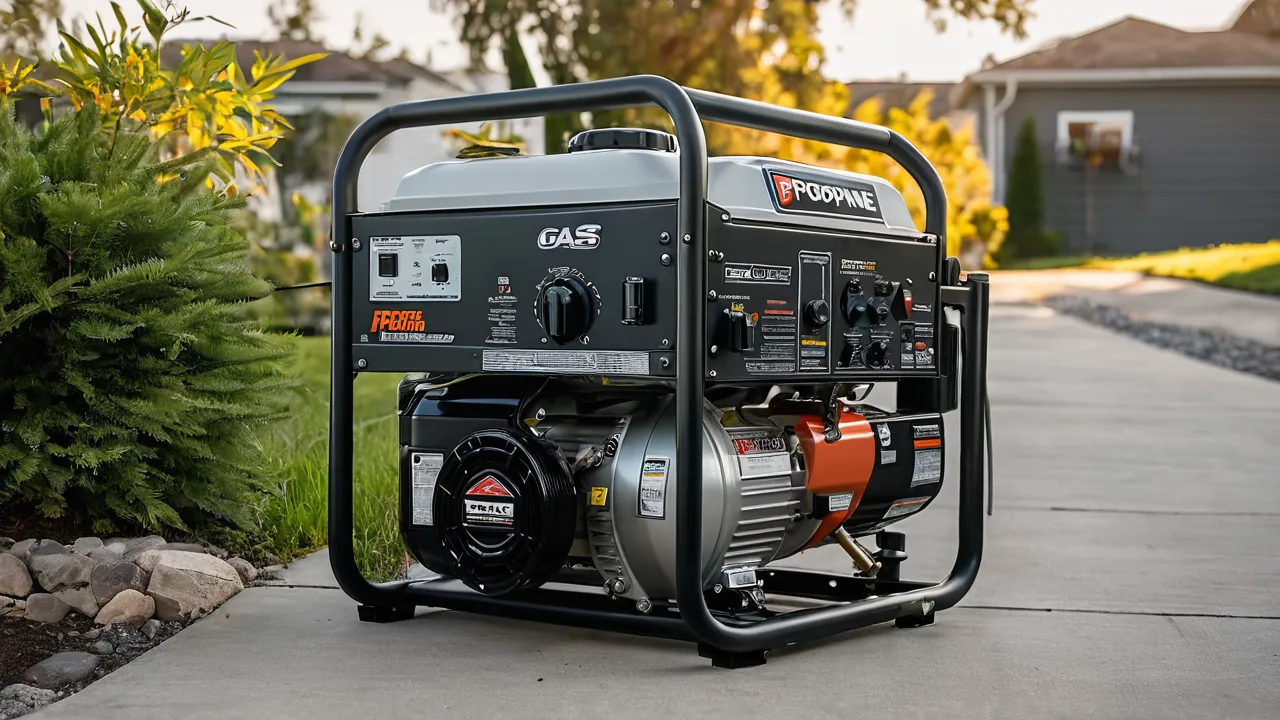
Propane versus gas for a portable generator is a choice between a fuel that stores for years and a fuel that is cheaper and easier to find in bulk. Propane keeps almost indefinitely in a sealed cylinder, burns cleaner and rarely gums up an engine, but it usually gives a little less output and runs through cylinders quickly under a heavy load. Gasoline gives more power per unit and is available at every station, but it goes stale and needs more upkeep. Which one is better depends on how often you run the unit and how long you must be able to store fuel.
Why the fuels behave differently
Gasoline is a liquid blend that evaporates, oxidizes and absorbs moisture over time. Modern pump gas often contains ethanol, which draws in water and can leave gummy deposits in a small carburetor. Untreated gasoline may begin to go stale in a few months, and a stabilizer extends that, according to the label of each product.
Propane is stored as a liquid under pressure in a sealed tank, and it turns to vapor when the valve opens. Because the tank is sealed and the fuel is a single compound, propane does not break down in storage the way gasoline does. A full cylinder that sits in the garage can be used years later, provided the tank is in good condition and within its inspection date. Check the date stamped on the cylinder collar and the requalification rules for your tank.
That difference is the heart of the choice. If your generator sits for most of the year and runs only during outages, fuel that stays fresh is valuable. If you run it every week for work or camping, gasoline’s availability and energy density matter more.
Rated output on each fuel
Propane has less energy per gallon than gasoline, and many engines make a bit less power on it. Dual fuel generators are often rated for lower output on propane than on gasoline, with a drop of roughly 10 percent on some models, though the gap varies. Read both numbers on the product page, and size the generator by the lower one if you plan to run propane.
For example, if the gasoline rating is 7,500 running watts and the propane rating is lower, plan around the propane figure when you pick your loads. A refrigerator, a sump pump and some lights may fit on either, while adding a window air conditioner could push you past the propane limit. The sizing guides for large portable generators cover how to add up running and starting loads.
Also look at the starting watts. A motor that needs a big surge may start fine on gasoline and stall on propane if the margin is thin. Leave headroom instead of running at the rated limit.
Runtime and tank math
Runtime is where many comparisons go wrong, because the numbers depend on load. Manufacturers usually list runtime at half load on a full tank of gasoline or on a 20 pound propane cylinder. Use that figure as a starting point, then adjust for your own load.
Here is a simple method:
- Find the listed runtime at half load for your fuel and tank size.
- Estimate your average load as a fraction of the rated output.
- Heavier loads burn fuel faster, so lower the runtime figure as your average load goes above half.
- Multiply by the number of tanks or gallons you can store.
A 20 pound propane cylinder holds about 4.7 gallons of propane when full, and propane contains roughly 91,500 BTU per gallon, while gasoline holds noticeably more energy per gallon, by common figures roughly a third more when both are measured on the same basis. In rough terms, that means you need more propane by volume than gasoline to get the same energy. Heating-value figures differ by source and by how they are measured, so check them against your fuel supplier or the maker’s runtime table.
Suppose a manual lists 8 hours of runtime at half load on one 20 pound cylinder. Five cylinders would give about 40 hours at that load, but only if the generator draws half load the whole time. If you run closer to full load, the cylinders will empty sooner. Propane cylinders are also only filled to about 80 percent of their capacity for safety, so the usable fuel is built into the quoted size.
Larger tanks, such as 30 or 40 pound cylinders, extend runtime, but they are heavier. A gasoline generator with a big built in tank may run for many hours, but you then need extra containers for multi day outages.
Cost over the long run
Sources conflict on cost because prices change by region and season, so look at the cost per unit of energy where you live, not a single number you saw online. Gasoline usually costs less per unit of energy at the pump. Propane exchange cylinders often cost more per gallon than refilling at a propane dealer, and refilling often costs less than exchanging, but refill locations are not everywhere.
Total cost also includes what you lose to spoilage. If you buy gasoline, stabilize it and still end up pouring half of it into your car every year, that is not a huge cost, but it takes effort. Propane that you buy once and keep full costs nothing in spoilage. Add the cost of maintenance, such as carburetor cleaning, and propane’s advantage grows for occasional use.
If you run a generator often, gasoline’s lower fuel cost and wide availability usually win. For standby use, propane’s storage life often wins even if the fuel itself costs more.
Maintenance and cold weather
Propane burns cleaner. It leaves fewer deposits in the carburetor and tends to keep the oil cleaner, so engines can have a longer service life when run on it often. You still need to follow the manual’s oil change and spark plug intervals, because those depend on the engine, not the fuel. Gasoline engines need fuel system care: stabilizer, fresh fuel and attention to the carburetor if the unit sits.
Cold weather changes the picture. Propane vaporizes at very low temperatures, so it usually keeps working well below freezing, though a nearly empty cylinder can lose pressure in the cold. Gasoline engines can be harder to start in deep cold, and an electric start battery weakens. Keep spare cylinders upright and clear of snow and ice, and never bring them into the living space to warm them. Check the manual’s cold weather guidance for oil grade and starting.
Handling, storage and safety
Both fuels are hazardous, and neither belongs in the living area. Store propane cylinders outdoors, upright, in a ventilated place away from ignition sources, never in a basement, vehicle trunk or enclosed shed. Store gasoline in approved containers in a detached garage or shed per local code, away from pilot lights and the generator itself. Local rules may limit the quantity of fuel you can store.
Regardless of fuel, run the generator outdoors and well away from the house, because the exhaust contains carbon monoxide. Use battery operated carbon monoxide alarms inside, and read the guidance in the portable generators category. Check hoses and regulators for cracks, use a soapy water check on propane connections for bubbles, and never smoke or use flames near fuel. If you smell gas, shut off the valve and move away.
For a house connection, hire a licensed electrician to install a transfer switch or interlock, and follow the manufacturer’s manual for any fuel conversion kit.
Who should pick which
Pick propane if the generator is mostly for outages, you value fuel that keeps for years, you want an engine that is easy to keep ready, or you already use propane for a grill and have tanks and a refill source. Pick gasoline if you run the generator often, you need the maximum output from a given size, you want the lowest fuel cost, or you need to refuel quickly from a station during a long outage.
Who should skip propane: owners who need the highest power from a small unit, those who cannot get refills nearby, people who will run heavy loads for days without a refill plan, and anyone with no safe outdoor spot to store cylinders. Who should skip gasoline: owners who will not rotate fuel, will not run the unit monthly, or have no safe place to store containers.
A dual fuel generator offers a middle path. You can keep propane for emergencies and use gasoline if cylinders run out. The tradeoff is a slightly higher price and a lower propane rating.
Frequently Asked Questions
Is a propane generator better than a gas generator?
Not always. Propane stores for years and burns cleaner, so it suits occasional use and standby needs. Gasoline provides more power per gallon, usually costs less per unit of energy and is easy to buy anywhere. Choose by how often you run the unit and how long you need to keep fuel on hand.
Does propane go bad like gasoline?
Propane does not degrade the way gasoline does, since it sits in a sealed cylinder as a single compound. The tank itself needs to be in good condition and within its inspection date. Gasoline can go stale in months and gum up the carburetor, so it needs stabilizer and rotation if you store it.
How long will a 20 pound propane tank run a generator?
It depends on the generator and the load. Check the manual’s runtime at half load for a 20 pound cylinder, then adjust for your actual load. Heavier loads empty the cylinder faster, so keep spare cylinders if you may need many hours. A full cylinder holds roughly 4.7 gallons of propane.
Do dual fuel generators produce less power on propane?
Usually yes. Many dual fuel models carry a lower rated output on propane than on gasoline, by a modest margin on many models, sometimes near 10 percent, though the exact figure varies. Check both ratings on the spec sheet and size your loads using the propane number if you plan to run propane.
Final Thoughts
Propane suits the owner who wants fuel that stays good for years, a cleaner engine and low upkeep, while gasoline suits the owner who runs the unit often and wants the most power per dollar and per gallon. Compare the ratings on each fuel, work out runtime from your own load, store fuel safely and keep the generator outdoors. For how we weigh these tradeoffs, see how we review.
Related buying guides
- Running Watts vs Starting Watts Explained
- What Can a 3000 Watt Generator Run? Load Planning
- What Can a 7500 Watt Generator Run? Home Load Guide
About the author

The BuyOnceChoice Editorial Team researches durable products worth buying once. Our guides compare published specifications, warranty terms, expert review consensus, and verified owner feedback. We do not conduct our own product trials. See How We Review and our Editorial Policy for our standards.