What Size Portable Generator Do I Need: Wattage Math
A step by step worksheet for sizing a portable generator to a typical house, with a continuous load margin so you buy one unit and keep it for years.
 By BuyOnceChoice Editorial Team
Updated November 16, 2026
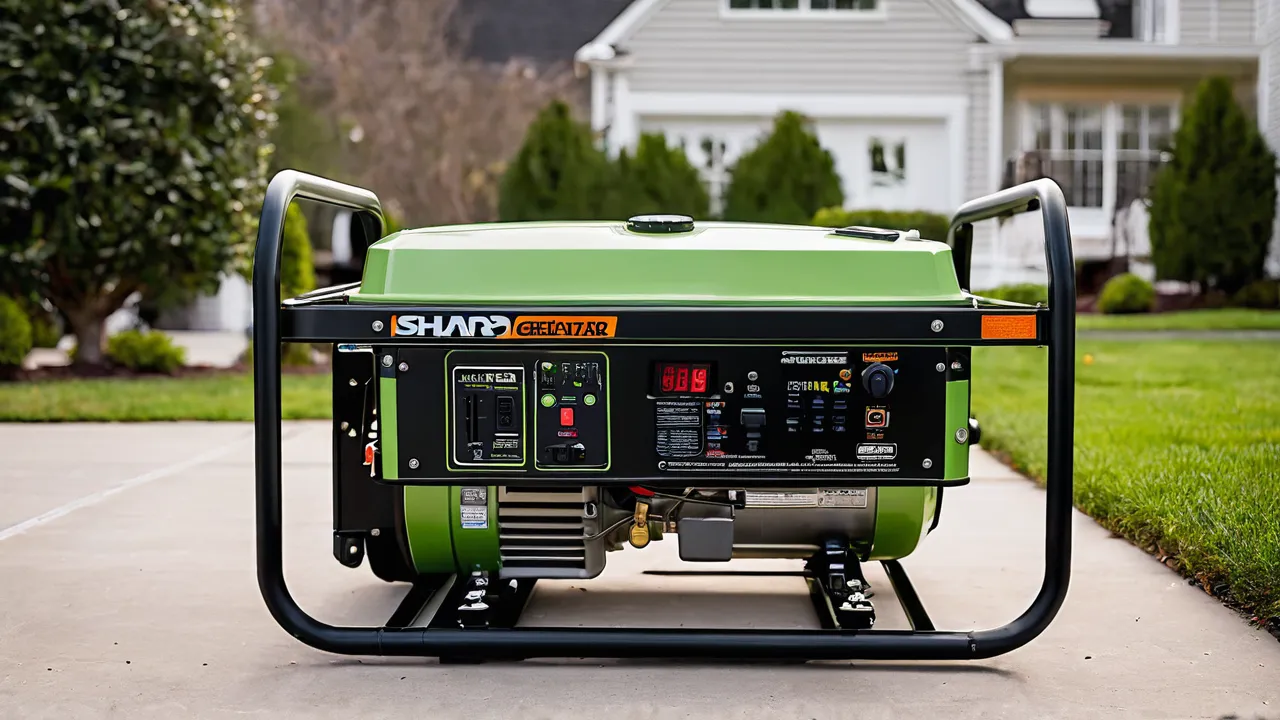
The size you need equals the running watts of everything you want powered at once, plus the single largest starting surge, then divided by a safety factor so the engine is not pinned at its label rating. For a typical house that wants a refrigerator, lights, a furnace fan, a sump pump and some electronics, the answer usually lands in the mid thousands of running watts, but your own list decides it.
Most sizing pages hand you a chart of appliance wattages and stop. The chart is useful, but it hides three decisions that actually determine whether a generator suits you. First, which loads run at the same time. Second, which motor creates the surge that sets your minimum. Third, how much of the label rating you are willing to use continuously. This guide walks through all three with a worked list you can copy and replace with your own numbers.
Two terms matter. Running watts (also called rated or continuous watts) is what the unit can supply hour after hour. Starting watts (also called surge or peak) is a brief burst, usually a few seconds, that lets motors spin up. Compressors in refrigerators, freezers, sump pumps and well pumps draw several times their running power for an instant when they start.
The three step wattage worksheet
Step one: build the load list
Walk through the house and write down every item you would want during an outage. Take the wattage from the nameplate or the manual, not from memory. Nameplates sometimes list amps and volts instead; multiply amps by volts to get watts. If a device only lists amps at 120 volts, that multiplication is the whole job.
Here is a sample list for a typical house. These are rounded, general figures. Your appliances will differ, so treat them as placeholders.
| Load | Running watts | Starting watts |
|---|---|---|
| Refrigerator | 150 to 250 | up to about 700 |
| Chest freezer | 100 to 200 | up to about 600 |
| Furnace blower | 400 to 800 | up to about 1,200 |
| Sump pump, one third horsepower | 800 to 1,000 | up to about 2,200 |
| LED lighting, several rooms | 100 to 200 | none |
| Router, modem, phone chargers | 50 to 100 | none |
| Television and a laptop | 150 to 250 | none |
| Microwave | 1,000 to 1,500 | none |
Only the first four items have a meaningful surge. That matters in the next step. These figures are illustrative midpoints, and published charts vary: some list refrigerators and furnace blowers with much larger starting figures, so replace them with the nameplate numbers on your own appliances.
Step two: add running loads, then the biggest surge
Add the running watts of everything that could be on together. Using the midpoints above for the refrigerator, freezer, furnace blower, sump pump, lights, network gear and electronics gives a running total of about 3,500 once you add a microwave. Now find the load with the largest gap between starting and running watts. In this example it is the sump pump. Add only that gap to your running total, because motors rarely all start in the same second.
Your minimum is therefore your running total plus the largest extra surge. That is the smallest generator that can physically carry the list. It is not the size you should buy.
Step three: apply the continuous load margin
A cautious rule of thumb, echoing the 80 percent guideline that electrical practice uses for continuous loads on circuits, is to keep continuous load at or below roughly 80 percent of the running rating, and your manual’s continuous rating comes first. Generators are built to handle their label output, but running at the ceiling for many hours raises engine temperature, fuel burn and wear, and leaves nothing for a load you forgot. Divide your minimum by the factor 0.8 (the same as multiplying by 1.25) and you have a comfortable target.
For buy once thinking, add one more cushion. Households add loads over time: a second freezer, a window air conditioner, a space heater someone insists on. A unit sized exactly to today’s list is outgrown. A step up in size costs less than replacing a unit, and an engine that idles along at moderate load is the one that tends to see a long service life. Do not oversize wildly, though. A very large engine at light load burns more fuel per useful watt and can carbon up on some designs. Aim for the next common size above your target, not two sizes above.
Compare your target against the running (rated) watts, never the starting watts. Marketing often leads with the bigger peak number. Also note that many dual fuel units list a lower figure on propane than on gasoline, so if you plan to use that fuel, read the derated number in the manual and size from that figure.
A Worked Example With Real Arithmetic
Take the midpoints from the sample table: refrigerator 200 running watts, chest freezer 150, furnace blower 600, sump pump 900, lighting 150, network gear 75, television and laptop 200, and microwave 1,250. Added together that is 3,525 running watts. The surge gaps (starting minus running) are about 500 for the refrigerator, 450 for the freezer, 600 for the blower and 1,300 for the sump pump, so the sump pump sets the extra figure at 1,300.
The minimum is 3,525 plus 1,300, or 4,825 watts. Divide by 0.8 and the target is about 6,030 running watts, which points to the next common size above that, in the 6,500 to 7,500 watt class. Those are placeholder numbers, so swap in the nameplate values from your own appliances.
How staggering loads shrinks the number
The microwave is the biggest single item and it only runs for minutes. If you agree to run it only when the furnace blower is idle, or to unplug the freezer for a few minutes, the simultaneous total drops. Remove the microwave and the list is 2,275 running watts. Add the 1,300 surge gap for 3,575, divide by 0.8, and the target falls to roughly 4,470, which is a mid size unit instead of a large one. Staggering is free, but it needs discipline, so choose it only if everyone in the house will follow it.
Reading the nameplate correctly
- Look for a rating plate on the back or side of each appliance, or search the model number in the manual.
- If it lists watts, use that number. If it lists amps and volts, multiply them.
- If a motor lists a locked rotor or starting current, multiply that by the voltage to estimate the surge, and check the manual if the figure seems extreme.
- If the plate gives only a range, plan around the higher figure for anything with a compressor or pump.
Clean power also matters for electronics. Inverter style generators are generally described as producing steadier output for laptops, routers and modern furnace controls, and conventional open frame units can be fine for pumps and tools. Check what the manual says about sensitive electronics before you plug them in.
Receptacles, scenarios and fuel
Size is only half of the fit. Check that the generator has the receptacle type your plan needs. Household cords use standard 120 volt outlets, while a transfer arrangement or a large appliance may need a 240 volt twist lock outlet. A 30 amp receptacle is common on mid size units; larger ones add a 50 amp outlet. If you intend to power a well pump or an electric dryer, confirm voltage and amperage before shopping, and ask a licensed electrician how the unit will connect. Our portable generators category lists the options by class, and how we review explains how we judge products without running trials.
Sizing for common scenarios
Different goals produce very different answers, so match the plan to the person.
- Keep food cold and lights on only: a small to mid size unit covers a refrigerator, a freezer, lighting and network gear if you run items one at a time.
- Furnace plus essentials: you need room for the blower surge, so move up a size from the first case.
- Sump pump in a basement prone to flooding: size around the pump’s start surge and consider a battery backup pump as well, since a generator cannot help while you are away.
- Window air conditioner or well pump: these have large starting needs. Read the manual wattage and plan for the surge first.
- Whole house expectations: a portable unit rarely covers central air, an electric range and a dryer at once. At that point look at whole home generators instead.
For heavy duty ranges, our roundup of the best 13000 watt portable generator shows what the top of the portable class looks like.
Fuel and runtime
A larger engine uses more fuel per hour, so plan storage for the runtime you expect. Use approved fuel containers and rotate stored gasoline, or consider propane or dual fuel if long storage is a concern. See the safety section below before you place the unit anywhere.
Generator safety while you size and run it
Carbon monoxide kills quietly. Run a portable generator outdoors only. The Consumer Product Safety Commission advises placing it at least 20 feet from the house, away from windows, doors and vents, with the exhaust pointed away. Your manual may state its own minimum, so follow the stricter of the two. Never run it in a garage, crawlspace, shed or on a porch, and opening a door or window does not make an enclosed space safe. Keep fuel in approved containers, stored away from ignition sources, and let the engine cool before refueling. Install battery powered CO alarms inside the home. Follow the owner manual for placement distances and grounding, and use a licensed electrician for any connection to your house wiring.
Quick decision rules
- If your list is refrigeration, lights and electronics, buy a small to mid size unit and run loads one at a time.
- If you need a furnace or a sump pump, size around the surge and keep the 80 percent margin.
- If you want to run air conditioning or several large motors together, step up a class or plan a standby system.
- If your needs are short and occasional, skip oversizing; a smaller, quieter unit is easier to store.
Frequently Asked Questions
How many watts does it take to run a refrigerator and a furnace?
Roughly 800 to 1,000 running watts for both, using the sample figures of about 200 for the refrigerator and 600 for the blower. Add the larger starting surge, which is around 600, and a unit of about 2,000 watts could carry the pair if nothing else runs. Always confirm against the nameplates on your own appliances.
Can I run a portable generator at its full rated wattage?
It can supply its rated running watts continuously, but holding it at the ceiling for many hours is hard on the engine. One cautious rule of thumb is to keep continuous load near 80 percent of the rating. That leaves room for a forgotten load and usually means cooler running, steadier fuel use and less wear.
Is a bigger generator always better for a power outage?
No. Extra capacity gives margin, but a very large engine at light load uses more fuel per useful watt and is heavier to move and store. Size to your target, then choose the next common size above it. Going two sizes up only makes sense if you expect to add large loads such as air conditioning.
Can a portable generator run my whole house?
Usually not. Central air conditioning, an electric range, an electric dryer and a well pump together can exceed what a portable unit supplies. Most owners run a chosen set of circuits. If you want every circuit powered automatically, look at a standby system, and have a licensed electrician handle any connection to house wiring.
Final Thoughts
Sizing is arithmetic, not guesswork. List the loads, add running watts, add the biggest surge gap, divide by 0.8, then round up to the next common size. Check the receptacles and the derating for your fuel, and write the result down so you can compare it against any model you consider. A generator chosen this way has headroom for the loads you add later, which is what lets one purchase last.
Related buying guides
- Are Dual Fuel Generators Worth It? Who Should Skip
- Do You Need a CARB Compliant Generator? Rules Explained
- Generator Buying Mistakes That Cost You When the Power Fails
About the author

The BuyOnceChoice Editorial Team researches durable products worth buying once. Our guides compare published specifications, warranty terms, expert review consensus, and verified owner feedback. We do not conduct our own product trials. See How We Review and our Editorial Policy for our standards.