Can a Portable Power Station Power a House
A portable unit can keep a few essential circuits alive, but not a whole house. See the output and capacity limits, and when a home battery is the better tool.
 By BuyOnceChoice Editorial Team
Updated November 16, 2026
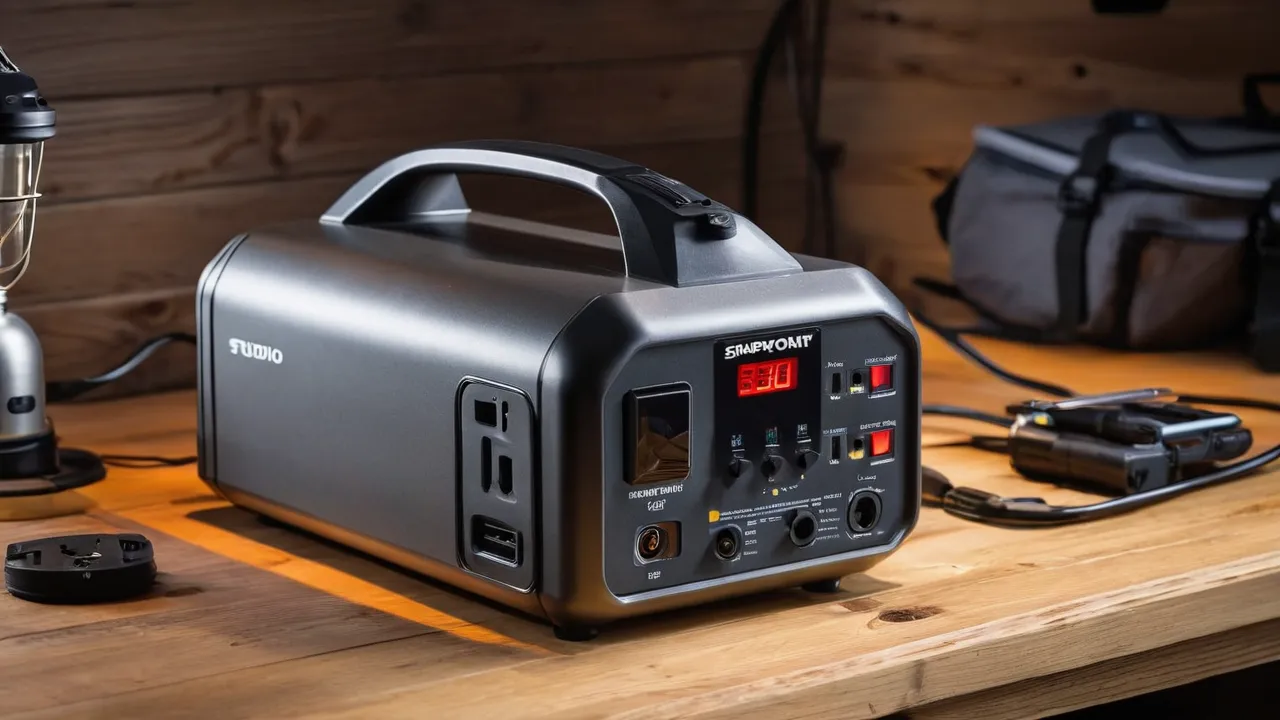
A portable power station can power parts of a house, such as the refrigerator, internet, lights and phone charging, but it cannot normally run an entire house. It is limited by output watts, which decide what can run at once, and by stored watt hours, which decide how long. Plan for essentials only, and connect it safely, with a licensed electrician for any link to your home wiring.
The Two Limits: Output and Energy
Every power station has two numbers that matter. Output is the most power the inverter can deliver at once, in watts, and it limits which appliances you can run together. Capacity is the energy stored in the battery, in watt hours, and it limits how long you can run them.
A whole house at average use draws roughly one to two kilowatts continuously and uses tens of kilowatt hours a day, depending on the home, and central air conditioning, electric ranges and electric water heaters can each draw several kilowatts alone. Most portable power stations offer output from a few hundred to a few thousand watts and capacity from a fraction of a kilowatt hour to a few kilowatt hours. That mismatch is why they back up selected loads, not everything.
Check the product page for continuous output, surge output, battery capacity, whether the outlets are 120 volt only or also 240 volt, and whether expansion batteries are available.
Which Circuits Are Realistic
Realistic loads for a power station include:
- Refrigerator and freezer, which run part of the time.
- Internet router, modem and a laptop.
- LED lights.
- Phone and device charging.
- A television for a few hours.
- A furnace blower or a small fan, depending on the model.
- A sump pump, if you account for its starting surge and run time.
Unrealistic loads are central air conditioning, electric heat, electric water heaters, electric dryers and ranges, well pumps that need 240 volts and anything that draws thousands of watts for hours. Check each appliance’s label, and read our guide to calculating home electricity use to list the watts.
Walk through your home with a notepad and sort each load into three groups: must run, nice to run and cannot run. Must run usually includes the refrigerator, internet, a few lights and any medical or work equipment. Nice to run includes a television, a coffee maker and a fan. Cannot run includes anything that draws thousands of watts for hours. Be honest about the third group, because most disappointment with power stations comes from trying to run one appliance that is too large. A short list, labeled on the power strip, also helps family members during an outage.
Check outlets too. Many stations have 120 volt outlets only, which means 240 volt appliances such as well pumps, dryers and central air conditioners cannot run unless the unit has a 240 volt output and the appliance is wired for it. Ask a licensed electrician about options, and do not improvise adapters.
How to Get Power Into the House Safely
The safest way is the simplest: run heavy duty, outdoor rated extension cords from the power station to the appliances you want to run. Place the unit indoors in a ventilated, dry place, since fuel free power stations do not produce exhaust, but keep it away from heat, flammables and moisture.
Do not plug a power station into a wall outlet to feed the house, which is called backfeeding. It can energize utility lines and cause shock, fires and equipment damage. If you want to connect to your home wiring, a licensed electrician must install a proper transfer switch or an inlet system designed for the unit, following local code and the manufacturer’s manual. Some power stations are sold with home integration kits, which also require professional installation.
Capacity Math for a Small Essentials Plan
Use a simple method. List each essential appliance, its running watts and hours of use. Multiply watts by hours to get watt hours. Add them, add 15 to 20 percent for inverter losses and compare with the power station’s capacity.
Example: a refrigerator averaging about 60 watts over a day, since it cycles, uses about 1,400 watt hours a day. A router at 15 watts for 24 hours is about 360 watt hours. Lights at 50 watts for five hours is 250 watt hours. Phone charging adds perhaps 50. The total is about 2,060 watt hours, or around 2,500 with a margin. A power station with around 2,000 to 3,000 watt hours covers roughly one day of these loads. For several days, plan to recharge from solar panels or a vehicle if the manual allows, or reduce loads.
Peak power matters too: add the running watts of everything that could be on together, plus the refrigerator’s starting surge, and make sure it fits under the unit’s continuous and surge ratings.
A second example shows how quickly capacity disappears. Suppose you add a 1,000 watt space heater for four hours. That alone uses 4,000 watt hours, more than the entire essentials plan above and more than many stations hold. Heating and cooling loads are the reason most plans fail. If you need heat, plan on a different source, and use the power station for the small loads that keep you connected and your food cold.
When a Home Battery Is the Better Tool
If you want to back up many circuits, run a well pump or an air conditioner or have frequent long outages, a home battery system or a standby generator is a better fit. A home battery is wired into the panel, switches automatically and often pairs with solar. A standby generator offers long runtime when fuel is available. See the home battery backup category for the larger option, and compare costs against the need.
Decision Rules by Buyer Type
- Renter or apartment dweller: a portable power station for essentials, used with extension cords.
- Homeowner with occasional short outages: a mid size station for refrigerator, internet and lights.
- Home with medical devices: consult the device maker and a professional, and consider a larger, dedicated backup system.
- Household with long outages or heavy loads: a home battery or generator.
Safety Rules
Never charge or store damaged, swollen or hot battery packs. Keep units away from heat, flames and direct sun, use them in a dry place and follow the manual’s temperature ranges. Do not cover vents. Use the charger and cables that came with the unit. Keep children and pets away from outlets and cords. Check for recalls and firmware updates from the maker.
A Realistic Outage Walkthrough
Imagine a storm knocks out power at night. You bring the power station to the kitchen, plug in the refrigerator, and run a power strip for the router and a lamp. You open the refrigerator rarely. In the morning you move the unit to a window or porch where the solar panels, if you have them, can charge it, following the manual’s guidance on weather. By the second evening you decide whether to run the television, knowing the battery gauge. This is a realistic use: limited, planned and flexible.
Questions to Ask Before You Rely on It
How many watts and watt hours does it provide, and does it cover my refrigerator’s surge? Can it charge from solar and the wall at the same time? How long does recharging take? What is the warranty? Can I expand it with more batteries? Is the temperature range suited to where I will use it? See the portable power station category and how we review.
Do a trial run on a calm day. Plug in the exact loads you plan to run, watch the display for watts and estimated time and note how the fan and noise behave. A trial shows whether the numbers match your expectations, and it lets you fix mistakes before a storm. Keep the unit charged to the level the manual recommends for storage, and check it every few months, since batteries self discharge slowly.
Frequently Asked Questions
Can a portable power station run a whole house?
No, not an average home. Whole house demand is too high for most units in both output and capacity. They can run essentials, such as a refrigerator, internet and lights, for hours or a day depending on capacity. Plan a short list of loads.
Can I plug a power station into a wall outlet to power my house?
No. Backfeeding through an outlet can energize utility lines, injure line workers and start fires in your own wiring. Use extension cords to run appliances directly, or have a licensed electrician install a transfer switch or inlet designed for the unit and approved by local code.
How long will a power station run my refrigerator?
Divide usable watt hours by the refrigerator’s average daily use, roughly 1,000 to 1,500 watt hours for many models. A 2,000 watt hour station may run it a day or more, with no other loads. Check your appliance label and the unit’s rating.
Is a portable power station better than a generator?
It is quieter, has no exhaust and can run indoors, but it holds limited energy. A generator provides longer runtime with fuel but needs outdoor use, fuel storage and maintenance. Choose by outage length, the loads you must run and how much noise and upkeep you can accept.
Final Thoughts
A portable power station can keep essentials running, but it cannot replace whole house backup. Size it by watts and watt hours, avoid backfeeding, use a licensed electrician for any home connection and follow the battery safety rules in the manual.
Related buying guides
- Can a Portable Power Station Run a Refrigerator
- How to Charge a Portable Power Station Faster
- Can You Fly With a Portable Power Station
About the author

The BuyOnceChoice Editorial Team researches durable products worth buying once. Our guides compare published specifications, warranty terms, expert review consensus, and verified owner feedback. We do not conduct our own product trials. See How We Review and our Editorial Policy for our standards.