How to Choose a Reciprocating Saw: Stroke, Orbit, Blades
Stroke length, orbital action and blade choice decide how a recip saw performs. Learn what each feature does and which one fits demolition, pruning or metal.
 By BuyOnceChoice Editorial Team
Updated November 16, 2026
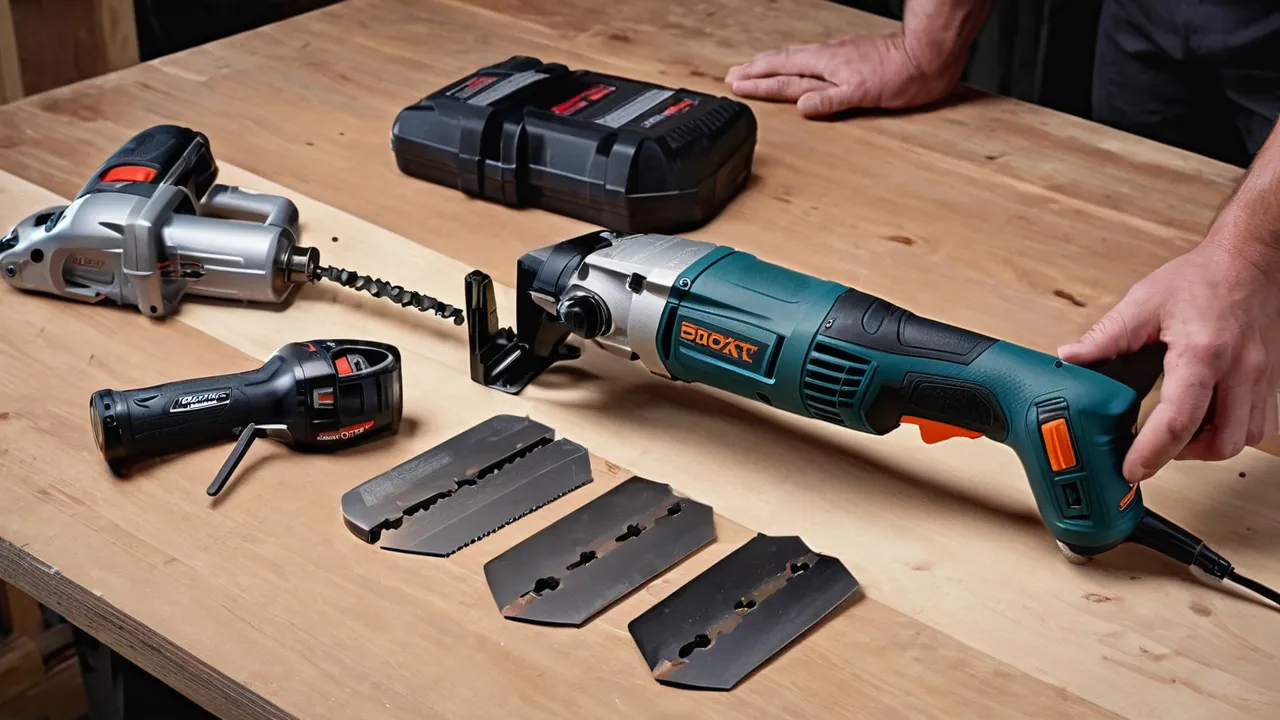
To choose a reciprocating saw, compare the stroke length and speed, decide whether you need orbital action, plan your blades around the materials you cut, and weigh corded power against cordless freedom. The saw’s weight and vibration matter as much as its power, because you hold it in awkward positions. For demolition and rough cutting, a good blade makes more difference than any spec on the box.
What a reciprocating saw does
A reciprocating saw drives a blade back and forth, like a long jigsaw. It cuts wood, nails, metal pipe, plastic, tree limbs and drywall, and it reaches places a circular saw cannot. It is a demolition and rough-cutting tool, not a precision tool. Cuts are rough and the blade can wander. If your work is remodeling, plumbing, pruning or salvage, it earns its place in the toolbox. Use a miter saw for accurate crosscuts, such as those covered in our miter saw category.
Stroke length and speed
Stroke length is how far the blade travels with each push and pull, often somewhere around an inch to an inch and a quarter, though it varies by model. A longer stroke removes more material per stroke, so it cuts faster in thick wood and also clears chips. Strokes per minute is how often it cycles. A higher rate suits thin metal and clean cuts in softer material, while a lower rate and a stronger stroke suit thick or hard material.
Variable-speed triggers let you start slowly, which prevents the blade from skating, then speed up. A speed dial lets you hold a chosen rate. Treat maximum speed figures as claims, and look at stroke length, motor power and how the manual says the saw is meant to be used. A saw with a long stroke and a controlled speed range handles more jobs than one with a high top speed alone.
Orbital action
Orbital action adds a forward-and-back motion to the blade’s path, so the blade steps into the cut as it moves. This increases the cutting rate in wood and thick material, but it makes rough cuts and can chatter in metal. Many saws let you switch orbital action on and off. Turn it on for fast cuts in lumber, and off for metal and for cleaner cuts. A saw with a dial or a lever to adjust it gives more control.
A saw with orbital action you cannot change is a compromise. If you cut a lot of metal pipe and thin sheet, check that orbital action can be turned off.
Blades matter most
The blade decides what the saw can do. Blades differ in length, tooth count, material and thickness.
- Wood with nails: bi-metal blades with moderate tooth counts that tolerate nails.
- Rough lumber and framing: coarse teeth with a lower tooth count remove material fast.
- Metal pipe and thin sheet: higher tooth counts, so several teeth stay in contact with the metal.
- Thick or hard metal: blades marked for it, with slower speed and cutting fluid where advised.
- Pruning: coarse, curved-tooth blades for tree limbs.
- Demolition: thicker, reinforced blades that resist bending.
Longer blades reach deeper but flex more. Use the shortest blade that does the job. Check the maker’s chart for tooth count and material, and replace blades as they dull. A dull blade overheats, binds and increases kickback risk.
Look for a tool-free blade clamp. Changing blades often is part of the job, and a clamp that releases and locks easily saves time and fingers. Check that the clamp holds the blade securely with the manufacturer’s recommended blade shank type.
Corded or cordless
Corded saws run all day at full power and cost less. Cordless saws have no cord to snag and work on roofs and in crawl spaces, but runtime is limited and heavier cuts drain packs fast. Larger packs and brushless motors help. If you already own a cordless platform, a saw from the same line saves money. For long demolition jobs, a corded saw or a pack spare is wise. Our power tools category covers battery platforms.
Weight, vibration and handling
You hold a reciprocating saw out in front of you, often above your head. Weight, balance and vibration decide how long you can work. A compact saw is easier to use in tight spaces but may give less power. Anti-vibration systems reduce the buzz in your hands. A shoe that pivots and adjusts gives you control of the depth and lets you brace the saw against the work. Look at the handle shape. A grip that lets you hold close to the blade gives control, and a rubber overmold absorbs vibration.
Check the shoe for a firm lock and consider a built-in work light. A pivoting shoe allows you to cut at angles and use all the blade’s teeth. Check how the saw feels with a battery fitted, since the pack adds weight.
Using the saw safely
Hold the saw firmly with both hands, brace the shoe against the work and let the blade reach speed before the cut. Clamp the work, keep clear of hidden wires and pipes, and wear eye and hearing protection and gloves where advised. Do not cut with the blade touching the work when you start. Unplug the saw or remove the battery before changing blades, and follow the manual. Kickback and blade breakage are real risks with dull or bent blades.
A buying checklist
- Stroke length that suits thick material, with a variable-speed trigger.
- Orbital action that can be switched off for metal.
- A tool-free blade clamp that holds standard shanks securely.
- A pivoting, adjustable shoe that locks firmly.
- Reasonable weight and an anti-vibration design, checked with a battery fitted.
- A platform and battery size that match your other tools, if you go cordless.
- A work light and a hang hook, which are useful on job sites.
Typical jobs and how to set up the saw
For cutting a nail-embedded stud during demolition, use a bi-metal demolition blade, switch orbital on, set the shoe firmly against the wood and let the blade do the work. For cutting copper or steel pipe, switch orbital off, use a fine-tooth metal blade, clamp the pipe and run the saw at a moderate speed. For pruning a branch, use a coarse pruning blade, brace the saw against the limb and cut from the outside in, standing in a stable position. For flush cuts, such as trimming a protruding bolt or a door stop, use a flexible blade and keep the saw steady. In each job, pick the blade first and then set the saw.
Care and blade storage
Clean sawdust and metal chips from the shoe and the clamp after use, check that the clamp locks and replace damaged blades right away. Store blades flat in a case or sleeve so the teeth are not damaged, and group them by material. Keep the saw dry and the vents clear, and check the cord, plug or battery contacts for wear. Replace a cracked shoe or a worn clamp, because they affect control and safety.
Blade length and thickness in practice
For general work a six inch or nine inch blade covers most jobs, and a twelve inch blade reaches deeper into thick timber or through a wall cavity. Longer blades flex, wander and break more readily, so step up only when you need the reach. Thicker blades resist bending in demolition, and thinner ones cut with less effort in clean work. If you cut mixed materials, such as wood with hidden nails, carry bi-metal blades in a few lengths and keep the pruning and metal blades separate so you grab the right one. When a blade shows burn marks or the teeth round off, replace it. It costs far less than the time you lose pushing a dull blade through the cut.
Frequently Asked Questions
What is the difference between orbital and straight stroke?
A straight stroke moves the blade in a line, which gives cleaner cuts and better results in metal. Orbital action adds a forward motion that speeds cutting in wood but leaves a rougher cut and can chatter on thin metal. Many saws let you switch it on and off, which is the most flexible design.
What blade should I use to cut metal pipe?
Use a bi-metal blade made for metal with a higher tooth count, so several teeth stay in contact with the pipe at all times. Run the saw at a moderate speed, turn orbital action off, clamp the pipe so it cannot spin, and follow the blade maker’s guidance on cutting lubricant.
Is a cordless reciprocating saw strong enough for demolition?
Many are, especially brushless models with large packs, but demolition drains batteries quickly because the saw works against thick material. Bring spare packs and a charger, or use a corded saw for long jobs. Choose a saw with a long stroke and pair it with strong, thick demolition blades.
Does stroke length matter in a reciprocating saw?
Yes. A longer stroke cuts faster and clears chips better in thick material, since each pass removes more. A shorter stroke may be easier to control in tight spaces and on small cuts. Compare stroke length along with speed range, orbital control and blade clamp design before you decide.
Final Thoughts
Choose a reciprocating saw by stroke length and speed range, orbital control, a good blade clamp, weight and vibration, and then buy the blades that match your work. Corded saws give steady power, and cordless saws give freedom. Wear protection, clamp the work and keep blades sharp. Read how we review for how we weigh tools like this.
Related buying guides
- How to Choose a Cordless Tool Battery Platform
- How to Choose a Dado Set and Table Saw Blade Basics
- Impact Driver vs Hammer Drill vs Drill Driver
About the author

The BuyOnceChoice Editorial Team researches durable products worth buying once. Our guides compare published specifications, warranty terms, expert review consensus, and verified owner feedback. We do not conduct our own product trials. See How We Review and our Editorial Policy for our standards.