Diesel vs Gas vs Propane Portable Generators
Gasoline is cheap, propane stores for years and diesel handles long loads. See how each fuel behaves in storage, starting and safety.
 By BuyOnceChoice Editorial Team
Updated November 16, 2026
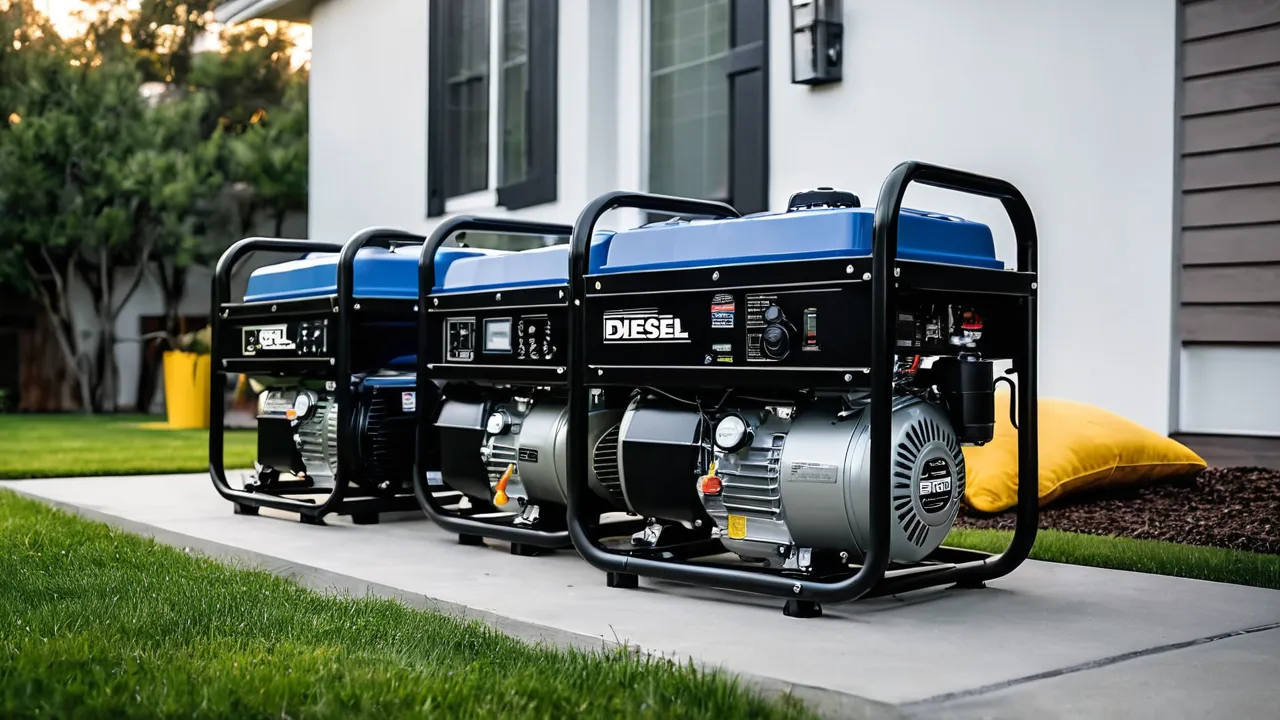
Gasoline, propane and diesel portable generators differ mainly in fuel storage life, running cost, availability and upkeep. Gasoline is the most common and easy to find but goes stale, propane stores almost indefinitely and burns cleaner, and diesel is efficient and durable but is rare in portable sizes. Dual fuel models run on gasoline or propane and are a popular middle choice.
How Each Fuel Behaves in Storage
Gasoline degrades over time. Untreated gasoline may start to go stale within a few months, forming gum and varnish that clog carburetors, and fuel stabilizer can extend storage to about a year, depending on the product and conditions. Ethanol blends absorb moisture, which worsens storage. Rotate stored fuel and follow the stabilizer label.
Propane keeps essentially indefinitely in a sealed tank, does not gum up the engine and is stored in standard cylinders, such as the 20 pound grill tank. It is a good option for emergency generators that sit unused for long periods.
Diesel keeps longer than gasoline, but it can degrade and grow microbes if water gets into the tank, and it can gel in very cold weather unless winter blends or additives are used. Follow the manual and use clean fuel.
Build a simple storage plan. For gasoline: buy fuel in approved cans, add stabilizer according to the label, label the can with the date, store it outdoors in a shed or detached garage away from ignition sources and use the oldest fuel first in a lawn mower or car. For propane: keep one or two full cylinders upright outdoors, check the valve and look for rust or damage, and do not store them indoors. For diesel: keep fuel in a clean, sealed container, check for water and cloudiness and use a stabilizer or biocide if the label recommends it.
Running Cost and Fuel Availability
Cost per hour depends on local fuel prices, the generator’s load and its efficiency. Gasoline is available at every gas station, but during storms stations lose power and lines form. Propane tanks can be stocked ahead and exchanged at many stores, though supply can tighten during emergencies. Diesel is available at stations too, and diesel engines are generally more fuel efficient per kilowatt hour at the same load.
For a rough comparison, a propane tank holds about 4.7 gallons by volume, or about 430,000 BTU, for a 20 pound cylinder. Check the generator’s manual for the fuel use at half and full load for each fuel, and multiply by the price you pay. Propane generators typically produce somewhat less power on propane than on gasoline, often around 10 percent less, so check the stated output for each fuel.
Do a quick calculation with your numbers. Look up the generator’s fuel use at half load, for example a gallon per several hours for gasoline, and a propane figure in pounds or gallons per hour. Multiply by the price per gallon or per tank you pay and by the hours you expect to run during an outage. Add a margin for longer outages. Also consider the number of cans or tanks you can store safely, since the storage limit often controls how many hours you can run. Check local fire codes about how much fuel you may store.
Starting, Noise and Emissions
Gasoline generators start with a recoil or electric start and are generally easy, but carburetors can foul after storage. Propane starts easily in cold weather, since the fuel is a vapor, and burns cleaner, with fewer deposits. Diesel engines can be harder to start in cold weather without glow plugs or block heaters, and they are heavier.
Noise depends on engine design, load and enclosure, so compare the decibel ratings stated by makers, noting that measurement conditions differ. Diesel engines tend to be loud and vibrate more unless enclosed. Inverter generators, which may run on gasoline or dual fuel, are usually quieter. All fuel generators produce carbon monoxide, and propane does as well, so the safety rules are the same.
Consider your neighbors and your own comfort. Open frame generators are loud, and the sound carries. Place the generator as far from the house and neighbors as is safe, point the exhaust away, and use sound deflecting baffles only as the manual allows. Never enclose a generator in a box or shed without proper ventilation and clearances, since heat and carbon monoxide build up. A quieter inverter model may be worth the extra cost if you expect long runs.
Which Fuel Suits Which Buyer
- Gasoline: occasional users who want low upfront cost and easy fuel, and will rotate fuel and run the engine regularly.
- Propane: those who store a generator for emergencies and want long fuel life and cleaner burning.
- Dual fuel: those who want flexibility to use whichever fuel is available.
- Diesel: those with heavy, long running needs, usually in larger or commercial units.
For models, browse the portable generators category, the 13000 watt portable generator roundup and whole home generators if you want a permanent unit.
Common regrets are worth listing. Buyers of gasoline generators regret not rotating fuel and finding the carburetor gummed after a year in the garage. Buyers of propane units regret not buying enough tanks or not checking the reduced output. Buyers of dual fuel units sometimes regret never running both fuels, so they should run it on each fuel once a year as the manual suggests. Buyers of oversized generators regret fuel use at light loads, so choose a size close to your needs.
Dual Fuel: What You Gain and Lose
Dual fuel generators let you switch between gasoline and propane, usually with a selector. You gain flexibility in an emergency, since you can use whichever fuel is available, and you can store propane for long periods. You lose some power on propane, add some complexity and weight and may pay more for the unit. Check the rated watts for each fuel, and make sure you have the hose and regulator the manual requires.
Maintenance Habits by Fuel Type
For gasoline: use fresh fuel, add stabilizer, run the engine monthly for a short time or drain the carburetor before long storage. For propane: check hoses and regulators for cracks, keep tanks upright and secured and check for leaks with soapy water. For diesel: keep tanks full to limit condensation, use a fuel filter and change it on schedule. For all: change oil and air filters as the manual directs, replace spark plugs where used and keep the unit clean.
Run the generator under a modest load for about 20 to 30 minutes each month, or as the manual recommends, which keeps parts lubricated and shows problems before an emergency. Keep a log of run time, oil changes and fuel dates. Replace the spark plug and air filter on schedule, and keep spare plugs, oil and filters in a labeled box with the manual.
Handling and Storage Safety
Never run any generator indoors, in a garage or near doors, windows or vents, because carbon monoxide can kill. Keep it outdoors, far from the house, with the exhaust pointing away, and install carbon monoxide alarms in the home. Refuel only when the engine is off and cool. Store gasoline and diesel in approved containers away from living areas and ignition sources. Store propane tanks upright outdoors, not inside the house. Never overload the generator, and use a licensed electrician for any connection to a home panel. See how we review for our approach.
Follow local rules for fuel storage amounts and container types, and check with your fire department if you plan to store more than a few gallons. Keep fuel away from the water heater, furnace and any pilot light, and never fuel a generator while it is running or hot, because vapors can ignite. Place a fire extinguisher rated for fuel fires nearby. For propane, keep hoses short, protect them from sharp edges and check connections with soapy water each time you attach a tank.
Frequently Asked Questions
Is propane better than gasoline for a portable generator?
For long term storage and cleaner burning, yes. Propane keeps indefinitely and does not foul the carburetor, but a generator usually makes somewhat less power on propane. Gasoline is easier to find. Dual fuel models give you both options.
How long can gasoline be stored for a generator?
Untreated gasoline can start to degrade in a few months, and stabilizer can extend storage to about a year depending on the product and conditions. Store fuel in an approved container, rotate it and follow the stabilizer label and manual.
Do diesel portable generators make sense for homes?
Rarely. Diesel engines are efficient and durable, but portable diesel generators are heavier, costlier and less common than gasoline or propane. They suit heavy, long running loads. Most homeowners are better served by gasoline, propane or dual fuel.
How much power do I lose on propane?
Many generators produce roughly 10 percent less on propane than on gasoline, but it varies by model. Check the manual for the rated running and starting watts on each fuel, and size the generator for the lower figure.
Final Thoughts
Choose gasoline for low cost and easy fuel, propane for storage and cleaner burning and dual fuel for flexibility. Rotate and stabilize fuel, never run a generator indoors and use a licensed electrician for any home connection.
Related buying guides
- Generator Carbon Monoxide Safety Checklist
- Generator Fuel Storage and Stabilizer Basics
- Generator Noise Levels Explained
About the author

The BuyOnceChoice Editorial Team researches durable products worth buying once. Our guides compare published specifications, warranty terms, expert review consensus, and verified owner feedback. We do not conduct our own product trials. See How We Review and our Editorial Policy for our standards.