What Size Whole House Generator Do You Need
Kilowatt ranges for whole house generators vary by source. Build a load worksheet that counts running watts, motor surge, and fuel derating to find your size.
 By BuyOnceChoice Editorial Team
Updated November 16, 2026
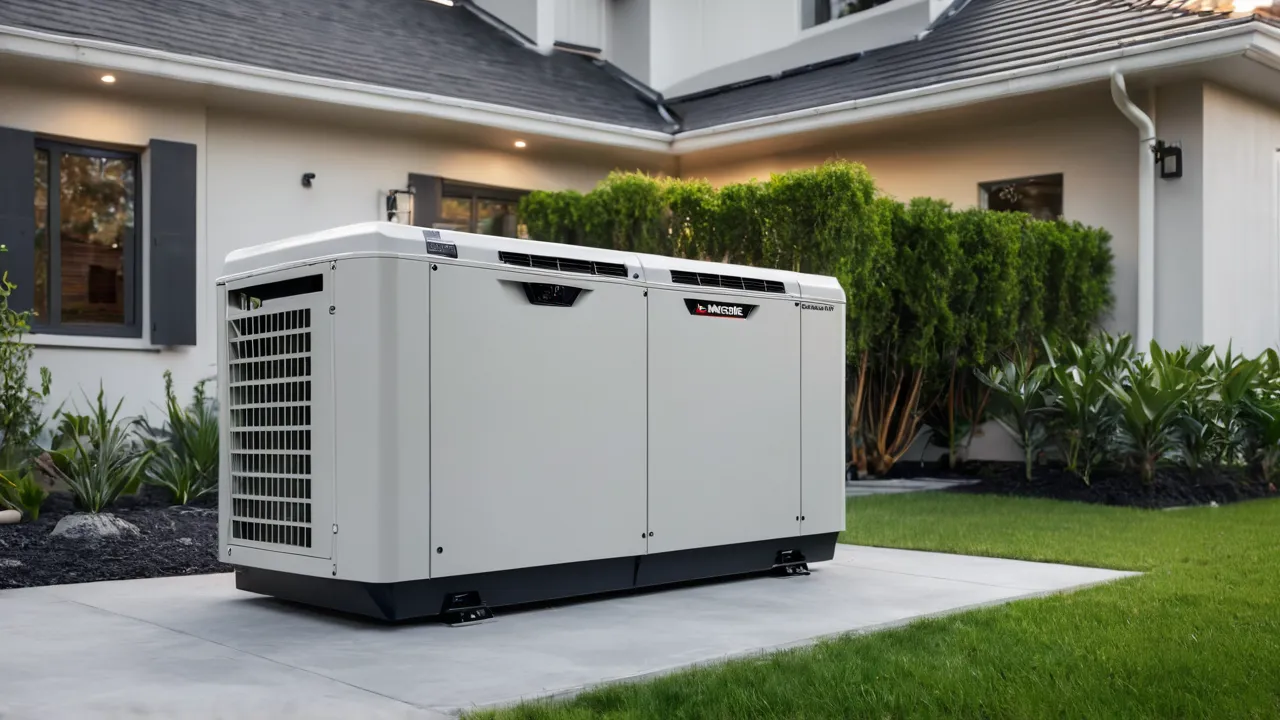
The size of a whole house generator you need is the total running watts of every load you want powered at once, plus the starting surge of the largest motor, then adjusted for fuel type, altitude, and a safety margin. Add up the loads with a worksheet, apply the manufacturer’s derating for your fuel and conditions, and have a licensed electrician or installer confirm the result against your electrical panel. Rules of thumb vary by source, and the worksheet is more reliable than any chart.
Ranges vary widely between websites because homes differ, so this guide walks through a load worksheet with surge and fuel derating, then fuel supply and service checks. All numbers are illustrations, so use the labels on your appliances. Browse our whole-home generators category for models, see the portable generator category for smaller options, and read how we review for how we treat specifications. Gas, electrical, and permit work must be done by licensed professionals.
Why Ranges Disagree
Charts that say a certain house size needs a certain generator size ignore the things that matter: whether you have central air conditioning, electric heat, an electric range, a well pump, or an electric vehicle charger. Two homes of the same square footage can need very different generators. Some sources size for the whole panel, some for essentials, and some include a safety margin while others do not.
The fix is to size by loads, not square feet. Decide what you want on during an outage, add the numbers, and let the worksheet set the size.
Step One: List the Loads You Want to Run
Walk through the house, and list every appliance and circuit you want powered in an outage. Typical items include the refrigerator and freezer, lights, furnace blower or boiler, sump pump, well pump, garage door opener, water heater, central air conditioner, microwave, range, washer, dryer, and electronics. Mark each as essential or optional. A shorter list means a smaller, less costly generator.
Step Two: Add Running Watts
Find the running watts on each label or in each manual. If only amps are listed, multiply by the voltage, which is 120 or 240. If a load cycles, such as a refrigerator, count its running watts, since it may run when others do. Add the numbers for loads that could run at the same time. Do not add loads you will never run together, but be honest: in a heat wave, the air conditioner, refrigerator, and well pump will run together.
Do Not Forget Hidden Loads
- Furnace blowers and circulator pumps, which run when it is cold.
- Garage door openers, doorbells, and security systems.
- Sump pumps and well pumps.
- Chargers for phones, laptops, and medical devices.
- Small appliances such as coffee makers and microwaves, which are brief but large.
- Lighting circuits in rooms you did not list.
Step Three: Add Motor Surge
Motors need much more power to start than to run. A central air conditioner compressor or a well pump may need several times its running watts for a moment. The generator must supply the largest surge while the other loads are already running. Find the starting watts or the locked-rotor amps in the manual, and multiply amps by volts. If you do not have the number, ask the manufacturer or the installer. Soft starters, available for some air conditioners, reduce surge, and may allow a smaller generator.
Add the largest surge to the running total of the other loads. If two big motors may start at about the same time, plan for staggering with load management.
Step Four: Apply Fuel Derating and Margin
A generator’s headline rating is for specific conditions. Output on natural gas is often lower than on propane for the same unit, and output drops at high altitude and in high heat, as the manual explains. Use the rating for your fuel and conditions, not the largest number on the front page. Then add a margin, commonly around twenty percent, so the generator is not running at its limit for hours, and so you have room to add loads later.
Step Five: Check Fuel Supply and Service
A bigger generator needs more fuel. Check the fuel consumption at expected load in the manual, then confirm that your gas meter and line can supply it, or that your propane tank can last the outage length you plan for. Also check local service: a large unit is only as good as the technician who maintains it.
A Sample Worksheet in Words
Suppose essentials are a refrigerator at 150 watts, a freezer at 100, lights at 300, a furnace blower at 600, a well pump at 1,000 running with a surge near 3,000, and a few electronics at 300. Running total is about 2,450 watts. The largest surge is the well pump’s, so the generator must handle 2,450 plus about 2,000 extra for the pump’s startup, about 4,500 watts at the peak moment. Add a central air conditioner running at 3,500 watts with a startup surge of several thousand, and the total grows to roughly 6,000 running and over 10,000 at the peak moment. A generator in the range of 10 to 14 kilowatts, after derating, might be needed, or load management could allow a smaller one. Use your own figures.
Decision Rules by Home Type
- Small home with gas heat and no central air: a smaller generator covering essentials is often enough.
- Home with central air, a well pump, and an electric range: a larger generator, or load management, and a larger transfer switch.
- All-electric home: a large unit, and a plan for the heat and cooking loads.
- Home with limited gas supply: size to what the meter can feed.
- Households with medical needs: prioritize reliability and service, and ask the doctor and the equipment maker about backup requirements.
Safety and Professional Work
Generators produce carbon monoxide, so they must sit outdoors with clearances from windows, doors, and vents, as the manual and code specify. Install battery-powered carbon monoxide alarms inside. A licensed electrician must connect the generator through a transfer switch, and a licensed professional must handle gas piping, with permits and inspections. Do not guess at sizing or wiring, and do not backfeed through an outlet.
Load Management as a Cost Lever
Load management devices and smart transfer switches monitor the generator’s load and turn off big appliances, such as the air conditioner or the dryer, when the load nears the limit, then turn them back on. They let a smaller generator serve a larger house by taking turns. For example, an air conditioner can pause while the water heater element runs. The trade-off is that not everything runs at once, so decide which loads have priority. Ask the installer how the system chooses, whether it can handle two air conditioners, and what happens during a long outage in hot weather.
Choosing Between Whole-Home and Essential Circuits
A whole-home approach powers the entire panel through an automatic transfer switch, and it fits large generators and households that want normal life during outages. An essential circuits approach powers a chosen subset, such as the refrigerator, furnace, lights, and a few outlets, and it fits smaller generators and tighter budgets. Neither is wrong. The question is which loads you would regret losing. Write the list, rank it, and decide where the line falls.
Future Loads
Think about what you may add in the next ten years. An electric vehicle charger, a heat pump, an induction range, a hot tub, or a workshop can change the load picture. You need not buy a generator for loads you do not have, but ask the installer whether your transfer switch and panel have room, and whether the generator can be swapped for a larger model without redoing the whole install. A modest margin now is cheaper than a replacement later.
Questions for Your Installer
- What running and starting watts did you use for each load, and where did the numbers come from?
- What is the rated output on my fuel and at my altitude?
- What does the gas meter or tank need to supply at full load?
- How does load management decide which loads run?
- What does the warranty require for service?
Frequently Asked Questions
What size generator do I need to run a whole house?
It depends on your loads. A home with central air, electric heat, or an electric range may need a generator in the range of 14 to 22 kilowatts or more, while a home with gas heat and essentials may need much less. Use a load worksheet with surge and derating, and have a licensed installer confirm.
Can a 10 kW generator run a whole house?
Possibly, if you manage the big loads. A 10 kilowatt unit can run many homes’ essentials plus one large load at a time, but not everything at once in a house with central air, an electric range, and a dryer. Add your loads and surge, and check the derated output on your fuel.
Is it better to oversize a standby generator?
A modest margin helps with surge and growth, but a very large unit costs more, uses more fuel, and may run lightly loaded, which can be inefficient. Size from your worksheet with about twenty percent margin, and consider load management instead of a much larger unit.
Final Thoughts
Size a whole house generator from a worksheet: list loads, add running watts and the largest motor surge, apply fuel and altitude derating, add margin, and confirm the fuel supply and service. Use load management to keep the unit practical, and rely on licensed professionals for gas, electrical, and permit work.
Related buying guides
- Whole House vs Essential Circuits Generator Setup
- Automatic vs Manual Transfer Switch for Generators
- Diesel vs Gas vs Propane Portable Generators
About the author

The BuyOnceChoice Editorial Team researches durable products worth buying once. Our guides compare published specifications, warranty terms, expert review consensus, and verified owner feedback. We do not conduct our own product trials. See How We Review and our Editorial Policy for our standards.