Hard Anodized vs Stainless Steel Cookware
Anodized aluminum and stainless steel age differently. Compare dishwasher use, heat response and longevity to pick the right pan for you.
 By BuyOnceChoice Editorial Team
Updated November 16, 2026
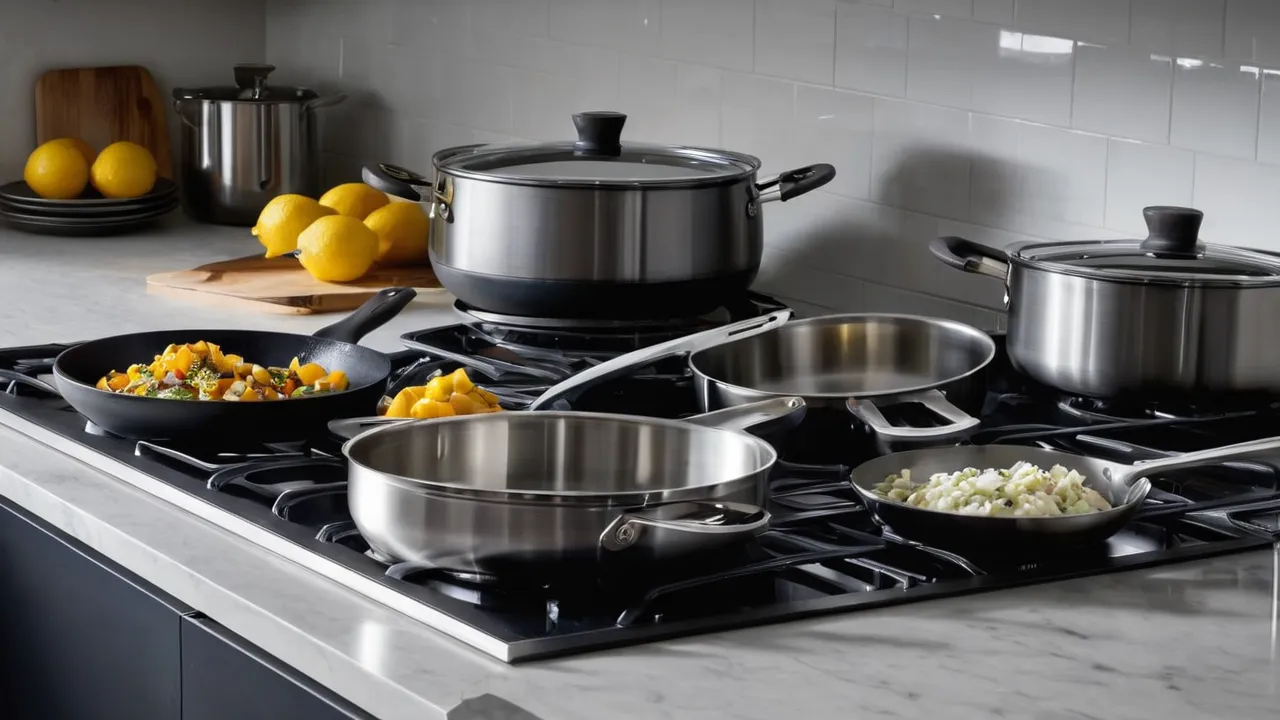
Hard anodized cookware is aluminum with an electrochemically hardened dark surface that heats quickly and evenly and is often paired with a nonstick coating, while stainless steel cookware is non-reactive, tough and long-lived but may need a clad core for even heating. Choose hard anodized for light, even-heating everyday pans, and stainless steel for a long-lasting, dishwasher-friendly pan that tolerates high heat and metal utensils.
What Hard Anodized Actually Is
Anodizing is a process that thickens and hardens the natural oxide layer on aluminum, using an electrical current in an acid bath. The result is a dark gray or charcoal surface that is harder than raw aluminum, resists scratches better and does not react with food the way bare aluminum can. The pan underneath is still aluminum, so it is light and conducts heat very well.
Many hard anodized pans also have a nonstick coating on the cooking surface, and some have a bare anodized interior. The two are different: the anodized layer is part of the metal, and a nonstick coating is a separate layer on top that wears out sooner. When you shop, check whether the pan’s cooking surface is plain anodized or coated, since the care and lifespan differ. Our stainless steel cookware page covers the other material in depth.
Heat Response and Cooking
Aluminum conducts heat quickly, so hard anodized pans heat fast and respond quickly when you change the burner. They spread heat evenly across the base and often up the sides, which suits sautéing, scrambling eggs and everyday cooking. They are light, which makes them easy to handle and toss.
Stainless steel alone conducts heat poorly, so good stainless cookware uses an aluminum or copper core, either across the base or throughout the pan. A well-built clad stainless pan heats evenly, though it is usually heavier. A thin, single-layer stainless pan heats unevenly and can scorch.
For searing, stainless steel with a good core can reach a high temperature and brown well, and it tolerates preheating. Hard anodized pans with nonstick coatings should not be preheated empty on high heat, since coatings can degrade. A bare anodized pan handles heat better, but food can stick if the surface is not seasoned or oiled.
Dishwasher Use and Care
This is where the two differ most in daily life. Many makers say hard anodized cookware should be hand washed, because dishwasher detergents can dull or degrade the finish and damage the nonstick layer. Some brands say their anodized pans are dishwasher safe, so check the care sheet for the exact pan.
Stainless steel is generally dishwasher friendly, though hand washing keeps it bright and avoids water spots. It tolerates metal utensils, scrubbing with non-scratch pads and a bit of rough treatment. Hard anodized surfaces resist scratches better than raw aluminum but can still be marked, and nonstick coatings need wood, silicone or nylon tools.
Whichever you choose, let the pan cool before washing, avoid abrasive pads on coated surfaces and follow the maker’s instructions to protect the warranty.
Lifespan and Failure Modes
Stainless steel can last for decades. Common failures are warping from thermal shock in thin pans, loose handles and pitting from salt. Good clad pans resist most of this.
Hard anodized aluminum itself is durable, but the nonstick coating that often covers it usually wears out first, often within a few years with regular use. When it flakes or loses its release, the pan is ready to replace, though a bare anodized surface may remain usable. Anodized pans can also scratch or lose their finish if exposed to harsh cleaners. Dents and warping are possible with heavy use.
Think of hard anodized as a good pan with a limited life, and stainless as a long-term purchase. If you want a buy-once pan, stainless steel, cast iron or carbon steel is a safer bet. See our cast iron page for another long-lived option.
A Worked Example
A cook buys a hard anodized nonstick skillet for eggs and a clad stainless saucepan for sauces. The skillet is light and releases eggs well for two years, then the coating begins to scratch, and the cook replaces it. The saucepan survives daily use, dishwashers and metal spoons without complaint. Over ten years, the cook buys several nonstick skillets and keeps the same saucepan. A different cook who buys a hard anodized pan with a bare anodized interior learns to preheat and use oil, and finds the pan lasts longer but needs more care to prevent sticking. The point is that the coating, not the anodized aluminum, usually decides the lifespan.
Weight, Induction and Oven Use
Hard anodized cookware is light, which helps with lifting and tossing. Stainless steel clad pans are heavier, which gives stability and heat retention but adds effort.
Induction needs a magnetic base. Aluminum is not magnetic, so hard anodized pans do not work on induction unless they have a magnetic stainless plate bonded to the base. Check for an induction mark on the product page. Clad stainless pans with a magnetic exterior usually work on induction.
Oven limits depend on the handle and any coating. Many hard anodized pans with nonstick coatings and plastic or silicone handles have lower oven limits than stainless pans with metal handles. Check the maker’s stated limit for both the pan and the lid. For stovetop-to-oven cooking, a stainless pan is usually the more flexible choice. For heavy, lidded oven cooking, consider a Dutch oven. See our Dutch oven page.
Nonstick Coating Care and Safety
If your hard anodized pan has a nonstick coating, treat it as a consumable. Use low to medium heat, since high heat can degrade the coating, and many makers warn against preheating an empty pan. Do not use aerosol cooking sprays, which can leave a residue that is hard to remove, and avoid sharp or metal tools that scratch. Stop using the pan if the coating flakes or peels off in large pieces, and replace it. Overheated nonstick coatings can release fumes that are harmful to pet birds, so keep birds out of the kitchen when you cook with them and follow the maker’s temperature guidance. Ventilate the kitchen when you cook at higher heat.
If you prefer to avoid coatings altogether, look for a bare anodized interior or choose stainless, cast iron or carbon steel. Check the product page to see what the cooking surface is made of, and ask the maker for details if the page is vague.
Cost Over Time
A hard anodized nonstick pan is often cheaper up front than a good clad stainless pan, but it may need replacing every few years, which narrows the gap. A stainless pan costs more at the start and may never need replacing. If you cook eggs every day and want a nonstick surface, it can be reasonable to treat the cost of a replacement pan as a regular expense and to buy a mid-priced pan, not an expensive one, since the coating will wear out either way. For pans that do the heavy lifting, such as searing and sauces, invest in stainless.
Think about the warranty too. Some makers warrant their anodized pans for a long time but exclude coating wear. Read the terms for what is covered, and keep your receipt.
When you compare two specific pans, look at the thickness of the aluminum, since a thick base resists warping and heats evenly, and a thin one does neither. Weigh each in your hand if you can, and look at how the handle is attached.
Who Should Choose Which
- Choose hard anodized if you want light, quick-heating pans for everyday cooking and are willing to hand wash and replace coated pans.
- Choose stainless steel if you want a long-lasting pan, dishwasher tolerance, metal utensils and high-heat searing.
- Choose hard anodized for eggs and delicate foods, and stainless for everything else.
- Choose stainless if you have an induction cooktop, unless the anodized pan has a magnetic base.
- Choose hard anodized if you have limited strength and need light pans.
- Choose stainless if you want one set for decades.
For how we weigh such claims, read how we review, and browse the cookware and kitchen tools hub for related guides.
If you are building a small kitchen, a simple split works well: one hard anodized or coated pan for eggs and other delicate foods, and a stainless skillet, saucepan and pot for everything else. That mix keeps the replaceable pan small and cheap and puts your money into pieces that last, while giving you light weight where it helps and durability where it matters.
Frequently Asked Questions
Is hard anodized cookware better than stainless steel?
Neither is better overall. Hard anodized is lighter and heats quickly, but often wears out with a nonstick coating and should be hand washed. Stainless steel lasts longer and tolerates dishwashers and metal tools. Choose by weight, care habits and lifespan.
Can hard anodized cookware go in the dishwasher?
Often not. Many makers recommend hand washing because dishwasher detergents can damage the finish and nonstick layer. Check the care sheet for your pan, since a few brands say their anodized pans are dishwasher safe.
Does hard anodized cookware work on induction?
Not by itself, since aluminum is not magnetic. Some hard anodized pans have a magnetic plate in the base and are marked induction compatible. Check the product page and use a magnet on the bottom of the pan.
Is hard anodized cookware safe?
Hard anodized aluminum is sealed and non-reactive under normal use. Nonstick coatings should not be overheated or used when badly scratched, and you should follow the maker’s instructions. If you have concerns, ask the maker about the materials in a specific pan.
Final Thoughts
Hard anodized suits light, fast, everyday pans with a limited lifespan, and stainless steel suits long-lasting, high-heat, dishwasher-tolerant cooking. Check the coating, induction compatibility and care instructions, and match the material to your habits.
Related buying guides
- How Long Do Nonstick Pans Last, and When to Replace
- How Long Does Stainless Steel Cookware Last
- How to Choose Stainless Steel Cookware: Clad, Handles, Lids
About the author

The BuyOnceChoice Editorial Team researches durable products worth buying once. Our guides compare published specifications, warranty terms, expert review consensus, and verified owner feedback. We do not conduct our own product trials. See How We Review and our Editorial Policy for our standards.