Running Watts vs Starting Watts Explained
Learn why a refrigerator or pump needs far more power for a split second than it does all day, and how to size a generator around that surge.
 By BuyOnceChoice Editorial Team
Updated November 16, 2026
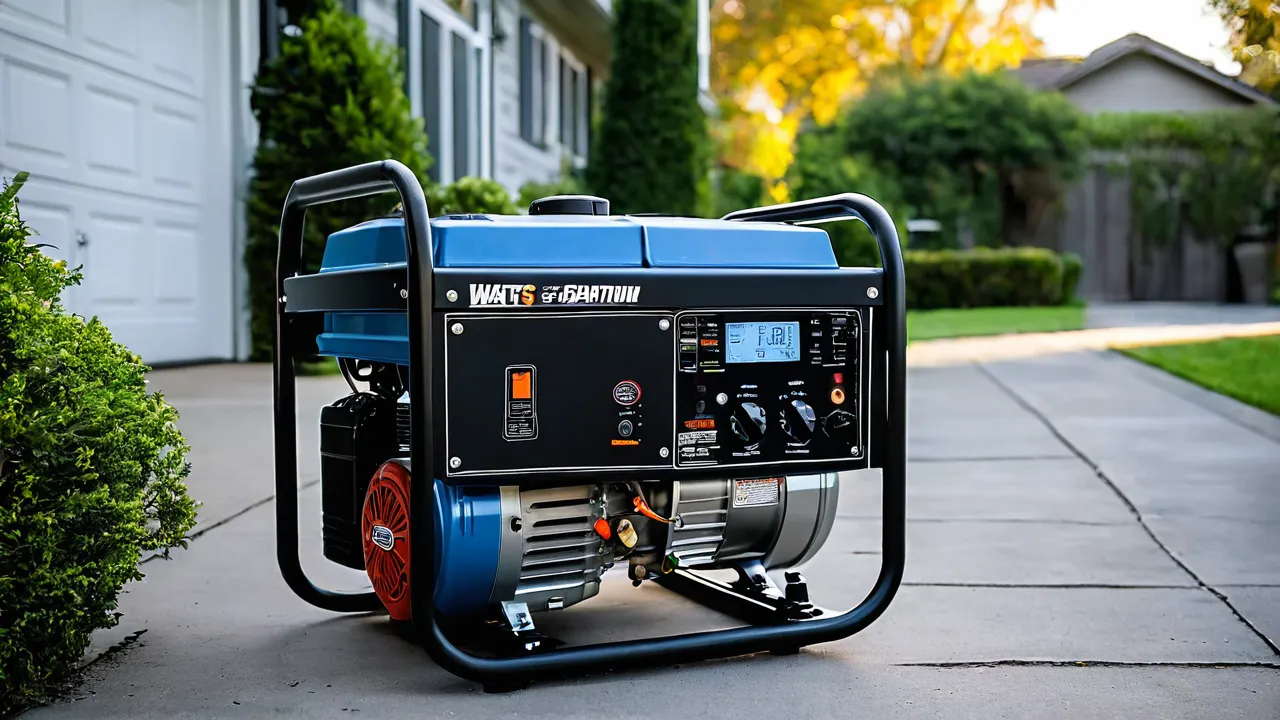
Running watts versus starting watts is the difference between the steady power a device uses once it is operating and the brief burst it needs to get started. Running watts (also called rated or continuous watts) are what a generator can supply for hours. Starting watts (also called surge or peak watts) are the short boost it can supply for a few seconds, which motors in refrigerators, sump pumps and air conditioners need at startup. Size a generator so the running total fits the continuous rating, and the largest startup surge fits the starting rating.
Where the surge comes from
Resistive loads such as light bulbs, space heaters and toasters draw about the same power all the time. Motor loads are different. A motor at rest has no spinning rotor to oppose the current, so it pulls several times its normal current for a fraction of a second until it reaches speed. Compressors are the hardest, because they start against pressure that is already in the system.
That surge is why a refrigerator with a modest running draw can trip a small generator at startup, and why a sump pump that seems light on paper can stall one. The surge is brief, usually a second or two, but if the generator cannot supply it, the engine bogs down, the voltage sags, the breaker may trip, and the motor may fail to start. Repeated failed starts can harm both the motor and the generator.
Typical motor loads that surge include refrigerators and freezers, sump pumps, well pumps, window and central air conditioners, furnace blowers, washing machines and power tools with induction motors. Electronics and lighting do not surge in the same way.
How to read a nameplate in amps
Many appliances list amps on a nameplate or in the manual, not watts. The basic conversion is watts equal volts times amps. In the United States, most household loads run on 120 volts, and large loads such as central air, dryers and some well pumps run on 240 volts.
Look for these entries on a motor or appliance label:
- Running or rated amps (sometimes labeled RLA or FLA for full load amps).
- Locked rotor amps (LRA), which describe the surge when the motor starts.
- Volts, so you know which multiplier to use.
For example, a refrigerator that lists 6 amps at 120 volts uses about 720 running watts (6 times 120). A sump pump that lists 8 amps at 120 volts uses about 960 running watts. These are estimates, because the real power draw of a motor also depends on its power factor, but multiplying amps by volts gives a safe, slightly high figure for planning.
For startup, use the locked rotor amps if the label lists them. A compressor with 30 LRA at 240 volts could surge to roughly 7,200 watts for a moment. If the nameplate shows no LRA, use a multiple of the running figure, and check the manual or ask the manufacturer. Never guess low.
Putting it together: the three step method
Follow these steps to size a generator.
- List what you need to run at the same time. Include refrigerator, sump pump, lights, furnace fan, a few outlets, and anything else essential. Leave out what you can run later.
- Add up the running watts of everything on the list. This total must fit within the generator’s continuous running rating, with some margin.
- Find the biggest startup surge. For each motor, take the starting watts minus the running watts to get the extra surge. Because motors rarely start in the same instant, add only the largest extra surge to the running total. That sum must fit within the starting rating.
Here is a worked example with illustrative numbers. A refrigerator runs at 700 watts and surges to about 2,100. A sump pump runs at 800 watts and surges to about 2,400. Lights and a phone charger add 300 watts. The running total is 700 plus 800 plus 300, or 1,800 watts. The largest extra surge is the pump’s, which is 2,400 minus 800, or 1,600 watts. Add that to the running total, and you need at least about 3,400 starting watts and 1,800 running watts. A generator rated for around 4,000 starting and 3,000 running would have room to spare, but the numbers depend on your real appliances.
If your loads start at different times, stagger them. Let the refrigerator start, then switch on the pump. Turning loads on one at a time keeps the surge small.
Typical multiples you will see
Manufacturer tables list startup multiples for common appliances, and they vary by model. As a rough guide:
| Load | Typical surge compared with running |
|---|---|
| Lights, heaters, toasters | None, about the same |
| Refrigerator or freezer | Roughly two to three times |
| Sump pump | Roughly two to three times, sometimes more |
| Window air conditioner | Roughly two to three times |
| Central air conditioner | Often three times or more |
| Well pump | Roughly two to three times |
Use these as a planning guide, not a rule. Check the nameplate and the manual for the real figures. The sump pump category explains why pump startup matters, and the portable generator category covers what to look for in a unit.
Two edge cases catch owners out. First, a cycling appliance such as a refrigerator surges every time its compressor restarts, so the generator must handle that surge repeatedly, not only once at the start of an outage. Second, an appliance that is already warm or under pressure, for example a compressor that restarts a few seconds after shutting off, can surge harder than a cold start, because it has to push against residual pressure. When in doubt, size for the higher figure.
Soft start devices and inverter generators
A soft start kit is a small electronic device that eases a compressor motor into motion, so it pulls less surge current. Makers of these devices often claim large cuts to the starting current, and they can let a smaller generator start a central or window air conditioner. Results vary by compressor, so check the device’s compatibility list and the air conditioner maker’s guidance before you install one. Electrical work on a central air system should be done by a licensed professional.
Inverter generators produce clean, stable power and often handle startup surges well, but their surge rating is still limited. A larger conventional generator may supply a bigger surge for a similar size. Do not assume an inverter ignores the surge math. Read both the running and starting ratings, and size by your loads.
Variable speed motors, sometimes found in newer appliances, may have lower startup demands. Check the product label and manual, because not every efficient appliance is a soft start design.
Safety and electrical notes
Never exceed the generator’s rated running watts for long periods, since overload overheats the unit and shortens its life. Run it outdoors, far from the house, with a battery operated carbon monoxide alarm indoors. Do not backfeed the house through a wall outlet. A home connection must use a properly installed transfer switch or interlock, and a licensed electrician should install it. Follow the manuals for the generator and the appliance, and consult an electrician for any panel or wiring work.
Which number should you buy on
Buy on the running watts first, since they cover your continuous load, and then confirm that the starting watts cover the largest surge on your list. A generator with a high starting rating but a low running rating will start your motors and then fail to keep up. Add a margin of roughly 20 percent to your running total so the generator is not at its limit all the time.
If your list is mostly electronics and lights, the starting number matters little. If it includes air conditioning, a well pump or several motors, the starting number may decide your choice. If your needs are large, see the large portable generator guide for higher output models.
Frequently Asked Questions
What is the difference between running watts and starting watts?
Running watts are the continuous power a device uses or a generator can supply for hours. Starting watts, also called surge or peak watts, are the brief extra power needed for a few seconds when a motor starts. A generator must handle both, so check the running total and the largest startup surge against its ratings.
How many watts does a refrigerator need to start?
It depends on the model, but a refrigerator often needs roughly two to three times its running watts at startup. Check the nameplate for amps and multiply by volts for running watts, then use the locked rotor amps or the manufacturer’s data for the surge. Never guess low when sizing.
Can I run an air conditioner on a portable generator?
Often yes, but it needs enough starting watts. Window units are easier, and central air conditioners may need a large generator or a soft start device. Check the compressor’s running and locked rotor amps on the nameplate, size by the largest surge, and have a licensed electrician handle any central air connection.
Do I need to add up the starting watts of every appliance?
No. Add up the running watts of everything you will run together, then add only the largest extra surge from a single motor, since motors rarely start at the same instant. Stagger the startups by turning appliances on one at a time to keep the surge within the generator’s rating.
Final Thoughts
Running watts tell you what a generator can carry, and starting watts tell you what it can handle for a few seconds at startup. List your loads, add the running watts, find the largest extra surge, add a margin and buy to cover both. Read nameplates in amps, remember that motors surge, and follow safe placement and wiring rules. For how we weigh these guides, see how we review.
Related buying guides
- What Can a 3000 Watt Generator Run? Load Planning
- What Can a 7500 Watt Generator Run? Home Load Guide
- What Size Portable Generator Do I Need: Wattage Math
About the author

The BuyOnceChoice Editorial Team researches durable products worth buying once. Our guides compare published specifications, warranty terms, expert review consensus, and verified owner feedback. We do not conduct our own product trials. See How We Review and our Editorial Policy for our standards.