Gas vs Electric vs Induction: Which Cookware Works
One table shows which cookware suits gas, electric coil, smooth-top electric, and induction, plus the base, size, and clearance checks.
 By BuyOnceChoice Editorial Team
Updated November 16, 2026
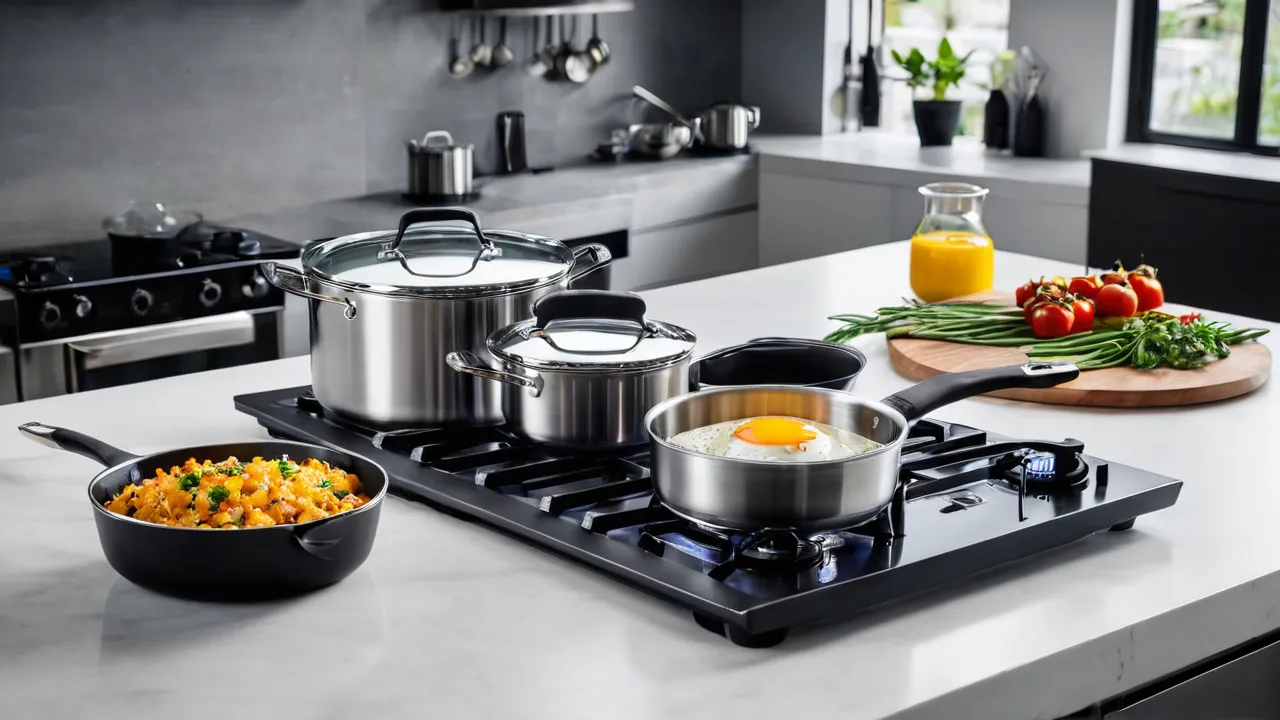
Which cookware works depends on your cooktop: gas works with nearly any pan but flames can scorch handles and thin sides, electric coil works with any flat-bottomed pan, smooth-top electric needs flat, smooth, clean bases, and induction needs a magnetic base such as cast iron, magnetic stainless or a pan marked induction compatible. If a fridge magnet sticks firmly to the bottom of a pan, it will work on induction.
One Table for Every Cooktop
| Cooktop | What works best | What to avoid or watch |
|---|---|---|
| — | — | — |
| Gas | Stainless, cast iron, carbon steel, enameled cast iron, aluminum, copper | Handles in the flame path, very thin pans that scorch, round-bottom pans without a stand |
| Electric coil | Any flat-bottomed pan, heavy bases, cast iron, stainless | Warped or domed bases, pans much smaller than the coil |
| Smooth-top electric (glass-ceramic) | Flat, smooth, clean bases, stainless, enameled cast iron with smooth base | Rough or dirty bottoms, sliding heavy pans, pans much larger than the element |
| Induction | Magnetic cast iron, magnetic stainless, carbon steel, pans marked induction | Pure aluminum, copper, glass, ceramic and non-magnetic stainless without a magnetic layer |
Use the table as a first filter, then check your cooktop’s manual for specific limits on pan size, weight and materials. This article is general information, and the cooktop maker’s instructions come first.
Gas Cooktops
Gas is the most forgiving about materials. A flame heats whatever sits above it, so aluminum, copper, stainless, cast iron and carbon steel all work. The pan does not need a perfectly flat base, though a flat base heats most evenly.
The issues are handles and sides. Flames that extend past the base of a small pan can heat the handle and the sides, which can scorch plastic or wooden handles and discolor thin pans. Keep the flame at or below the edge of the pan base, and choose pans with metal handles if you use high heat. Gas also puts heat into the room and releases combustion byproducts, so ventilation matters. Use a range hood that vents outdoors if you have one, and see our range hood page for what to look for. Follow the stove’s manual, and use a licensed professional for gas line or ventilation questions.
Round-bottom woks need a support ring on many gas ranges, so check the grate design before you buy.
Electric Coil Cooktops
Coil cooktops heat by contact between the coil and the pan. For the best heat transfer, the pan base should be flat and the coil should sit snugly beneath it. Warped or domed bases leave gaps that waste heat and create hot spots. Heavy, flat-bottomed pans, including cast iron and clad stainless, work well.
Match the pan to the coil: a pan much smaller than the coil wastes heat and can overheat the coil’s edges, and a pan much larger leaves the outer part cool. Coils heat and cool slowly, so you plan ahead, turning down the heat before a dish is done. Check the manual for any limits on pan size or weight.
Moving Between Cooktops
If you move house or change a stove, check each pan again. A pan that worked well on gas may not work on induction, and a pan that rocks on a smooth top may be fine on a coil. Before moving, check each pan with a magnet to see if it will work on induction. Keep the pans that work on every cooktop, such as magnetic stainless clad and cast iron, as the core of your set, and plan to replace those that do not. If you are renting, ask what cooktop the next place has, since an induction-ready set is useful on most cooktops.
Smooth-Top Electric Cooktops
Glass-ceramic cooktops have a flat surface over the heating elements. They need flat, smooth-bottomed pans that make full contact. A rough, warped or dirty bottom scratches the glass or heats poorly. Stainless clad, enameled cast iron with a smooth base and smooth carbon steel can work well. Heavy cast iron needs care, because dropping or sliding it can damage the glass. See our cast iron cookware page for more, and check the manual.
Avoid pans much larger than the element, since the glass beyond the element can overheat, and some cooktops have limits on overhang. Clean the glass after it cools and wipe the pan bottoms, since spilled sugar and residues can burn and pit the surface. Lift pans instead of sliding them.
Induction Cooktops
Induction heats the pan directly using a magnetic field, so the pan must have a magnetic base. Cast iron, enameled cast iron, carbon steel and magnetic stainless work. Aluminum, copper, glass and ceramic do not, unless they have a magnetic layer or disc. Many clad stainless pans have a magnetic outer layer and carry an induction mark on the product page.
Check with a magnet. If it sticks firmly to the base, the pan is likely to work. Pans that are barely magnetic may heat poorly or make noise. Also match the pan size to the cooking zone: a base much smaller than the zone may not be detected, and one much larger heats unevenly at the edges.
Induction heats fast and responds quickly, so use lower settings than you might on other cooktops, and avoid preheating empty nonstick pans, which can overheat quickly. Some pans hum or buzz, particularly thin or layered ones, which is usually normal. People with pacemakers or other implanted medical devices should read the cooktop manual and ask their doctor about induction, since the magnetic field is a consideration.
Checks That Apply to Every Cooktop
- Flat base: place a ruler across the bottom and check for gaps.
- Clean base: wipe it before each use.
- Handle material and oven safe temperature: check the limits for gas flames and ovens.
- Size match: the base should be close to the size of the burner or zone.
- Weight: check that the cooktop can support the pan, and that you can lift it safely.
- Cooktop manual: follow the maker’s notes on materials and limits.
- Ventilation: use a hood or open a window when cooking, especially with gas.
Handles, Lids and Oven Limits Across Cooktops
Cookware does not live only on the cooktop. Many pans go into the oven, and each part has its own limit. Plastic or phenolic handles and knobs often have a lower temperature limit than the pan body, and silicone grips may too. On gas, a handle near the flame can heat up even if the pan is rated for the oven, so check the position of the handle relative to the burner. On induction, the pan heats directly, and handles stay cooler, but a pan left empty on high can overheat very quickly. On electric coils and smooth tops, the heat spreads under the pan, and handles are usually safe, but a hot burner stays hot after you turn it off. Keep an eye on residual heat, and do not leave a pan on a hot surface where someone could touch it.
Lids matter too. A glass lid can crack from sudden temperature change or from a hot element if it touches. Check the maker’s guidance on lids in the oven and on the cooktop. If you use a gas flame at high heat, a pan that is too small for the burner can send flames up the sides and scorch the pan’s exterior, so choose a burner size that matches the pan.
Choosing Cookware That Works Everywhere
If you want pans that work on any cooktop now or later, favor magnetic, flat-bottomed, oven safe cookware. Clad stainless steel with a magnetic exterior, cast iron, enameled cast iron and carbon steel meet those requirements. They work on gas, coil, smooth top and induction, and they handle oven use. Avoid buying pans that work on only one cooktop unless you are sure you will not change. Check for an induction mark on the product page, check that the base is flat and read the oven limits. A kit of three or four such pans will serve you through a move or a kitchen upgrade.
A Worked Example
A cook is moving from a gas range to an induction cooktop. They check their pans with a fridge magnet. The cast iron skillet and the clad stainless skillet pass. The aluminum saucepan and the copper pan do not stick. The nonstick pan sticks weakly. The cook keeps the cast iron and stainless, replaces the aluminum saucepan with a magnetic stainless one and uses the copper pan as a decorative piece. They also lower the heat settings on induction after finding that a dish that took a medium flame on gas browns quickly on medium. The magnet check saved a failed first dinner.
For how we weigh cookware claims, see how we review, and see our stainless steel cookware page for construction details.
Frequently Asked Questions
What cookware works on induction?
Cookware with a magnetic base: cast iron, enameled cast iron, carbon steel and magnetic stainless steel or pans marked induction compatible. Aluminum, copper and glass do not work alone. A fridge magnet that sticks firmly to the bottom is a quick check.
Can I use any pan on a gas stove?
Nearly any pan works on gas, but watch for plastic handles in the flame path, thin sides that scorch and round bottoms that need a support ring on the grate. Keep flames at or below the pan base, and use ventilation while cooking.
What cookware is best for a glass top stove?
Pans with flat, smooth, clean bases, such as clad stainless or enameled cast iron with a smooth bottom. Avoid rough or warped bottoms, lift instead of sliding and follow the cooktop manual, especially for heavy cast iron.
Will my old pans work if I switch to induction?
Some will. Check each with a magnet: cast iron and magnetic stainless usually work, while aluminum and copper do not. You may need to replace a few pans, so check your whole collection before the switch and plan the replacements.
Final Thoughts
Match cookware to your cooktop: gas is forgiving, coil and smooth-top need flat bases, and induction needs magnetic ones. Check with a magnet, follow the cooktop manual and keep ventilation in mind, then choose pans that work on any cooktop you may use in the future.
Related buying guides
- Hard Anodized vs Stainless Steel Cookware
- How Long Do Nonstick Pans Last, and When to Replace
- How Long Does Stainless Steel Cookware Last
About the author

The BuyOnceChoice Editorial Team researches durable products worth buying once. Our guides compare published specifications, warranty terms, expert review consensus, and verified owner feedback. We do not conduct our own product trials. See How We Review and our Editorial Policy for our standards.