Cookware Set vs Buying Pieces Individually
Sets look like bargains, but lids and tiny pans inflate the piece count. Compare cost per useful piece and pick the route that fits how you cook.
 By BuyOnceChoice Editorial Team
Updated November 16, 2026
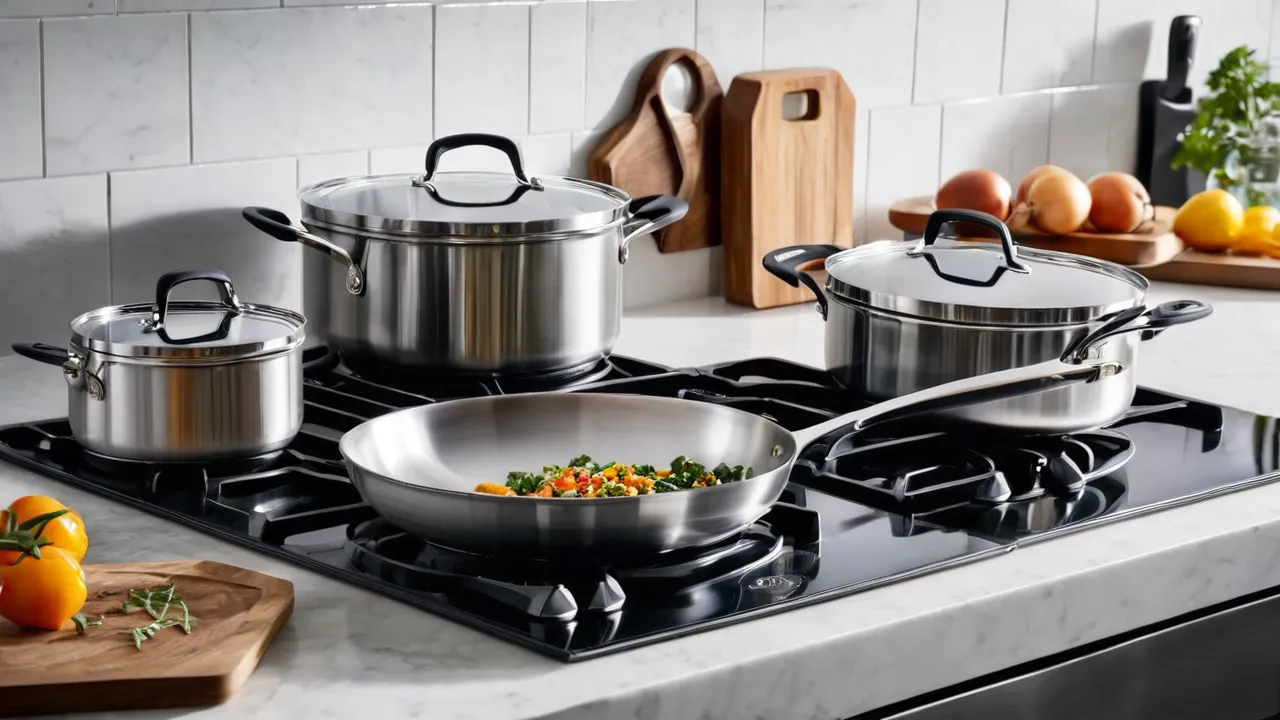
For most cooks, buying cookware pieces individually gives better value and fit than a set, because you pick the sizes and materials you will actually use and avoid pads like extra lids and utensils counted as pieces. A set makes sense when you are furnishing a first kitchen, the set is a single well-made material and the pieces match your cooking, but check what the piece count really includes.
How Sets Count Pieces
A set advertised as ten or twelve pieces often counts each lid as a piece, and may include utensils, steamer inserts and storage items. A ten-piece set might hold only four pans and four lids, plus two spoons. The number is meant to look generous, but it does not tell you how many pans you actually receive.
To compare fairly, count the vessels: skillets, saucepans, sauté pans, stockpots and Dutch ovens. Ignore the lids and utensils for the purpose of value, and then ask whether you would buy those vessels separately. Our cookware overview explains the main categories.
What Sets Pad
Sets tend to include pieces that raise the count and not the usefulness.
- Lids counted as separate pieces, including lids that fit only one pan.
- Two or three skillet or saucepan sizes that overlap, when one would do.
- Utensils of lower quality than the pans, including nylon tools that melt or scratch.
- Steamer inserts and small pans that rarely get used.
- A very small saucepan and a very large stockpot that few kitchens need.
- Matching pieces in a material that is not ideal for every task, such as nonstick everywhere.
None of this is dishonest, but it changes the value calculation. If you find that you would use only half of what is in the box, the real price per useful piece is double what the label suggests.
Cost Per Useful Piece
To compare, calculate the cost per piece you will use. Take the set price and divide it by the number of pieces you would otherwise buy. For example, if a set costs a certain amount and you would use a skillet, a saucepan with lid and a stockpot with lid, divide the set price by those three vessels. Then compare that figure with the price of buying those three pieces individually in the same quality. If the set is cheaper per useful piece, it may be good value. If not, buy individually.
Do not forget what you may need to buy anyway. If a set lacks a large skillet or a Dutch oven, you will add them later, which erases some of the savings. Look at the set’s gaps as well as its contents. Also factor in the quality of each piece, since a set sometimes pairs a good skillet with a weak saucepan.
Matching Materials to Tasks
One of the biggest advantages of buying individually is choosing the right material for each task.
- Skillet for searing and frying: stainless steel, cast iron or carbon steel.
- Nonstick skillet for eggs: a small, inexpensive pan you will replace.
- Saucepan for sauces and grains: stainless steel with a lid, since it is non-reactive.
- Stockpot: stainless steel with a thick base, or aluminum core.
- Dutch oven: enameled cast iron or cast iron for braises, soups and bread.
- Roasting and baking: separate bakeware, not part of most sets.
Sets are usually one material, such as all stainless or all nonstick. A single material rarely suits every task, so a set can leave you with a nonstick pan that you replace and a stainless pot that you keep. See our stainless steel cookware and cast iron pages for how the materials differ.
When a Set Makes Sense
- You are furnishing a first kitchen and need many pieces at once.
- The set is one well-made material, such as clad stainless, and the vessels match your cooking.
- The price per vessel is lower than buying the same pieces individually.
- The lids fit more than one pan, and the handles are oven safe to your needs.
- The brand sells replacement and add-on pieces, so you can build on the set.
- You cook mostly basic meals and want a matching look.
If most of these are true, a set can be a sensible purchase. If few are true, buy individually.
A Sample Buy-Once Order
A good way to build a kitchen is to buy in the order you would use the pieces.
- A 10 or 12 inch skillet, in stainless or cast iron.
- A 2 to 3 quart saucepan with a lid, in stainless.
- A 5 to 7 quart Dutch oven or stockpot.
- A small nonstick skillet for eggs, if you want one.
- A sauté pan or larger saucepan if you cook for a family.
- Roasting pan and baking sheets.
Add pieces as gaps appear, and upgrade the pieces you use most. Buying individually lets you spread the cost and change your mind.
A Worked Example
A student furnishing an apartment compares a 12 piece set with five individual pieces. The set has two skillets, two saucepans, a stockpot, four lids and some utensils, at one price. The individual pieces, a good skillet, a saucepan, a stockpot and a small nonstick pan, cost a little more in total but are better quality. The student realizes that the set’s second skillet and second saucepan duplicate sizes, and the utensils are nylon. The student buys the individual pieces, and uses the savings on a good spatula and a Dutch oven. Two years later, the student still uses every piece. If the student had been furnishing a house for a large family, the set might have been the better choice.
Checking Quality Inside a Set
A set can hide uneven quality. Look at each piece’s description, not only the headline. Compare the thickness of the skillet with the saucepan, since some sets use a thick base on one piece and a thin one on another. Check that the handles are riveted or well attached, that the lids sit snugly and that the knobs can handle the oven temperature you use. If the set lists an oven safe limit, note whether it applies to the lids and handles as well as the pan.
Check the cooktop compatibility for every piece, not just the set as a whole. Some sets include a mix of induction-ready pans and pieces that are not. Weight matters, too: a set of heavy pans may look solid but be tiring to lift, and a set of very light pans may warp. If you can, hold a piece from the set in a shop, or look for detailed weights online.
Space, Storage and Replacement
Space is a hidden cost. A twelve piece set takes cabinet room, and nested pans that scratch each other need liners. If your kitchen is small, fewer well-chosen pieces are easier to store and use. Think about replacement as well. If one piece in a set wears out, can you buy that piece alone? Some makers sell open stock, and others do not. If a nonstick skillet in a set wears out in two years, you may be left with a mismatched collection or have to buy a whole new set. Open stock availability makes both sets and individual pieces more practical.
Finally, consider gifts and registries. People often receive sets as gifts, and a set that is a gift can be a good start if you supplement it carefully. If you are asking for a set, name the material and the vessels you want, so you do not end up with pieces you will not use.
Mistakes to Avoid
- Counting lids and utensils as pieces.
- Buying a set with pans that overlap in size.
- Choosing nonstick for everything.
- Ignoring the cooktop and the oven safe limits.
- Not checking whether lids and pieces are sold separately.
- Overlooking the warranty terms for each piece.
- Buying a set because of the discount and not because you need it.
For how we weigh set claims, see how we review.
If you are still undecided, run a small experiment before you buy. Borrow or use the pans you already own for two weeks, and note which sizes you reach for and which you never touch. That short list is your real shopping list. It often turns out that a skillet, a saucepan and a large pot are used far more than anything else, and that spending on those three pays back sooner than a boxed set with pieces you will not touch.
Frequently Asked Questions
Is it cheaper to buy a cookware set or individual pieces?
A set is often cheaper per piece but not per useful piece. Count the vessels you would actually use, compare their price with buying them individually and factor in the quality. If you would use only half the set, individual pieces are usually better value.
What does a 10-piece cookware set include?
Often four pans and four lids, plus a couple of utensils, but it varies. Many sets count lids as pieces. Check the product page for the list of vessels, sizes and materials before you compare prices.
Should I buy a nonstick cookware set?
Only if you understand that nonstick coatings wear out and you plan to replace them. A nonstick set may suit a basic kitchen on a budget, but many cooks do better with one nonstick skillet and stainless or cast iron for everything else.
What pieces do I really need in a cookware set?
A skillet, a saucepan with a lid and a large pot or Dutch oven cover most cooking. Add a sauté pan, a small nonstick skillet and bakeware as needed. Anything beyond that should earn its place by use.
Final Thoughts
Buy individually when you know what you cook, choose the right material for each task and count real vessels instead of the piece count. Consider a set only when it is one good material, matches your needs and costs less per useful piece.
Related buying guides
- Core Cookware Checklist: Pans You Actually Need
- Fully Clad vs Disc Bottom Stainless Cookware
- Gas vs Electric vs Induction: Which Cookware Works
About the author

The BuyOnceChoice Editorial Team researches durable products worth buying once. Our guides compare published specifications, warranty terms, expert review consensus, and verified owner feedback. We do not conduct our own product trials. See How We Review and our Editorial Policy for our standards.