Portable Generator Safety: Safe Placement and CO Rules
Carbon monoxide from a running generator can enter a home through gaps you cannot see. Use this placement and alarm checklist before every outage.
 By BuyOnceChoice Editorial Team
Updated November 16, 2026
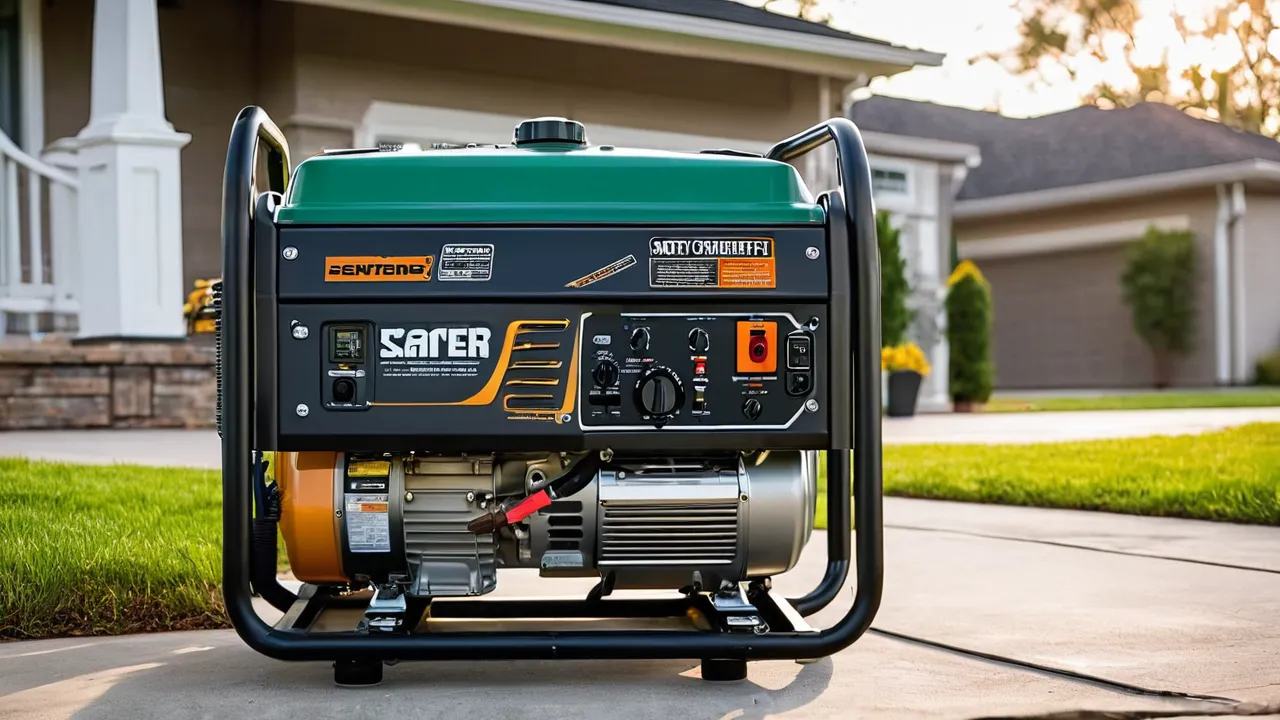
Portable generator safety comes down to carbon monoxide: the engine exhaust contains it, you cannot see or smell it, and it can kill within minutes indoors. The core rule from federal safety agencies is to run a generator outdoors only, far from the house, with the exhaust pointed away from doors, windows and vents, and to have working carbon monoxide alarms inside the home. Treat everything below as a plain checklist, and let your manual and local rules override it where they are stricter.
Why generators are dangerous in ways that surprise owners
A gasoline or propane engine makes carbon monoxide (CO), a gas that blocks the blood’s ability to carry oxygen. Early symptoms such as headache, dizziness, weakness, nausea and confusion look like the flu or fatigue, and a person who is sleeping may never notice them. A generator running for even a short time in a poorly ventilated space can build up dangerous levels, and the gas can drift into living areas through gaps, ducts and shared walls.
Owners often get tripped up by false comfort. An open garage door, a fan, or a window cracked “just a little” does not reliably clear the exhaust. Wind can push fumes back toward the house. A generator that is outdoors but close to a window or crawl space vent can still send CO inside. Outages also come with cold weather, rain and darkness, which push people to cut corners.
The rest of this guide is a set of steps that remove those temptations.
The placement checklist
Federal safety agencies such as the Consumer Product Safety Commission and the CDC advise running a generator outdoors and well away from the building. A commonly cited distance is at least 20 feet from the house, and some manuals ask for more. Use the farther figure if your manual and local rules differ.
- Place the generator outdoors, never in a garage, basement, crawl space, shed, porch or any enclosed or partly enclosed space.
- Keep it at least 20 feet from the home, or the distance your manual states, if that is longer.
- Point the exhaust away from the house and away from neighbors’ windows and doors.
- Keep it clear of vents, air intakes, windows and doors, and any opening that leads indoors.
- Set it on a flat, stable, dry surface that will not wash out in rain.
- Leave open space around the unit for cooling, and keep leaves, snow and debris away from the vents.
- Keep children and pets away from the generator and its hot muffler.
- Run it where you can see it from a safe place, so you can check for smoke, leaks or odd noises.
Think about the wind direction before you choose the spot. If the wind is strong and steady, place the generator so the exhaust drifts away from every opening of the home and any occupied building nearby. Re-check the spot if the wind changes during a long outage.
Tents, canopies and homemade enclosures
Rain and snow tempt people to cover the generator with a tarp, a box or a tent. A poorly designed cover traps exhaust and heat, can block the cooling air the engine needs and may create a fire hazard. Federal agencies warn against operating generators in enclosed or partially enclosed spaces, and a homemade box falls into that category.
If you need weather protection, look for a product made for generators and read the generator manual for what it allows. In general, any cover should be open on all sides, sit well clear of the engine and muffler, and not hold exhaust beneath it. Do not drape fabric or plastic over a running unit. Never move the generator closer to the home just because it is raining.
A better habit is to plan placement ahead. Choose a spot with a stable base and some natural shelter, such as a sheltered patch of yard that is still 20 feet away, and run outdoor rated extension cords to the house by a route the exhaust cannot reach, and keep the door or window closed around the cord as far as it allows. Check the cord length and routing before the storm, with no engine running.
Carbon monoxide alarms and shutoff features
Alarms inside the home
Install battery operated or battery backup CO alarms on every level of the home and outside sleeping areas. Check each alarm monthly with its own check button, replace batteries per the manufacturer, and replace the alarm itself when the label says it is expired. Plug in alarms may lose power during an outage, so a battery backup is important.
Alarms are a backup, not a permission slip. If an alarm sounds, move everyone outside into fresh air, call 911 or your emergency number, and do not go back in until responders say it is safe. Shut off the generator only if you can do so without re-entering the house.
What a CO shutoff feature does and does not do
Many newer portable generators include a CO sensing shutoff that stops the engine when CO builds up near the unit. Check the product page or manual to see whether a model has it. This feature is a useful extra layer, but it does not replace distance, placement and alarms. It senses CO at the generator, not inside your house, and a shutdown does not clean the air in an affected space.
Do not rely on a shutoff as a reason to run the unit closer to the home or in a semi enclosed spot. Keep the sensor area clean, follow the manual’s guidance on checking the indicator, and never bypass or disable the feature.
Fueling, cords and electrical safety
Gasoline and propane add fire risk to the CO risk. Turn the engine off and let it cool before refueling, because spilled fuel on a hot muffler can ignite. Store fuel in approved containers, outdoors in a ventilated spot, away from the generator and from any pilot light, flame or spark source. Store propane cylinders upright and outdoors, and keep them away from the exhaust.
For power delivery, use heavy duty, outdoor rated extension cords sized for the load and length. Check the cords for cuts and damaged plugs. Plug appliances directly into the generator or into cords rated for the job, and keep the cords out of puddles and door pinch points. Use ground fault protection where the generator manual calls for it.
Never connect a generator to a house outlet or wiring with a homemade double ended cord or any improvised link. This is called backfeeding, and it can send power into utility lines and injure line workers or damage your home. A home connection requires a properly installed transfer switch or interlock, and a licensed electrician should do that work. Browse the portable generators category for related guides.
A short routine for every outage and the mistakes to avoid
Follow this routine each time.
- Confirm CO alarms are working before the generator starts.
- Place the generator at least 20 feet from the house, exhaust pointed away, and on a stable base.
- Run cords to the loads you need, and turn the generator on with nothing plugged in.
- Add loads one at a time, staying within the rated output. If you are sizing a unit for larger needs, the best 13000 watt portable generator guide covers high output models.
- Refuel only after shutting down and cooling off.
- Check the alarms, the oil and the surroundings regularly during the outage.
- Shut the generator down fully before leaving it unattended for the night unless your manual allows otherwise.
The mistakes that keep showing up are easy to name: running it in the garage with the door open, placing it near a window, covering it with a tarp, skipping the alarms, refueling while hot, overloading it, and backfeeding the house. Each one has a simple fix in the checklists above.
Frequently Asked Questions
How far should a portable generator be from the house?
Federal safety agencies advise at least 20 feet from the home, with the exhaust pointed away from doors, windows and vents. If your owner manual gives a longer distance, follow that. Distance helps, but it does not make it safe to skip CO alarms indoors, so keep working battery alarms on every level.
Can I run a generator in my garage with the door open?
No. An open garage door does not reliably clear the exhaust, and carbon monoxide can build up quickly and seep into the house. Run the generator outdoors, well away from the building, with exhaust directed away from every opening. A garage counts as an enclosed or partly enclosed space and is not safe for operation.
Do I need a carbon monoxide detector if my generator has a shutoff?
Yes. A CO shutoff senses gas near the generator and can stop the engine, but it does not monitor air inside your home. Keep battery operated CO alarms on every level and outside sleeping areas. The shutoff is an extra layer, not a substitute for placement distance or alarms.
Can I put a tent over my generator in the rain?
Only if the cover is made for generators, is open on all sides and the manual allows it. A closed tent, tarp or box traps exhaust and heat and can block the cooling air. Never move the generator toward the house for shelter. Plan a spot at the proper distance ahead of time.
Final Thoughts
Generator safety is mostly about distance, exhaust direction, alarms and discipline. Keep the unit outdoors and at least 20 feet from the home, never enclose it, keep working battery alarms inside, treat shutoff sensors as a bonus, and use a licensed electrician for any house connection. When in doubt, follow the manufacturer’s manual. For how we weigh safety guidance, see how we review.
Related buying guides
- Propane vs Gas Generator: Fuel, Runtime and Storage
- Running Watts vs Starting Watts Explained
- What Can a 3000 Watt Generator Run? Load Planning
About the author

The BuyOnceChoice Editorial Team researches durable products worth buying once. Our guides compare published specifications, warranty terms, expert review consensus, and verified owner feedback. We do not conduct our own product trials. See How We Review and our Editorial Policy for our standards.