What Size Portable Power Station Do I Need
Size a power station in five steps: list loads, total running and surge watts, convert to watt-hours, add losses and margin, then check your refill speed.
 By BuyOnceChoice Editorial Team
Updated November 16, 2026
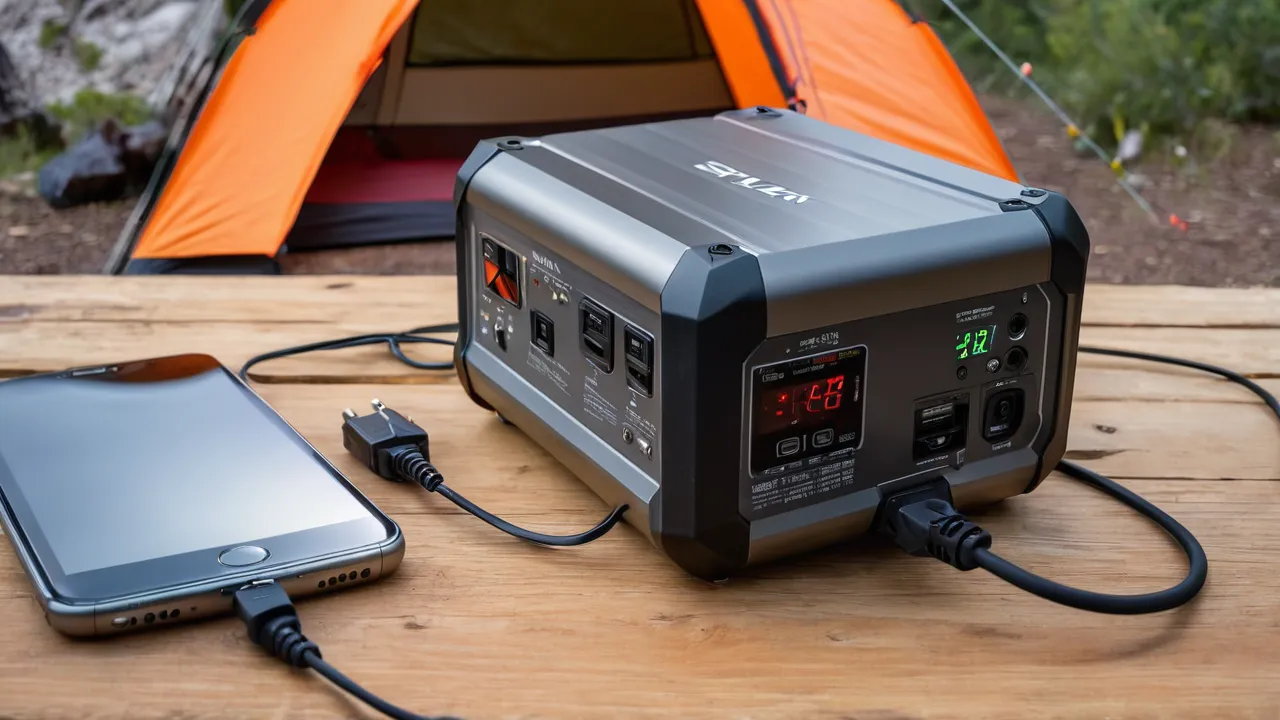
The size of the portable power station you need depends on two numbers: the total watts of the devices you run at the same time, which sets the inverter size, and the watt-hours you use over your time away from a recharge, which sets the battery size. Add up your device watts, add the largest motor surge, multiply watts by hours for watt-hours, then add about twenty to thirty percent for losses and margin.
Competitors give tiers without showing the work, so this guide is a step by step worksheet with surge, losses, and recharge time, plus sample setups to calibrate your intuition. All numbers are illustrations, so replace them with the labels on your own devices. Browse our portable power station category for models, see our solar generator category for systems with panels, and read how we review for how we treat specifications.
Step One: Build the Load List
List every device you want to run, how many watts each draws, and how many hours per day. Find watts on the label or in the manual. For devices that cycle, such as refrigerators, use the average over a day, which may be a third to a half of the running watts. Separate devices that run together from those that run at different times.
| Device | Watts | Hours per day | Watt-hours |
|---|---|---|---|
| Laptop | 60 | 5 | 300 |
| Phone charging | 15 | 3 | 45 |
| LED lights | 20 | 5 | 100 |
| Router | 10 | 24 | 240 |
| Mini fridge (averaged) | 50 | 12 | 600 |
The total for this list is about 1,285 watt-hours per day. Replace every row with your own devices.
Step Two: Find the Inverter Size From Simultaneous Loads
Add the watts of everything that could run at the same moment, including devices that start on their own, such as a refrigerator compressor or a heater thermostat. In the sample, if the laptop, charger, lights, router, and fridge all run at once, the total is about 155 watts. The inverter’s continuous rating must be higher than this total, with margin of at least twenty percent. Devices that you use one at a time do not stack, so decide your rules.
Account for Surge
Motors, such as refrigerators, pumps, and some tools, draw several times their running watts for a moment at startup. A fridge that runs at 50 watts averaged may need several hundred watts for a second at startup. Look for a locked-rotor or starting figure in the manual. The unit’s surge rating must exceed the largest startup, since other loads are already running when it starts.
Step Three: Convert Usage to Watt-Hours
Multiply each device’s watts by its hours of use, then add. That is the daily watt-hours. If you want multiple days without recharging, multiply by the number of days. If you plan to recharge each day from solar or a vehicle, size for one day plus margin, and match the recharge capability to it.
Step Four: Add Losses and Margin
The inverter, cables, and battery management waste some energy, so usable capacity is roughly eighty-five percent of the label. Divide your daily watt-hours by 0.85. Then add twenty to thirty percent margin for cold weather, battery aging, and days when you use more. In the sample, 1,285 divided by 0.85 is about 1,510, and adding twenty-five percent gives about 1,900 watt-hours of label capacity for a day without recharging.
Step Five: Check Recharge Time and Solar
A battery is only useful if you can refill it. Divide the unit’s capacity by the real charging watts to estimate refill time. A 1,900 watt-hour unit on a 600 watt wall charger refills in roughly three to four hours. On a 200 watt solar panel with four peak sun hours, daily collection is about 600 watt-hours, so full recovery takes days and you need either more panels within the unit’s solar input limit or a smaller daily use. A vehicle’s twelve volt socket is slow, so check the manual.
Sample Setups to Calibrate Your Intuition
- Phone, tablet, and lights for a weekend: a few hundred watt-hours and a few hundred watts.
- Laptop and router for remote work for a day: about 500 to 1,000 watt-hours.
- Camping with a small fridge, lights, and fan for a weekend: about 1,000 to 2,000 watt-hours.
- Home outage with refrigerator, lights, router, and electronics for a day: about 2,000 to 3,000 watt-hours with a surge-capable inverter.
- Power tools on a job site: high continuous output and surge first, then watt-hours.
These are rough ranges, not rules. Use your own worksheet to decide. If your result falls between two sizes, choose the larger one when you depend on the unit for outages, and the smaller one when you carry it often and can recharge daily. Also check that the unit you pick has the ports you need, since a unit with the right capacity but the wrong ports still leaves a device unpowered, and consider whether expansion batteries are sold for it so you can grow later without replacing the whole unit.
A Second Worked Example: Home Outage
Say a household wants a refrigerator averaging 60 watts, a freezer averaging 50 watts, a router at 10, two phones at 20 total, a few lights at 40, and a laptop at 60 for four hours. Running watts at the same time are about 240, so a 1,000 watt inverter is enough for the continuous load. The refrigerator and freezer starts may reach several hundred watts each, so the surge rating should be well above that, and the manual’s number should be checked. Daily energy: the refrigerator about 720 watt-hours, the freezer about 600, the router 240, phones 60, lights 200, and the laptop 240, for about 2,060 watt-hours. Divide by 0.85 for roughly 2,420, and add twenty-five percent for about 3,000 watt-hours. That is a big unit, or a mid-sized unit with expansion and solar recovery. If the outage may last several days, the family may reduce the list, and let the freezer ride without power for a few hours since a full freezer holds temperature, and recharge from solar.
Common Sizing Mistakes
- Sizing by capacity alone and forgetting the inverter limit.
- Counting running watts for a motor and forgetting its startup surge.
- Skipping losses, so the unit runs out earlier than the math said.
- Ignoring recharge time, which leaves the unit empty for days.
- Adding heating devices that drain any battery quickly.
Walk through your worksheet once for each of these, and the size usually becomes clear.
Quick Recharge Time Reference
| Charging source | Real watts | Time to add 1,000 watt-hours |
|---|---|---|
| Wall charger | 400 to 800 | About 1.5 to 3 hours |
| Vehicle twelve volt socket | 60 to 120 | About 8 to 17 hours |
| Single solar panel in good sun | 100 to 150 | About 7 to 10 hours |
| Two solar panels in good sun | 200 to 300 | About 3.5 to 5 hours |
Check your unit’s input limits, since they set the maximum. These figures are rough, and they ignore losses, so allow extra time.
Who Should Size Up, Who Should Size Down
- Size up if you plan outages of more than a day, run a refrigerator and a freezer, work from home, or want expansion later.
- Size up if your largest motor’s surge is near the inverter’s limit.
- Size down if you travel light, carry the unit often, and recharge each day from a vehicle or solar.
- Size down if your list is phones, lights, and a laptop, and you rarely have long outages.
Weight rises with capacity, so remember that a very large unit is hard to carry. Expandable units let you start smaller.
Safety While You Size
Do not run a unit at its limit for long periods. Keep it ventilated, dry, and within the temperature range in the manual. Use cords rated for the load, and avoid heating devices. Do not connect a power station to household wiring through an outlet, which can backfeed the utility. Use a licensed electrician for any permanent connection, with a proper transfer switch.
Frequently Asked Questions
What size power station do I need for a refrigerator?
Pick an inverter whose continuous and surge ratings exceed the fridge’s running and starting watts, and a battery covering about a day or more. A typical refrigerator uses roughly a kilowatt-hour a day, so a unit near 1,500 to 2,000 watt-hours gives a day with margin. Check your fridge label for the real numbers.
How many watt-hours do I need for camping?
Add up your devices’ watt-hours for each day, such as a phone, a laptop, lights, and a small fan, then multiply by the days away from a recharge, and divide by 0.85. Many weekend trips fall between 500 and 1,500 watt-hours. A compressor fridge adds several hundred watt-hours per day.
Is a bigger power station always better?
No. A larger unit costs more, weighs more, and takes longer to recharge, and you may never use the capacity. Size to your worksheet, add a margin, and favor expandable units if your needs may grow. The right size is the one that covers your list with margin.
Final Thoughts
Sizing is arithmetic: add watts for the inverter, multiply by hours for the battery, add losses and margin, and check surge and recharge time. Write the numbers down before you shop, and compare units against them. Keep the manual handy, and use a licensed electrician for any home connection.
Related buying guides
- Can a Portable Power Station Power a House
- Can a Portable Power Station Run a Refrigerator
- How to Charge a Portable Power Station Faster
About the author

The BuyOnceChoice Editorial Team researches durable products worth buying once. Our guides compare published specifications, warranty terms, expert review consensus, and verified owner feedback. We do not conduct our own product trials. See How We Review and our Editorial Policy for our standards.