Work Boots vs Cowboy Boots: Job Site Fit and Wear
Cowboy boots and work boots overlap on ranches but diverge on job sites. Compare toe, heel, sole and safety features to match boots to your daily work.
 By BuyOnceChoice Editorial Team
Updated November 16, 2026
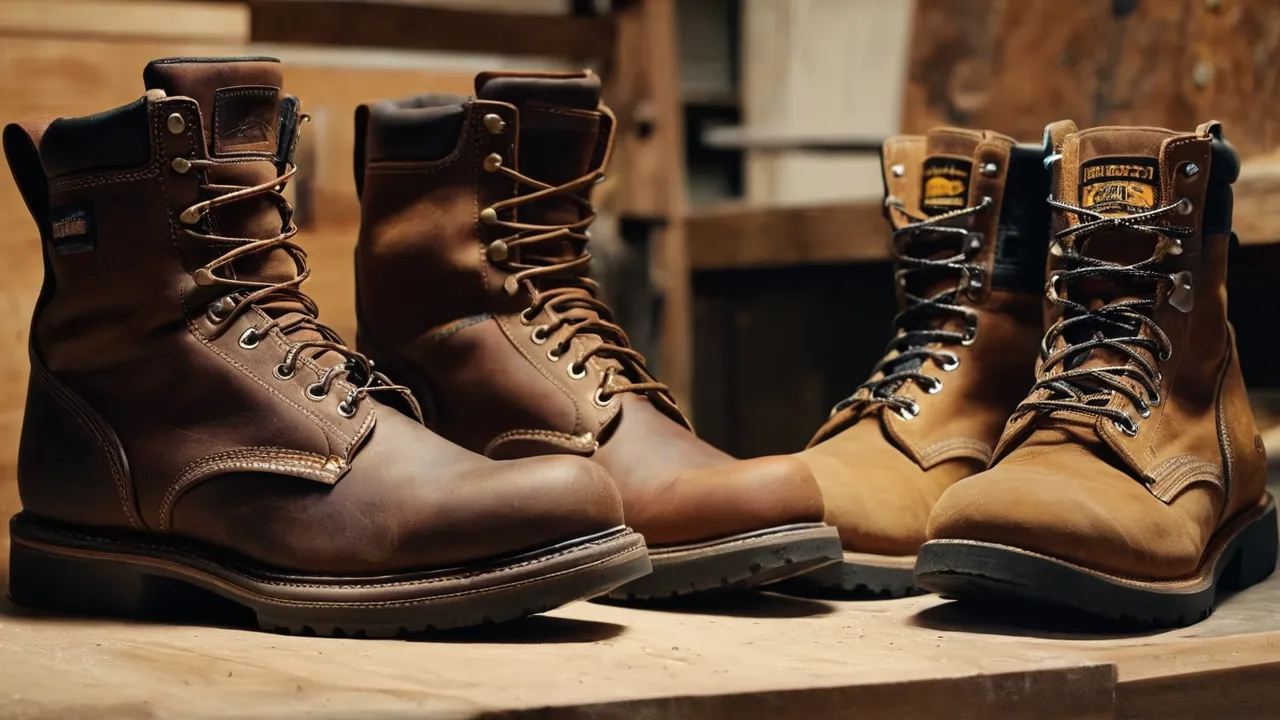
Work boots and cowboy boots are built for different jobs: work boots prioritize protection and traction on job sites, while western boots prioritize riding, a smooth slide into a stirrup and a classic style. If your work involves falling objects, ladders or hazards, choose a rated work boot, and if you spend your day in the saddle or around livestock, a western or western work boot may fit better.
What Each Boot Is Built For
A work boot is a tool for a hazardous or demanding workplace. It typically has a thick leather or synthetic upper, a lace-up closure, a lugged or slip-resistant sole and often a safety toe or other rated protection. The design assumes ladders, concrete, uneven ground, tools and heavy loads.
A western boot grew out of riding. It has a pull-on shaft that protects the leg from brush and keeps debris out, a pointed or rounded toe that slides into a stirrup and an underslung heel that helps hold the foot in the stirrup and makes it easier to stop. It is made of leather with a leather or rubber sole and is designed for riding, walking in dry conditions and looking good.
Both can be tough, but they are tough in different ways. Pick the boot that matches the tasks you do most often.
Toe and Heel Design
Western boots have a narrower toe, whether pointed, snip or rounded, and a tall angled heel. These features are meant for a stirrup, but they can feel awkward on a ladder or in a crowded work area, where a narrow toe wastes space and a tall heel raises the foot and can feel unstable on uneven ground.
Work boots have broader toe boxes with room for a safety toe, and a lower, flatter heel that is better on ladders and stairs. Some work boots use a wedge sole, which is a single piece with no separate heel, and others use a heeled sole. Our work boots guides explain how soles compare.
Safety Features and Ratings
This is where the two diverge most. Work boots are sold with safety ratings, including toe protection, puncture resistance, electrical hazard resistance and slip resistance. Check the label and the maker’s documentation for the specific ratings, and confirm that the rating meets your employer’s requirements.
Most traditional western boots have no safety rating. Some makers sell western work boots with a safety toe and other protections, and these are a middle path. If your job requires rated footwear, check the label on the specific model and do not assume that a boot with a western look is rated.
Farm, Ranch and Construction Use
Ranch and Riding
For riding, a western boot is hard to beat. The shaft protects against brush, the heel catches the stirrup and the smooth sole slides out in an emergency. If you work in the saddle, choose a boot with a riding heel, a snug heel counter and a sole you can trust on both stirrups and ground. A boot that grips too much can be a hazard if a foot gets caught in a stirrup.
Farm Work
Farm work covers mud, manure, equipment and livestock. A pull-on boot is quick to put on and shed, and easy to hose off if it is made of rubber or treated leather. A lace-up work boot gives a firmer fit and better ankle support on uneven ground. If animals can step on your feet, a safety toe may be worth considering, and some makers offer western styles with protected toes.
Construction
Construction sites call for rated protection, slip-resistant soles and stable footing. A standard western boot usually does not meet that need. If your employer allows pull-on boots, look for a model with the required ratings, a wedge or work sole and a snug heel. Lace-up work boots remain the more common choice, since they adjust to the foot and stay on better when climbing.
Comfort, Fit and Durability
Western boots are made on lasts that fit tight at the heel and instep, with room in the forefoot. Many people find that a good western boot feels secure but needs a proper fit, since a heel that slips or a shaft that is too tight causes trouble. Work boots usually offer more cushioning and options for insoles, and lace adjustments for fit.
Durability depends on materials and care. Both boot types last longer with leather conditioning and rotation. Leather soles on western boots wear faster on rough surfaces and can be slippery on wet floors, so look for a rubber or composite sole if you work in those conditions. Work boots with a stitched welt can often be resoled, and many western boots can be too, at a cobbler.
Decision Rules
- Job requires safety-rated footwear: choose a rated work boot, or a rated western work boot if your employer accepts it.
- Mostly riding: choose a western boot with a riding heel.
- Farm or ranch work with mud and animals: choose a boot with a grippy rubber sole and, if needed, a safety toe.
- Long days on concrete: choose a cushioned work boot.
- Climbing and ladders: choose a lace-up work boot with a low, stable heel.
- Style for casual wear: choose either, but check fit.
Two Worked Examples
A rancher spends mornings on horseback and afternoons fixing fence and hauling feed. Nothing in the job requires a rated boot, but a heavy post could drop on a foot. The practical answer is a western work boot with a riding heel low enough for walking, a rubber sole that grips wet ground and a safety toe if the maker offers one in a style that fits the stirrup. If a safety toe makes the boot too bulky for the stirrup, keep a separate lace-up pair for ground work.
A site carpenter likes the look of western boots and wonders if a pull-on pair can replace lace-ups. The site requires a rated toe and slip-resistant sole, and the carpenter climbs ladders often. A pull-on western work boot with the required ratings and a low heel can work, but only if the heel holds on a ladder rung and the shaft does not slip. If the first week shows heel lift or an unsteady rung, the lace-up boot is the safer choice.
In both cases the style is secondary to the task. Decide on the rating, the heel and the closure first, and then pick the look.
Western Work Boots as a Middle Path
Western work boots combine the pull-on shaft and style of a cowboy boot with a work sole, a lower heel and, in some models, a safety toe. They suit people who want easy on and off, with some protection. Check the sole, the ratings and the heel height, and be aware that not all models are fully rated.
Climbing, Ladders and Uneven Ground
A tall riding heel catches on ladder rungs and makes you feel unstable on rough ground. If you climb often, choose a low heel, a lace-up closure and a firm shank. A pull-on boot with a loose shaft can slip on a rung, so check the fit and the heel hold before relying on it.
A Short Checklist Before You Choose
- What does my employer require?
- Will I ride, climb or walk on concrete?
- Do I need safety toe or other ratings?
- Do I want a lace-up or a pull-on?
- Is the sole slip resistant for my floor?
- Can the boot be resoled?
- Does it fit at the heel and ball?
Weather, Care and Resoling
Weather, Mud and Manure
Wet and dirty conditions are hard on leather. Rubber boots or treated leather boots handle mud and manure better and are easier to clean. Rinse off manure promptly, since it can degrade leather and stitching. Leather boots need to dry slowly at room temperature, and conditioning helps keep them supple. See our leather care guides for how to clean and condition leather.
Care and Resoling
Brush, wipe and condition leather when it looks dry. Rotate two pairs to let them dry. Check the heel and sole for wear and see a cobbler for resoling when the sole thins. Western boots with leather soles may need new half soles and heel caps more often. Our clothing and footwear section has more, and how we review explains how we judge durability claims.
Frequently Asked Questions
Can I wear cowboy boots as work boots?
For some jobs, yes, such as riding and light ranch tasks. For jobs requiring safety-rated footwear, ladders or heavy hazards, no. Check your employer’s policy and the label on the boot, and choose a western work boot with the ratings you need if you want the style.
Are western work boots safe for construction?
Only if they carry the ratings your site requires and have a suitable sole. Some western work boots include a safety toe and slip-resistant sole, but many do not. Check the label and your employer’s requirements, and be cautious on ladders with a tall heel.
Which is better for farm work, cowboy boots or work boots?
It depends on the tasks. Pull-on boots are convenient in mud and around animals, and lace-up work boots give better support and options for protection. Choose a grippy sole, a safety toe if animals or equipment can crush your feet and a style you can clean easily.
Do cowboy boots hurt your feet on concrete?
Many have a firm, thin leather sole and a tall heel, which can be tiring on concrete. A cushioned insole or a work-style sole helps. If you stand on concrete all day, a cushioned work boot is usually more comfortable.
Final Thoughts
Choose work boots for hazards, ladders and concrete, and western boots for riding and style, with western work boots as a middle path if they carry the ratings you need. Check the label, the sole and the heel, and let the job decide.
Related buying guides
- 6 Inch vs 8 Inch Work Boots: Which Height Fits Your Job
- ASTM F2413 Safety Toe Ratings Explained: I/75 C/75 and More
- Boot Resole Cost: What You Will Pay and When It Pays Off
About the author

The BuyOnceChoice Editorial Team researches durable products worth buying once. Our guides compare published specifications, warranty terms, expert review consensus, and verified owner feedback. We do not conduct our own product trials. See How We Review and our Editorial Policy for our standards.