Wedge vs Heeled Work Boots: Sole Shape and Your Back
A wedge sole spreads contact across the foot, while a heeled boot adds a defined edge for ladders and stairs. Match the style to your surface and tasks.
 By BuyOnceChoice Editorial Team
Updated November 16, 2026
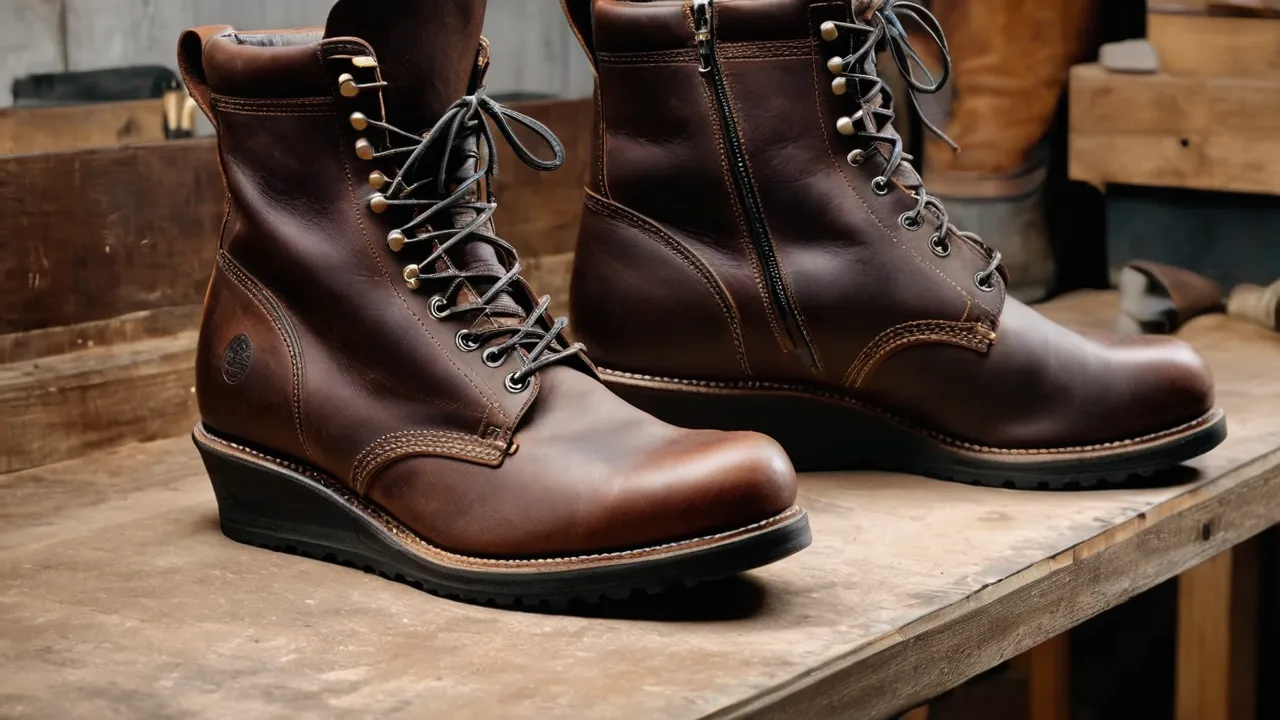
Wedge sole vs heeled work boots comes down to where you stand and what you do. Choose a wedge sole for long days on flat, hard surfaces such as concrete floors, where its broad contact area and smooth roll feel steady. Choose a heeled boot for ladders, stairs, uneven ground and tasks that need a defined edge to hook or brace. Each style has trade-offs in grip, stability and wear, so match the sole to where you walk, not to a general idea of comfort.
What the two soles look like
A heeled work boot has a distinct heel block, set apart from the forefoot by an instep gap called the breast of the heel. The heel is often a separate raised piece with a sharp back edge. A wedge sole is one continuous piece of rubber or foam that slopes gradually from the heel to the toe, with no gap under the arch. The sole is often lighter and softer, with a flatter profile.
The difference changes how the boot meets the ground. A heeled boot concentrates load at the heel and forefoot, while a wedge spreads it over a broad area. Both come with safety toes, waterproof uppers and different outsole compounds, so the sole shape is only one part of the decision.
Where wedge soles shine
Wedge soles are popular with people who stand or walk on level, hard floors for long shifts, such as warehouse workers, mechanics, delivery drivers and farm workers on packed ground. The broad base gives a stable platform and a smooth heel to toe roll. The soles are often lighter and more cushioned, which some wearers find easier on hard surfaces. The smooth profile also sheds mud better in some designs.
Wedges tend to grip well on flat, dry and some wet surfaces, depending on the compound and tread. Many wedge soles use softer rubber, which can wear faster. Check the tread depth and plan to replace the boots earlier if you walk long distances daily.
Where heeled boots win
A defined heel helps on ladders, stairs and slopes. The edge can hook a rung or brace in loose ground, and the gap under the arch gives a place for the boot to seat on a step. Many employers favor heeled boots for climbing. Heeled boots also tend to offer more tread options for mud, gravel and rough ground, and the heel can be replaced during a resole.
The trade-off is a firmer, narrower base and more concentrated load at the heel and forefoot on hard floors. Some wearers find that tiring over long concrete days, and a cushioned insole or a rocker midsole may help. Check your site’s rules too, since a few workplaces restrict wedge soles around ladders or heavy equipment.
Ladders, stairs and the heel breast
If you climb, look at the heel breast, the front face of the heel block. A square, clearly defined breast seats against a ladder rung and keeps the boot from sliding forward. A rounded or sloped heel does not grip the rung as well. Many employers specify a defined heel for ladder work for that reason. A wedge sole with a shallow heel step may feel stable on a stair but can slip on a rung. If your job includes frequent climbing, treat the heel breast as a requirement, not a preference.
Concrete, cushioning and fatigue
Long hours on concrete push many wearers toward soft, wide soles. A wedge’s broad, cushioned base spreads pressure and smooths the roll of the step. A heeled boot with a cushioned midsole and a supportive insole can do the same job, but the cushioning is often in the midsole instead of the outsole. Compare the midsole material and thickness, and note that foam compresses with use. Rotating two pairs gives foam time to rebound. If you have back or foot pain, ask a health professional, since a sole shape is not a treatment.
Mud, snow and soft ground
A wedge’s flat, wide sole can clog in sticky mud and slip on loose gravel. A heeled boot with deep, spaced lugs can bite into soft ground and release mud better. Some wedge designs include lugs, so look at the pattern rather than the shape alone. On snow and ice, both styles depend on the compound and tread, and no boot offers guaranteed traction.
Comparison at a glance
| Factor | Wedge sole | Heeled boot |
|---|---|---|
| Flat, hard floors | Usually steadier and smoother | Firmer, more concentrated load |
| Ladders and stairs | Less defined edge to hook | Heel edge helps seat the boot |
| Soft or uneven ground | Can feel less secure | Heel digs in, more tread options |
| Weight | Often lighter | Often heavier |
| Repair | Some wedges cannot be rebuilt | Often resoleable if welted |
| Wear | Softer compounds can wear faster | Heel wears at an angle, can be replaced |
Treat the table as typical behavior, since compounds, tread and construction vary by model. Our work boots guides cover the other features that decide a boot.
Matching the style to your task
- Warehouse and fulfillment on concrete: wedge or a low heel with cushioning.
- Roofing, framing and ladder work: heeled boot with a defined breast.
- Farm and ranch on mixed ground: heeled boot with lug tread, or a wedge for flat barn work.
- Electrical and utility work: check the standard your employer requires, and note that some electrical work calls for non conductive soles.
- Delivery and driving with frequent stairs: moderate heel with good traction.
- Occasional heavy work at home: a heeled boot for versatility.
If you move between environments, a heeled boot is the safer all rounder. If you spend most of your time on one flat surface, a wedge may suit you better. Some workplaces and standards restrict certain sole types, particularly for ladder, scaffold and electrical work, so check the policy and the marking inside the boot, and ask your safety officer if you are unsure. This guide is general information, not occupational advice.
Worked examples
A parts picker in a distribution center walks a smooth concrete floor for ten hours, rarely climbs and never meets mud. A wedge sole or a low heeled boot with a cushioned midsole fits, and the picker should check the tread depth monthly because soft soles wear.
A carpenter moves between framing a roof, climbing ladders and walking in sawdust. A heeled boot with a square breast gives the grip on rungs and stairs that matters most, and the heel can be replaced in a resole.
A dairy farmer walks on packed barn floors, then crosses a muddy lot. A wedge works on the barn floor, while a lugged heeled boot handles the lot. Many farmers keep two pairs, one for each surface, and they dry them between uses.
A delivery driver climbs in and out of a truck and uses stairs on every stop. A moderate heel with a firm shank and a clean tread seats better on steps than a flat wedge.
Match the boot to the part of your day with the highest risk. If a fall from a ladder is the worst case, choose the heel. If fatigue on concrete is the worst case, choose the cushioned wedge or a cushioned heeled boot.
Wear, repair and cost over time
Heeled boots built with a welt can be resoled and have replaceable heels. Wedge soles are often molded as a single piece, which can be difficult to replace, although some makers or cobblers can attach a new wedge. Ask about repair before you buy. If a boot cannot be rebuilt, treat it as a consumable and plan to replace it when the sole wears.
Questions to ask before you buy
- Is the sole a single molded wedge or a stack with a separate heel, and can it be resoled?
- What is the heel breast shape, and is it square, sloped or rounded?
- What compound is the outsole, and what surface does the maker say it is built for?
- How thick is the midsole, and can I use my own insole?
- Does the rating label cover the hazards on my site?
These answers tell you more than the shape alone. Two wedge soles can differ widely in tread and compound, and two heeled boots can differ in how well they brace on a ladder.
See also our clothing and footwear section for related guides, and read how we review to see how we treat comfort claims.
Frequently Asked Questions
Are wedge sole work boots better for standing on concrete?
Many wearers find them steadier and smoother on flat, hard floors because the broad base spreads pressure. A heeled boot with a cushioned midsole and a supportive insole can work too. Cushioning, fit and rotating pairs matter as much as sole shape.
Are wedge sole boots safe for ladders?
They can feel less secure, since the shallow heel step gives less of an edge to seat on a rung. Many employers specify a defined heel for climbing. If you climb often, choose a heeled boot with a square heel breast and check site rules.
Can wedge sole work boots be resoled?
Sometimes, but many wedge soles are molded as one piece and cannot be replaced cleanly. Some makers or cobblers can attach a new wedge. Ask before you buy, and treat the boot as a consumable if resoling is not possible.
Which sole is better on mud and gravel?
A heeled boot with deep, spaced lugs usually bites better into soft ground and releases mud. Flat wedge soles can clog or slip, though some wedge designs add lugs. Look at the tread pattern, the compound and the maker’s described surface.
Final Thoughts
Pick by surface and task. A wedge suits long shifts on flat, hard floors, and a heeled boot suits climbing, uneven ground and work where a defined edge matters. If your work covers both, choose the heeled boot for safety and add cushioning for comfort. Check repair options before you buy, since a boot that can be rebuilt is easier to keep.
Related buying guides
- Goodyear Welt vs Blake Stitch vs Stitchdown Boots
- When to Resole Work Boots and When to Replace Them
- Wide Feet and Work Boots: Width Sizing Explained
About the author

The BuyOnceChoice Editorial Team researches durable products worth buying once. Our guides compare published specifications, warranty terms, expert review consensus, and verified owner feedback. We do not conduct our own product trials. See How We Review and our Editorial Policy for our standards.