Tilt Head vs Bowl Lift Stand Mixer: Which to Buy?
Tilt-head mixers suit light baking and tight spaces, while bowl-lift designs steady heavy dough. Compare gears, parts, and clearance before you buy.
 By BuyOnceChoice Editorial Team
Updated November 16, 2026
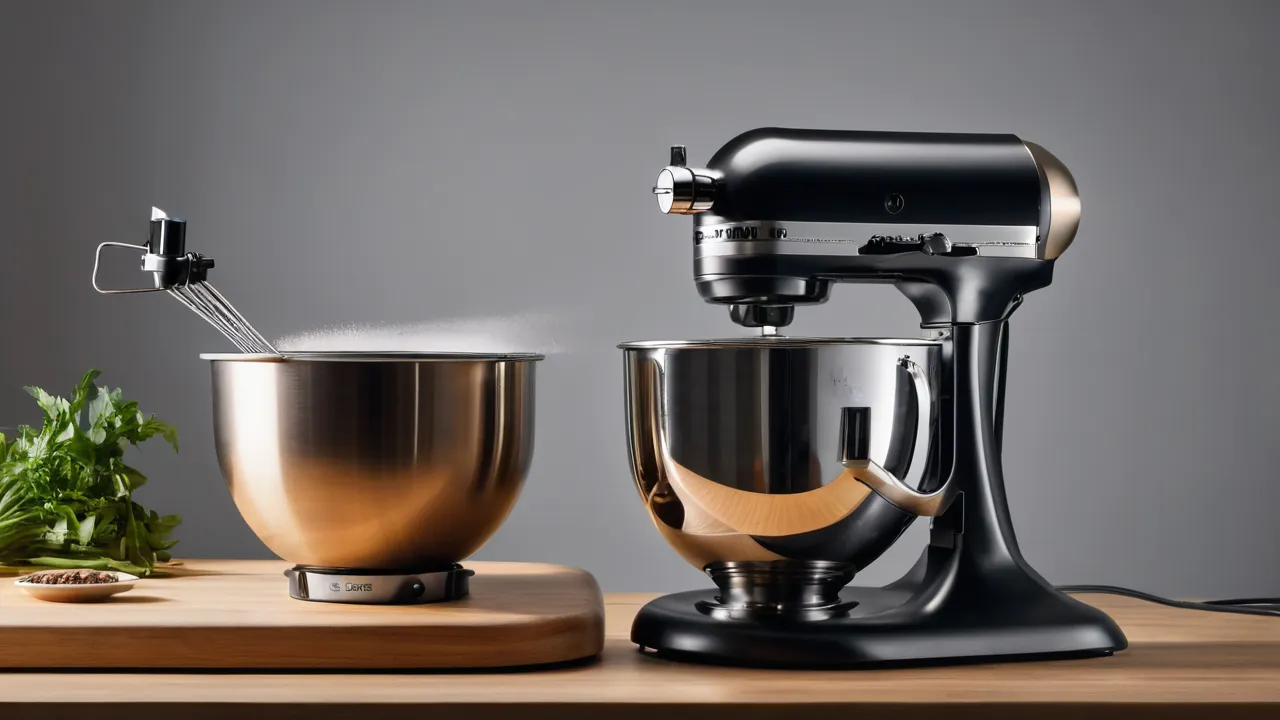
Tilt-head vs bowl-lift stand mixer: buy a tilt-head if you bake cookies, cakes, and the occasional loaf, want easy access to the bowl, and have limited counter and cabinet space, and buy a bowl-lift if you bake bread often, make large batches, or want a sturdier, larger-capacity machine. Tilt-head models are friendlier for everyday use, and bowl-lift models are built for heavier work.
How the Two Designs Work
In a tilt-head mixer, the motor head hinges at the back. You unlock it, tilt it up, and the beater is clear of the bowl, so you can add ingredients, scrape the sides, and swap attachments with room to work. The bowl sits on a pedestal and locks in place or twists on.
In a bowl-lift mixer, the head stays fixed and a lever raises and lowers the bowl on arms. The bowl clamps onto the arms, and the beater sits above it. The head is rigid and the frame is typically heavier and sturdier. The bowl is usually larger, and the machine is built for dense doughs.
Both designs work for most tasks, and the differences show in access, capacity, stability, and space.
Access and Ease of Use
Tilt-head models are easier for everyday jobs. Tilting the head back gives a clear view into the bowl, and scraping, adding ingredients, and changing attachments is simple. Some people find tilt-head locks and hinge mechanisms handy and easy to learn.
Bowl-lift models make you raise the bowl with a lever, and the beater sits inside the bowl while you add ingredients through the gap. Some cooks find this less convenient for scraping and for fitting a pouring shield. Lifting a large, full bowl off the clamp can also be heavy. Some bowl-lift models are handy for adding ingredients while running, though, since the head is fixed and stable.
Capacity and Power
Tilt-head mixers commonly come in the 3.5 to 5 quart range, and bowl-lift mixers commonly come in 5 to 8 quarts and sometimes more. Bowl-lift models usually carry a stronger drive and a larger stated flour limit for dough. If you regularly make multiple loaves or stiff doughs, that capacity matters. Check the manual or product page for the stated yeast dough limit and run-time guidance, because the capacity of any specific model depends on its motor and gears.
Tilt-head models handle most home baking within their limits. They struggle with heavy, stiff doughs and with large batches, where the head can lift or the motor can strain.
Stability
A bowl-lift mixer has a fixed head, so the machine feels planted during heavy kneading. A tilt-head mixer has a hinge, and on some models the head can bounce or shift under heavy load or in thick batters. Locks vary, so check that the head locks firmly. Place either type on a non-slip surface away from the counter edge, because stiff dough can make a mixer walk.
Size, Weight, and Storage
| Factor | Tilt-head | Bowl-lift |
|---|---|---|
| Typical bowl size | Smaller | Larger |
| Height with head up | Needs vertical clearance | Less clearance needed |
| Weight | Lighter | Heavier |
| Counter footprint | Smaller | Larger |
| Under cabinet | Check the height when tilted | Often taller overall |
| Moving and storing | Easier | Harder |
Measure the height from counter to cabinet, then check the maker’s stated height with the head raised for a tilt-head model. A tilt-head that fits under a cabinet closed may not tilt fully, which makes using it frustrating. Bowl-lift models are often taller when assembled, but the head does not move.
Attachments and Accessories
Both designs use a power hub for attachments such as pasta rollers, grinders, and ice cream makers. Check that the hub size matches the attachments you want, since some are sold by size. Pouring shields and splash guards fit some bowl-lift and tilt-head models differently, and the maker’s compatibility list helps. Bowls from one size or design may not fit another, so check before you buy a second bowl.
Who Should Choose Which
- Beginner or casual baker: tilt-head, for ease of use and lower cost.
- Small kitchen: tilt-head, if clearance allows.
- Weekly bread baker: bowl-lift, for the stronger drive and larger dough limit.
- Large household or double batches: bowl-lift.
- Someone who struggles to lift heavy equipment: tilt-head, or consider the weight of the bowl-lift carefully.
- Someone who values stability for stiff dough: bowl-lift.
- Someone who bakes mostly cakes, cookies, and whipped cream: tilt-head.
Our stand mixer guides explain the types and features, and our best stand mixer roundup compares models. For related appliances, see the blender and mixer guides. Our How We Review page explains how we evaluate products using research and specifications rather than claims of our own trials.
Worked Example
A household bakes cookies, quick breads, and sandwich bread every other week in a small kitchen with low cabinets. A 4.5 to 5 quart tilt-head fits, handles their batches, and the head tilts under the cabinet with room to spare. Another household bakes two loaves weekly and makes double batches for gatherings. A 6 quart bowl-lift gives them more headroom for dough, and the fixed head stays steady. Both are right for their situations.
Mistakes to Avoid
- Buying a tilt-head for heavy daily dough because of price.
- Buying a bowl-lift for occasional baking and then storing it away.
- Skipping the clearance measurement for a tilt-head.
- Ignoring weight when lifting a full bowl-lift bowl.
- Assuming a bigger bowl always means a bigger flour limit.
Durability and Repair Considerations
Neither design is automatically more durable. What matters is the drive: metal gears and a motor sized to the stated load hold up better than plastic parts under heavy use. Bowl-lift models are often built with heavier frames and larger motors, so they tend to be aimed at demanding use, but a poorly maintained one can fail as well. Tilt-head models have a hinge and a locking mechanism that can loosen with age. Check that the head locks securely and that the maker sells replacement parts. When a mixer’s head wobbles, the beater height drifts, or you hear grinding, read the manual and contact the maker or an authorized service center instead of forcing the machine.
Using the Bowl Lever and Head Lock Correctly
Learn the controls before you start heavy work. On a bowl-lift model, lower the bowl fully before removing it, and seat it firmly on the arms before raising it. Make sure the lever clicks into place, because a bowl that is not fully engaged can shift during mixing. On a tilt-head model, lock the head before turning on the machine, and never run the mixer with the head unlocked. Keep hands, spoons, and cords clear of the beater, and unplug the mixer before attaching or removing accessories. These habits protect both you and the machine.
Noise, Splatter, and Everyday Annoyances
Small differences add up in daily use. Tilt-head models are easier for scraping the bowl and adding mix-ins, but flour and liquid may escape around the head when you start at too high a speed. A pouring shield helps. Bowl-lift models may have a small gap above the bowl, which is useful for adding ingredients, though splatter can escape through it. Both designs are loud under heavy loads, so plan around early mornings or late nights. Always start at the lowest speed, and increase gradually.
Buying Checklist
- Measure the space where the mixer will sit, including height with the head raised.
- Note the stated bowl size and the yeast dough flour limit.
- Check weight, and think about whether you will lift it often.
- Confirm that the attachments you want fit the hub.
- Check the warranty and the availability of replacement parts.
- Decide how you will clean the bowl, beaters, and base.
- Ask whether a second bowl is available.
Price Versus Value Without Numbers
Bowl-lift mixers generally cost more than tilt-head mixers of similar brand, because of the larger frame and motor. Whether that is worth it depends on use. If you bake bread weekly, the extra capacity and stability earn their keep, and the lower strain may extend the life of the machine. If you bake rarely, a tilt-head gives you most of the function at a lower price and with less bulk. Compare the specifications you care about, such as the flour limit and the warranty, instead of focusing on the label.
Frequently Asked Questions
Is a bowl-lift mixer better than a tilt-head?
For heavy dough and large batches, yes, since it is sturdier and usually larger. For everyday baking and easy access, a tilt-head is more convenient and often cheaper. Choose by what you bake most and by how much space you have.
Which stand mixer is better for bread?
A bowl-lift is generally better for frequent or large bread batches, because of its stronger drive and fixed head. A tilt-head can handle occasional loaves within its stated flour limit. Check the manual for the yeast dough capacity, and stay below it.
Do tilt-head mixers wear out faster?
Not necessarily. Wear depends on how hard you use the machine and the build quality. A tilt-head pushed with stiff dough can wear faster, and a tilt-head used for cakes and cookies can last for years. Stay within the stated limits, and keep up with cleaning and any grease service the maker describes.
Will a tilt-head mixer fit under my cabinet?
Check the maker’s stated height with the head raised. If the cabinet clearance is less, you will need to pull the mixer forward to use it, or choose a bowl-lift. Measure the space before buying, including the depth, so the mixer sits near the front of the counter.
Final Thoughts: Choose for Your Heaviest Regular Job
Tilt-head mixers suit everyday baking and small spaces. Bowl-lift mixers suit bread, large batches, and heavy use. Measure your space, check the stated dough limit, and consider the weight of the bowl and machine before buying.
Related buying guides
- Blender Jar Material: Glass, Plastic, or Stainless
- Blender Safety: Hot Liquids, Overfill, and Blades
- Blender vs Food Processor: Which Should You Buy
About the author

The BuyOnceChoice Editorial Team researches durable products worth buying once. Our guides compare published specifications, warranty terms, expert review consensus, and verified owner feedback. We do not conduct our own product trials. See How We Review and our Editorial Policy for our standards.