Blender vs Food Processor: Which Should You Buy
They look alike but do different jobs. Map your weekly cooking to a machine and see who needs both, only one, or neither of them.
 By BuyOnceChoice Editorial Team
Updated November 16, 2026
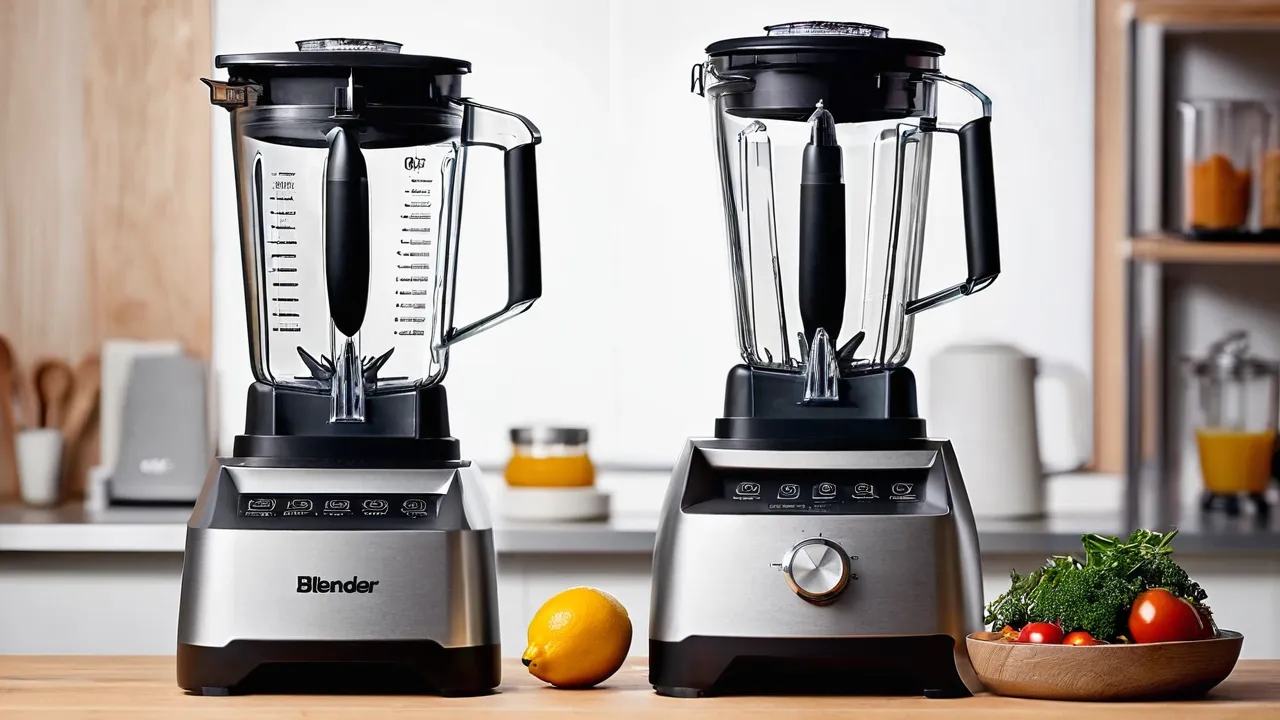
A blender and a food processor are different machines: a blender uses a tall jar and blades that make a vortex to purée liquids, smoothies and soups, while a food processor uses a wide bowl and flat blades or discs to chop, shred, slice and mix dough. If you mostly drink smoothies and blend soups, buy a blender. If you mostly chop vegetables, shred cheese or make dough and dips, buy a food processor.
Shape Explains the Difference
The shapes of the two machines are not an accident. A blender jar is tall and narrow, with a blade at the bottom. As the blade spins, it pulls the contents down and throws them up the sides, creating a circulating flow. This works because there is liquid to carry the food through the blades. Without enough liquid, the food stalls around the jar’s walls and the blade spins in an air pocket.
A food processor bowl is wide and shallow, and the blade sits on a central shaft. The food stays in contact with the blade or a disc as it spins, so you can chop dry, solid food without liquid. Discs for slicing and shredding fit on top, and the feed tube lets you add food while it runs. The design lets you control texture, from coarse chop to fine paste.
This single difference, vortex versus contact, explains most of the task split below. Our blenders and mixers page covers the blender side in more depth.
Tasks Mapped to Machines
| Task | Better choice | Why |
|---|---|---|
| — | — | — |
| Smoothies and shakes | Blender | Vortex pulls fruit through the blade |
| Hot soups, puréed | Blender, if rated for hot liquids | Smooth texture, with venting |
| Crushing ice | Blender | Jar shape and blade design |
| Chopping onions and vegetables | Food processor | Even pieces with pulses |
| Shredding cheese and slicing | Food processor | Disc attachments |
| Pie dough and pastry | Food processor | Cuts butter into flour without warming it |
| Hummus and dips | Either, processor gives more control | Texture can be coarse or smooth |
| Nut butter | Either, processor often more forgiving | Wide bowl handles thick paste |
| Salsa | Food processor | Pulse control avoids a purée |
| Bread dough | Stand mixer or food processor | Check the processor’s dough capacity |
If your list is mostly in the first half of the table, a blender fits. If it is in the lower half, a food processor fits.
What a Blender Cannot Do
A blender struggles with dry or stiff mixtures because it needs liquid to circulate. It cannot slice or shred, since it has no discs. It makes uneven chopped vegetables, because pulses leave some pieces large and others puréed, and it cannot make most doughs. Thick mixtures can stall the blades, and tamping them through the lid is a workaround that some models support.
A blender may also be harder to clean around the blade assembly, and a tall jar can be awkward to fill and scrape. If you want a coarse salsa or shredded carrots, a blender will turn them into mush.
What a Food Processor Cannot Do
A food processor does not make smooth, silky purées of fibrous foods like leafy greens, and its bowl can leak if you fill it with a thin liquid, since the central shaft and wide bowl are not designed for it. Large liquid volumes risk spilling. It does not crush ice well in most models, and it does not produce the fine, uniform texture of a high-powered blender for smoothies.
It also has more parts to wash, including the bowl, lid, pusher, blades and discs. If you cook in small amounts, the setup and cleaning can feel like too much work for a task.
Size, Power and Capacity
Blender jars commonly hold around 48 to 64 ounces for full-size models, with personal blenders much smaller. Food processors are rated by bowl capacity in cups, from small prep sizes of about 3 to 4 cups to full-size 9 to 14 cups. Check the usable capacity, since the working limit for liquids is lower than the total. For a household of one or two, a small processor or a personal blender covers many tasks. For families or batch cooking, larger sizes save time.
Power ratings help but are not the whole story. Motor design, blade shape and jar shape matter. A mid-power food processor with a good bowl and blade can handle most chopping, and a strong blender with a vortex jar will outperform a weak one on frozen foods. Check how the maker describes the intended use, and read the manual for limits on dough and thick mixtures. If dough is your main interest, see our stand mixers page, since a stand mixer handles heavier kneading better.
A Worked Example
A household cooks dinner most nights and makes a smoothie each morning. The cook wants fewer gadgets, and counter space is limited. The smoothie needs a blender, since a food processor would leave chunks. The dinner tasks, such as chopping onions, shredding cabbage and making a quick vinaigrette, would be faster in a processor, but a sharp knife and a box grater handle them. In this case, the blender covers the daily task, and the processor is a nice addition when budget and space allow.
Take another household that bakes a lot, makes hummus and shreds large amounts of cheese. The food processor serves the daily tasks, and a blender is only occasionally useful. A stick blender can handle the occasional soup. The right answer depends on what you cook most often, not on which machine seems more versatile.
Cleaning, Storage and Everyday Convenience
Convenience decides how often a machine is used, and a machine that stays in the cabinet saves no time. A blender has few parts: jar, lid, blade assembly and base. Most people rinse it immediately after use, or run a short cycle with warm water and a drop of soap. A food processor has more pieces, and the bowl, lid, pusher, blades and discs all need washing, though most are dishwasher safe on the top rack according to the maker. If you will not wash a processor after a quick chop, you may reach for a knife instead.
Storage matters too. A blender base is tall and takes up counter or shelf space, while a processor is wide and heavy with attachments that need their own place. Look at how the discs and blades are stored: a case or holder that keeps them together is worth having. Sharp blades and discs need safe storage away from drawers where hands reach in.
Noise is another factor. High-power blenders can be very loud, and short, frequent use in a shared home may annoy others. Food processors are usually quieter, though chopping hard foods is not silent either. If you share walls or have a baby sleeping, consider when you will run the machine.
Which Features Are Worth Looking For
On a blender, look for a vented lid if you plan to blend hot soups, a jar with a fill line, a tamper if you plan thick mixtures and a motor that the maker rates for ice if smoothies are your main use. On a food processor, look for a feed tube wide enough for your vegetables, a bowl that seals well, a pulse control, a variety of discs and a safety lock that prevents operation without the lid. A mini bowl insert, if included, saves time for small tasks like garlic and herbs.
Do not be swayed by long lists of attachments. A few discs and blades that you use will serve better than a drawer full of accessories. Check what is included, what is sold separately and what replacement parts cost, because a lost disc can make a processor less useful.
If you are shopping on a budget, do not assume a cheaper machine will do the job of a more expensive one. A weak blender may stall on frozen fruit, and a weak processor may struggle with dense dough. Read the maker’s description of the intended use, check the warranty and look for realistic capacity numbers. A smaller, simpler machine that matches your tasks beats a large one that you avoid.
Who Should Buy Which
- Buy a blender if you make smoothies, frozen drinks, soups or sauces and want a smooth finish.
- Buy a food processor if you chop, shred, slice and make dough, dips and pastry often.
- Buy both if you do both kinds of tasks regularly, and you have space and budget.
- Buy neither first if you cook occasionally, since a good knife, a box grater and a stick blender cover the basics.
- Consider a combination unit with a blender jar and a processor bowl, but check whether each part is good at its task, since compromise designs often do both only adequately.
Consider storage and noise too. Blenders are loud, particularly high-power ones, and food processors are usually less noisy but bulkier. Check cabinet space for the base and the attachments. For how we weigh claims like these, read how we review, and browse the cookware and kitchen tools hub for related guides.
Frequently Asked Questions
Can a blender replace a food processor?
For some tasks, such as soups, sauces and dips, a blender can work. It cannot slice, shred or make most doughs, and it chops unevenly. If you need those tasks, a food processor or a good knife and grater is a better choice.
Can a food processor replace a blender?
Partly. It can chop and mix, but it struggles with smooth smoothies, ice and large amounts of liquid. If smoothies and soups are your main use, a blender will give a smoother result with less effort.
Which is better for making hummus?
Either works. A food processor gives more control and handles thick mixtures in a wide bowl. A blender can make a smoother hummus with enough liquid but may need scraping and tamping. Choose the one you already own or the one that fits your other tasks.
Do I need both a blender and a food processor?
Not necessarily. If you do both smoothies and heavy chopping or dough often, owning both saves time. Otherwise, choose the one that fits your most frequent tasks and use knives, graters or a stick blender for the rest.
Final Thoughts
Buy a blender for liquids, smoothies and soups, and a food processor for chopping, shredding and dough. Let your most frequent tasks decide, and consider a knife, a grater and a stick blender if you cook only occasionally.
Related buying guides
- Blender Wattage Guide: How Much Power You Need
- High Speed vs Regular Blender: Is the Upgrade Worth It?
- How Long Does a Blender Last? Signs to Replace
About the author

The BuyOnceChoice Editorial Team researches durable products worth buying once. Our guides compare published specifications, warranty terms, expert review consensus, and verified owner feedback. We do not conduct our own product trials. See How We Review and our Editorial Policy for our standards.