Sealed vs Ported Subwoofers for Home Theater
Small rooms, apartments and music lovers lean sealed. Big rooms and movie fans who want deep, loud effects lean ported. Here is the table that sorts it out.
 By BuyOnceChoice Editorial Team
Updated November 16, 2026
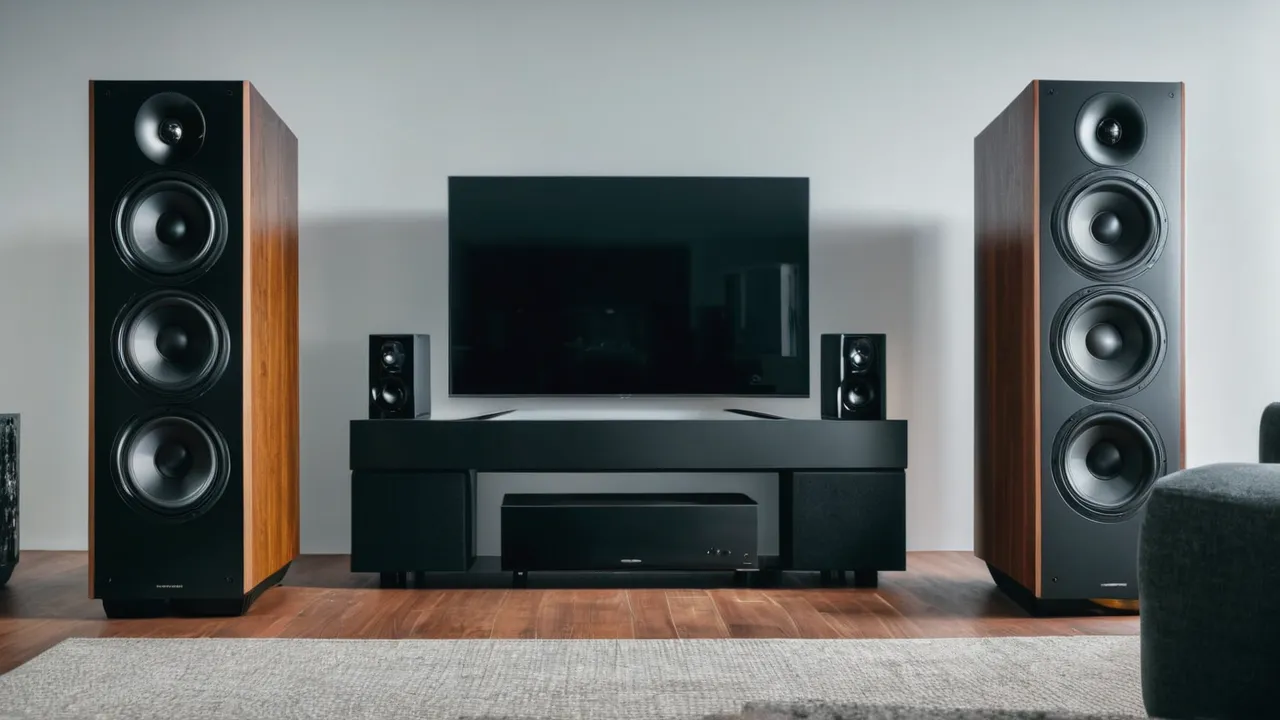
A sealed subwoofer uses an airtight cabinet and a ported subwoofer adds a tuned opening that boosts low bass. Sealed designs tend to sound tighter and fit smaller rooms, apartments and music. Ported designs tend to play louder and deeper for the same size, which suits larger rooms and movies. Pick by room volume, neighbors and what you play most.
What sealed and ported actually mean
In a sealed cabinet, the driver moves against a closed volume of air that acts like a spring. Output falls off gradually below the cabinet’s tuning, at a gentle rate. The design is simple, needs a fairly small box and tends to give a controlled, quick response.
In a ported cabinet, a tube or slot lets air move in and out, and the port is tuned to a frequency near the bottom of the range. Near that frequency the port adds output, so the same driver and amplifier play louder and reach lower. Below the tuning, output falls off faster than in a sealed box. Ported cabinets are larger because they need the air volume and the port length.
Neither design is better in every case. The right choice depends on room size, how loud you play, how deep the content goes and how much space you have.
Bias in most of the advice you will read
Most advice comes from sellers and makers, who sell what they build. A company that makes ported subwoofers will describe sealed ones as weak, and a sealed specialist will describe ported ones as boomy. Retailers also push whichever type has a better margin or is in stock. Spec sheets add to the confusion, since output figures are reported with different methods and often at different distances and room conditions.
Use these habits when you read a review or product page.
- Look for the frequency range with a stated tolerance, such as plus or minus a few decibels, not just a low number.
- Treat watts as a power rating of the amplifier, not as a measure of loudness.
- Ask whether the output figure is measured in a room or in open space, since rooms add gain at low frequencies.
- Compare cabinet volume and driver size at similar prices.
Our How We Review page describes how we approach product claims, and we do not run listening trials on products.
One decision table
| Situation | Leans toward |
|---|---|
| Small room, such as a bedroom or den | Sealed |
| Medium room, mixed movies and music | Either, check size and output |
| Large or open room | Ported |
| Apartment or shared walls | Sealed, and keep the level moderate |
| Mostly music, especially acoustic | Sealed |
| Mostly action movies and effects | Ported |
| Tight space, such as a shelf or corner with little depth | Sealed |
| Plenty of floor space, a large room | Ported |
Use the table as a starting point, then check the specific models. A well designed ported subwoofer in a small room can sound fine if placed and set up carefully, and a sealed subwoofer with a large driver and strong amplifier can fill a big room.
Room volume and the limits of small subs
Room size changes the picture. In small rooms, walls boost low bass, an effect called room gain, so a sealed subwoofer with modest output can sound full. In larger rooms, the effect is smaller, and you need more output to fill the space. A small sealed subwoofer in a big, open living room can run out of headroom on loud scenes.
There is also a physical limit. Small cabinets cannot move much air at low frequencies. A compact subwoofer with a small driver can sound nice at moderate levels and then compress on demanding material. If your room is large, look for a larger driver or a larger cabinet rather than a smaller box with an optimistic rating. For specific sizes, check the manufacturer’s recommended room size, and treat it as a guide, not a promise.
Apartments and music versus movies
Low frequencies travel through floors and walls. In an apartment, a subwoofer that digs deep can bother neighbors before it bothers you. A sealed design rolls off sooner, which often means less energy at the deepest frequencies, though the neighbors can still hear it at high levels. Place the subwoofer on a firm floor, avoid shared walls, consider an isolating base, and keep the volume moderate at night.
Music and movies ask different things. Music often has bass that changes quickly, such as plucked bass and kick drums, and tight bass makes it easy to follow. Movies include effects with very deep content, which favors extension and output. If you want both from one subwoofer, a good ported model in a room that can use it, or a sealed model with strong output, can cover most needs. Many owners favor one over the other based on how they listen most.
Port noise and placement
Ported subwoofers can make audible air noise at high output, called chuffing, if the port is too small or the driver moves a lot. Well designed ports reduce this, and slot ports or flared ports help. Sealed subwoofers do not have this issue.
Port placement affects setup. A front firing port wants some clearance, and a rear firing port wants space behind the cabinet, often several inches from the wall, according to the manual. A port blocked by furniture or pressed to a wall changes the tuning and can add boom. Check the manual for the clearance it asks for.
Common mistakes
- Choosing a ported subwoofer for a small room and then wondering why bass is boomy.
- Choosing a tiny sealed subwoofer for a big room and running it at its limit.
- Blocking the port with furniture or a wall.
- Judging by watts and driver size alone.
- Putting the subwoofer in the first spot you find, without moving it to check.
Who should choose which
Pick sealed for small rooms, apartments, music and tight spaces. Pick ported for large rooms, action movies and buyers with space. If you are unsure, choose by room size first, then by listening habits. Pair the subwoofer with your speakers by looking at our home theater speakers category and make sure the receiver has the right output and bass management, which our AV receivers category covers.
Understanding the numbers on a sub spec sheet
A subwoofer spec sheet lists frequency response, amplifier power, driver size and sometimes maximum output. Frequency response with a stated tolerance is the most useful, since it shows the real range. Amplifier power tells you about the electronics and not about how loud the unit plays. Driver size gives a clue about how much air it moves, but the cabinet and the amplifier decide the result. If a maker lists maximum output at a given frequency and distance, that is more informative than a low number alone.
Setting a sub up once you have it
Start with the subwoofer near the front of the room, then try a few positions. Many owners place the subwoofer at the listening seat, play bass heavy music and crawl around the room to find where bass sounds best, then put the subwoofer there. Set the receiver crossover to a common starting value such as 80 Hz, set the subwoofer’s own crossover out of the way, and balance the level by ear. Confirm that the receiver distance setting matches the subwoofer position.
A note on future upgrades
A second subwoofer often helps more than upgrading one. Two subwoofers can smooth bass across seats, and they let each play with less effort. If you expect to add one later, check that your receiver has two subwoofer outputs, or use a splitter cable with caution. Matching types is not required, but matching levels is.
Frequently Asked Questions
Is a sealed or ported subwoofer better for movies?
Ported subwoofers usually suit movies better, since they produce more output and reach deeper for the same cabinet size, which helps with effects. Sealed models can do well in small rooms and with careful setup. Choose by room size and neighbors, and check the output and frequency range on the specification sheet.
Is a sealed subwoofer better for music?
Often yes. Sealed designs tend to produce tighter bass with quick decay, which makes bass lines easy to follow. A well made ported subwoofer can also sound great for music, if it is properly placed and set. If most of your listening is music in a small room, sealed is a safe choice.
Do ported subwoofers make more noise for neighbors?
They can, because they reach lower and play louder for their size, and deep bass passes through floors and walls easily. Sealed models also carry through walls at high levels. Place the subwoofer on a solid floor away from shared walls, use isolation feet, and lower the level at night.
Does a bigger subwoofer always sound better?
Not always. A larger cabinet and driver give more output and headroom, which helps in big rooms. In a small room, a large subwoofer can sound boomy if it is not set up carefully. Match the subwoofer to the room, and use the receiver settings to blend it with the speakers.
Final Thoughts
Start with room size and neighbors. Sealed subwoofers suit small rooms, apartments and music, and ported subwoofers suit large rooms and movies. Read specifications with the maker’s bias in mind, leave room for the port, and spend time on placement. A modest subwoofer in the right place beats a bigger one in the wrong spot.
Related buying guides
- Home Theater Speaker Layout for a Small Room
- Soundbar vs Bookshelf Speakers for TV
- Speaker Break In: What It Does and Does Not Do
About the author

The BuyOnceChoice Editorial Team researches durable products worth buying once. Our guides compare published specifications, warranty terms, expert review consensus, and verified owner feedback. We do not conduct our own product trials. See How We Review and our Editorial Policy for our standards.