Bookshelf Speaker Placement: Distance, Height, Toe In
Begin with the speakers away from the walls and angled to your seat, then nudge them in small steps until the sound firms up. Port and wall tips included.
 By BuyOnceChoice Editorial Team
Updated November 16, 2026
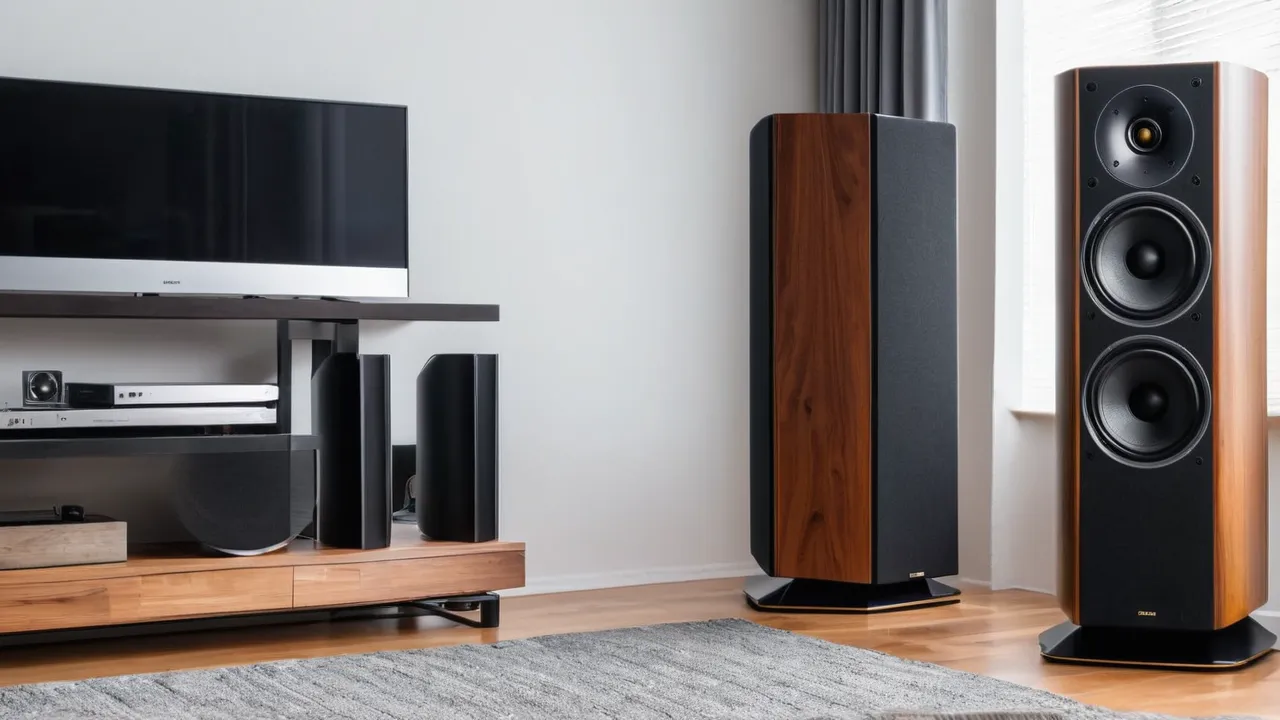
Start bookshelf speakers well out from the front wall, with each tweeter at ear height and the pair angled toward your seat, then move them in small steps and keep the position that sounds clearest. A workable first guess is a foot or more from the wall behind them for rear ported models, a bit less for sealed ones, and a seating triangle where the speakers and your head form roughly equal sides.
The start point
Set up the speakers using this order:
- Triangle: place the two speakers apart by about the same distance as each one is from your head. If you sit eight feet back, a spread of about six to eight feet is a sensible beginning.
- Height: raise each speaker so the tweeter is near your ear level when seated. Stands, sturdy shelves or a desk riser all work for this.
- Toe-in: angle each speaker so it points at you or slightly past your shoulders. More toe-in generally gives a sharper center image, less gives a wider spread.
- Wall distance: start roughly a foot from the rear wall for a rear ported model and somewhat less for a sealed one, then adjust.
- Side walls: keep them as far from the nearest side wall as you can manage, ideally more than a couple of feet, so early reflections are less obtrusive.
Check the manual for the manufacturer’s suggested placement. Many brands print a minimum distance from walls for ported designs, and that is better information than any general rule.
Why every guide gives different wall distances
Advice on wall spacing conflicts because it mixes up several things. A sealed speaker, a rear ported speaker and a front ported speaker all react differently to a nearby wall. Room size, wall material and the speaker’s own tuning change the result too. A distance that is ideal for one pair may sound boomy for another.
What is consistent is the physics. A wall behind a speaker reinforces low frequencies. Move the speaker closer and bass gets heavier and may blur. Move it farther out and bass thins but clarity and stereo depth usually improve. Your job is to find the point where the bass is full without drowning the midrange. Treat the numbers below as a start point, not a rule.
Rear ports, front ports and sealed cabinets
The port is a tuned opening that adds bass output. Where it sits matters for placement.
- Rear ported: the port exhausts toward the wall. Too close and the bass can become boomy or the port can chuff. Give it breathing space. If the speaker must sit on a shelf near a wall, sometimes a foam port plug that comes in the box can calm things down, but check the manual before using one.
- Front ported: the port faces you, so these suit shelves and cabinets where the rear is close to a wall. They are more forgiving of tight placement.
- Sealed: there is no port, bass is tighter and rolls off earlier, and these tolerate closer wall distances. They often get a lift from a nearby wall, which can be a feature in a small room.
If you are choosing speakers for a tight shelf, our look at how port location ties to cabinet placement can save you from a poor match.
Adjust by ear: a repeatable routine
Use one familiar track with a clear vocal and a steady bass line. Sit in your normal position, close your eyes, and ask three questions.
- Is the singer’s voice solid and centered between the speakers, or smeared?
- Is the bass heavy or boomy at certain notes?
- Does the soundstage feel wider than the physical distance between the speakers, or squeezed?
Move each speaker the same distance, a couple of inches at a time. Change one thing at a time: first wall distance, then toe-in, then spacing. Keep notes or use masking tape marks on the floor or shelf so you can return to the good position. Small changes can matter a lot, and it is easy to lose track.
If the center image sounds hollow, try reducing the distance between the speakers a little or adding a touch of toe-in. If the bass is too thick, pull the speakers out from the wall. If the sound is lean, move them nearer to the wall or add a subwoofer.
Shelves, stands and desks
A speaker on a bookshelf sits inside a box that adds its own resonance. If you must use a shelf, put the speaker near the front edge so the cabinet’s front is flush with or slightly beyond the shelf. Tucked deep into a shelf, a speaker sounds muffled. Use isolation pads or small feet to decouple it from the shelf and keep it from buzzing.
Stands are usually the better choice because they set height, keep the speaker away from boundaries, and remove cabinet coupling. If you have children or pets, make sure the stand has a wide base and a secure fit, since a toppled speaker is both a hazard and a repair bill. Our guide on stand height covers the sizing in more detail.
Desk setups raise their own concerns: the desk surface reflects sound into your ears early, and speakers sitting too low point toward the keyboard. Angle them up toward your head and keep some space behind them.
Adding a subwoofer changes the plan
Bookshelf speakers often give up bass below a certain point. If you add a subwoofer, you can usually position the bookshelf speakers for imaging rather than for bass, because the sub covers the low notes. That lets you pull them farther from the wall. Set the crossover on your receiver to hand the bass over at a value that suits the speaker’s specified response. Our home theater speakers guides cover the surrounding choices, and the AV receivers section covers the electronics side.
Room shape and furniture that change the answer
The same speakers behave differently in a narrow room than in a wide one. In a long narrow room, placing the speakers on the short wall usually gives a more even balance between left and right, because both sit about the same distance from the side walls. On a long wall, the seats are close to the speakers and the sound can feel crowded, so a bit more spacing and a little less toe-in may help.
Furniture matters too. A sofa pushed against the back wall puts your head near a reflecting surface, which can thicken the bass you hear. Moving the sofa a foot or two out can make a noticeable difference. Heavy curtains, rugs and bookshelves filled with books soften reflections and can tame a bright speaker. A bare room with hard floors and large windows may sound harsh and may call for a rug between you and the speakers.
If speakers sit on either side of a television, keep their tweeters at the same height on both sides and avoid placing them behind the screen plane, since that smears the front soundstage. When a TV stand forces them close together, accept a narrower image rather than angling them sharply inward.
Mistakes people regret
A few errors show up again and again in owner discussions, and all of them are cheap to fix:
- Pushing speakers tight to the wall to save space, then adding bass boost on the receiver to compensate.
- Leaving the left and right speakers at different distances from the seat, which pulls vocals off center.
- Forgetting to remove the foam port plug, or leaving it in when the manual does not call for it.
- Mounting speakers so the tweeter sits well below ear level while seated.
- Never marking the final position, so any later cleaning or move undoes the work.
Frequently Asked Questions
How far should bookshelf speakers be from the wall?
Start about a foot from the rear wall for a rear ported model and somewhat less for a sealed one, then adjust by ear. Closer to the wall makes bass heavier and may blur it, and farther out thins bass but improves clarity. Check the manual for the manufacturer’s minimum distance.
Should bookshelf speakers be angled toward me?
Usually, yes. Toe them in so they point at you or slightly past your shoulders. More toe-in sharpens the center image, and less widens the spread. Keep tweeters at ear height, and make small changes one at a time so you can tell what helped.
Can I put bookshelf speakers on a shelf?
You can, but a stand is usually better. If you use a shelf, keep the speaker near the front edge so the cabinet is flush with or past the shelf, and decouple it with pads. A speaker tucked deep inside a shelf sounds muffled.
How high should bookshelf speakers be?
Aim for the tweeter near ear level when you are seated. On a desk, angle the speakers up toward your head. If they must sit lower, tilt them, and check that both speakers are at the same height and distance from your seat.
Final Thoughts
There is no single correct distance, only a sound that suits your room. Begin with a seat centered triangle, tweeters at ear height, modest toe-in and some breathing room from the wall, then make small changes one at a time. Mark good positions so you can return to them. When in doubt about port clearance or recommended placement, trust the manufacturer’s manual over any general rule. For how we weigh claims like these, see How We Review.
Related buying guides
- Bookshelf Speakers for Classical vs Rock: How to Choose
- Bookshelf Speakers for a Desk: Near Field Setup Guide
- Bookshelf vs Floorstanding Speakers: Pick by Room
About the author

The BuyOnceChoice Editorial Team researches durable products worth buying once. Our guides compare published specifications, warranty terms, expert review consensus, and verified owner feedback. We do not conduct our own product trials. See How We Review and our Editorial Policy for our standards.