Bookshelf vs Floorstanding Speakers: Pick by Room
Room size, wall distance, a subwoofer plan and upgrade path decide this choice. Here are plain decision rules and the long-term cost of each route.
 By BuyOnceChoice Editorial Team
Updated November 16, 2026
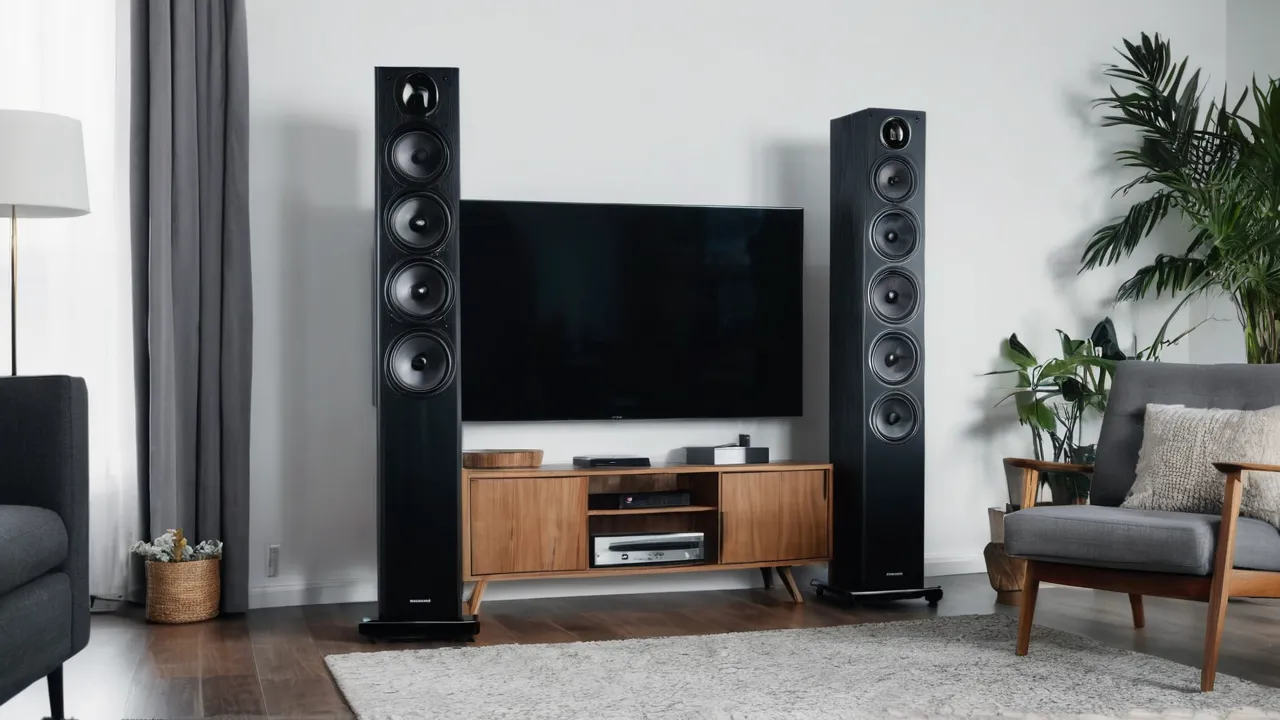
Choose floorstanding speakers if your room is medium to large, you want deep bass without a subwoofer, and you have space around them. Choose bookshelf speakers if the room is small, the speakers must sit near a wall, or you plan to add a subwoofer anyway. Both routes can sound excellent, so the right pick depends on the room more than on the speaker format.
What actually differs between the two formats
A floorstanding speaker has a taller cabinet, which allows larger woofers and more internal volume. That generally means lower bass extension and an easier time filling a big room. A bookshelf speaker has a smaller cabinet and smaller drivers, so bass rolls off earlier, but the compact size makes it easier to place and often easier to blend into a room.
Do not assume the tower is simply better. A well-designed bookshelf model on a solid stand can image beautifully, while a poorly placed tower can sound boomy. The format sets the potential, and the room decides how much of it you hear.
Room volume is the first filter
Think in cubic feet: length times width times ceiling height. Small spaces, such as a bedroom or a compact den, tend to favor bookshelf speakers because big woofers can overload the room with bass. Medium rooms accept either. Large or open spaces tend to favor towers, because small drivers have to work hard to move enough air.
For a worked example, picture a room 12 feet by 14 feet with an eight foot ceiling. That is 1,344 cubic feet, which is a small to medium space. Bookshelf speakers on stands, with a subwoofer if you want deep movie effects, are a comfortable match. Now picture a room 20 feet by 25 feet with a vaulted ceiling that opens into a kitchen. That is several times the volume, and a tower pair, or bookshelf speakers with a capable subwoofer and strong amplifier, makes more sense. Measure your own room before comparing.
| Room type | Usually fits | Reason |
|---|---|---|
| Small bedroom or office | Bookshelf | Limits bass buildup and saves floor space |
| Average living room | Either | Choose by placement and subwoofer plan |
| Large or open plan | Floorstanding or bookshelf plus subwoofer | More drivers and cabinet volume help fill the space |
Treat that table as a starting point, not a rule. Ceiling height, furniture, and how much of the room opens into another space all change the outcome.
Wall distance and placement
Speakers placed close to a wall gain bass, sometimes too much. Many tower designs have rear ports, which makes them sensitive to wall distance, and the manual usually suggests how far to pull them out. Bookshelf speakers on stands can sit a bit closer in some designs, and sealed models are especially forgiving. If your layout forces speakers close to a wall or into a corner, check the manual for port location and recommended spacing before buying.
Also consider tweeter height. Bookshelf speakers on a low shelf aim at your knees. Put them on stands so the tweeter lands near ear height when you sit.
The subwoofer question
A bookshelf pair plus a subwoofer is a very common home theater solution. The subwoofer handles the lowest notes and the small speakers handle everything above, and the system can still be tuned with room correction. A floorstanding pair can handle the low end alone for music, though many movie fans still add a subwoofer for the lowest effects.
The trade-off is simple. Bookshelf plus subwoofer costs more pieces and more setup, but gives separate control over bass placement. Towers alone give a simpler footprint and less to tune. If a sub is on your list regardless, the extra bass capability of a tower matters less.
Upgrade path and long-term cost
Think about what you will keep. Speakers often outlast several receivers and TVs. A bookshelf pair can later move to a bedroom or desk system if you move up to towers, which gives them a second life. A tower pair is harder to repurpose in a small room. A bookshelf route also lets you add a subwoofer later and change it separately if your room or tastes change.
Cost is not just the pair. Stands, a subwoofer and its cable add to a bookshelf system, while towers may need a stronger amplifier to drive them well. Compare total cost for the whole path, not the price of the speaker alone. Our floor standing speaker picks and the home theater speakers category are useful for pricing the tower route.
Verdict by Room and Plan
- Small room or desk or shelf placement: bookshelf.
- Large room, no subwoofer planned, music is the main use: floorstanding.
- Movies matter most and you will add a subwoofer: either, but bookshelf saves space and money.
- Rear-ported speakers near a wall: check the manual’s wall distance or pick sealed bookshelf models.
- Tight budget with a plan to upgrade later: start with bookshelf pair and stands, add a subwoofer and a center channel later.
- Anyone who values flexibility to move or sell the speakers: bookshelf, because they fit more rooms.
Match the pair to your receiver as well. The AV receiver category shows what kinds of amplifiers fit each route, and our How We Review page describes how we judge value.
How each format behaves in real rooms
Bookshelf speakers in apartments and shared walls
Apartment dwellers often worry about neighbors, and bookshelf speakers help because they put out less low-frequency energy for the same listening level. Bass travels through floors and walls far more easily than midrange, so a small speaker with a modest subwoofer you can turn down at night is easier to live with than a pair of towers that rumble across the floor. If you rent, the ability to take a small pair with you also counts.
Floorstanding speakers in living rooms with real space
A tower shines where it has room to breathe. Placed a few feet from the front wall and angled slightly toward the seats, a good tower produces a wide, full sound that fills the space without any extra equipment. That simplicity is attractive: two cabinets, two cable runs, and nothing else to tune. In a family room used for both music and TV, that is often what people want.
Mixed-use rooms and the center channel
For home theater use, remember the front stage includes a center speaker. Tonal match matters, and most speaker lines offer a center channel that pairs with both their towers and their bookshelf models. Buying into a line with both options keeps your upgrade path open. If you plan to start with two speakers and add a center later, confirm that the line you pick makes one.
Questions to ask before you buy
- Where will the speakers physically sit, and how far from the front wall?
- Is the room closer to a bedroom or a great room in size?
- Will you add a subwoofer now, later, or never?
- Does your receiver have the power the speaker manual recommends?
- Might the speakers move to a different room in a few years?
Answering those five questions gives you most of the decision before you ever compare a model, and it protects you from the most common regret: a big speaker in a small room, or a small speaker in a room that needed more.
One more factor is stand height and stability. A bookshelf speaker only performs as intended when it sits on a solid stand or a sturdy shelf, with the tweeter near ear height and some space behind it as the manual describes. Putting a small speaker inside a cabinet or against a wall usually thickens the bass and blurs the midrange. A tower avoids that problem by design, because it already stands at a good height, though many models include spikes or feet that need to be adjusted on carpet or hardwood. Budget for stands the same way you budget for a cable, since a good pair sounds worse without them.
Frequently Asked Questions
Do floorstanding speakers sound better than bookshelf speakers?
Not automatically. Towers have larger cabinets and woofers, so they usually reach lower and fill big rooms more easily. A well-designed bookshelf speaker on a solid stand can image beautifully, and with a subwoofer it can match a tower for bass. Room size and placement decide how much of the potential you hear.
Do I need a subwoofer with floorstanding speakers?
Not for most music, since towers can handle the low end alone. Many movie fans still add a subwoofer for the lowest effects. If a subwoofer is on your list anyway, the extra bass capability of a tower matters less, and bookshelf speakers may save space and money.
Can bookshelf speakers fill a large room?
They can with a subwoofer and an amplifier that has enough power, but small drivers work harder in a large or open space. If you want a full sound from one pair and have room around them, a tower is the simpler route. Check the speaker’s recommended amplifier power in its manual.
Is it better to buy bookshelf speakers now and floorstanding later?
It is a sensible path if you are unsure. Bookshelf speakers can later move to a bedroom or desk system, so they keep their value. Budget for stands and check that the line offers a matching center channel, so your front stage stays tonally consistent.
Final Thoughts
Bookshelf speakers suit small rooms, tight placement, and systems with a subwoofer. Floorstanding speakers suit larger rooms, open space away from walls, and listeners who want deep bass from one pair. Pick by room volume and placement first, then by subwoofer plan and long-term flexibility, and the right format becomes clear.
Related buying guides
- Buying Used Speakers and Receivers: Inspection Checklist
- CL2 vs CL3 In-Wall Speaker Wire: Code Basics
- How to Clean Speakers and Spot Foam Rot
About the author

The BuyOnceChoice Editorial Team researches durable products worth buying once. Our guides compare published specifications, warranty terms, expert review consensus, and verified owner feedback. We do not conduct our own product trials. See How We Review and our Editorial Policy for our standards.