How to Choose a Carry-On Suitcase: Size, Shell, Wheels
A ranked decision order for carry-on suitcases, plus a measuring routine that counts wheels and handles so the bag clears the airline sizer.
 By BuyOnceChoice Editorial Team
Updated November 16, 2026
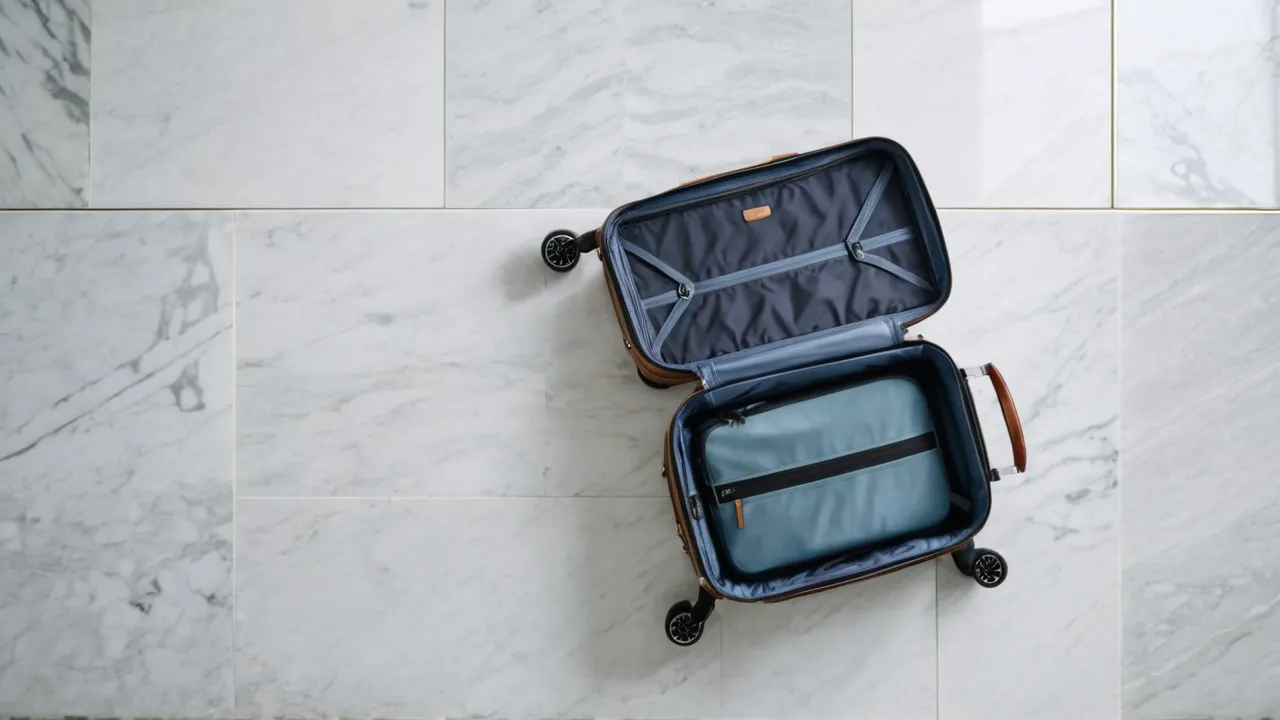
To choose a carry on suitcase, start with the airline size limit measured with wheels and handles included, then pick the shell type that fits how you travel, then check the wheels, handle, and zippers, and only then compare features like pockets and expansion. Doing the steps in that order keeps you from falling for a bag that looks right but fails at the gate or fails after a few trips. The sections below rank the decisions by how much they matter and explain how to measure.
The ranked decision order
Most guides list features in no particular order. This ranking puts the things that cost you the most if you get them wrong first.
- Size that clears your airline’s sizer, including wheels and handles.
- Empty weight, since it eats into your packing allowance.
- Wheel type and how replaceable the wheels are.
- Handle strength and whether the handle sits flush when pushed down.
- Zipper quality and whether the bag closes without strain when full.
- Shell material and your routes.
- Interior layout, pockets, and expansion.
Everything below ties back to this list. If a bag fails item one, nothing else on the list matters.
Measure with a tape, not a label
Retail labels often describe the shell or the body of the bag and leave out the wheels and the top handle. Airlines measure the full external size, so the number printed on a product page may be smaller than what the sizer sees. Many US carriers describe a carry-on limit of roughly twenty-two by fourteen by nine inches, but the limit varies, so check the page for your carrier and the fare type you booked.
Use this measuring routine on any bag, including one you already own.
- Stand the bag upright on a flat floor.
- Measure height from the floor to the top of the extended handle housing when the handle is fully down, including the wheels.
- Measure width at the widest point, usually across the shell or the side pockets.
- Measure depth at the thickest point, including any front pocket and expansion zipper if it is open.
- Repeat with the bag packed, because a soft or expandable bag grows when full.
Compare each number with the airline limit. A bag that fits empty but bulges when packed can fail. Leave a small margin, and read the airline page again before each trip because rules change.
Empty weight and real packing capacity
A bag that is heavy empty leaves less allowance for your things, which matters when a carrier states a weight limit for carry-ons or when you must lift it into an overhead bin. Look for the manufacturer’s stated empty weight on the product page, and treat missing weight as a warning sign. Compare weight between bags of similar volume, not between a small and a large one.
Capacity is better judged by shape than by liters. A bag with a deep, boxy cavity holds more than a tapered one of the same outside size. Compression straps and expansion zippers add flexibility, but remember that expansion can push the bag past the size limit.
Shell, wheels, and handle
Shell choice follows your routes and how you pack. Hard shells resist rain and crushing and suit travelers who pack fragile items. Soft shells give a little, add outer pockets, and handle stuffed packing. For a deeper look at those trade-offs, read what to look for in a luggage set and the details on softside options.
For wheels, spinners are easier on smooth floors and two-wheel designs suit rough ground and stairs. Look for wheel housings that are screwed on, not welded, and for a maker that sells replacement parts. Check that wheels turn smoothly by hand and that the bag does not roll when parked.
The handle is the next failure point. Extend it fully, then wiggle it from side to side. Rattle and wobble in the store usually becomes worse over time. A handle with multiple height stops lets taller travelers avoid stooping. Also check that the top and side grab handles are firmly anchored, since you will lift the bag more than you expect.
Zippers, lining, and small details matter next. Zippers hold the bag together and are among the first parts to fail on an overstuffed bag. Look for coil zippers with large, firm pulls and a sturdy tape on both sides. Double pulls help you lock bags together, and a zipper garage keeps the pulls from snagging. If you pack tight, choose a bag with a deeper main compartment instead of relying on an expansion zipper.
Inside, a lining that is stitched firmly and a divider panel that keeps clothes from shifting are more useful than extra pockets. Check the stitching around the handle base and the wheel housing, since stress concentrates there. Outside, a front pocket for a laptop or documents is convenient but can add thickness.
If you can handle the bag before buying, or when it arrives, run through a short routine. Lay it flat and open it fully to see how the interior is stitched. Close it and confirm the zipper runs smoothly around all corners without snagging. Lift it by the top and side handles to feel whether the shell flexes. Push the handle down fully and see whether it locks without a gap.
Roll it on a hard floor and then on carpet, listening for scraping or wheel wobble. Park it on a slight incline and see whether it stays put. Finally, pack it as you would for a typical trip and check the size again. If a returns window exists, use it for this routine and keep the packaging until you are sure the bag clears the sizer.
Worked Example of the Ranking
Suppose you fly two carriers. One lists a carry-on limit of 22 by 14 by 9 inches and the other a slightly smaller bin on regional jets. You measure a candidate bag at 22 inches tall with the wheels, 14 inches wide and 9.5 inches deep when packed. It fails on depth by half an inch, so it drops off the list at item one, however good its zippers are. A second bag measures 21 by 14 by 8.5 inches and weighs less empty. It clears the sizer with a small margin, so you move on to the wheels, handle and zippers. This elimination order saves time because the size check removes bags that cannot work before you compare finer details.
Also decide on a margin. Many owners keep about half an inch of room on each side to allow for a bulging shell, a thick tag or a strap. If a bag only fits when it is half empty, it is too large for your plan.
Fare rules and where the bag will ride
A carry-on that suits one ticket may not suit another. Basic fares on some carriers allow only a small personal item, and a full-size carry-on then counts as a paid bag. Regional jets and some international carriers also use smaller overhead bins and lower weight limits than mainline US flights. If you fly these often, size the bag to the stricter rule, even if that means choosing a slightly smaller model.
Think about the rest of the trip as well. A bag that must fit in a rental car trunk, a train rack, or a hotel closet is limited by those spaces, not just the airline. Write the tightest limit you meet on a normal trip and choose the bag for that number.
Who should choose what
Frequent flyers who check bags rarely should favor repairable wheels and a sturdy handle, because they will lean on the bag every trip. Occasional travelers can choose features for convenience, but should still check size. Business travelers benefit from a front pocket and a design that stands upright. Families packing for children should consider a lighter bag, since the adult will lift it more often.
Skip any bag whose maker does not state exact dimensions, wheels included, or whose warranty excludes wheels and handles without explanation. Our page on how we review outlines the questions we ask about support terms.
Frequently Asked Questions
What size is a standard carry on suitcase?
Many US airlines publish a limit around 22 by 14 by 9 inches, including wheels and handles, but limits vary by carrier and fare. Check your airline’s page for the exact numbers and measure the bag fully packed, since soft bags grow.
Should I choose two wheels or four wheels for a carry on?
Four spinner wheels roll easily on smooth airport floors and let you push the bag beside you. Two wheels suit rough ground, stairs and cobbles, and take less space under the shell. Choose by the surfaces you cross most, and check that wheels can be replaced.
Is a hardside or softside carry on better?
Hardside resists crushing and rain, suits fragile items and looks clean, but it cannot flex into a tight bin. Softside gives a little, has outer pockets and handles stuffed packing. Pick the one that matches how you pack and how rough your routes are.
Final Thoughts
Choosing a carry on suitcase is easier when you rank the decisions. Confirm the size with a tape, check the weight, decide between two wheels and four, inspect the handle and zippers, then choose the shell and layout that match your trips. A bag that satisfies the first three items and has repairable parts is more likely to stay in use than one chosen for color or brand.
Before you buy, write down the airline limits for the carriers you use most and keep the numbers in your phone. The measuring routine takes a few minutes and prevents the most expensive mistake in this category, which is a bag that is not allowed on board.
Related buying guides
- How to Choose Luggage for a Cruise
- How to Choose a Luggage Set: Pieces, Sizes, Nesting
- How to Choose Luggage Wheels: Bearings and Replaceability
About the author

The BuyOnceChoice Editorial Team researches durable products worth buying once. Our guides compare published specifications, warranty terms, expert review consensus, and verified owner feedback. We do not conduct our own product trials. See How We Review and our Editorial Policy for our standards.