SAE vs Metric Wrenches: Do You Need Both?
Most American garages need both SAE and metric wrenches. See which jobs call for which size, how to avoid rounded bolts and when to buy a set or singles.
 By BuyOnceChoice Editorial Team
Updated November 16, 2026
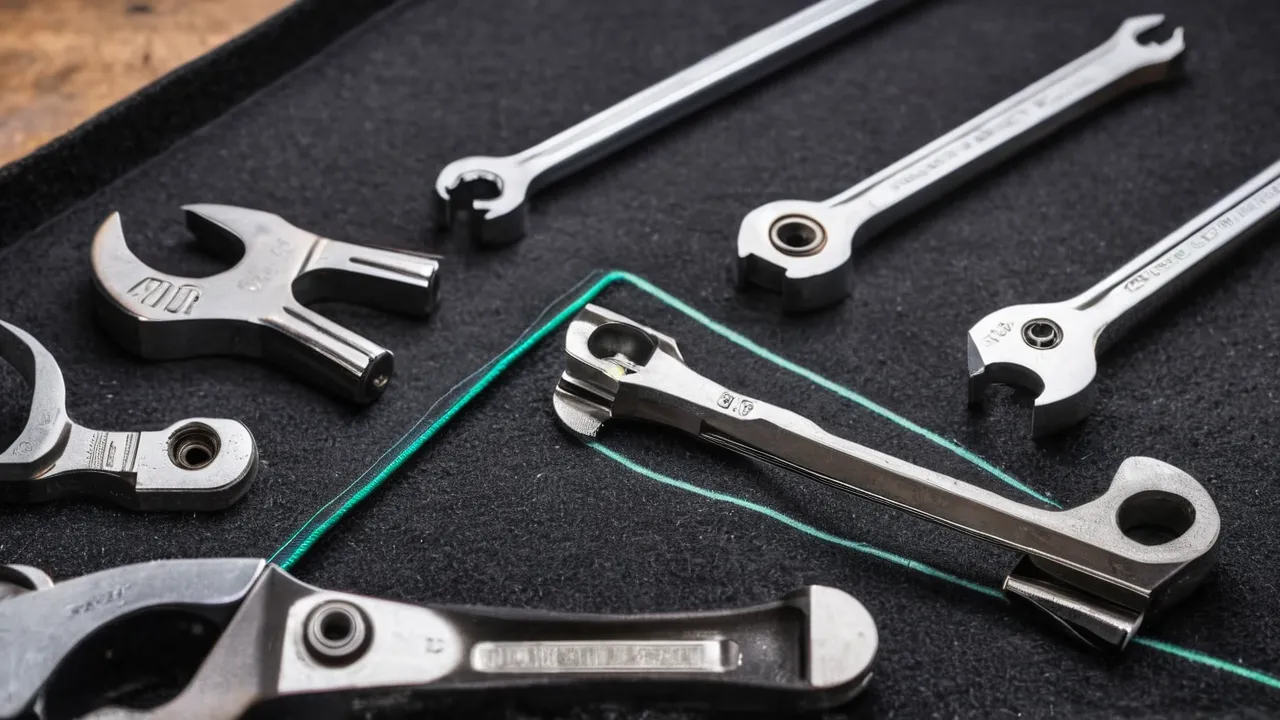
SAE versus metric wrench sets comes down to which measuring system your fasteners use. SAE wrenches are sized in fractions of an inch, and metric wrenches are sized in millimeters, so a wrench from one system rarely fits a bolt from the other without slop. If you work on newer cars, bicycles, appliances and imported equipment, you need metric. If you work on older American vehicles, some farm and industrial equipment and certain hardware, you need SAE. Most home garages end up needing both.
Why both systems exist
The United States built much of its machinery and hardware in inches, and most of the rest of the world standardized on millimeters. American automakers shifted most of their vehicles to metric fasteners over time, but not all at once, and some models mixed both systems. Trucks, tractors, lawn equipment, plumbing fittings and a lot of hardware store bolts still use inch sizes, while most imported vehicles, electronics, bicycles and furniture use metric.
That is why one toolbox rarely covers everything. A home owner might fix a car with metric bolts, assemble a bike with metric hex keys, and tighten a deck bolt that is cut in inches, all in the same weekend.
Which jobs need which
Use this as a starting guide, and verify by trying the wrench on the fastener.
- Newer cars and trucks, including most imports: mostly metric, with some exceptions.
- Older American vehicles from the era of domestic production: often SAE, and sometimes mixed.
- Motorcycles, scooters and bikes: usually metric, though some older bikes use inch sizes.
- Lawn and garden equipment: often a mix, check each machine.
- Home repair, framing and deck hardware: mostly SAE, with some metric on imported items.
- Appliances, electronics and furniture kits: mostly metric.
- Plumbing: often has its own sizes such as pipe threads and flare nuts, which a regular wrench may or may not fit.
A quick way to find out which system a fastener uses is to try the wrench by hand. A wrench that seats snugly with almost no play is the right one. A wrench that rocks or slides on easily is too big, and one that will not go on is too small. If neither a metric nor an inch size feels snug, the fastener may be a different standard altogether, such as a worn head, so inspect it before you apply force. Reading the vehicle manual or the equipment label can also tell you which system the maker used.
If you buy only one set, base the choice on what you work on most. A mixed household that cannot predict the work should plan on both.
Wrench types and sizes
Common sizes
Metric wrench sets usually run from about 6 or 8 millimeters up to 19 or 22 millimeters or more. The sizes you will use most often are 8, 10, 12, 13, 14, 17 and 19 millimeters. SAE sets commonly run from one quarter inch to about three quarters of an inch, sometimes to one inch, in steps such as 5/16, 3/8, 7/16, 1/2, 9/16, 5/8, 11/16 and 3/4.
The near size trap
Several metric and inch sizes are very close, which tempts people to use the wrong one. A half inch is 12.7 millimeters, so a 13 millimeter wrench will slip onto a half inch bolt head with a little slop, and a 9/16 inch head is about 14.3 millimeters, close to a 14 millimeter wrench. A slightly loose wrench can round the corners of a bolt, especially when it is tight or corroded. A wrench that is too small will not fit at all, and forcing it can break the tool.
| Inch size | Millimeters (approx.) | Nearest metric |
|---|---|---|
| 1/2 | 12.7 | 13 |
| 9/16 | 14.3 | 14 |
| 11/16 | 17.5 | 17 |
| 3/4 | 19.1 | 19 |
Treat the table as a warning, not a substitute. Use the correct system whenever you can, and keep one set of each for jobs where fit matters. For stuck or critical fasteners, always match the wrench size exactly.
Six point versus twelve point and styles
Six point openings grip the flats of a hex head and resist rounding, which makes them better for tight or rusty fasteners. Twelve point openings engage more easily in tight spaces because they need less swing, but they grip the corners more. Combination wrenches have an open end and a box end, offset or ratcheting versions help in tight spots, and flare nut wrenches protect soft fittings on brake and fuel lines. See the hand tools category for the types.
Set or singles
A set is usually the best value for a general toolbox, because you get the common sizes in a case, and you can see at a glance what is missing. Singles make sense when you have a set and need a specific size, a deep reach, a large wrench, or a special type such as a flare nut wrench.
How to choose:
- Buy a full set of the system you use most, and fill gaps with singles.
- Buy the second system as a smaller set that covers the common sizes, not a huge one you will rarely open.
- Check that the set includes the sizes you use, since some skip sizes.
- Choose a case or rail that keeps the wrenches sorted and visible, so you do not mix systems.
- Look for clear size markings that you can read in poor light, and mark your own tools if they wear off.
Quality shows in the details. Look for wrenches with a snug opening, a smooth finish, a head that is not too thick for tight spaces, and a handle that is comfortable under load. A thin, well machined box end reaches recessed bolts, while a thick, rough one does not. Forged chrome vanadium steel is common in decent sets, and the finish should resist rust. Cheap wrenches with loose openings are a main cause of rounded bolts, so a modest set from a maker with a clear warranty is often better than the biggest set at the lowest price.
If you are starting from nothing, a combination wrench set in each system plus a basic socket set will cover most household work. Add specialty wrenches only when a job needs them.
Socket sets and the relationship
Many people reach for a socket set before a wrench set, and the same two systems apply. A socket and ratchet handle most bolts faster than an open end wrench, and extensions and swivels help with tight access. Wrenches still matter where a socket does not fit, such as on nuts at the end of long studs, on flare fittings and in tight spaces. A good garage has both.
Sockets come in six point and twelve point styles too, plus shallow and deep versions. Match the drive size to the job: small drive for small bolts, half inch drive for heavier work. Power tools and impact tools need impact rated sockets. The power tools category covers cordless drivers and impacts that use those sockets.
The common SAE and metric sockets are stored in sets, and it is worth keeping the two systems in separate rows or cases. The famous lost 10 millimeter socket is a real problem for metric owners, so keep spare common sizes if you work on imported vehicles often.
Protect bolts and tools
Rounded bolts are the main cost of mixing systems. To protect them:
- Try the wrench by hand on the bolt head before you apply force. It should seat snugly with almost no wobble.
- Use a six point socket or box end wrench on tight or rusty fasteners.
- Pull the wrench toward you smoothly, and avoid hammering unless the tool is made for it.
- Keep wrenches clean and free of rust, and replace any with worn or spread jaws.
- Do not use a pipe on a wrench unless the maker allows it.
- Use penetrating oil on corroded fasteners and give it time.
If a fastener does round off, a bolt extractor or a locking pliers may help, but prevention is far cheaper.
Frequently Asked Questions
Do I need both SAE and metric wrenches?
Most households do. Newer cars, bikes and appliances use metric, while older American vehicles, lawn equipment and much hardware use SAE. If you only work on one type of equipment, one set may do, but a second small set of common sizes prevents trouble and saves rounded bolts.
Can I use a metric wrench on an SAE bolt?
Sometimes it fits, but it can slip. A few sizes are close, such as 13 millimeters on a half inch head, but a loose fit can round the corners of the bolt. Use the matching system when you can, and never force a wrench that does not seat snugly.
Which is more useful, a wrench set or a socket set?
A socket set is faster for most bolts, and a wrench set handles tight spots and fittings that sockets cannot reach. A general toolbox benefits from both. If you must pick one first, start with a socket set, then add combination wrenches in the system you use most.
What sizes should a basic metric wrench set include?
A basic metric set usually covers 8 through 19 millimeters, which includes the most common sizes such as 10, 12, 13, 14, 17 and 19. Check the set against the sizes your own equipment uses, and add singles for any gaps.
Final Thoughts
SAE and metric tools are not interchangeable, and a near fit can round a bolt. Match the system to your equipment, buy a full set in the system you use most and a smaller set in the other, and keep them organized. Use six point tools on tight fasteners and check the fit before you pull. For how we weigh tool advice, see how we review.
Related buying guides
- Starter Garage Hand Tool Checklist: What to Buy Once
- Tool Warranty Guide: What Lifetime Warranty Really Covers
- Torque Wrench Types: Click, Beam and Digital Compared
About the author

The BuyOnceChoice Editorial Team researches durable products worth buying once. Our guides compare published specifications, warranty terms, expert review consensus, and verified owner feedback. We do not conduct our own product trials. See How We Review and our Editorial Policy for our standards.