Ratchet vs Breaker Bar vs Impact Wrench for Stuck Bolts
A breaker bar gives smooth, controlled leverage, an impact wrench hammers a stuck bolt loose, and a ratchet turns. Learn which to use and which sockets to buy.
 By BuyOnceChoice Editorial Team
Updated November 16, 2026
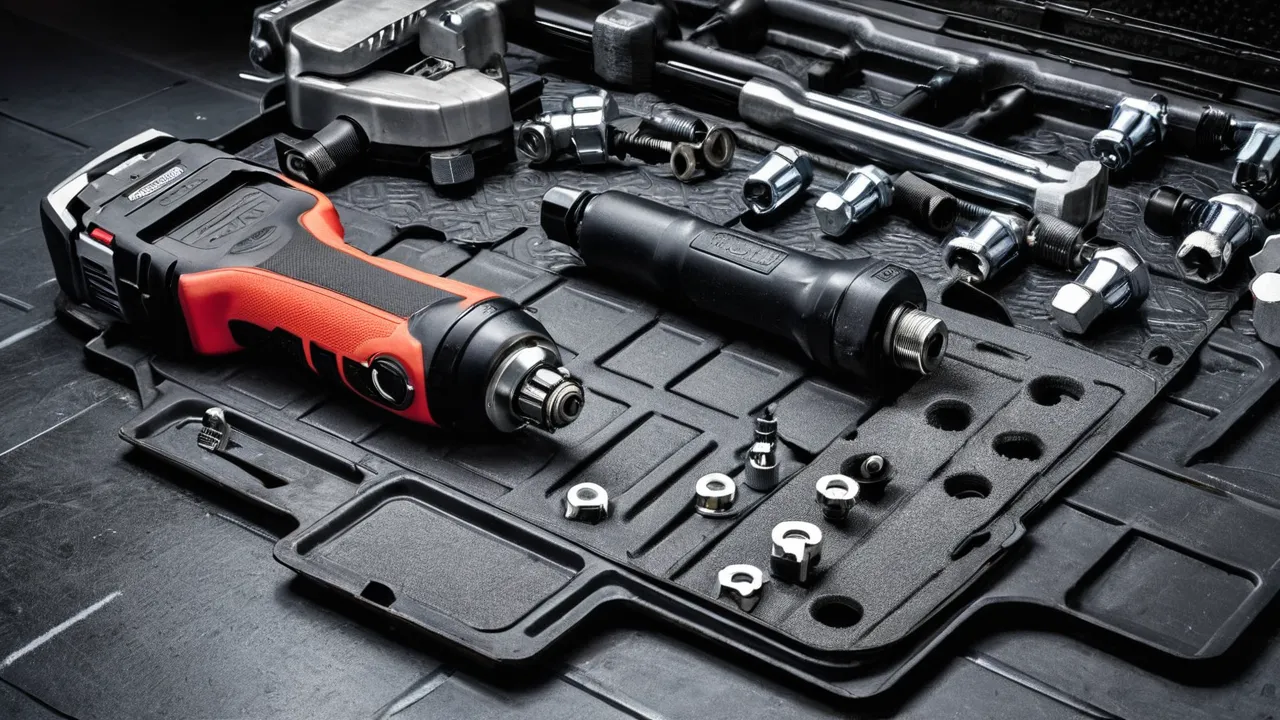
A breaker bar versus an impact wrench is a choice between steady leverage and rapid hammering force for loosening stuck fasteners. A breaker bar is a long, non-ratcheting handle that multiplies your muscle with length, and an impact wrench delivers short rotational blows that break a seized fastener free with little effort from you. For a one off stuck lug nut or axle nut, a breaker bar is the low cost, low risk choice. For frequent heavy work, an impact wrench saves time. A ratchet is for speed on fasteners that are not stuck.
How each tool applies force
Torque is force times distance. A longer handle gives you more twisting force for the same push. A ratchet has a short handle and an internal mechanism that clicks, which is convenient for spinning fasteners but limits how much torque you can safely apply. A breaker bar is a long, solid handle with a pivoting or fixed head and no ratchet mechanism, so it can take much more force.
An impact wrench works differently. Instead of a steady push, a hammer mechanism inside spins up and strikes the anvil repeatedly. Each blow carries a burst of rotational energy that can free corrosion and thread lock without you leaning on a handle. The trade is noise, shock to the socket and fastener, and less control over final tightness.
In everyday terms: the ratchet is for finesse, the breaker bar is for steady force, and the impact is for speed and shock.
The breaker bar: smooth leverage
A breaker bar is the simplest answer to a stuck bolt. Common lengths range from about 15 to more than 24 inches, and the drive size usually matches the socket size you need, with half inch drive being the most common for automotive nuts and bolts. A longer bar gives more leverage, but it also makes it easier to apply more force than a socket or fastener can take.
Pros: it is quiet, inexpensive, needs no power, gives you a feel for when the fastener starts to move, and is gentle on the socket compared with hammering. Cons: it takes physical effort, needs room to swing, and can slip if you pull at an angle. Keep your pull at a right angle to the bar and use a smooth pull, not a jerk.
Drive size deserves a quick check before you buy. Three eighths inch drive tools suit small fasteners and tight spaces, half inch drive covers most wheel, suspension and engine mount bolts, and three quarter inch drive is for large truck and equipment work. Mixing drive sizes with adapters is possible, but each adapter is a weak link and can reduce how much force the setup can take, so match the bar, socket and fastener as closely as you can. Before you pull, make sure the socket is fully seated on the fastener and square to it, because a socket sitting at an angle is the usual cause of rounded heads.
Many people buy a breaker bar as their first answer to lug nuts and crank bolts. Look for a bar with a comfortable grip, a flex or pivot head if you need angles, and a head that fits well in the sockets you own. A fixed head is stronger for a straight pull, and a pivot head is useful where access is tight.
The impact wrench: speed and shock
An impact wrench can be corded, cordless or air powered. Cordless models are popular for garage work, corded units are steady, and air impacts depend on your compressor. If you plan to use an air impact, check the tool’s air consumption against what your compressor delivers. The air compressor category explains CFM and tank size, and the power tools category covers cordless options.
Impact wrenches are rated in torque, but the numbers need careful reading. Makers often list both a fastening torque and a higher “nut busting” or breakaway number. Those figures are measured under the maker’s conditions, and real results depend on battery charge, socket, extension length and the condition of the fastener. Use the ratings to compare tools in the same class, not as a promise that a given nut will come off.
Pros: fast, effortless, great for many fasteners, strong against rust and thread lock. Cons: noise, higher cost, shock to the socket, the risk of over tightening if you use it for final torque, and the need for a power source. Never use an impact to tighten lug nuts to final torque. Snug them with the tool if the manual allows it, then finish with a torque wrench to the vehicle’s specification.
Socket ratings are a safety issue
Sockets are not all the same. Standard chrome sockets are hard and somewhat brittle, which suits a ratchet or breaker bar, but they can crack or shatter under the repeated shock of an impact wrench. Impact sockets are made from a tougher, more ductile steel, usually with thicker walls and a dark finish, and they are designed to absorb the hammering.
- Use impact rated sockets with an impact wrench, every time.
- Do not use an impact wrench with a chrome socket, even for a quick job.
- You can use impact sockets on a breaker bar or ratchet, and many people do.
- Use impact rated extensions, adapters and universal joints with an impact, since a weak link can fail and fly off.
- Check sockets for cracks, rounded corners and worn drive holes before heavy use, and replace damaged ones.
Wear eye protection whenever you use an impact tool or put your full weight on a bar. A failing socket, a slipped wrench or a bolt that snaps can send fragments and knuckles into hard objects. Choose six point sockets for stuck fasteners, since they grip the flats better than twelve point sockets and are less likely to round the corners.
When to use which
Use this order for a stuck bolt, starting with the lowest risk tool that can do the job.
- Spray penetrating oil on the threads, let it soak, and tap the head lightly if the manual or situation allows it.
- Try a breaker bar with a six point impact or chrome socket, seated fully on the fastener, with a smooth steady pull.
- If it does not move and you have an impact wrench, switch to impact rated sockets and use short bursts.
- Use a ratchet only once the fastener is loose, to spin it out quickly.
For example, an axle nut or a crank pulley bolt that may be torqued high is a good job for a breaker bar or an impact. A set of lug nuts suits either, and many garages use a breaker bar for the first turn and an impact to spin them off. A small bolt on a plastic cover needs a ratchet and a light touch, not either of the heavy tools.
If you own a breaker bar and a ratchet set but no impact, you can still handle most stuck bolts. If you own only an impact, a breaker bar is still a worthwhile addition because it gives you control for fasteners that must not be shocked, such as delicate castings. For more on the basics, see the hand tools category.
Safety and technique
Do not slide a pipe over a ratchet handle to make a “cheater” bar, because the ratchet mechanism can fail suddenly. Do not use a pipe on a breaker bar unless the maker says it is allowed, since the extra length makes it easy to exceed the limits of the socket or bolt. Keep your body out of the path your arm will take if the tool slips, and pull toward you instead of pushing, when you can, so a slip does not drive your hand into a sharp edge.
Support the vehicle on proper jack stands, never on a jack alone, and block the wheels. Loosen lug nuts while the tire is on the ground, then raise the car. Use the vehicle manual’s torque value when tightening, and recheck the torque after a short drive. For electrical or brake work, or any job you are unsure about, ask a qualified mechanic.
Frequently Asked Questions
Is a breaker bar better than an impact wrench?
Neither is better in every case. A breaker bar costs less, needs no power and gives controlled leverage, which makes it a good first tool for stuck lug nuts and bolts. An impact wrench is faster and handles seized fasteners with less effort. Many garages own both and pick based on access and torque needed.
Can I use a breaker bar with impact sockets?
Yes. Impact sockets work fine on a breaker bar or ratchet, and their tougher construction is a plus. The reverse is the problem: standard chrome sockets can crack under an impact wrench. If you buy only one type, buy impact sockets and use them with every tool.
Can I use a ratchet to loosen a stuck bolt?
Only for bolts that are not really stuck. A ratchet’s mechanism is not made for the force that a stuck bolt needs, and it can strip or break. Use a breaker bar or an impact wrench for the first turn, then switch to a ratchet to spin the fastener out quickly.
How long should a breaker bar be?
A length of about 18 to 24 inches suits most automotive work, since it gives good leverage without being unwieldy. Longer bars give more leverage but make it easier to over stress a socket or bolt. Match the drive size to your sockets and choose a bar with a good grip.
Final Thoughts
Use a ratchet for speed, a breaker bar for steady leverage on stuck fasteners, and an impact wrench when you need fast, strong shock for heavy or frequent work. Match your sockets to the tool, use impact rated ones with any impact wrench, wear eye protection and support the vehicle properly. Read torque ratings with care, and tighten critical fasteners with a torque wrench. For how we weigh tool advice, see how we review.
Related buying guides
- SAE vs Metric Wrenches: Do You Need Both?
- Starter Garage Hand Tool Checklist: What to Buy Once
- Tool Warranty Guide: What Lifetime Warranty Really Covers
About the author

The BuyOnceChoice Editorial Team researches durable products worth buying once. Our guides compare published specifications, warranty terms, expert review consensus, and verified owner feedback. We do not conduct our own product trials. See How We Review and our Editorial Policy for our standards.