Apartment Home Theater: Bass and Neighbor Guide
Choose a controlled sub, decouple it from the floor, trim the level and use night modes. You can enjoy movies in an apartment without shaking the walls.
 By BuyOnceChoice Editorial Team
Updated November 16, 2026
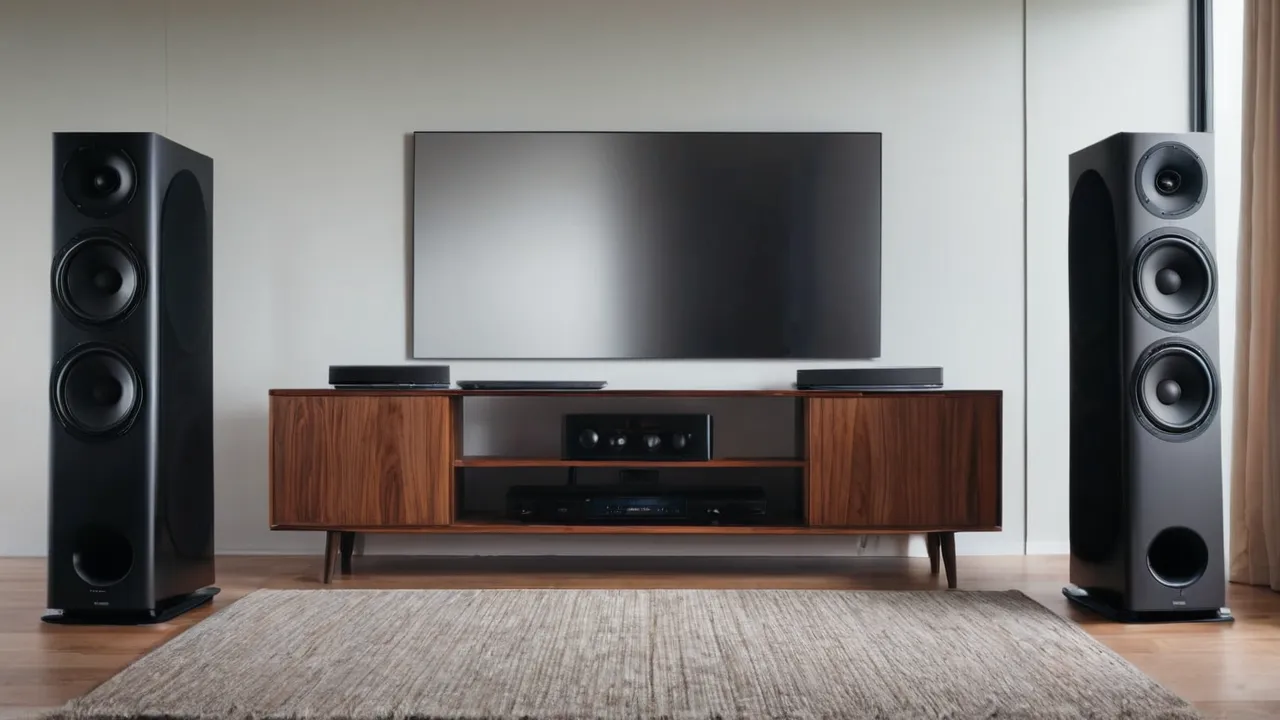
For an apartment home theater, choose a modest, well controlled subwoofer, keep its level reasonable, decouple it from the floor, and use your receiver’s night or dynamic range features for late viewing. Low frequencies travel through floors and walls much more readily than higher ones, so bass is what neighbors notice first. You can’t remove that physics, but you can shrink the problem with sizing, placement and habits.
Why bass travels
Low frequency sound has long wavelengths and passes through building materials with less loss than higher frequencies. In an apartment, the floor and shared walls carry vibrations to neighbors, and a subwoofer that shakes the floor can transmit energy structurally. Voices and treble are easier to contain, and bass is the main issue.
Because we cannot measure your building, we avoid giving decibel figures. The method below focuses on reducing the sources of the problem.
Sub sizing for apartments
Judge a subwoofer for an apartment on four criteria. First, enclosure: a sealed design is usually tighter and easier to control than a ported one. Second, size: choose the smallest driver and cabinet that still fills your room, because extra output only matters at volumes you cannot use. Third, controls: look for a level knob or app control, a phase switch, and a low-pass setting that you can reach without a ladder. Fourth, the manufacturer’s placement guidance, since some designs are made to sit near a wall and others are not. If a listing quotes huge output figures, treat them as irrelevant to your situation.
A smaller room needs less sub. Our guide on subwoofer size by room size explains why a modest sub often suffices. In an apartment, a huge subwoofer adds little that you can use, since you cannot play it loud. A sealed design is often easier to control and may be easier on neighbors because it is tighter and less boomy than some ported designs, as our comparison of sealed and ported subwoofers discusses. A moderate driver size and a sealed enclosure make a good starting point.
Do not choose a sub because you want to feel the explosions at full level. Choose one that gives pleasant bass at a level you can actually use.
What not to buy
Avoid very large subwoofers designed for big rooms, and be cautious of products that promise to eliminate bass transmission. Foam and mats reduce some vibration, but no product removes the problem. Be wary of claims of exact reductions, and remember that we cannot verify them. See our note on How We Review for how we handle sales claims.
Placement and isolation
Where you put the sub matters.
- Avoid placing it against a shared wall, if you can, since the wall transmits vibration.
- Avoid the center of a room over a thin floor span.
- Use a firm base that decouples the sub from the floor, such as a heavy platform on isolation feet or pads. Our guide on spikes and isolation pads explains when these help and what they cannot do.
- Make sure the sub is stable and level, and do not stack things on it.
- Check the manual for placement recommendations.
Seating position matters too. If you sit close to the sub or in a corner, you will hear a lot of bass and be tempted to lower it less than you should, while neighbors get the structural energy. Moving the seat a little away from the room’s corners usually evens the bass, so you can lower the level and still enjoy it. Isolation reduces the transfer of vibration into the structure, but it will not eliminate airborne sound. A mat or platform helps with the floor and does not stop bass from passing through the air to the next unit.
Building materials and what to expect
Apartments differ. A concrete building transmits sound differently from a wood framed one, and the floor span and the construction determine how bass travels. In wood framed buildings, floors often act like drums and radiate low frequencies to the unit below. Concrete floors transmit vibration over longer distances but may radiate less airborne sound. We cannot tell you which you have, so use what you notice. If a neighbor reports a particular kind of sound, such as a thump, adjust accordingly.
Rugs and thick carpet under the sub and seating can help to absorb some energy. Heavy furniture and bookcases against shared walls add mass and slightly reduce transmission. None of these is a miracle, and together they help.
Set a sensible level
Run calibration and then lower the subwoofer level to a point you find pleasing at your normal volume. Many people leave the sub too high, which makes bass dominate and carries to neighbors. Trim in small steps. Use a movie scene with plenty of low frequency content to judge. Check with a neighbor, if you can, and be ready to adjust.
Movies versus music
Action movies often contain very deep effects, which are the most likely to bother neighbors. Music tends to have bass at higher frequencies that is less penetrating. Use night mode for movies, and consider reducing the sub level and relying more on your main speakers. Some listeners keep a separate listening preset for each use. Our guide on receiver crossover settings explains how the sub and speakers share the bass, and a slightly higher crossover moves more bass to the speakers, which are less likely to shake the floor, though it may make the sub less effective in your room.
Night modes and dynamic range
Many receivers offer a night mode or dynamic range control, which reduces loud peaks and lifts quiet sounds. This is helpful when you want to hear dialogue at low volume without loud effects waking people. Look for a setting called night mode, late night, dynamic range compression or something similar in the menu. Some streaming sources also offer their own dynamic range settings. Check the manual to find them and what they do on your model.
Watching with lower overall volume is the single most effective habit. Set a time after which you reduce the volume or switch to headphones.
Headphones and other options
If you want to watch late at night, headphones solve the problem. Some receivers have a headphone output and a mode that simulates surround sound. Wireless headphones can connect to a TV or to the receiver, depending on the model. These do not replace a theater experience but spare your neighbors.
Speakers and surround in small spaces
Compact speakers suit apartments, and our guides on bookshelf placement and small room layouts explain placement. If walls are shared, mount speakers on stands or a wall bracket with a foam backing so that the speaker does not couple strongly to a thin wall. If you rent, avoid drilling. Use stands, and keep cables tidy.
If you have limited space for rear speakers, our guide on surround placement shows options, and our article on running a receiver with fewer speakers shows how to configure smaller systems. See the home theater speakers section for gear ideas.
Communicating with neighbors
A friendly note or a short chat can prevent conflicts. Tell neighbors when you plan to watch something loud, and ask if there are quiet hours. Many problems arise from surprise. If someone complains, take it seriously and try changes in sub level and placement before arguing. Also check your lease and local rules about noise, since they vary.
Receiver features that help
Receivers with room correction can help reduce excess bass by matching the sub to your seat, and many offer sub level controls and separate presets. Create a night preset with a reduced sub level and dynamic range control. Our AV receivers pages describe what to look for.
Verdict by apartment type
- Upper floor apartments with thin floors: smaller sealed sub on isolation, low level, night mode.
- Ground floor or concrete buildings: you may have more freedom, but still be considerate.
- Shared walls with a quiet neighbor: place the sub away from the shared wall and keep levels low.
- Late night viewers: headphones and night mode.
Frequently Asked Questions
How do I keep subwoofer bass from bothering my neighbors?
Use a modest sealed subwoofer, place it away from shared walls, set it on a heavy platform with isolation feet, and keep the level lower than you think you need. Add night mode for late viewing. Bass also travels through air and structure, so none of these steps eliminates it completely.
Do subwoofer isolation pads work in an apartment?
They help reduce vibration that travels through the floor, but they do not stop sound traveling through the air. Treat them as one part of the plan, alongside lower sub level, careful placement, and viewing habits. Be cautious of any product claiming an exact reduction.
Is a smaller subwoofer better for an apartment?
Often yes. A smaller sealed sub fills a small room, gives tighter bass, and tempts you less to turn it up. A large sub mainly adds output you cannot use without disturbing others. Choose the size that sounds full at your normal listening level.
Can I watch movies late at night without waking neighbors?
Yes, with night mode or dynamic range control, a lower sub level, and a lower overall volume. For the quietest option, use headphones, or a receiver headphone output that simulates surround sound. Check the manual to find these settings, which vary by model.
Final Thoughts
Apartment bass is a matter of size, placement, level and habit. Pick a modest sub, decouple it, trim the level and use night features, and talk to your neighbors. See How We Review for how we approach advice like this.
Related buying guides
- Banana Plugs vs Bare Wire: How to Connect Speakers
- Bookshelf Speaker Placement: Distance, Height, Toe In
- Bookshelf Speakers for Classical vs Rock: How to Choose
About the author

The BuyOnceChoice Editorial Team researches durable products worth buying once. Our guides compare published specifications, warranty terms, expert review consensus, and verified owner feedback. We do not conduct our own product trials. See How We Review and our Editorial Policy for our standards.