Open Floor Plan Home Theater: Speaker and Bass Tips
Open space bleeds bass and weakens surround effects. Choose efficient speakers, plan more subwoofer output, and use nearby walls and furniture to help.
 By BuyOnceChoice Editorial Team
Updated November 16, 2026
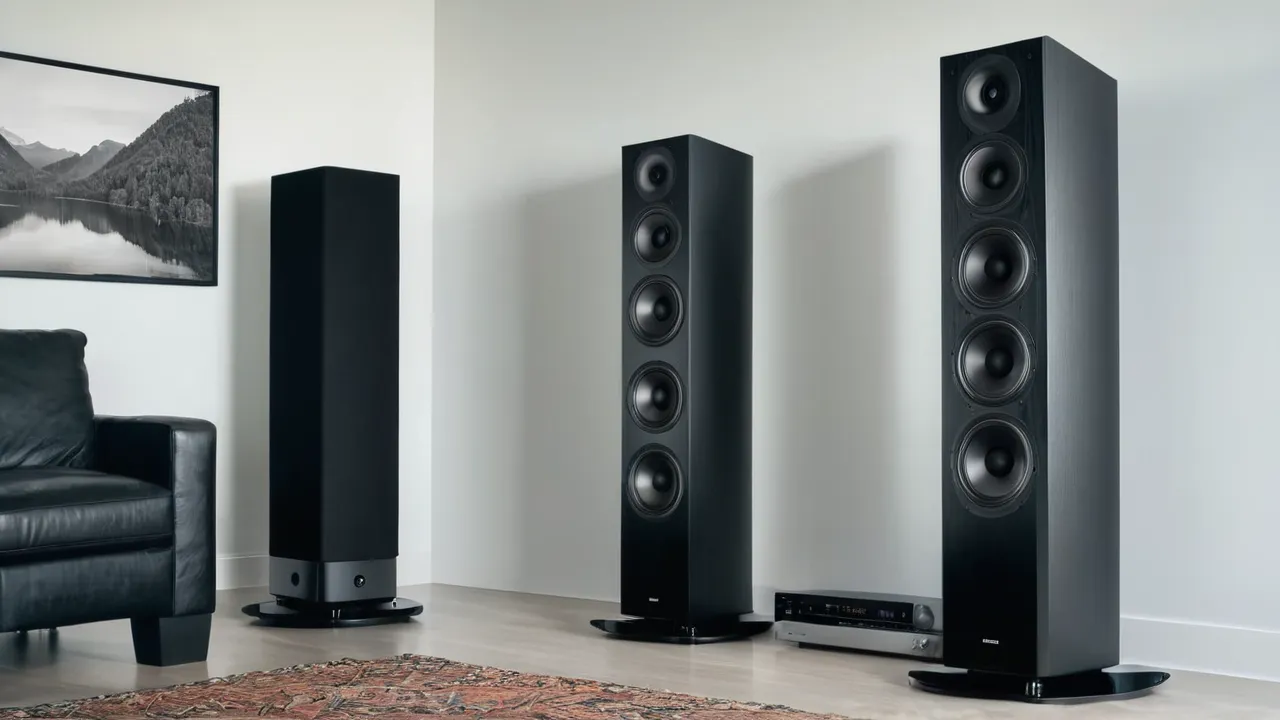
An open floor plan home theater works, but the room does not help the way a closed room does. Bass energy escapes into the connected space, surround effects feel weaker, and dialogue can lose focus if the layout is poorly chosen. The practical answers are speakers with good dispersion and sensitivity, more subwoofer output than a closed room would need, careful seat placement, and any boundaries you can use, such as a wall behind the seats.
What changes when the room has no walls
In a closed room, walls reflect sound back toward you. Low frequencies build up and the room adds a sense of weight and envelopment. In an open space, much of that energy travels away. A subwoofer that sounds strong in a bedroom may feel weak in a great room, and surround speakers may seem to sound only locally, since there are fewer reflections to blend them.
Open plan spaces also bring other issues: sound that leaks into the kitchen or the upstairs, reflections from hard floors and large windows, and a television placed on a wall far from the seats.
Bass in open space
Bass is the main casualty. Because walls are far away, you may need more subwoofer output. Our guide on subwoofer size by room size explains how volume affects the choice, and for an open plan you count the connected space. Options include a larger subwoofer, two subwoofers, or placing a sub near a boundary where it can use the wall to reinforce the output.
To plan the numbers, treat the connected space as one room. Add the floor area of the seating zone, the kitchen, and any other area that opens into it, and multiply by the ceiling height to estimate volume. Compare that volume with the sizing guidance for subwoofers, and expect to land a class larger than a closed room of the same seating area. If you cannot measure exactly, a rough estimate is fine, since the aim is to avoid undersizing the bass by assuming the room ends at the seats. Write the estimate down before you compare models, and recheck it if you later open up another wall.
Two subs are especially helpful, because they spread the bass energy and smooth seat to seat variations. Our comparison of dual subwoofers and one big sub covers the trade-offs. Placement near walls and corners boosts output, and the crawl method in our placement checklist helps find good spots. After placement, run calibration and trim the level.
Choosing speakers
In open spaces, speakers with higher sensitivity can help, because they use less amplifier power for a given volume. Speakers with controlled dispersion, meaning they aim sound toward the seats and not widely around the room, can reduce reflections from far surfaces and improve clarity. Floor standing speakers can give more bass and output than small bookshelf speakers. Check sensitivity and impedance in the specifications, as discussed in our impedance and sensitivity guide, and make sure your receiver can drive them. The floor standing speaker roundup is a good place to start.
If you use bookshelf speakers, plan for a subwoofer and place them on stands at proper height and angle, as discussed in our placement guide.
Receiver and amplifier considerations
Open plan systems need amplifier headroom. A receiver that runs near its limit sounds strained and runs hot. Check the power specifications as discussed in our power ratings guide, and make sure the receiver has enough channels for your layout. Our AV receivers section can help you shop.
Surround speakers when there are no side walls
Surround speakers need something to mount on. In an open plan, side walls may not exist near the seats. Options include:
- Placing the surrounds on stands beside or just behind the seating area.
- Mounting them on a nearby pillar or wall if one exists.
- Using the back of a sofa or a low cabinet behind the seats as a platform, if it is stable.
- Using in-ceiling speakers above the seats for surround and overhead channels, where installation is possible.
- Using wireless rear speakers where cable runs are difficult, with the trade-offs discussed in our wireless versus wired article.
Keep distances to the seats similar for the left and right surrounds, and run calibration so the receiver can adjust delays.
Projectors, screens and the rest of the layout
In many open plans, the screen is a large television on one wall, or a projector screen that drops down. Speakers should relate to the screen. Place the left and right speakers beside the screen, as close to its edges as practical, and aim them at the main seat. A center speaker sits above or below the screen. If the screen is far from the seats, the front stage may feel distant, and moving the seating forward or using a larger screen helps. Remember that speakers farther from the seats need more output to hold the same level, which adds to the case for efficient models.
If the front wall has windows or glass doors, reflections can brighten the sound. Use curtains or a rug, and avoid placing speakers directly against glass.
Seating, Furniture, and Sound Leakage
Seating placement
Where you sit matters more in an open plan. A sofa against a wall provides a boundary behind you, which helps bass and envelopment. A sofa floating in the middle of a space gets less help. If you can, place the seating near a wall. Our guide on seating distance explains how far to sit from the screen and speakers. Avoid placing seats directly in the path of an opening, such as a doorway, where sound escapes.
Furniture and rugs
Furniture can act as a partial boundary. Bookcases, sofas and cabinets reflect and scatter sound. A large rug under the seats reduces reflections from a hard floor. Curtains over large windows help control reflections that can sound harsh. These are inexpensive and effective tools, and they make a space that is partly open feel more like a theater.
Controlling sound leakage
Bass in an open space travels. If other people are in the connected area, consider their comfort. Keep the sub level sensible and avoid placing it where it vibrates the floor. In a multi story home, bass may travel upstairs. Our apartment guide describes ways to reduce transfer without making claims about decibel numbers.
A Setup Sequence for Open Spaces
- Choose the main seat and decide where the sofa will sit, ideally near a wall.
- Place the front speakers and center, then the subwoofers, using the crawl method for each sub.
- Place the surrounds on stands or mounts beside or just behind the seat.
- Run room correction with several measurement positions.
- Listen to a bass heavy scene and adjust sub levels.
- Check dialogue clarity from the main seats and the kitchen, if people also listen from there.
- Repeat calibration after any changes to furniture.
Realistic expectations
An open plan will never sound like a sealed dedicated room, and it does not need to. The goal is a system that sounds enjoyable at normal levels from the main seats, and that blends with daily life. If you want maximum impact, a dedicated room is better, and some people eventually move the system to one. Until then, the steps above get you most of the way.
Verdict by Space
- Large open spaces with a main seating area: floor standing speakers, two subs, seats near a wall.
- Open plans with limited space: bookshelf speakers and one good sub placed carefully.
- Renters with an open layout: stands and wireless rears.
- Homeowners planning construction: in-ceiling speakers and conduit for later additions.
Frequently Asked Questions
How do I get good bass in an open floor plan?
Use more subwoofer output than a closed room would need, count the connected space when you size it, and consider two subs to even out seat to seat variation. Place subs near boundaries where they can reinforce output, then calibrate and trim the level. Keep an eye on leakage into other rooms.
Where do surround speakers go when there are no side walls?
Use stands beside or just behind the seats, a nearby pillar or wall, a stable cabinet behind the sofa, or in-ceiling speakers. Wireless rears help where cable runs are hard. Keep the left and right surrounds at similar distances from the seat, and run calibration to set delays.
What kind of speakers work best in an open plan room?
Speakers with good sensitivity and controlled dispersion aim sound toward the seats and reduce reflections from far surfaces. Floor standing speakers give more bass and output than small bookshelf pairs. Check sensitivity and impedance in the specifications, and make sure the receiver can drive them.
How can I keep home theater sound from disturbing others?
Keep the subwoofer level sensible, avoid placing it where it vibrates the floor, and use rugs, curtains, and furniture to absorb sound. In multi-story homes, bass can travel upstairs. Use night mode on the receiver for late viewing, and talk to others in the household.
Final Thoughts
An open floor plan asks more of your system, but the response is clear: more bass output, speakers that aim sound toward the seats, seating near a boundary, and careful calibration. Browse our home theater speakers section for related topics, and see How We Review for how we weigh advice.
Related buying guides
- Powered vs Passive Bookshelf Speakers: Which to Buy
- Sealed vs Ported Subwoofers for Home Theater
- Home Theater Speaker Layout for a Small Room
About the author

The BuyOnceChoice Editorial Team researches durable products worth buying once. Our guides compare published specifications, warranty terms, expert review consensus, and verified owner feedback. We do not conduct our own product trials. See How We Review and our Editorial Policy for our standards.