Remove Discoloration and Burnt Residue From Stainless
Burnt food and rainbow tints look permanent but are not. These methods lift residue while keeping the polished finish intact.
 By BuyOnceChoice Editorial Team
Updated November 16, 2026
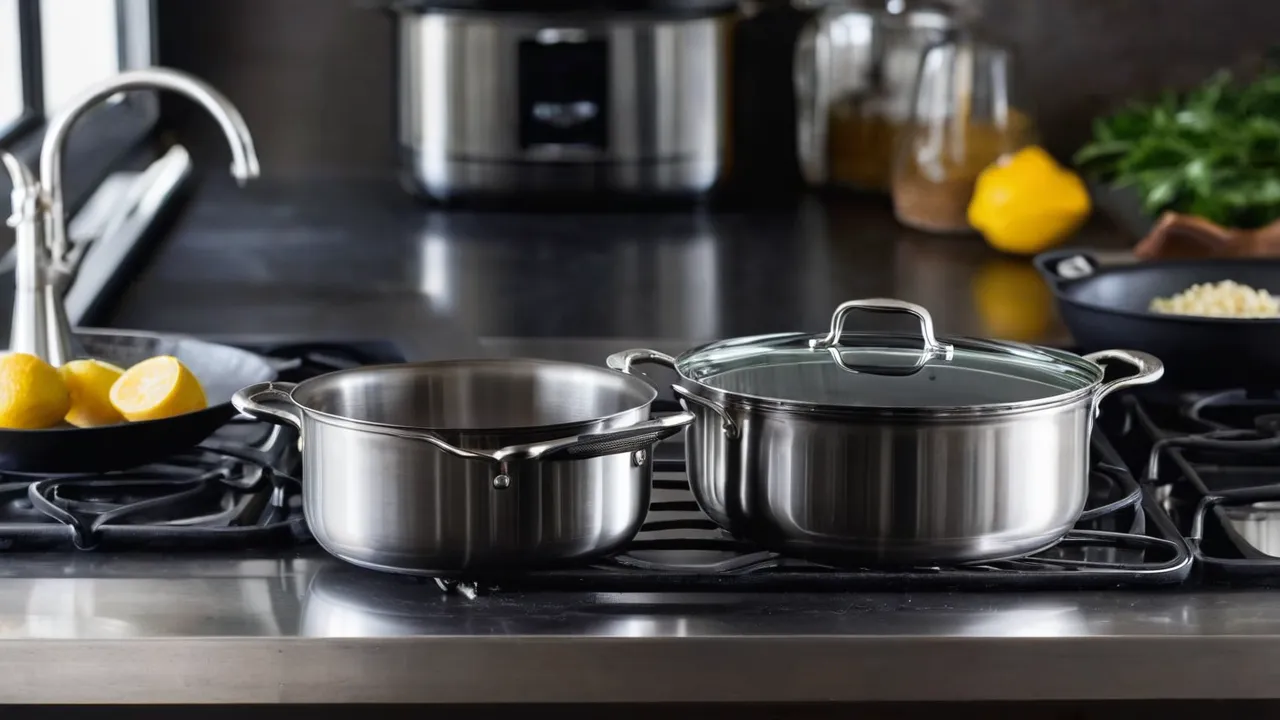
To clean a burnt stainless steel pan, fill it with enough water to cover the burnt area, add a few tablespoons of baking soda, simmer for 10 to 15 minutes, let it cool, and scrub with a soft sponge or a wooden spoon. For rainbow tint or white mineral spots, a wipe with diluted white vinegar works. Most marks are cosmetic and come off without damaging the pan.
Know the Mark Before You Scrub
Stainless steel develops several different marks, and each needs a different cleaner. Using the wrong one wastes effort and can scratch the surface.
- Burnt-on food: dark, hard residue stuck to the base, usually from heat that was too high or food left to scorch. It is carbon and proteins, so it responds to soaking, alkaline cleaners, and gentle abrasion.
- Rainbow or blue-gold tint: a thin heat-induced oxide layer, often after high heat or boiling certain foods. It is not harmful and wipes off with a mild acid.
- White chalky spots: mineral deposits from hard water or salt. A diluted vinegar wipe removes them.
- Brown film: baked-on oil. It needs a degreaser or a baking soda simmer.
- Dark pitting or rust-colored dots: small pits from salt or harsh chemicals. These are damage, not residue, and do not clean away.
- Scratches: surface marks from utensils or abrasives. They are cosmetic and do not clean off.
Let the pan cool before cleaning, because cold water on a hot pan can warp it.
Method 1: Soak and Wash for Light Residue
1. Cool the pan fully, then fill it with warm water and a few drops of dish soap. 2. Soak for 20 to 30 minutes. 3. Wipe with a soft sponge, a nylon brush, or a plastic scraper. 4. Rinse and dry with a towel to avoid water spots.
This handles light residue and fresh scorch, and should be your first move every time.
Method 2: Baking Soda Simmer for Burnt-On Food
1. Add enough water to cover the burnt area, then add roughly one to two tablespoons of baking soda per quart of water. 2. Bring to a gentle simmer for 10 to 15 minutes, using a wooden spoon to loosen the edges of the burnt layer. 3. Turn off the heat and let the pan cool until safe to handle. 4. Scrub with a nylon brush or a non-scratch sponge. 5. For stubborn spots, make a paste of baking soda and a little water, spread it over the spot, wait 20 to 30 minutes, and scrub.
Do not leave the pan to boil dry, and keep the heat low. Never pour cold water into a very hot pan.
Method 3: Cleansers Made for Stainless
For heavy burnt-on residue, a powdered or paste cleanser made for stainless steel and based on oxalic acid works well.
- Wet the pan, apply the cleanser as the label directs, and let it sit briefly.
- Scrub gently in the direction of the grain, using a damp soft sponge.
- Rinse very thoroughly so no residue remains, then dry.
- Wear gloves, ventilate the kitchen, and follow the product label. Do not mix cleansers with bleach or other chemicals.
Use these products as needed, not for every wash, and avoid them on pans where the maker advises against them.
Method 4: Vinegar for Tint and Mineral Spots
Wipe the surface with white vinegar diluted with an equal part of water, or warm the mixture in the pan for a few minutes and let it cool. Rinse and dry. This removes rainbow tint and white mineral deposits. Do not leave vinegar sitting for hours, and do not use it with bleach.
What to Avoid
- Steel wool and harsh abrasive pads on polished or brushed finishes, which scratch.
- Bleach on stainless, which can cause pitting and discoloration, unless the maker allows it.
- Oven cleaner, which is caustic and can damage the finish.
- Quick cooling by running cold water on a hot pan.
- Leaving salt to dissolve on the bottom of a pan before the water boils, since it can cause pitting.
- Dishwasher use for heavily burnt pans, since it rarely removes the burn and can dull the finish.
Preventing Burn and Tint
- Preheat on medium heat, and avoid blasting a dry pan on high.
- Add enough oil and stir or deglaze before food scorches.
- Use a pan size that matches the burner, since a small flame under a large pan can overheat the center.
- Stay near the stove during searing and reductions.
- Dry the pan after washing to avoid spots.
- Clean right after cooking, while the pan is warm but not hot, using the soak method.
Quick Reference
| Mark | Likely cause | Fix |
|---|---|---|
| Burnt-on black residue | Scorched food | Baking soda simmer, then scrub |
| Rainbow tint | Heat oxidation | Diluted vinegar wipe |
| White spots | Minerals or salt | Vinegar wipe |
| Brown sticky film | Baked oil | Warm soapy soak, degreaser |
| Pits and rust spots | Salt or harsh chemicals | Cosmetic, cannot clean away |
| Scratches | Utensils, abrasives | Cosmetic |
Our stainless steel cookware guides explain how to choose and care for stainless pans. Our How We Review page explains how we evaluate products using research and specifications. For related gear, see the cookware and kitchen tools section.
A Worked Example
A cook scorches a pot of caramelized onions and finds a black layer across the base. She covers the burn with water, adds baking soda, simmers for fifteen minutes, then lets the pot cool. Most of the layer lifts with a wooden spoon, and a nylon brush removes the rest. A faint rainbow tint remains, so she wipes the pot with diluted vinegar. The pan returns to a clean silver finish with no scratches, and she dries it to avoid spots.
When It Is Not Worth Saving
Most burnt pans can be rescued. A pan is worth retiring if it is warped, has loose handles, or has extensive pitting that traps food and cannot be cleaned. A burned-on layer that does not move after two rounds of simmering and a stainless cleanser may need a longer soak or a different approach, but it is rarely permanent damage.
Cleaning the Outside and the Rim
Burnt residue and discoloration often show up on the outside of the pan, where grease splatters bake on and the base picks up dark rings from the burner. Use the same methods but with extra care for the finish. For baked-on grease on the outside, a paste of baking soda and water left for 20 to 30 minutes, then rubbed with a damp soft cloth, usually works. For rings on the base, a stainless cleanser applied with a soft sponge, rubbing with the grain, brings back the shine. The rim and the area where the handle rivets attach collect grime that a soft toothbrush can reach. Rinse the whole pan and dry it with a towel so that spots do not form.
Pots With Stuck-On Sugar or Milk
Sugar and milk scorch differently from oils. Burnt sugar hardens into a glassy layer, and burnt milk forms a brown crust. For sugar, fill the pot with water and bring it to a simmer, which dissolves the sugar so that it lifts in minutes without scrubbing. For burnt milk or starchy residue, a baking soda simmer works well, followed by a nylon brush. Avoid scraping with metal tools, which scratch. If the residue has formed a thick crust, repeat the simmer instead of scrubbing harder, because patience protects the finish better than force.
Cleaning Schedule That Keeps Stainless Bright
- After each use: wash with warm soapy water, rinse, and dry.
- Weekly or as needed: wipe with diluted vinegar to remove tint and mineral spots.
- Monthly with regular use: use a stainless cleanser on the base and outside, rinsing thoroughly.
- After any scorch: soak right away while the residue is soft, instead of leaving it overnight.
This routine takes only a few minutes and prevents the heavy buildup that calls for the strongest cleaners. It also reduces the wear that comes from repeated scrubbing, so the pan looks good for years.
Frequently Asked Questions
How do I get burnt food off the bottom of a stainless steel pan?
Cover the burn with water, add a spoonful or two of baking soda, and simmer for 10 to 15 minutes. Let the pan cool, then scrub with a nylon brush. For stubborn spots, leave a baking soda paste on for half an hour and try again.
What causes rainbow stains on stainless steel?
A thin heat-induced oxide layer causes rainbow or bluish tints, often after high heat or with certain foods. It is harmless and cosmetic. Wipe it off with diluted white vinegar, rinse, and dry the pan. It may return with high heat.
Can I use steel wool on stainless steel?
Avoid it on polished or brushed finishes, because it scratches. A nylon brush, non-scratch sponge, or a cleanser made for stainless steel is gentler. If you must use an abrasive on the inside of a very stubborn burn, use fine pads and rub with the grain.
Is a burnt stainless steel pan ruined?
Rarely. Burnt-on residue and heat tint are cosmetic and can be cleaned. Only warping, loose handles, or extensive pitting are reasons to retire a pan. Try simmering with baking soda, then a stainless cleanser, before deciding, and give each method a little time to work before you scrub harder.
Final Thoughts: Soak, Simmer, Then Scrub Gently
Most burnt stainless pans come clean with a baking soda simmer, a stainless cleanser, or a vinegar wipe. Cool the pan first, avoid steel wool on polished surfaces, and keep the heat moderate next time.
Related buying guides
- 18/10 vs 18/0 Stainless Steel Cookware Explained
- 3 Ply vs 5 Ply Stainless Steel Cookware: Does It Matter?
- Cookware Buying Mistakes That Cost You Twice
About the author

The BuyOnceChoice Editorial Team researches durable products worth buying once. Our guides compare published specifications, warranty terms, expert review consensus, and verified owner feedback. We do not conduct our own product trials. See How We Review and our Editorial Policy for our standards.