Generator Noise Levels Explained
Learn why a decibel rating means little without a distance and load, how inverter, open-frame and standby units differ, and how to cut the noise you hear.
 By BuyOnceChoice Editorial Team
Updated November 16, 2026
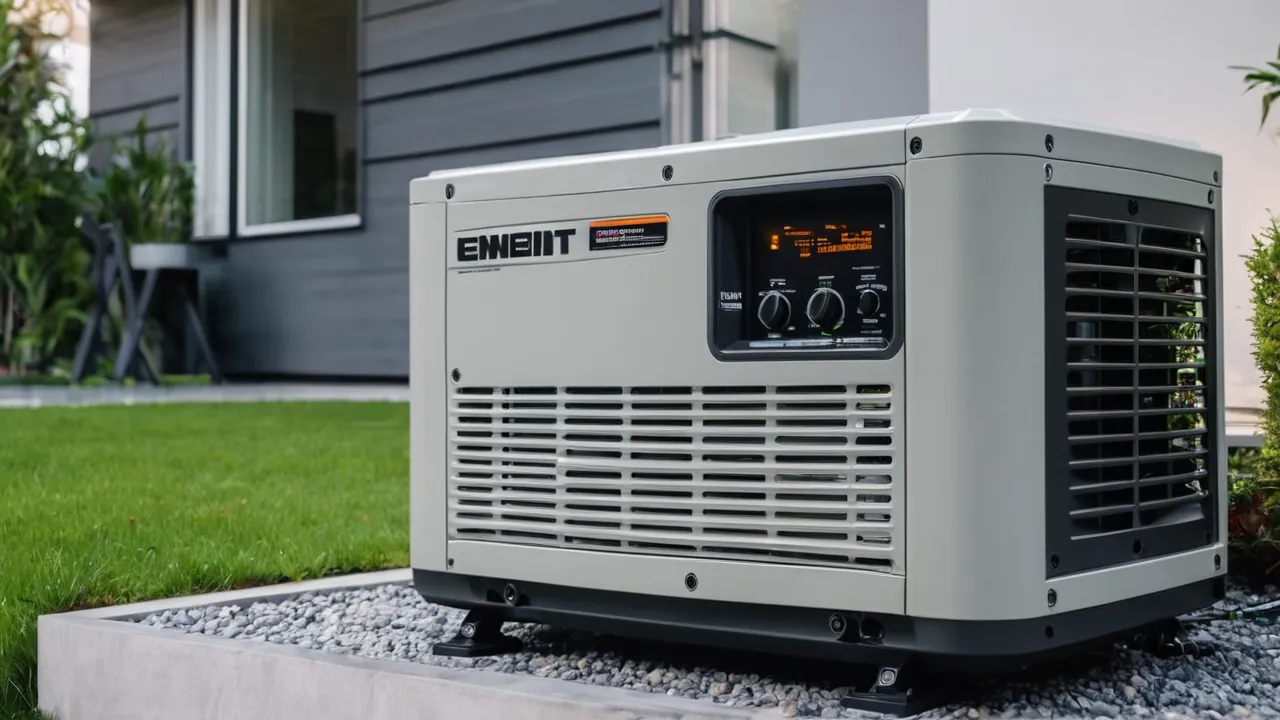
Generator noise levels are listed in decibels, usually as a sound pressure level in dBA measured at a stated distance and load, so compare numbers only when the distance and load match. A change of 10 decibels sounds roughly twice as loud, so a unit rated 10 decibels lower is clearly quieter, and distance and placement change what you actually hear.
How the Decibel Scale Really Works
The decibel scale is logarithmic. An increase of 3 decibels doubles the sound energy, but the ear perceives a rise of about 10 decibels as roughly twice as loud. A generator at 60 dBA sounds about twice as loud as one at 50 dBA, and one at 70 sounds about four times as loud as one at 50. The A in dBA means the measurement is weighted to match how human hearing responds to different pitches.
This means small differences matter less than big ones. A gap of 1 or 2 decibels is hard to notice, while a gap of 10 is obvious. Be wary of marketing that treats a difference of a decibel or two as a major advantage.
Work through a quick example of comparing models. Suppose model A lists 58 dBA at 23 feet at quarter load, and model B lists 64 dBA at 23 feet at full load. Those numbers are not directly comparable, because the load is different. Model B at quarter load might be quieter than 64, but you cannot tell. If both list the same distance and load, then the 6 decibel difference is noticeable but less than twice as loud. Always ask for the distance and the load, and compare like with like.
Why the Distance in the Spec Matters
A sound level is only meaningful with a distance. Sound fades as it travels. In open air, the level drops by roughly 6 decibels each time you double the distance from the source. A generator rated at 60 dBA at 23 feet would be roughly 66 dBA at about 11.5 feet and roughly 54 dBA at 46 feet, in ideal open conditions. Real yards have walls, trees and surfaces that reflect or absorb sound, so the numbers shift.
Manufacturers choose different distances. Some use 23 feet, which is about 7 meters, and others use other distances, so a number measured at a shorter distance will look louder than the same unit measured at a longer one. Read the footnote in the specifications.
What Load the Number Was Taken At
Engines are quieter at light load, because the engine slows down. Many specifications give a figure at a quarter load, and some at full load. A rating at quarter load can understate what you hear when you run a heavy appliance. Inverter generators vary the engine speed with load, so they are usually quiet at light loads but louder when you demand more power. Conventional open frame generators run at a fixed speed, so noise changes less with load.
Look for the load stated in the specification, and compare numbers measured at the same load. If none is stated, treat the number with caution.
Typical Categories
These ranges are general and vary by model, so use them only as a guide.
- Inverter generators: often in the range of the 50s to low 60s dBA at the stated distance and light load.
- Conventional portable generators: often in the 60s to 70s dBA.
- Large open frame or construction units: often above that.
- Standby generators: often similar to conventional units, and quieter with a sound enclosure.
- Battery power stations: no engine, though fans may produce a hum.
Keep in mind that published numbers come from the manufacturer or from standards based methods, and different methods give different results. Be cautious about very low numbers that lack a stated distance or load. Reading owner reviews for comments about real world noise can help, though perceptions vary with the surroundings. A generator in an open field sounds quieter than the same unit between two buildings, because walls reflect sound back toward you.
Putting the Numbers in Context
For context, a normal conversation is commonly cited as about 60 dBA, a quiet street is lower and a vacuum cleaner is higher. A generator that is about 60 dBA at 23 feet will be close to conversation level at that distance but much louder if you stand next to it. Because it runs for hours, even moderate noise becomes tiresome, so think about the duration as well as the level.
Sleeping near a generator is hard, because sound carries through walls and open windows. If the generator is a few feet from a bedroom window, even a quiet unit may bother you.
Rules, Neighbors and Campgrounds
Many cities, homeowner associations and campgrounds limit noise, often with a decibel cap at the property line or a quiet hours rule. Some limit generator use entirely during certain hours. Check local ordinances, campground rules and your lease. Emergency use during an outage may be treated differently, but do not assume. Talk with neighbors, and place the generator so the exhaust and noise point away from them. For camping, look for generators marketed as quiet and check the stated levels. For power at a camp site without noise, a portable power station is an alternative. See the portable power stations category.
Look up the rules before you buy, not after a complaint. Many campgrounds set quiet hours and some set a maximum decibel level for generators, often measured at a specific distance, so a unit that exceeds it may be banned. Homeowner associations often restrict generator use to emergencies. Some cities define a nighttime limit at the property line. Write down the limit that applies to you and compare it with the manufacturer’s number and your planned placement. If the numbers are close, choose the quieter unit or a battery power station.
Practical Ways to Reduce the Noise You Hear
- Increase the distance, within the limits of cord length and safety.
- Place the generator on a soft surface or a rubber mat to reduce vibration.
- Aim the exhaust and the noisy side away from living areas and neighbors.
- Use a barrier, such as a solid fence or a structure placed several feet away, without blocking airflow.
- Keep the engine maintained, since a loose muffler or dirty filter adds noise.
- Reduce the load. A smaller load lets an inverter generator run at a lower speed.
- Run it only when you need it, and plan times.
Do not enclose a generator in a box, tent or shed without the manufacturer’s approved enclosure and ventilation, because heat and carbon monoxide can build up.
Consider the placement example. If your cord length allows you to move the generator from 15 feet to 30 feet from the house, you gain about 6 decibels in open conditions, which is a clear improvement. Add a solid barrier a few feet from the unit, not touching it, and you may gain a few more. Placing it on a rubber mat reduces the low frequency rumble that travels through the ground. Together, these steps often matter as much as choosing a quieter model, and they cost very little. Always keep the exhaust away from buildings and maintain airflow around the unit.
Safety Comes Before Quiet
Never run a generator indoors, in a garage or near windows, doors and vents to reduce noise. Carbon monoxide from exhaust can kill. Keep it outdoors, far from the house, with exhaust pointed away, and use carbon monoxide alarms. Use a licensed electrician for any connection to the home panel. If quiet matters more than runtime, consider a battery system.
Who Should Care About Which Number
- Campers and tailgaters: choose a quiet inverter model and compare dBA at the same distance and load.
- Homeowners with close neighbors: check local rules and consider a quieter unit or a battery.
- Worksite users: noise matters less, but hearing protection does.
- People who plan long outages: consider the sound over many hours, and the placement.
Browse the whole-home generator options and the portable generators section, and read How We Review for our approach.
Think about how long you will run the unit. A generator used for an hour of tailgating matters less than one running all night during an outage. For overnight use, aim for the lowest level that meets your power needs, place it far from sleeping areas and use a longer cord. For daytime use on a worksite, protect your hearing instead, since long exposure to loud noise can damage hearing, and wear hearing protection when you work near an engine.
Frequently Asked Questions
How loud is a typical portable generator?
Many inverter models are in the 50s to low 60s dBA and conventional open frame models in the 60s to 70s, at the stated distance and load. Check the specification footnote, since distance and load change the number a lot.
Does 10 decibels really sound twice as loud?
Roughly, yes. A rise of 10 decibels is commonly perceived as about twice as loud, even though the sound energy rises tenfold. A difference of 1 or 2 decibels is hard to hear, so ignore small gaps.
How can I make my generator quieter?
Increase the distance, point the exhaust away, set the generator on a soft surface, add a solid barrier without blocking airflow and keep the engine maintained. Never enclose it without approved ventilation and never run it indoors.
Are inverter generators quieter than conventional ones?
Usually, because they vary engine speed with load and often have better enclosures. At heavy loads they speed up and become louder. Compare dBA at the same distance and load, and check local noise rules.
Final Thoughts
Compare generator noise only when the distance and load match, remember that 10 decibels is about twice as loud and plan placement and distance to reduce what you hear. Keep the unit outdoors and away from the house, whatever the noise rating.
Related buying guides
- Generator Placement and Clearance Rules for Safety
- Can a Generator Run a Well Pump and Furnace
- Generator Surge Watts vs Running Watts
About the author

The BuyOnceChoice Editorial Team researches durable products worth buying once. Our guides compare published specifications, warranty terms, expert review consensus, and verified owner feedback. We do not conduct our own product trials. See How We Review and our Editorial Policy for our standards.