12V vs 120V Air Compressor: Tires, Tools and Limits
A 12 volt compressor travels with your vehicle but has tight duty limits, while a 120 volt unit offers more flow. Match each type to real garage tasks.
 By BuyOnceChoice Editorial Team
Updated November 16, 2026
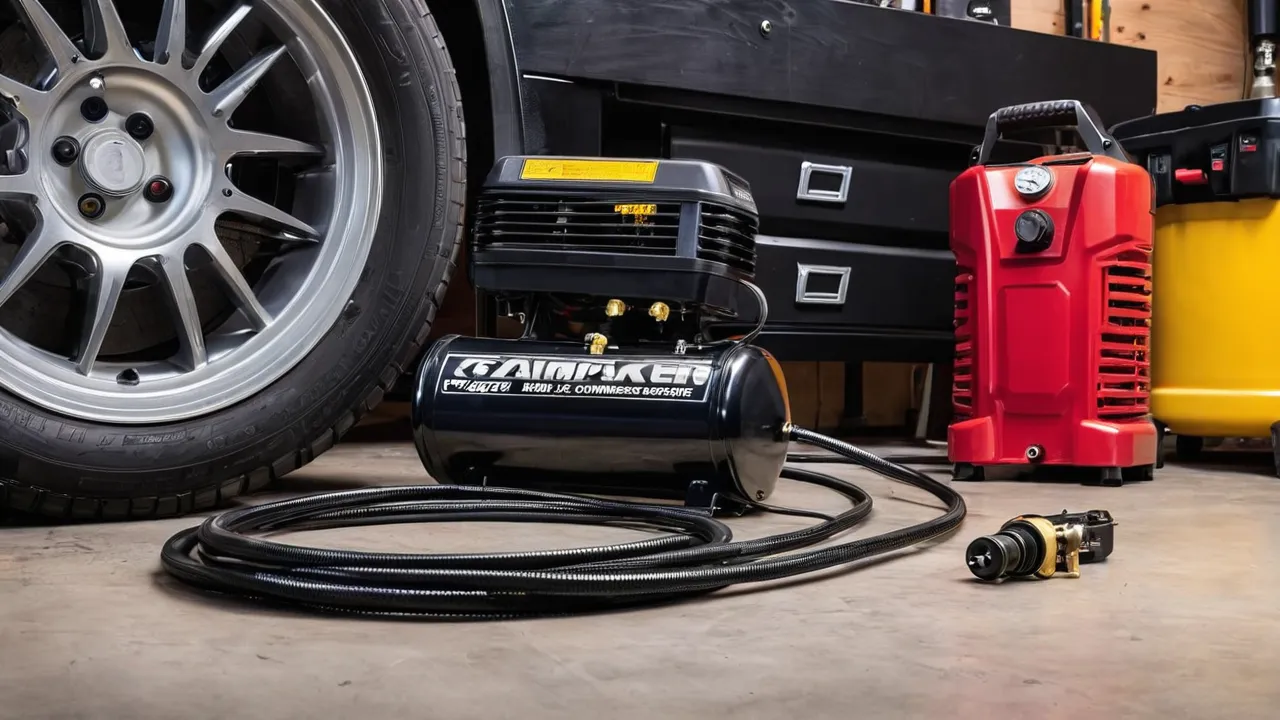
A 12 volt vs 120 volt air compressor comparison is a choice between portability and real air supply. A 12 volt compressor plugs into a vehicle power outlet and is built for tires, air mattresses and sports balls, with short run times and little or no tank. A 120 volt compressor plugs into a wall outlet and delivers far more air for nailers, impact wrenches and shop tools. Pick by the tasks you need to do, then confirm the duty cycle in the manual.
What each type is built for
A 12 volt compressor draws power from the car’s accessory socket or from clamps on the battery. It is compact, light and easy to keep in a trunk for roadside tire inflation. Most have no tank, so air comes straight from a small pump. It is a convenience tool for emergencies and top-offs.
A 120 volt compressor uses household power and has an electric motor sized for real work. Many come with a tank that stores air, a regulator and an outlet for a hose. It suits a garage, a job site with a generator, or a home workshop. It is heavier and needs a power source, but it moves much more air.
Cordless battery inflators form a third group. They run from a tool battery, have no cord and handle tires and balls. They share the duty limits of 12 volt units. If you already own a battery platform, one can replace a trunk inflator. Check the maximum pressure and the run time per battery, since small pumps drain a pack fast.
Duty cycle is the dividing line
Duty cycle is the share of time a compressor can run before it must rest, often written as run time to rest time. Small 12 volt units can often run only for short periods before they overheat, and the manual may list a maximum continuous run time. Exceeding it can damage the pump or blow a fuse in the vehicle.
Many 120 volt compressors with tanks have better duty ratings because the tank lets the pump rest between uses. Even so, small units have limits, and continuous tools such as sanders can push them hard. Check the duty rating and the CFM at 90 PSI rather than assuming.
A rating such as a few minutes on followed by a longer rest is a common pattern for small units. Respect it. Heat is what shortens the life of a small pump, and many 12 volt units have no thermal protection. If you must inflate several tires in a row, plan rest periods and keep the unit in the shade while it cools.
A worked example with four tires
Suppose a small 12 volt unit lists a short maximum run time. Filling one tire from low pressure may use most of that time, so a set of four tires means stopping to cool between each. A small 120 volt compressor with a tank can often fill all four in one sitting because the tank does part of the work. Read the manual’s fill-time table for the tire size you own, and expect longer times for large truck and trailer tires.
Power supply issues
A 12 volt unit draws a lot of current through a small socket. Many vehicle sockets are fused at a modest amp rating, and a unit that draws close to the limit can blow the fuse. Direct clamps to the battery, if the compressor supports them, carry more current. Keep the engine running during longer use so the battery is not drained.
A 120 volt compressor needs a suitable outlet and cord. Larger models draw significant current at start, and a long thin extension cord causes voltage drop and motor heat. On a portable generator, check the compressor’s running and starting watts against the generator’s ratings. The articles in our portable generator category explain how to size a generator for motor loads.
Hose and chuck design matter on small inflators. A screw-on chuck gives a secure connection, while a loose clip-on chuck leaks. Built-in gauges are often rough, so verify the reading with a separate tire gauge before you drive, and never exceed the maximum on the tire sidewall.
Which tasks fit which type
- Top off a tire: 12 volt is good, 120 volt is more than needed.
- Inflate a flat tire from empty: 12 volt is possible but slow, 120 volt is faster.
- Air mattress or sports ball: either works.
- Finish nailer or stapler: 12 volt is rarely suitable, 120 volt is suitable.
- Impact wrench: 12 volt is not suitable, 120 volt works if CFM is high enough.
- Paint sprayer or sander: 12 volt is not suitable, 120 volt needs a larger unit.
Some tasks sit in between. Inflating a large truck or trailer tire from empty takes a long time on a 12 volt unit and risks overheating. A small 120 volt compressor does it in a fraction of the time. If you tow, camp or drive off road, a higher flow 12 volt unit with battery clamps may be worth it, but the manual’s duty cycle still applies.
Portability and storage
The 12 volt unit lives in a vehicle and takes little space. It works anywhere you can park. The 120 volt unit needs a garage corner, and a larger one needs a dolly. If you handle roadside tire needs, a 12 volt model in the trunk is a cheap safety item. If you work on projects at home, a 120 volt unit saves time quickly. See our air compressor guide for shop picks.
Think about the whole kit. A 12 volt inflator should come with nozzle adapters for balls and mattresses and a case that keeps the cord tidy. A 120 volt compressor needs a hose, a coupler, a few tool fittings and a place to hang them. Choose standard connector types so replacements are easy to find, which matters for a buy-once approach.
Verdict by buyer type
- Commuter who wants a roadside tire fix: 12 volt.
- Homeowner with a nailer or an occasional impact wrench: 120 volt with a small tank.
- Camper or off-road driver: 12 volt with battery clamps, plus a good tire gauge.
- Home mechanic: 120 volt, and keep a 12 volt unit in the car as a backup.
- Anyone on a single-purchase budget who works on projects: 120 volt plus a simple hand pump in the car.
Safety
Follow the manual for pressure limits, and watch the hose and fittings. Do not leave a 12 volt compressor running unattended because it can overheat. Keep cords away from heat and water, and wear eye protection when inflating or running tools. Do not exceed the tire’s rated pressure, which is printed on the sidewall or on the vehicle placard. Drain tanks on 120 volt units after use.
Do not run a 12 volt inflator in a closed garage with the engine running, and do not leave the cord across a walkway. The pump can be hot after use. If the unit smells hot or smokes, stop and let it cool. Replace damaged cords and clamps rather than taping them, because a vehicle electrical fault is a fire hazard. For any wiring or battery connection you are unsure about, ask a qualified professional.
Buying checklist for either type
Before you buy, check a handful of items on the product page or in the manual. These apply to both types and keep you from the common regrets.
- Maximum pressure: confirm it exceeds the highest pressure you will need, such as a truck tire or a trailer tire.
- Fill time: look for a stated time to fill a given tire size, and treat it as a best case.
- Cord and hose length: a short cord forces awkward parking, and a short hose forces you to move the machine.
- Gauge quality: a digital gauge that shuts off at a preset pressure is handy, but still verify it against a separate gauge.
- Noise: small pumps are loud, and a 120 volt unit with a large motor can be louder still, so plan hearing protection.
- Fuse and clamp details: for 12 volt units, check the fuse rating the manual calls for.
- Replacement parts: look for chucks, hoses and filters that are sold separately.
Frequently Asked Questions
Can a 12 volt air compressor run an impact wrench?
Not in a practical way. Impact wrenches use bursts of air at higher flow than a 12 volt pump can supply, and most small units have no tank to cover the gap. A 120 volt compressor with enough CFM at 90 PSI is the usual answer. Check the wrench’s air requirement in its manual.
How long can a 12 volt compressor run continuously?
It depends on the model, and the manual states the limit, often a short run followed by a rest period. Running past it risks overheating the pump or blowing the vehicle fuse. Plan breaks when filling several tires, and keep the unit out of direct sun.
Can I run a 120 volt compressor from a car battery?
Only through a properly sized inverter, and most car outlets cannot supply the starting current a compressor needs. A generator or a dedicated wall outlet is the safer route. Check the compressor’s starting watts before pairing it with any power source.
Is a 12 volt compressor enough for car tires?
Yes for top-offs and slow fills, since that is what it is built for. A flat tire takes longer, and large truck or trailer tires may exceed the duty cycle. Keep an accurate separate gauge and fill to the pressure on the door placard.
Final Thoughts
Choose a 12 volt compressor when you need a small emergency inflator that rides in the car. Choose a 120 volt compressor when you need to run tools, fill many tires or work in a garage. Owning one of each is common and sensible. Judge by duty cycle and CFM at a stated pressure, and see how we review for how we approach such comparisons.
Check tire pressure when the tires are cold, using the number on the door placard rather than the maximum printed on the sidewall. A reliable inflator and a good gauge together make a small safety kit that earns its place in any vehicle.
Related buying guides
- Air Compressor CFM vs PSI: What Actually Matters
- Air Compressor for Impact Wrench and Tire Work: Sizing
- Air Compressor for Paint Sprayers: CFM and Tank Needs
About the author

The BuyOnceChoice Editorial Team researches durable products worth buying once. Our guides compare published specifications, warranty terms, expert review consensus, and verified owner feedback. We do not conduct our own product trials. See How We Review and our Editorial Policy for our standards.