Single Stage vs Two Stage Air Compressor: Which Lasts
A garage owner's view of single stage and two stage compressors, covering the 120V limit, duty cycle, durability and who actually needs the bigger pump.
 By BuyOnceChoice Editorial Team
Updated November 16, 2026
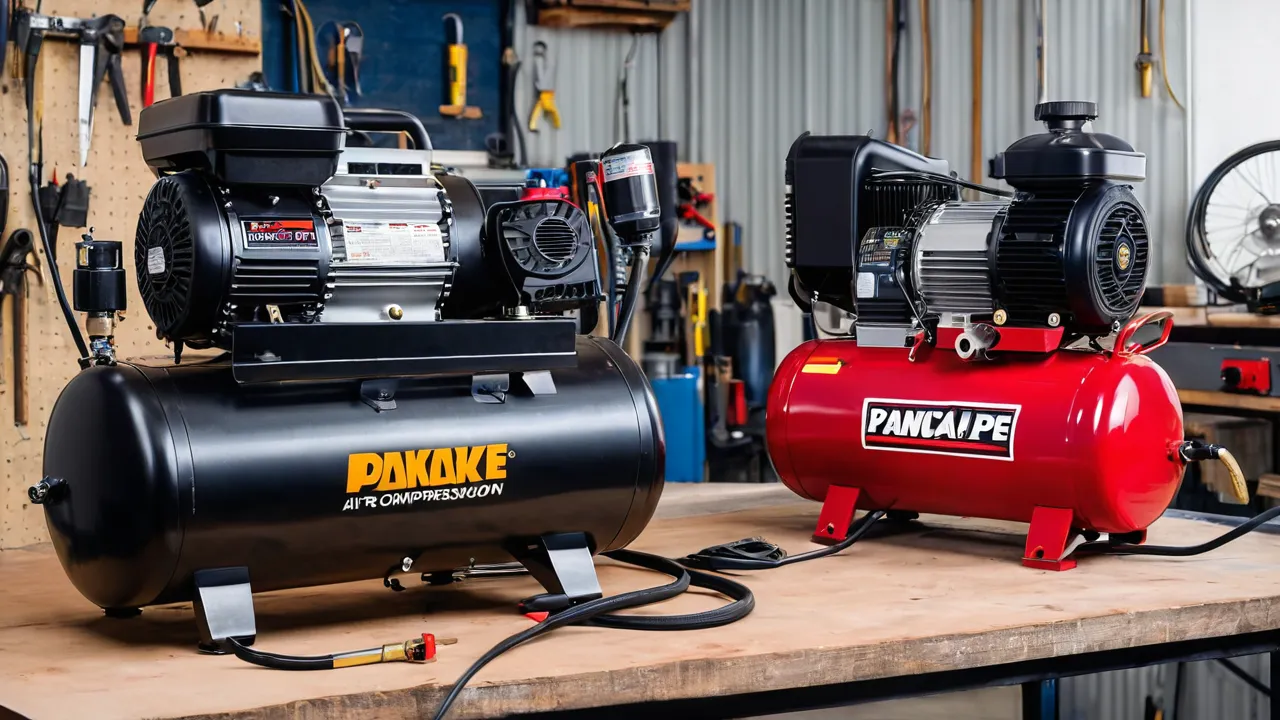
A single stage versus two stage air compressor is a difference in how many times the pump squeezes the air before it goes to the tank. A single stage compressor compresses air in one piston stroke, and a two stage compressor compresses it in two steps with cooling between them, which lets it reach higher pressure, run cooler and last longer under heavy use. For most home garages on a standard 120 volt outlet, a single stage compressor is enough. A two stage unit is for shops that run air tools for long periods and have a 240 volt circuit.
What the stages mean
In a single stage pump, a piston draws in air and compresses it directly to tank pressure in one stroke. In a two stage pump, a larger piston compresses the air to an intermediate pressure, the air passes through an intercooler tube where it sheds heat, and a smaller piston compresses it to final pressure. Cooler air holds less moisture and puts less stress on the pump.
The result is that two stage compressors are more efficient at high pressure, and they tend to be built heavier, with cast iron cylinders, larger tanks and 240 volt motors. Single stage compressors are lighter, cheaper and more common in portable and home models.
Neither type is automatically better. The question is whether your tools need what a two stage unit provides, and whether your garage can power it.
Where each type tops out
Single stage compressors commonly reach pressures somewhere in the range of about 125 to 150 psi, and two stage compressors are typically rated around 175 psi. Check the product page for the maximum pressure, and do not run the unit above its rating.
Pressure is only half the story. Air tools list the volume of air they need, measured in cubic feet per minute (CFM) at a given pressure, often 90 psi. A compressor must deliver at least that much CFM at the same pressure for the tool to work continuously. Many home tools such as nailers, tire inflators and brad guns need little air. Tools such as die grinders, sanders, impact wrenches and paint sprayers use much more.
Compare the CFM at 90 psi on the compressor’s spec sheet with the CFM needs of your tools. If a tool needs more than the compressor delivers, it will stall or the pump will run constantly. The best air compressor guide explains how to size by CFM and tank.
The 120 volt ceiling
This is where garage users run into a wall. A standard household 120 volt outlet is usually on a 15 amp circuit, and some are 20 amp. A 15 amp circuit supports roughly 1,800 watts at its limit, and continuous loads should stay below that, with other devices on the same circuit eating into the margin.
Compressor makers often advertise high horsepower numbers that describe peak or “developed” output, not what the motor draws from a regular outlet. A compressor that claims a very high horsepower on a 120 volt plug is not drawing more than the outlet can supply, so the real running output is lower. Read the amps on the nameplate or product page and compare with your circuit.
Two stage compressors usually need 240 volts, because their larger motors draw more current than a standard outlet can provide. That means a dedicated circuit with the right breaker and receptacle. Installing a 240 volt circuit is electrical work, and a licensed electrician should do it, following local code. Some garages already have a 240 volt outlet for a welder or dryer, which can help, but check the plug type and the circuit rating before you assume anything.
If you cannot add a circuit, a single stage 120 volt compressor is the answer. Pick the highest CFM and tank size you can run on your outlet, and use an air hose of reasonable length to avoid pressure loss.
Durability and duty cycle
Duty cycle is the share of time a compressor can run without overheating. A pump that runs hot wears faster. Two stage units, with intercooling and sturdier components, are built for higher duty cycles, and they often continue to run for years in a shop setting. Single stage units can last a long time in a home setting where use is intermittent, but they may wear faster if they run continuously.
Factors that affect lifespan:
- Oil lubricated pumps usually run cooler and last longer than oil free pumps, but they need oil changes.
- Cast iron cylinders handle heat and wear better than aluminum in heavy use.
- Tank size affects how often the motor starts, and a bigger tank means less cycling.
- Draining the tank regularly prevents rust, which can weaken it.
- A clean intake filter protects the pump.
If you use the compressor for short bursts, a good single stage model with regular care can serve for many years. If you run a sandblaster, a large sander or a paint rig for long periods, a two stage unit is better suited to the duty.
Noise, weight, space and cost
Compressors are loud. Oil free single stage models are often the loudest, and a two stage unit may be quieter at its slower pump speed, though it is also large. Plan to wear hearing protection when it runs, and consider where you put the unit so the noise does not bother you or neighbors.
Two stage compressors are heavy, often with a large vertical or horizontal tank, and need a permanent spot and a floor that can hold the weight. Portable single stage units can be wheeled or carried. A two stage unit costs more upfront, and the electrician’s work on a circuit adds to the cost, while a single stage unit is cheaper and plugs in. Over time, the cost of a two stage unit can be lower for heavy users because of its efficiency and longevity, but a light user may never repay the difference.
Real garage scenarios
Hobbyist with a nailer and tire inflator
A single stage compressor on a 120 volt outlet is plenty. A small tank and modest CFM handle brad nailers, inflation and blowing dust. A two stage unit would be a poor fit in cost and space.
Weekend mechanic with an impact wrench and ratchet
Impact wrenches use more air than nailers. A single stage with a larger tank and good CFM at 90 psi can handle intermittent use, but a two stage unit helps if you do long jobs. Check the tool’s CFM and the compressor’s rating.
Painter or bodywork enthusiast
Paint guns and sanders need steady air, and moisture in the line can ruin a finish. A larger compressor with a water separator or filter helps. A two stage unit, if your garage can power it, gives steadier, cooler air for long jobs.
Home shop with a sandblaster or plasma cutter
These tools use a lot of air and run for long periods. This is where a two stage compressor makes sense, with a 240 volt circuit and a tank sized to the tool’s demand.
Decision rules and safety
Use these rules.
- If you only have a 120 volt outlet and no plan to add a circuit, choose single stage.
- If your tools need a lot of air for long periods, and you can power a 240 volt unit, choose two stage.
- If you use air tools in short bursts, choose single stage with the best CFM you can run.
- Compare CFM at 90 psi, not horsepower claims, and compare with your tools.
- Size the tank for your usage, since a bigger tank means less cycling.
For safety, drain the tank after use to remove moisture, check the pressure relief valve according to the manual, never exceed the rated pressure, and never modify the safety valve or regulator. Wear eye and hearing protection, and release pressure before changing fittings. Follow the maker’s instructions, and use a licensed electrician for any new circuit. Browse the air compressors category for related guides.
Frequently Asked Questions
Is a two stage air compressor better than a single stage?
A two stage compressor is better for heavy, long running use at high pressure, because it runs cooler and is more efficient. It is not better for every garage. If you have only a 120 volt outlet and use tools in short bursts, a single stage compressor is the practical and cheaper choice.
Can I run a two stage air compressor on 120 volts?
Usually not. Two stage compressors generally need a 240 volt circuit because their motors draw more current than a standard outlet supplies. Check the nameplate for the voltage and amps, and have a licensed electrician install any new circuit. If you only have 120 volts, choose a single stage model.
How long do single stage compressors last?
It depends on the build, the duty cycle and care. With intermittent home use, regular tank draining and clean filters, a good single stage compressor can last many years. Heavy continuous use shortens its life, and an oil lubricated pump with a cast iron cylinder usually outlasts an oil free one.
Do I need a two stage compressor for a garage?
Most garages do not. A single stage compressor handles nailers, tire inflation, impact wrenches in short bursts and general cleanup. You need a two stage unit mainly for long, air hungry work such as sandblasting or extended painting, and only if your garage can supply the 240 volt power.
Final Thoughts
Single stage compressors suit most home garages, thanks to their lower cost, lighter weight and 120 volt operation. Two stage compressors suit heavy, long running work and shops with 240 volt power. Compare CFM at 90 psi with your tools, check the nameplate amps against your circuit, and follow the safety rules for pressure vessels. For how we weigh these decisions, see how we review.
Related buying guides
- What Size Air Compressor Do I Need: CFM, PSI and Tank
- 12V vs 120V Air Compressor: Tires, Tools and Limits
- Air Compressor CFM vs PSI: What Actually Matters
About the author

The BuyOnceChoice Editorial Team researches durable products worth buying once. Our guides compare published specifications, warranty terms, expert review consensus, and verified owner feedback. We do not conduct our own product trials. See How We Review and our Editorial Policy for our standards.