Winter Work Boots: Insulated Safety Toe Fit and Warmth
A metal cap pulls heat from the toes. See how cap material, insulation and sock room work together, and what to check on the safety label for winter work.
 By BuyOnceChoice Editorial Team
Updated November 16, 2026
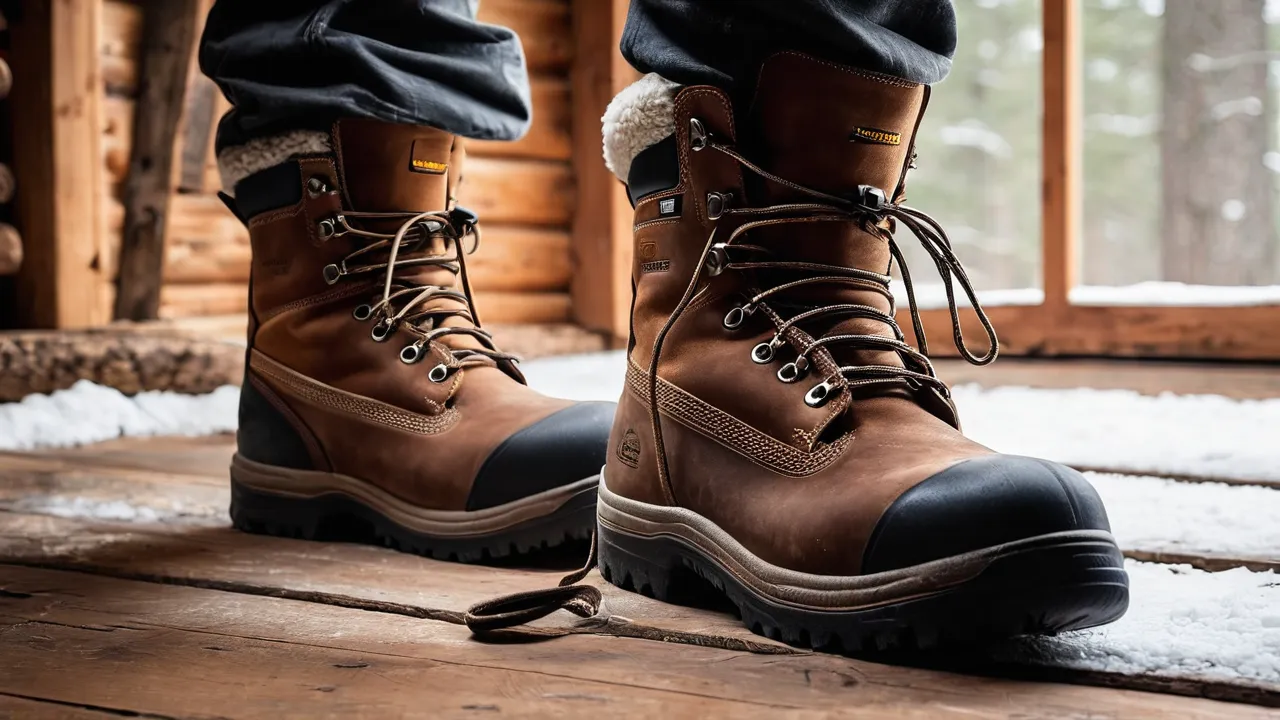
Insulated steel toe boots can still leave your toes cold because steel conducts heat away from the foot. To keep them warm, compare cap materials, look at how much insulation sits around the toe box, and leave room for a warm sock. Alloy and composite caps conduct less, though they have trade-offs. Whatever you choose must still meet the safety rating your workplace requires, so read the label inside the boot and follow the manual.
Why cold toes happen in safety boots
Steel is a good conductor. A steel cap sits near your toes and is exposed to the cold outside. It draws heat from the toes and spreads it to the air. Even with insulation, the cap can create a cold spot. The effect grows when you stand on frozen ground and when your feet are not moving.
Cold also depends on the rest of the boot. A thin sole, a packed liner and tight lacing all reduce warmth. The cap is one factor among several, so look at the whole system.
Cap materials compared
| Cap | Cold behavior | Other notes |
|---|---|---|
| Steel | Conducts cold readily | Slim profile, usually lowest cost |
| Alloy | Conducts, but with less mass | Lighter than steel, bulk varies |
| Composite | Does not conduct like metal | Bulkier, may take more toe volume |
Many winter workers choose composite or alloy caps for that reason. The difference is not magic. A composite cap in an uninsulated boot is still cold, and insulation and fit matter as much. Cap material does not change the safety rating when the boot is marked to the same standard, so choose on warmth, weight and fit once the markings match your requirement. Our safety toe versus soft toe guide explains cap choices in more depth.
Insulation around the toe
Look at how the boot is insulated. Some boots insulate the whole upper and the sole, and some only the sides. Insulation at the toe box matters, since that is where the cap sits. A liner that wraps the toe and a thick footbed add warmth. Look for insulation that covers the toe box and sits above and below the foot, since an insulated upper with an uninsulated sole leaves a path for cold through the bottom.
Removable liners are useful in cold work, since you can dry them overnight. See our removable liner guide.
How insulation is described
Makers describe insulation in grams, in temperature ratings or by name. Grams refer to the weight of synthetic fill per square meter, and higher numbers suggest more loft, though the figure alone does not tell you how warm a boot is. The shape of the boot, the sole, the lining and the fit all change the result. A temperature rating is the maker’s estimate for a certain activity level, and it is not a standard that every brand follows. Treat these figures as a rough guide and rely on construction details.
Insulation is not a safety rating. A boot can be heavily insulated and carry no toe protection, or carry a rated toe and little insulation. Check each separately.
Sock room and fit
A safety toe has a fixed volume. A thick sock can fill it and leave no air space, which reduces warmth. Fit the boot with the socks you will wear, and leave room to wiggle your toes. If you need a larger size to fit warm socks, try a half size up, and check the heel hold. Avoid over tightening the laces over the toe area, which restricts circulation.
Moisture, sweat and safety boots
Safety boots are often more rigid and less breathable than regular boots. Sweat has nowhere to go, and a damp foot cools quickly. Wear moisture wicking socks and change them if they get damp. Remove liners at night. A boot with a removable liner makes this easier. Keep a spare pair of socks in your bag.
Safety rating and standards
Cold weather features do not replace the safety rating. Check the marking for impact and compression, and for other hazards you face. Metatarsal or puncture protection are separate codes. If your workplace requires a standard, follow it. This guide is general information, not occupational advice. Ask your safety officer if you are unsure which rating applies.
Do not modify a rated boot. Adding insoles or liners can affect fit and, in some cases, the marking, so check the manual and the maker’s guidance. Dry the boots at room temperature and never near a direct heater.
Cold, conductivity and electrical hazard work
Cold work often overlaps with electrical hazard, where an EH marking matters. Steel is conductive, and a non-metallic cap and a non conductive sole are often used in electrical work, though the marking, not the cap material, is what counts. A boot can carry both an EH marking and a composite cap. Follow your employer’s requirements. If you work around live circuits, a licensed electrician or your safety officer can tell you which footwear applies.
Worked example: a cold loading dock
Consider a worker who spends a shift on an outdoor loading dock, moving in short bursts and then standing while a truck is prepared. The hazards call for a rated toe and perhaps a puncture plate. The cold is steady, and long waits are the weak point. A composite or alloy cap, a liner that wraps the toe box and an insulating sole address the waits. A removable liner lets the worker swap in a dry pair at lunch, and a half size up leaves air around warm wool socks.
Now compare a worker in a heated warehouse who steps outside for a few minutes at a time. Heavy insulation would overheat the feet and leave them damp, and a moderate insulation boot with a breathable lining is a better match. In both cases, the safety marking comes first, and warmth features are chosen within the boots that already meet the requirement.
If you try boots at home, check the tag, wear your warmest work socks and stand on a cold floor for ten minutes. If your toes already feel cold, they will feel colder outside, and that boot may not suit your job.
Decision rules
- Standing outdoors in deep cold: composite or alloy cap, removable liner, insulating sole, warm socks.
- Moving work in cold: moderate insulation, breathable lining, composite cap.
- Cold storage and freezers: look for boots designed for it, with insulated soles.
- Metal free requirement: composite caps, confirmed against the site rule.
- Wide forefoot: check cap shape and toe volume.
- Tight budget: steel cap with an insulating insole and a good sock.
See the clothing and footwear section and how we review for related guidance.
Tight budget options
If you cannot afford a premium composite cap boot, there are ways to improve a steel cap boot. Add an insulating insole made for cold, choose thick wool socks with room to spare, keep the boots dry and rotate pairs. Avoid putting cold boots on cold feet. Warm them indoors before you step out. Chemical foot warmers can add warmth, but follow their instructions and the boot’s guidance, since some are not meant for direct skin contact or for tight boots.
Care in winter
Salt and moisture damage safety boots like any other. Clean, dry and condition them, and check the cap area for dents or corrosion. Replace the boot after an impact that dents the cap, even if the boot looks fine.
A short buying checklist
- Read the safety label inside the boot and confirm the categories you need.
- Ask what the cap is made of and how much toe volume it takes.
- Check how the toe box is insulated, and whether the sole is insulated too.
- Choose a boot with a removable liner if you stand in the cold for hours.
- Fit with your warmest work socks and leave room to wiggle your toes.
- Check the return policy and wear the boots indoors first.
- Plan to dry the boots overnight at room temperature.
Work through the list once, and you avoid the most common regrets with cold weather safety boots. They are a heavy, expensive tool, and a few minutes of checking pays back through a whole winter.
Frequently Asked Questions
Do steel toe boots make your feet colder?
They can. Steel conducts heat away from the toes, so a steel cap may feel colder in deep cold, especially when you stand still. Alloy and composite caps conduct less. Insulation around the toe box, an insulating sole and room for warm socks matter just as much.
Are composite toe boots warmer than steel toe boots?
Often, since composite does not conduct heat like metal. But a composite cap in an uninsulated boot is still cold, and composite caps can be bulkier. Compare insulation, sole and fit, and confirm the safety markings match your requirement. Cap material does not change the rating when both are marked to the same standard.
Does insulation affect the safety rating of work boots?
No. Insulation is a warmth feature, not a safety rating. The toe rating and hazard codes are printed on the tag inside the boot. Check them separately, and follow your employer’s requirements. An insulated boot with the wrong toe rating is not suitable for a job that requires a specific marking, however warm it feels.
Can I wear thick socks in safety toe boots?
Yes, if the boot still fits. A safety toe has fixed volume, so a thick sock can leave no air space and cool the foot. Try boots on with your warmest socks, leave room to wiggle your toes, and consider a half size up.
Final Thoughts
Steel caps conduct cold, and the cap choice is only part of the answer. Combine composite or alloy caps, insulation around the toe, an insulating sole and roomy fit for socks. Confirm the rating you need and follow the manual. A warm toe box comes from a system, not a single feature.
Related buying guides
- Kids Winter Boots Sizing: How to Fit Growing Feet
- Pac Boots vs Insulated Hiking Boots vs Snow Boots
- Removable Liner vs Fixed Insulation Winter Boots
About the author

The BuyOnceChoice Editorial Team researches durable products worth buying once. Our guides compare published specifications, warranty terms, expert review consensus, and verified owner feedback. We do not conduct our own product trials. See How We Review and our Editorial Policy for our standards.