Lace Up vs Pull On Wellington Work Boots: Which Is Better
Laces give adjustment and ankle support, while pull-on Wellingtons give speed and a clean shaft. Compare fit, safety and wear to choose for your work.
 By BuyOnceChoice Editorial Team
Updated November 16, 2026
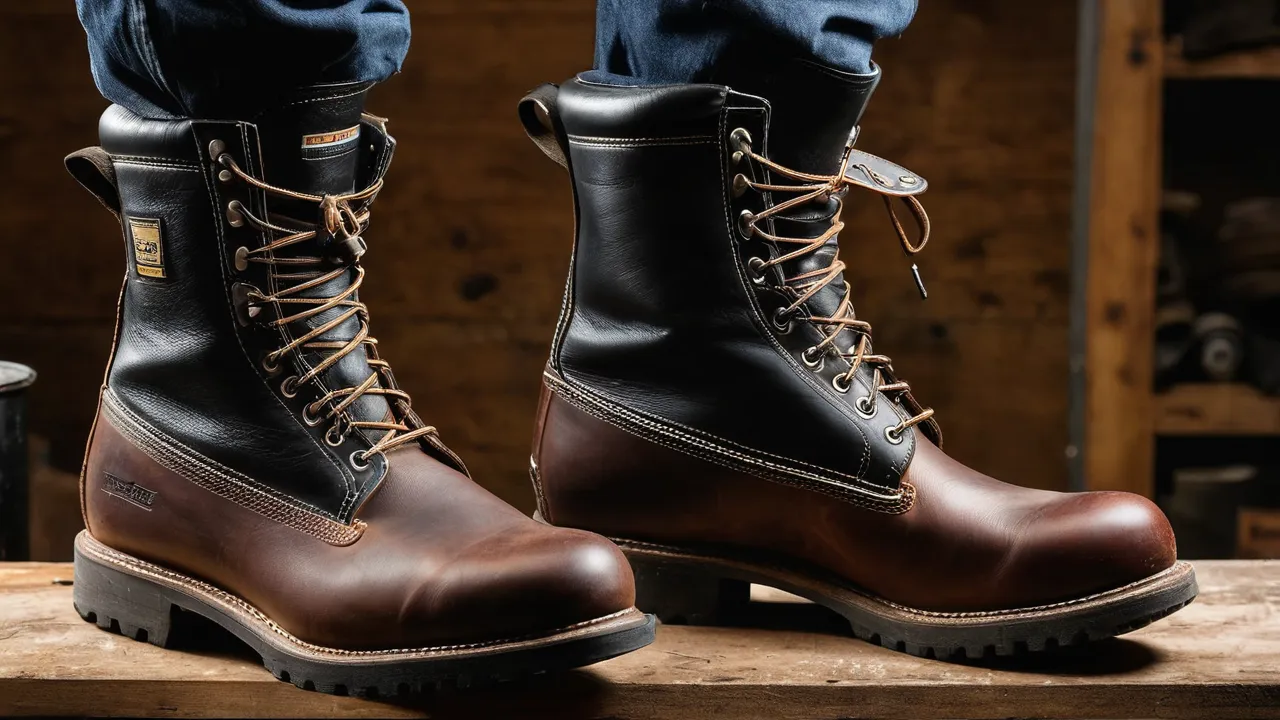
Lace up vs Wellington work boots is a choice between an adjustable closure and a pull on boot. Choose lace up boots when you need adjustable fit, ankle support and a secure hold on uneven ground. Choose Wellington boots when you value fast on and off, a smooth shaft that sheds debris and work on flat or predictable surfaces. Neither is universally better, and the right choice depends on your foot, your tasks and your site’s footwear rules.
How each style works
A lace up work boot closes with laces and eyelets or hooks, which let you tighten each zone of the foot separately. You can loosen the forefoot, lock the heel and adjust the ankle. A Wellington, or pull on, boot has no laces. It relies on a snug shaft, often with elastic side panels or pull loops, and the fit is set at purchase.
Both styles come in leather and with safety toes, soles and shanks. The closure changes how the boot holds the foot and how debris reaches it. It also changes how fast you can get the boots on and off, which matters for people who change footwear often during the day.
Fit and adjustability
Laces win on adjustability. If your foot swells during the day, you can loosen them. If you have a high instep, you can leave gaps. If your heel slips, you can use heel lock lacing. Pull on boots need to fit well from the start, because you cannot adjust them. Many Wellingtons run a bit snug at the instep to hold the foot, and a loose heel is common. Look for a shaft that fits the calf and a collar that grips the ankle without squeezing.
A Wellington can be a good choice for people with wide calves or those who find laces tedious, but fit problems are harder to solve. A tight instep, a loose heel or a narrow shaft are difficult to change after the fact.
Fit questions to ask before buying
- How wide is the shaft opening, and does it fit over your calf?
- Are the elastic panels replaceable?
- How many eyelets or hooks does the laced version have, and are they speed hooks or standard?
- Does the model come in half sizes and widths?
- Is the sole resoleable?
Comfort over a long shift
Lacing lets you adjust through the day, loosening in the afternoon as feet swell and tightening on climbs. A pull on boot is comfortable if it fits, and less so if it does not, because there is no fix other than socks and insoles. Many owners keep a laced pair for variable days and a pull on pair for predictable work, so each is worn when it suits the task.
Ankle support and stability
Laced boots, especially taller ones, support the ankle better because you can tighten the boot around it. For ladder work, uneven ground and carrying loads, that support helps. Wellingtons have a shaft that provides some support, but the support is fixed and depends on fit. The relatively loose ankle hold can allow more movement on rough ground.
Weigh this with your tasks. If you spend the day on flat concrete or in a barn, a Wellington’s support may be enough. If you scramble over rubble or slopes, lace up boots are the safer choice. If you have a history of ankle injuries, ask a health professional what support you need.
Debris, snags and safety rules
- Laces can snag on equipment or machinery. Some workplaces restrict laces near moving parts.
- Wellingtons have no laces to catch, and the smooth shaft sheds mud and dust.
- A loose pull on boot can come off in deep mud or snow.
- Laces can loosen during the day, so check them at breaks.
- Some safety rules, such as those for firefighters, utilities or farms, may specify one style.
Check your workplace policy and the marking on the boot. Follow the manual and the standard your workplace requires. Our guide to side zipper versus lace work boots covers a related quick on option.
Water, mud and snow
A pull on boot with a high, smooth shaft sheds mud and light splashes, but any opening at the top lets water in when you step into a deep puddle. A laced boot with a gusseted tongue seals the front, but laces collect mud and ice and can freeze stiff in cold weather. In snow, a laced boot with a high gusseted shaft and gaiter works well, while a pull on boot with an elastic panel may let snow in around the sides. For winter use, see our winter boots guides for liners and shaft height.
Trousers and uniforms
Trousers sit differently over the two closures. A boot shaft that is wide at the top can bunch a snug pant leg, while laces let you tuck or cover the top of the boot more neatly. In some trades, such as electrical and utility work, trouser hems are worn over the boots to keep debris out, and a pull on boot with a smooth shaft makes that easy. Where hems are tucked in, the laced boot’s tongue and top eyelets can hold the fabric.
Sole wear, care and repair
Both styles can be resoled when built with a welt or stitchdown. Wellingtons often wear on the heel from the heel first step. Lace up boots may show wear on the ball of the foot if they flex more. Check how the sole is attached, since repair options vary by construction.
Leather conditions the same way in both styles, but the stress points differ. A Wellington’s side panels and pull tabs are the first to fail, and the leather at the ankle creases with flex. A laced boot’s eyelets, hooks and laces take the wear. Inspect these parts regularly, and replace laces before they snap on the job. Dry both types at room temperature, and rotate pairs.
Pull on boots are fast, which is why many ranch, farm and utility workers prefer them. The pull loops take strain, and repeated pulling can stretch or tear them, so check the loops and elastic panels from time to time. If you take your boots off several times a day, a Wellington saves time. If you do it once, lacing is a minor cost.
A verdict by job
A short verdict by trade makes the choice concrete. Framers, roofers and ironworkers climb and balance, so laced boots with a firm shank and a locked heel serve better. Farm, ranch and barn workers step in and out of boots often and meet mud, so a pull on boot with a smooth shaft fits, provided it holds the heel. Electricians and utility crews vary by site, and some wear pull on boots under trouser hems while others prefer laces for ladder work, so follow the employer’s policy. Warehouse and delivery workers on flat floors can use either, and comfort and fit decide. Landscapers on slopes and uneven ground lean toward laces.
If your day mixes tasks, pick the boot for the hardest task. A boot that is easy to take off but unstable on a ladder is the wrong tool, while a laced boot that takes a few minutes is a small cost.
A practical check is to ask what goes wrong at the end of a bad day. If the answer is a rolled ankle or a slipping heel, choose laces. If the answer is wasted time or mud inside the boot, choose the pull on.
Whichever you pick, break the boots in with your regular socks, check the heel hold and keep the return window open until you have worn them through a full workday.
Decision rules
- Uneven ground, ladders, slopes: lace up.
- Farm, ranch, flat floors, frequent on and off: Wellington.
- High instep or swelling feet: lace up.
- Wide calves: try a Wellington shaft or a taller laced boot with a gap at the top.
- Equipment with moving parts: check the site policy on laces and pull on boots.
- Wet, muddy work: pull on boots with a sealed shaft.
See the clothing and footwear section and how we review for more.
Frequently Asked Questions
Are Wellington work boots as supportive as lace up boots?
Usually less adjustable. A snug Wellington shaft gives some support, but it is fixed at purchase, while laces let you tighten around the ankle. On ladders, slopes or rubble, lace up boots are generally the safer choice. Ankle injury history is a reason to ask a health professional.
Are Wellington boots good for wide calves?
They can be, if the shaft opening is wide enough, since there are no laces to loosen. Fit problems are hard to fix after purchase. A taller laced boot with a gap at the top is another option for wide calves.
Can laces be a safety problem at work?
Yes, in some settings. Laces can snag on equipment or moving parts, and some workplaces restrict them. Check your site’s policy and the marking on the boot. Check lace tightness during breaks, and replace frayed laces before they fail. Follow your employer’s rules.
Which wears out faster, Wellington or lace up boots?
It depends on the build, not the closure. Wellington pull loops and elastic panels often fail first, while laced boots wear at eyelets, hooks and laces, which are cheaper to replace. Both can be resoled if welted or stitchdown. Inspect pull loops and eyelets regularly.
Final Thoughts
Laces buy fit control and ankle support, while a Wellington buys speed and a smooth shaft. Match the closure to the surface you work on and to the rules of your site. If you are unsure, start with a lace up boot, since it is easier to adjust, and consider a Wellington as a second pair for flat, fast work.
Related buying guides
- Leather vs Synthetic Work Boots: Durability and Cost
- Made in USA Work Boots: What the Label Really Means
- Metatarsal Guard Boots: Internal vs External Guards
About the author

The BuyOnceChoice Editorial Team researches durable products worth buying once. Our guides compare published specifications, warranty terms, expert review consensus, and verified owner feedback. We do not conduct our own product trials. See How We Review and our Editorial Policy for our standards.