How Many Liters Do You Need for a One Week Trip
Skip the generic range. Add up clothing volume item by item, adjust for season and see why a one week trip often fits in a mid-size carry-on pack.
 By BuyOnceChoice Editorial Team
Updated November 16, 2026
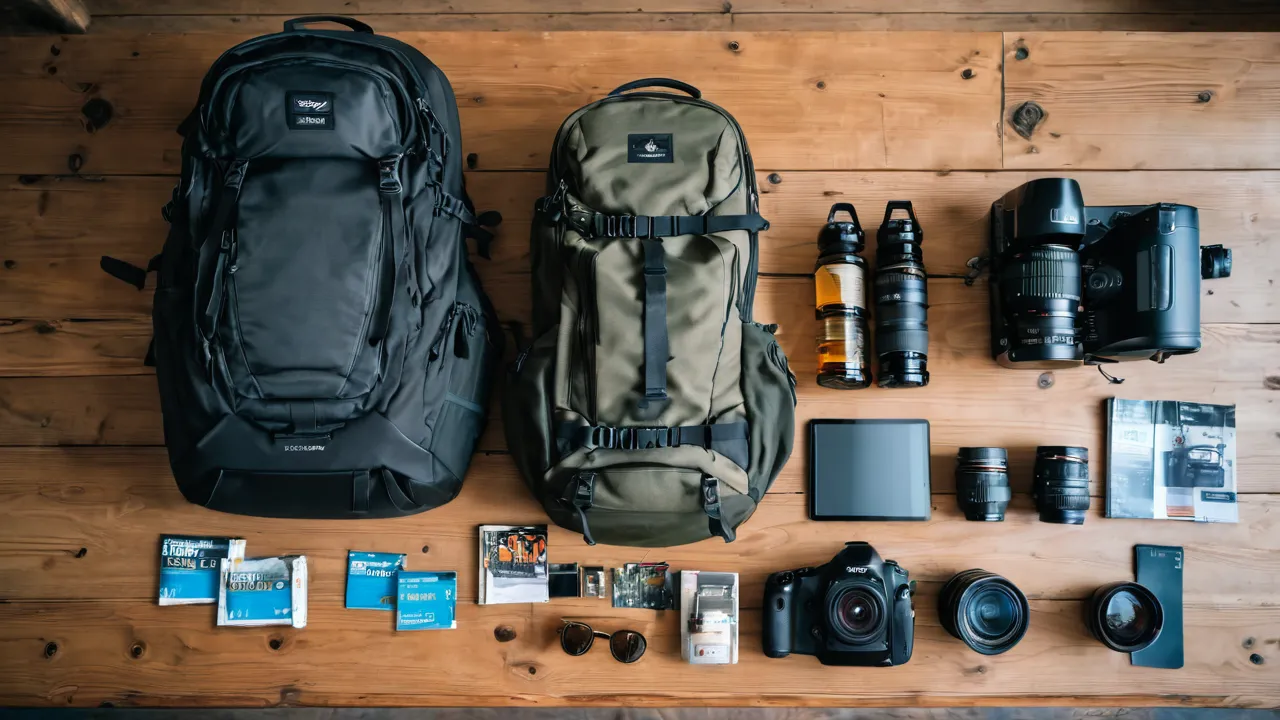
For a one week trip, most travelers fit comfortably in a backpack of about 35 to 45 liters, though the real answer depends on season, shoes and laundry habits. A summer trip with a few light outfits can fit in a smaller pack, while winter layers push you toward the top of the range. The only reliable way to choose is to add up volume item by item.
Why Generic Liter Ranges Mislead
Pack listings quote liters, a measure of internal capacity, and shopping guides give ranges for trip length. These ranges hide big differences. A liter is about 61 cubic inches, but a pack’s usable space is lower than its rated capacity, because stiff panels, pockets and a laptop sleeve eat into volume. Two 40 liter packs can hold different amounts depending on their shape.
Season changes volume more than trip length. A week of summer clothing may take a third of the space of a week of winter clothing. And your habits matter: if you do laundry halfway through, you pack for four days, not seven. So instead of using a range, estimate volume from the things you will actually put inside.
Estimating Volume by Item
Use these approximate volumes for compressed or rolled items. They are rough, and your clothes may differ, so treat them as starting points, not facts.
| Item | Approx. volume in liters |
|---|---|
| — | — |
| T-shirt or light top | 1 |
| Lightweight pants or shorts | 1.5 |
| Jeans | 3 |
| Sweater or fleece | 3 to 4 |
| Light jacket or rain shell | 2 to 3 |
| Pair of shoes | 4 to 6 each |
| Underwear and socks per day | 0.5 |
| Toiletry bag | 2 to 3 |
| Packing cubes and organizers | 1 to 2 in total |
Add up your list, then add about ten more liters for items you will pick up on the way and for the space the pack’s structure takes up. That is your minimum pack size.
Worked Example: Summer Week
A warm weather week might include five tops, two bottoms, one light jacket, one extra pair of shoes, a swimsuit and toiletries. That adds up to roughly 5 plus 3 plus 3 plus 5 plus 1 plus 3, which equals 20 liters. Adding underwear and socks for seven days brings it to about 23 liters. Add the ten liter buffer, and you land near 33 liters. A pack in the mid 30s works, and a 40 liter pack leaves room for souvenirs.
Worked Example: Winter Week
A cold weather week might add two sweaters, a heavier jacket, thermal layers and boots. The sweaters alone take 7 liters, the jacket 5, thermal layers 3 and boots up to 8. Combined with the basics, the total can reach about 40 liters before the buffer. This pushes you toward a 50 liter pack or toward wearing the bulkiest items on the plane. If you choose to wear the boots and jacket, you recover about 13 liters and can use a pack in the mid 40s.
Carry-On Fit Matters More Than Liters
If you want to avoid checking a bag, airline carry-on size limits matter as much as volume. A 40 liter pack can exceed a carry-on size limit if it is too tall or too deep. Many airlines list maximum dimensions for carry-ons, and basic economy or international carriers may be stricter, so check your airline’s dimension page. A soft pack can compress when stuffed in a sizer, but a stiff-panel pack cannot. Choose by the pack’s measured dimensions and not only its liter rating.
Our backpack category lists travel packs where you can compare stated capacity and dimensions, and you can see how we weigh such figures on the how we review page. For other bag formats, the travel and luggage section groups every related guide.
Do not forget the pack itself
A pack with a clamshell opening, a sleeping bag compartment or a bottom zipper has dead space around its dividers. Pockets that hold a water bottle or a laptop sleeve use volume that you cannot fill with clothing. If you plan to use these pockets, subtract about three to five liters from the rated capacity when you compare it to your list. This is why two packs both labeled 40 liters can feel quite different in practice.
Seasonal adjustments to your list
Spring and fall trips fall between the summer and winter examples. One extra layer, such as a light sweater, adds about three liters. A rain shell is worth carrying regardless of season, and it packs to a small bundle. Tropical trips add volume in unexpected ways: bulky sandals, sun hats and beach gear all take space. A quick look at your destination’s typical weather lets you adjust the list before you add up the numbers.
Ways to Shrink the Volume You Need
You do not always need a bigger pack. Rolling clothes, using compression straps and choosing fabrics that pack small cut volume. Wear your bulkiest shoes and jacket on travel days. Pick a color palette so pieces combine, which reduces the number of tops and bottoms. Choose quick-dry fabrics so a sink wash replaces extra outfits. Decant toiletries into small containers, or buy them at your destination.
Another useful approach is the two-bag system: a 30 to 35 liter main pack plus a small daypack that folds flat inside. The main pack carries the basics, and the daypack handles city days. That setup gives flexibility without carrying empty space.
A quick checklist before you buy
Write your item list with volumes, add the buffer, then compare against three numbers on the product page: rated liters, exterior dimensions and weight. Check that the opening style suits you; a clamshell makes it easy to see everything, while a top-loader can bury items at the bottom. Confirm there is a hip belt if you plan to carry more than about fifteen pounds. Finally, look at the return window, since a pack that looks right on paper can still feel wrong once loaded with your own gear, and a short return period leaves you no room to correct a sizing mistake.
Many travelers also overlook the weight of the pack itself. A heavy pack with thick padding and a rigid frame may cost you several pounds before you pack anything, which matters when an airline enforces cabin weight limits. Compare empty weights for packs of similar capacity, and weigh that against comfort features you will actually use.
Worked example: a spring week with one laundry stop
Plan for four days of clothing and wash midway. Four tops take 4 liters, two bottoms 3, a light sweater 3, a rain shell about 2.5, one extra pair of shoes 5, toiletries 2.5, four days of underwear and socks 2, and packing cubes 1.5. That adds up to 23.5 liters, and the ten liter buffer brings the total to about 34. A 35 to 40 liter pack suits that list, with a little room to grow. Notice how doing laundry cut the requirement far more than any compression trick.
Write your own version of this list on your phone, with a line for each item and the volume next to it. Then edit it by trip type. A business week replaces the second pair of shoes with dress shoes and adds a folded jacket, so the total rises. A beach week swaps the sweater for swimwear and sandals, which are bulky but light. The method does not change, only the line items.
Who Should Choose Which
Choose 30 to 35 liters if you travel light in warm weather and are comfortable doing a mid-trip wash. Choose 40 to 45 liters if you carry a laptop, a second pair of shoes or occasionally add souvenirs. Choose 50 liters or more only for cold climates, long trips or gear-heavy trips, and consider checking the bag. Skip oversized packs if you tend to fill any space you are given, since extra capacity usually becomes extra weight.
Frequently Asked Questions
What size backpack do I need for a week of travel?
Most people fit a one week trip in about 35 to 45 liters. Warm weather and a mid-trip laundry stop point to the low end, while winter layers, boots or a laptop point to the high end. Add up your items by volume plus about ten liters for a buffer to get your own number.
Is a 40 liter backpack enough for a week?
Usually yes for warm weather or a trip with one wash. It can be tight in winter, when sweaters, a heavy jacket and boots may total close to the pack’s usable volume. Wear the bulkiest items on travel days to free up space, and check that the pack’s dimensions meet your carry-on limit.
How many liters is a 40 liter pack in cubic inches?
One liter is about 61 cubic inches, so 40 liters is roughly 2,440 cubic inches of rated capacity. Usable space is lower, because pockets, a laptop sleeve and stiff panels take volume. Subtract about three to five liters if you plan to use those pockets.
Does a bigger backpack make packing easier?
It makes packing faster but not better. Extra space tends to fill, and a filled pack is heavy to carry and may not fit carry-on limits. A half-empty large pack also sags and shifts. Choose the smallest pack that carries your list comfortably, and use compression straps to control the rest.
Final Thoughts
Add up your items, include a buffer and compare the total to the pack’s usable volume, not just its rated liters. Summer weeks often fit in the low-to-mid 30s, winter weeks often need the mid 40s, and wearing bulky items shrinks the number. Confirm the pack’s dimensions against your airline’s carry-on rules, and choose the smallest pack that carries your list comfortably.
Related buying guides
- Ballistic Nylon vs Cordura vs Polyester Luggage Fabric
- How to Care for a Travel Backpack: Washing and Waterproofing
- Carry-On Backpack Dimensions: Will It Pass the Gate
About the author

The BuyOnceChoice Editorial Team researches durable products worth buying once. Our guides compare published specifications, warranty terms, expert review consensus, and verified owner feedback. We do not conduct our own product trials. See How We Review and our Editorial Policy for our standards.