Generator Surge Watts vs Running Watts
Starting watts are a brief peak, running watts are what the engine holds continuously. Here is how to read both and build a safe load list.
 By BuyOnceChoice Editorial Team
Updated November 16, 2026
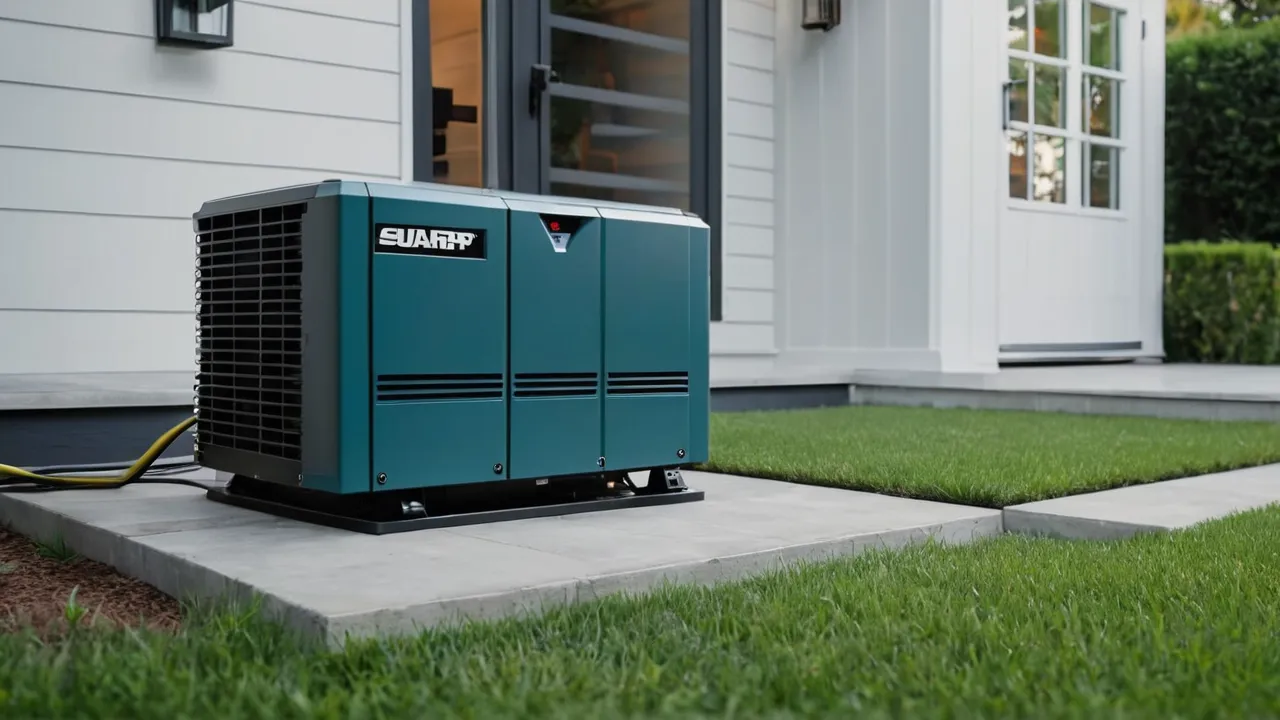
Generator starting watts, also called surge or peak watts, are the brief extra power a generator can deliver for a few seconds to start motors, while running watts are the steady power it can supply continuously. Size a generator so its running watts cover everything you run at once and its starting watts cover the biggest motor’s extra surge on top of that.
The Two Ratings in Plain Terms
Every generator lists two numbers. Running watts, also called rated or continuous watts, are what it can deliver hour after hour. Starting watts, also called surge, maximum or peak watts, are what it can deliver for a few seconds, enough to start a motor or compressor.
Think of running watts as walking speed and starting watts as a short sprint. You can sprint briefly, but you cannot sprint all day. The surge capacity is a short term overload that the engine and alternator can handle for a moment, and then the output must fall back to the running rating. If a load keeps drawing above the running rating, the generator will overload, the breaker will trip or the engine will bog down.
Find the ratings in the right place. The manual and the data plate are more reliable than a box or listing. Check whether the surge number is for gasoline only, whether the generator derates at high altitude or in hot weather and whether the starting number is a peak that lasts only a fraction of a second. A conservative approach is to size so that the running watts you need are no more than about 80 percent of the generator’s running rating, which leaves headroom for variations.
Why Motors and Compressors Surge
An electric motor at rest has no back force opposing current, so it draws a large inrush of current when power is first applied. As the motor speeds up, the current falls to its running value. Compressors in refrigerators and air conditioners must also push against pressure at start, which adds to the surge. The surge often lasts a second or less for small motors and a few seconds for larger ones.
Resistive loads, such as lights, toasters and space heaters, have almost no surge. Their starting watts equal their running watts. Electronics also have little surge, though some have small inrush. Motors, pumps, compressors and tools are the loads that need extra surge capacity.
A Worked Sizing Example
Suppose you want to run a refrigerator, a sump pump, lights and a router during an outage. The refrigerator runs at about 150 watts and starts at about 450. The sump pump runs at about 800 and starts at about 2,400. Lights and the router run at about 150 total with no surge.
Step one: add all running watts: 150 plus 800 plus 150 is 1,100 watts. Step two: find the largest surge increase. The pump adds about 1,600 above its running watts, and the refrigerator adds about 300. The largest is 1,600. Step three: add the largest increase to the running total: 1,100 plus 1,600 is 2,700 watts needed at the start of the pump. Step four: add a margin of 20 percent, which gives about 3,200 watts of starting capacity. The running requirement is 1,100 watts plus margin, around 1,300.
A generator rated at 2,400 running and 3,000 starting would cover the running loads easily and nearly cover the surge, so choosing one with about 3,500 starting watts gives breathing room. In practice you can also avoid stacking surges by starting the pump and refrigerator at different times.
Run a second example with a workshop. A table saw runs at about 1,800 watts and starts at about 4,000. A shop vacuum runs at 1,000 and starts at 2,000. Lights run at 200 watts. Running watts total about 3,000 if all run together. The largest extra surge is the table saw at about 2,200 above its running watts. Starting requirement is 3,000 plus 2,200, about 5,200 watts, plus 20 percent margin gives roughly 6,200 starting watts, and running about 3,600. In practice, you would not start the saw and vacuum at the same instant, so you could use a smaller unit if you stagger loads, but the margin is a good idea because tool manufacturers’ numbers vary.
What Happens When You Exceed Each Rating
If you exceed the starting rating, the generator may stall, the voltage may sag or the breaker may trip. The motor may fail to start and hum, which can overheat it. If you exceed the running rating for a sustained time, the generator may overheat, the breaker trips or the engine may stall. In some cases, repeated overloads can damage the generator or the appliance, particularly with poor quality power.
Signs of overload include dimming lights, a straining engine, a motor that hums but does not start and a tripping breaker. If you see them, turn off loads and restart them one at a time. Use the generator within its ratings.
Inverter, Conventional and Soft Starters
Conventional generators often have a higher surge ratio, meaning starting watts well above running watts, though not all do. Inverter generators produce clean power for electronics, but surge capacity varies, and some can sustain surge only briefly. Large inverters can handle a wide range of loads.
A soft starter is a device that reduces the starting current of a motor, such as an air conditioner compressor. It limits the inrush and lets a smaller generator start the load. Some air conditioners and pumps are available with built in soft start. Ask the appliance maker whether a soft starter is compatible, and have a professional install it.
Ask the appliance maker about the starting current. Some modern air conditioners and refrigerators with inverter compressors have lower inrush, which is helpful on a smaller generator. Older units, and units with simple compressors, draw more. A plug-in meter with a peak hold feature, or an electrician’s clamp meter, shows the real figure. If you are close to the limit, a soft starter or a larger generator is the safer choice.
Reading a Specification Sheet Without Getting Fooled
Look for the numbers on the specification page and compare the same terms. Check whether the starting watts are for gasoline, propane or both, since propane output is usually lower, and note any altitude or temperature derating in the manual. Some listings highlight only the peak watts, which can mislead. Look for the rated continuous watts and the surge duration. Check the outlets, including 120 volt and 240 volt receptacles, and their amp ratings. A generator with enough watts can still lack the right outlet for a pump or a transfer switch.
Managing Loads in Real Time
Make a habit of staging loads. Start the largest motor first with other loads off, then add others one at a time, allowing each to settle. Turn off non essential loads while a large motor starts. Keep a list near the generator of what is running. Use the generator’s display or a plug-in meter, if available, to see how close you are to the limit.
If you have a transfer switch with a load management feature, such as a module that sheds a large load when the generator is near capacity, it can protect the generator. Ask an electrician whether it is appropriate.
Safe Use and Wiring Reminders
Run generators outdoors only, far from the house, with the exhaust pointed away, and keep carbon monoxide alarms working indoors. Do not plug a generator into a wall outlet. Use a transfer switch or interlock installed by a licensed electrician. Use cords rated for outdoor use and the wattage you are running, keep them short and avoid damage.
Keep a log of what you learned during your first outage or practice run: which loads started easily, which tripped and which ordering worked. Update your plan each season. Store the generator’s manual with the load list, and keep spare oil, a spark plug and a funnel in a labeled box.
Who Should Look at Which Number
- Occasional users running lights and electronics: running watts matter most.
- Homeowners with pumps, refrigerators and air conditioners: both numbers, with the surge being critical.
- Contractors running tools: starting watts for saws and compressors.
- Anyone planning a transfer switch: the generator’s outlet, running watts and the home loads.
Browse the portable generators and whole-home generators pages, the power and energy section and how we review.
Frequently Asked Questions
What is the difference between starting watts and running watts?
Running watts are the steady power a generator can supply continuously. Starting watts are the higher, short term power it can supply for a few seconds to start motors. Size for the total running watts plus the largest motor’s extra start surge.
How do I find the starting watts of my appliance?
Check the nameplate or manual for amps and voltage, and look for starting or locked rotor amps. If it is not listed, motors often need two to three times running watts. A plug-in meter that records peaks, or an electrician with a clamp meter, can measure it.
Can a generator run at its starting watts continuously?
No. Starting watts are a brief overload capacity, usually lasting a few seconds. Running at that level for long can overheat the generator or trip the breaker. Use the running watts rating for steady loads and leave a margin.
Do I need a bigger generator for an air conditioner?
Often yes, because compressors have a large surge. A soft starter can lower the starting current and let a smaller generator run it. Check the air conditioner’s starting amps, the generator’s surge rating and have an electrician advise.
Final Thoughts
Add up running watts for everything you run together, then add the largest motor’s extra starting watts and a margin. Check outlets and the fuel type’s rating, start big loads one at a time and connect to the house only through a transfer switch installed by a licensed electrician.
Related buying guides
- How Long Does a Whole House Generator Last
- Inverter vs Conventional Generators: What to Buy
- Natural Gas vs Propane Standby Generators
About the author

The BuyOnceChoice Editorial Team researches durable products worth buying once. Our guides compare published specifications, warranty terms, expert review consensus, and verified owner feedback. We do not conduct our own product trials. See How We Review and our Editorial Policy for our standards.