Portable Power Station Cold Weather Guide
Cold shrinks power station runtime and can make charging unsafe for lithium cells. Here is a rule of thumb for winter use, storage, and solar charging.
 By BuyOnceChoice Editorial Team
Updated November 16, 2026
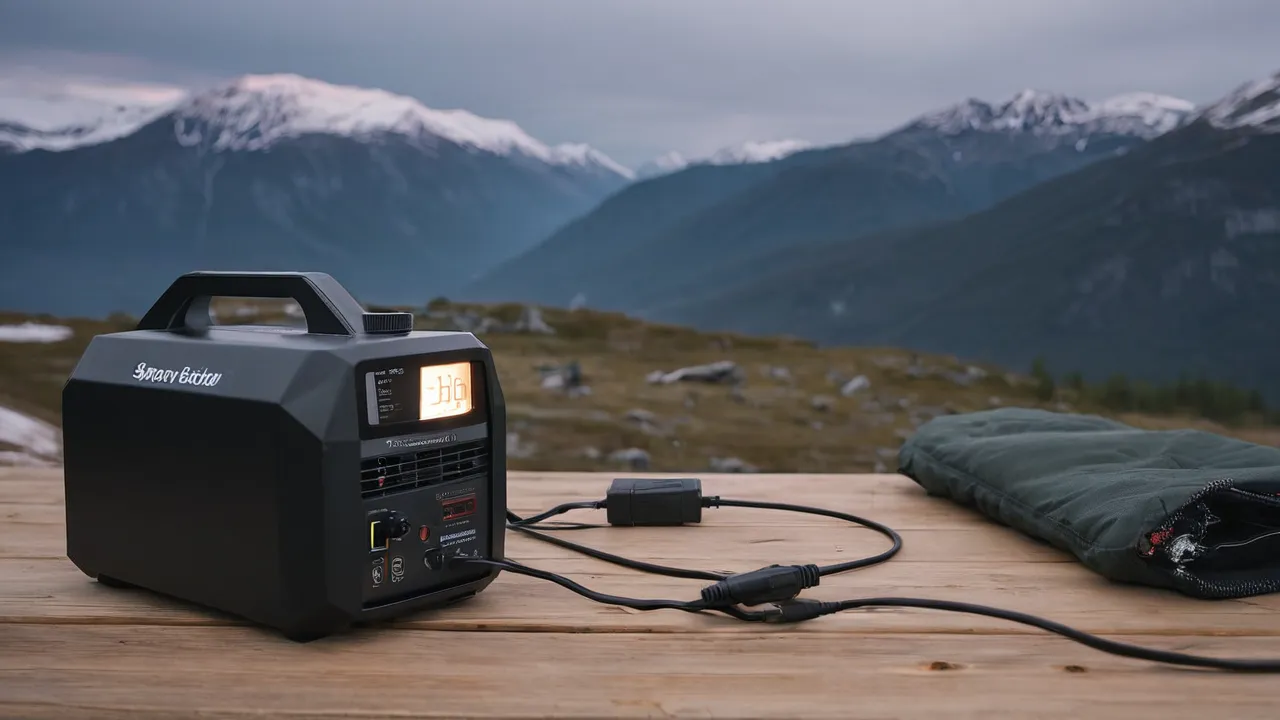
A portable power station can discharge in cold weather, often down to well below freezing, but it should generally not be charged when the battery is below freezing unless the manual says the unit has a heater or a low-temperature charging mode. The safe rule of thumb is to keep the battery above 32 degrees Fahrenheit while charging, expect less usable capacity in the cold, and always follow the temperature ranges printed in the manual for your model.
Sellers disagree on cold limits, and chemistry matters, so this guide tells you which numbers to find, how to plan runtime in winter, and how solar charging changes. Browse the portable power stations category for models, see our solar generators guides if you plan to recharge from panels, and read how we review for how we handle specifications.
Why Cold Hurts a Lithium Battery
Inside a lithium battery, ions move through an electrolyte between the electrodes. Cold slows that movement. The result is higher internal resistance, which means the battery delivers less power and the voltage sags under load, so the unit may shut down earlier than the percentage suggests. Capacity that returns when the battery warms up is a temporary loss, so a unit that dies in the cold may recover indoors.
Charging in the cold is the more serious problem. When a lithium cell is charged below freezing, lithium metal can plate onto the anode instead of inserting into it. That plating can permanently reduce capacity and, in severe cases, create internal short circuits. It does not always show up right away, which is why the manual’s charging limit matters even if the unit appears to charge normally.
The Two Temperature Ranges to Find in Your Manual
Look for two separate ranges, one for discharging and one for charging. Discharging ranges often extend well below freezing, and charging ranges commonly begin near freezing. Some units add a third range for storage. If the manual gives only one range, ask the manufacturer in writing which activity it covers.
- Discharging range: the lowest and highest temperatures at which you can power devices.
- Charging range: the lowest and highest temperatures at which you can charge from the wall, solar, or a vehicle.
- Storage range: the temperatures at which the unit can sit unused without damage.
Different chemistries behave differently. Lithium iron phosphate cells are often described as having a lower limit for safe charging than some nickel-based cells, though makers differ, and some stations include a heater that warms the cells before charging. Do not assume a chemistry label answers the question. The manual does.
A Safe Rule of Thumb
If you cannot find a charging range, treat 32 degrees Fahrenheit as the floor for charging, and warm the unit to a cool room temperature before connecting a charger. Keep it indoors overnight, move it into the cold only for use, and do not charge it in an unheated vehicle, garage, or tent on a freezing night. Insulating the unit in a cooler or padded box helps retain its own heat, but do not seal it in a way that blocks ventilation.
Never warm a unit with an open flame, a space heater aimed at the case, or a hair dryer held close. Gentle room-temperature warming is enough. If the case is frosted or wet from condensation after coming inside, let it dry fully before charging, and wipe moisture from ports.
Planning Runtime in the Cold
Plan for less capacity. A common planning habit is to assume a noticeable loss at freezing temperatures and a larger loss well below, but the real number depends on the chemistry, the load, and how cold the cells are. Since manufacturers rarely publish exact capacity curves, build margin into your plan rather than trusting the label.
A Worked Example
Say your unit is labeled at 1,000 watt-hours and you want to run a 60 watt device overnight for ten hours. In mild weather that is 600 watt-hours, with usable capacity near 850 watt-hours after inverter losses, so you have margin. If the unit is outside in the cold and loses a quarter of its usable capacity, you may have closer to 640 watt-hours. The same night still works, but with little to spare. Add a second device or a longer night and it fails. Check your own numbers, and keep the unit warm when you can.
Also consider the loads. Heating devices such as electric blankets draw steady power, and space heaters draw far more than a typical station can supply for long. A power station is a poor fit for running a heater. Choose a better warming strategy, and use the station for lights, communications, and a few small loads.
Cold Weather and Solar Charging
Panels often produce well in cold, clear weather, since cold raises panel voltage. That is good, but it has two consequences. The higher voltage can exceed the station’s solar input limit, so check the open-circuit voltage of your panels against the manual’s maximum input at the coldest temperatures you expect. The station itself may refuse to accept charge if its cells are too cold, so a clear sunny morning does not guarantee charging. Short winter days and low sun angles also reduce energy, so plan on fewer hours of useful production, and clear snow off the panels.
Safety Notes, and Who Should Worry
Follow the manual for operating limits. Do not use a station that has been frozen and shows damage, swelling, or leaks, and do not charge one that has been dropped. Keep carbon monoxide risk in mind: never run a generator or a gas heater in a closed space as a backup to the station.
- Who should worry most: owners who leave a unit in an unheated garage, cabin, car, or tent for winter use.
- Who can mostly ignore it: owners who store and use the unit indoors in a climate-controlled home.
- Who should plan ahead: anyone depending on a station for winter outages, especially with solar charging.
- Who should choose a different solution: those who need many hours of heating or large loads at subzero temperatures.
A Winter Outage Routine
Preparation decides how a station performs in a cold snap. Before winter, charge the unit to the level the manual recommends for storage and then top it up in the days before a forecast storm. Keep it in the warmest practical room, off the floor, where cold air collects. When the outage starts, run cords to where devices need power instead of placing the unit near a window or exterior door.
- Before the season: read the temperature ranges, check that the unit charges normally indoors, and label cables.
- Before a storm: charge to full, charge phones and lights, and move the unit to a warm, dry room.
- During an outage: power only what matters, switch off the inverter when no AC load is running, and watch the percentage.
- After an outage: let the unit return to room temperature before recharging, then recharge fully and inspect cords and ports.
Switching off the AC inverter or the DC ports that are not in use saves standby drain, which matters when capacity is already reduced. Many stations draw a small amount of power just to keep the inverter running, and over a long night that adds up. If your manual lists the idle draw, multiply it by the hours you expect to leave the inverter on, and compare the result with the capacity you have left. That one calculation often shows that a small DC-only setup lasts far longer than an AC setup for the same devices.
Common Cold-Weather Mistakes
The most frequent mistake is plugging a charger into a frozen unit that was just carried in from a vehicle. The second is leaving it in a car trunk over a freezing night and then relying on it at dawn. The third is assuming the battery percentage on the display tells the whole story, when voltage sag under cold can shut the unit off with charge left. The fourth is putting a heater on the station. A few simple habits avoid all four: keep the unit warm, charge above freezing, watch the load, and check the manual.
Frequently Asked Questions
Can you charge a power station below freezing?
Generally you should not, unless the manual says the unit has a heater or a low-temperature charging mode. Charging a cold lithium battery can cause permanent damage. Check the charging temperature range, warm the unit to a cool room temperature, and then connect the charger.
How cold is too cold for a portable power station?
It depends on the model. Many units list a discharging limit well below freezing and a charging limit near freezing, but you must read your manual. Cold reduces capacity and power output even within the allowed range, so plan for less runtime than the label suggests.
Should I keep my power station in the garage in winter?
Only if the garage stays within the manual’s storage and operating ranges. An unheated garage in a cold climate can drop below them. A cool indoor closet is safer, and it keeps the battery ready to use and charge when an outage hits.
Final Thoughts
Keep your power station warm, charge it above freezing, read both temperature ranges in the manual, and plan for reduced capacity in the cold. Use solar with attention to voltage limits and short winter days, and keep heating loads off the station. A little planning before the storm matters more than any marketing number on the box.
Related buying guides
- Portable Power Station Safety Checklist
- Power Outage Preparedness Checklist for Backup Power
- Power Station Output Ports Explained
About the author

The BuyOnceChoice Editorial Team researches durable products worth buying once. Our guides compare published specifications, warranty terms, expert review consensus, and verified owner feedback. We do not conduct our own product trials. See How We Review and our Editorial Policy for our standards.