Watts vs Watt Hours: Power Station Specs Explained
Watts tell you how much a power station can deliver at once, and watt hours tell you how long it can keep going. Here is how to read both on a spec sheet.
 By BuyOnceChoice Editorial Team
Updated November 16, 2026
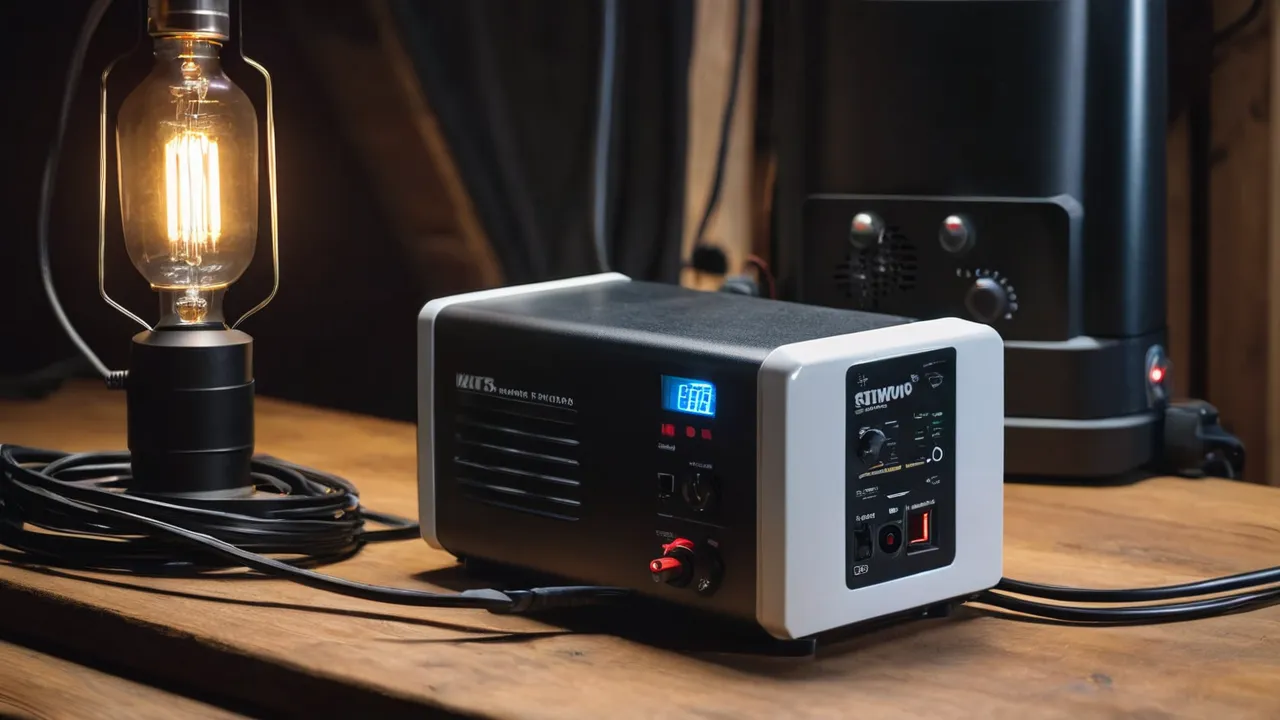
Watts measure how fast a power station can deliver energy at a moment, while watt-hours measure how much energy it stores in total. Watts decide which devices you can run at the same time, and watt-hours decide how long you can run them, so you need both numbers to be right. Divide watt-hours by the watts you draw to estimate runtime, and compare watts against what your devices need to check whether the unit can run them at all.
This guide uses a pipe and tank picture to explain the difference, shows a runtime method you can follow, and lists the spec sheet traps that mislead buyers, such as surge numbers and boost modes. Browse our portable power stations category for models, read how we review for how we treat specifications, and visit the power and energy section for related guides.
The Pipe and Tank Picture
Picture a tank of water with a pipe at the bottom. The size of the tank is like watt-hours: it holds a fixed amount. The width of the pipe is like watts: it limits how fast water can flow out. A big tank with a narrow pipe takes a long time to empty and cannot supply a big, fast demand. A small tank with a wide pipe supplies a big demand but empties quickly.
A power station is the same. The battery is the tank, and the inverter is the pipe. A unit with a large battery and a small inverter runs small things for a long time. A unit with a small battery and a large inverter can start a power tool but runs out quickly. Both specs matter, and neither substitutes for the other.
What a Watt Tells You
A watt is a rate of using energy. Every device lists its power in watts, on a label or in the manual. A phone charger might use 10 to 20 watts, a laptop 45 to 100, a television around 100, a small refrigerator 50 to 150 while running, a hair dryer over 1,000, and a space heater up to 1,500. To run several devices together, add their watts and compare the total with the unit’s continuous output rating.
If the total exceeds the output rating, the unit shuts off. Motors, such as refrigerators and pumps, draw more at startup than while running, and the surge rating shows how much the inverter can supply briefly.
What a Watt Hour Tells You
A watt-hour is an amount of energy: one watt for one hour. Battery capacity is listed in watt-hours. A 500 watt-hour battery could in theory run a 50 watt device for ten hours, or a 500 watt device for one hour. Capacity is also given in kilowatt-hours, which equal 1,000 watt-hours.
Capacity on the label is a nominal figure. Usable energy is lower because the inverter, the cables, and the battery management lose some. A planning figure is about eighty-five percent of the label, so a 500 watt-hour unit yields about 425 usable watt-hours.
A Simple Runtime Method You Can Follow
- Add the watts of the devices that will run together, and check that the total is below the continuous output.
- Multiply the unit’s capacity in watt-hours by 0.85 to get usable watt-hours.
- Divide usable watt-hours by the total watts to get hours of runtime.
- For devices that cycle, such as refrigerators, use the average watts, not the peak.
Worked Examples
Example one: a laptop at 60 watts and a router at 10 watts draw 70 watts. A 500 watt-hour unit gives about 425 usable watt-hours, so runtime is about six hours. Example two: a 1,000 watt-hour unit powering a small refrigerator averaging 60 watts runs about 14 hours, since 850 divided by 60 is a bit over 14. Example three: a 1,000 watt-hour unit powering a 1,200 watt space heater would not even start if its output is lower than 1,200 watts, and if it did, it would last well under an hour. These numbers show the method, so use your own device labels.
Spec Sheet Traps to Watch For
- Peak or surge watts printed in large type, with continuous watts in small type. Continuous is what matters for steady loads.
- Boost or lift modes marketed under various names, which let the inverter run certain resistive loads above the rated watts by reducing voltage. They do not help motors, and the heating device may run at lower power.
- Capacity quoted at the cell level rather than at the outlet, which overstates usable energy.
- Output limited when charging or when the battery is low, which the fine print may mention.
- Combined port limits that are lower than the sum of individual ports.
- Watt-hours quoted for a battery that comes in a bundle with an expansion pack that is sold separately.
When a number affects your decision, find it in the manual or the rating label. If the manual contradicts the product page, trust the manual and ask the seller to explain.
A Device Table to Copy
| Device | Typical running watts | Notes |
|---|---|---|
| Phone charger | 10 to 20 | Small, steady |
| Laptop | 45 to 100 | Depends on workload |
| LED lights | 5 to 15 each | Efficient |
| Router and modem | 10 to 25 | Runs all day |
| Small refrigerator | 50 to 150 | Cycles, higher at startup |
| Television | 50 to 150 | Varies by size |
| Space heater | Up to 1,500 | Usually too much for a portable unit |
These ranges are general, so use the label on your own device. Multiply the watts by the hours to get watt-hours for each line, then add the lines.
Where the Missing Energy Goes
The inverter converts the battery’s direct current to alternating current, and some energy is lost as heat in the process. An inverter also draws a small amount just by being on, even with nothing plugged in, which adds up over a night. Cables and the battery management system lose a little more. Together this is why planning with about eighty-five percent of the label capacity is a safer habit than counting the full number. Using DC and USB ports directly for phones, lights, and 12 volt gear avoids inverter loss for those loads, so a small DC-only routine often stretches runtime noticeably. If the manual lists an idle draw, multiply it by the hours the inverter stays on, and subtract it from your budget.
Common Mix-Ups
- Reading kilowatt-hours as kilowatts, and expecting a unit to supply more power than it can.
- Dividing watt-hours by the peak watts instead of the average watts.
- Counting both a device’s surge and running watts as if they were continuous.
- Forgetting that cold, heat, and age reduce usable capacity.
- Comparing a unit’s watts with another unit’s watt-hours as if they measured the same thing.
Keep one sentence in mind: watts are speed, watt-hours are distance. A fast car with a tiny tank goes far only briefly, and a slow car with a huge tank goes far slowly. Match the car to the trip.
Safety Notes for Using the Numbers
Do not run a unit at its limit for long periods, since that heats the inverter and shortens its life. Leave margin, typically twenty percent or more for continuous loads. Use cords rated for the load, avoid daisy-chaining power strips, and keep the unit ventilated and dry. Do not connect a power station to household wiring through an outlet. Any permanent connection requires a licensed electrician and a transfer switch. Follow the manual for temperature limits and storage.
Who Should Prioritize Which Number
- Campers with phones, lights, and a fan: watt-hours, for days of use, with modest watts.
- People running a refrigerator or a CPAP machine: watt-hours for runtime, and enough watts for startup.
- Tool users and job sites: watts and surge first, then watt-hours.
- Home backup owners: both, with watts for the largest simultaneous loads and watt-hours for outage length.
- Buyers comparing two units: ask what each device you own needs in watts, and how many hours you want in watt-hours, then check both boxes.
Frequently Asked Questions
What is the difference between watts and watt-hours on a power station?
Watts are the rate at which the unit can deliver power at one moment, and watt-hours are the total energy stored. Watts decide what you can run together, and watt-hours decide how long it lasts. Divide watt-hours by your load in watts to estimate runtime, then adjust for losses.
How long will a 1,000 watt-hour power station run a 100 watt device?
Roughly eight to nine hours, since usable energy is about 850 watt-hours and 850 divided by 100 is 8.5. The real figure depends on conversion losses, the device’s actual draw, and temperature. Use the label watts of your device, and add margin.
Is a higher watt rating better than a higher watt-hour rating?
Neither is better in general. A high watt rating lets you run bigger devices, and a high watt-hour rating lets you run them longer. Match both to your devices and your hours. A unit strong in one and weak in the other will fall short of your needs.
Final Thoughts
Watts tell you what can run at once, and watt-hours tell you for how long. Add up your device watts, check them against the continuous output, divide usable watt-hours by that total, and watch for spec sheet traps like surge-only numbers and boost modes. Use the manual for the final word.
Related buying guides
- What Size Portable Power Station Do I Need
- Can a Portable Power Station Power a House
- Can a Portable Power Station Run a Refrigerator
About the author

The BuyOnceChoice Editorial Team researches durable products worth buying once. Our guides compare published specifications, warranty terms, expert review consensus, and verified owner feedback. We do not conduct our own product trials. See How We Review and our Editorial Policy for our standards.