Drip vs Pour Over vs French Press: Pick Your Method
Compare three brewing methods by cleanup time, counter space, ongoing filter cost, and which part of each setup tends to fail first.
 By BuyOnceChoice Editorial Team
Updated November 16, 2026
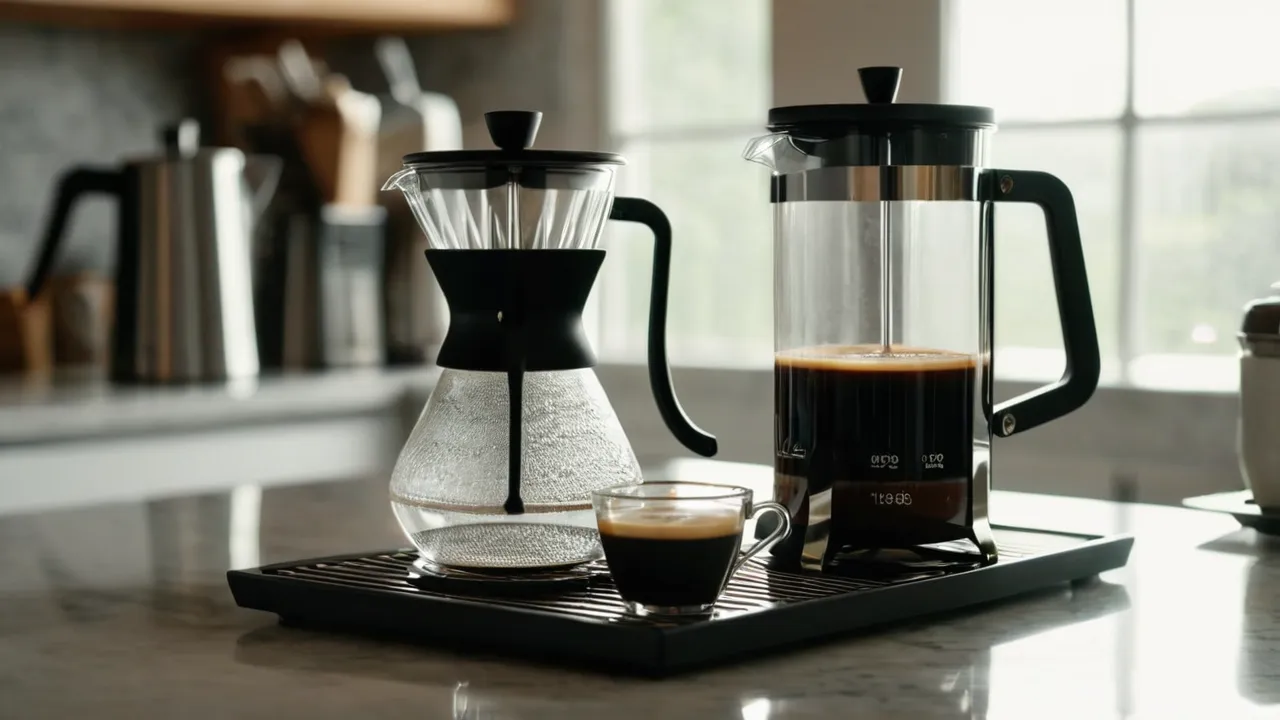
Pick a drip machine if you want hands-off coffee for several cups every morning, a pour over cone if you brew one or two cups and enjoy the routine, and a french press if you want the lowest cost and fewest parts to replace. Drip wins on convenience and volume, pour over wins on control and a small footprint, and the press wins on simplicity, though it leaves silt in the cup and the grounds are messy to clean.
All three can make good coffee from fresh beans and a decent grinder. The better question is which method fits the way you live, so this guide compares cleanup time, counter space, ongoing filter cost, and what tends to wear out first.
How Each Method Works
A drip machine heats water in a small chamber, then sprays it over a basket of grounds. The brew falls into a carafe, usually on a timer or at the push of a button. You scoop grounds, add water to the reservoir and walk away.
Pour over uses a cone or dripper, a paper or metal filter, and a kettle you control by hand. You pour hot water in slow circles, and gravity does the rest. The result depends on your pour rate, grind size and water temperature, which gives you control and also creates variation.
A french press is an immersion method. Coarse grounds sit in hot water for a few minutes, then a metal mesh plunger pushes them down. Because the coffee stays in contact with grounds until you pour, it tastes fuller and heavier, with more oils in the cup.
Cleanup Time
Cleanup is the part people underestimate, and it often decides which method they keep using.
- Drip: remove the basket, toss the grounds and paper filter, rinse the basket and carafe. A permanent filter needs a bit more rinsing. The water reservoir and spray head need occasional descaling.
- Pour over: toss the paper filter and grounds together, then rinse the cone. This is the quickest method, and the kettle needs only a rinse.
- French press: grounds stick to the glass and mesh, so you rinse them into a trash bin or compost, not the sink drain, since sludge can clog pipes. The mesh needs disassembling for a thorough clean.
For a household that brews once a day, pour over and drip tie for easy cleanup, while the press takes the longest.
Counter Space and Storage
Drip machines take the most room. They need a spot near an outlet, with clearance above for the lid to open and for filling the reservoir. A pour over setup is the smallest: a cone, a kettle and a carafe or mug, with no cord on the cone. A french press sits between the two, since the vessel is compact but you still need a kettle.
Kettle needs matter. A drip machine heats its own water. Pour over and press both need a separate kettle, and a gooseneck kettle improves pour control for the cone. If you do not already own a kettle, include that in your counter plan.
Ongoing Filter and Consumable Cost
Drip machines use paper filters, or a reusable mesh basket that some models include. Pour over typically uses paper cones that are sized to a specific dripper, so check the shape before you stock up. Reusable metal cones exist but let more fine particles through. French press uses no paper at all, and the mesh screen is the only consumable. Over years, the press costs least to run, drip and pour over cost a little more because of paper.
If you want to cut paper waste, a permanent filter in a drip machine is an option. Be aware that reusable filters need regular cleaning to avoid oily build up.
Which Part Fails First
Understanding failure points helps you buy once.
- Drip machine: the heating element and pump are sealed inside, and limescale from hard water shortens their life. A glass carafe breaks easily, so a thermal carafe is sturdier but still has a lid that wears. Look for machines with removable water reservoirs and descaling instructions.
- Pour over: nothing mechanical wears out. Ceramic and glass drippers can chip or crack, plastic and stainless ones last longer. The kettle becomes the long term cost.
- French press: the glass beaker is the typical failure, because it cracks from impact or thermal shock. Stainless presses survive drops. The mesh screens bend or wear out and many models have replaceable ones.
A fully stainless french press or a metal cone has the fewest parts to fail, which fits a buy-once approach. Drip machines have more points of failure but replace the most effort.
Taste and Control
Drip machines vary a lot. Some do not reach the brewing temperature recommended by specialty coffee groups, and some do not saturate grounds evenly. Look for models that state compliance with an industry certification, and read the product page for the stated brew temperature range, rather than assuming.
Pour over gives the most control. A slower pour extracts more, a faster pour extracts less, and you can adjust for different beans. The cost is attention. The french press gives a bolder, heavier cup, and the amount of fine sediment depends on your grinder and your patience when pouring. A burr grinder helps all three, since uneven grounds hurt every method.
Starting Numbers for Each Method
These starting points are common among coffee guides and are a place to begin, not rules. For drip and pour over, many people start near one part coffee to sixteen parts water by weight, with water between about 195 and 205 degrees Fahrenheit, a range often cited by specialty coffee groups. For french press, use a coarser grind and a similar ratio, steep for about four minutes, then press and pour out all the coffee so it does not keep extracting. Adjust grind and ratio to taste. A scale and a timer improve consistency more than any gadget.
Daily Routines That Favor Each Method
Think through a typical weekday rather than an ideal Sunday. If you are rushing out the door, a drip machine with a programmable timer finishes brewing before you reach the kitchen, and a thermal carafe keeps the pot hot for the next hour without a warming plate. If you work from home and take a few quiet minutes before the first meeting, pour over turns that pause into a routine, and a single cup avoids the stale second half of a pot.
Households with two coffee drinkers who want different strengths often do well with a pour over cone for one person and a press for the other, since both can share a kettle. A household that drinks several mugs through the morning is better off with a drip machine, because pouring by hand four times is tedious. Entertaining changes the math too. A press can make several cups at once, but it must be served quickly, since the coffee keeps extracting while it sits on the grounds.
Water quality matters across all three. Hard water leaves scale in a drip machine’s heater and tubing, while filtered water protects the machine and improves flavor. If your tap water tastes strongly of chlorine, filter it for any method.
A Verdict by Buyer Type
- Busy commuter: drip with a timer and a thermal carafe.
- Solo drinker who enjoys a ritual: pour over.
- Fan of a full bodied cup with little equipment: french press.
- Large household: drip, possibly with a second carafe.
- Traveler or small kitchen: a pour over cone or a press packs well.
- Anyone sensitive to sediment: pour over with paper filters, which hold back oils and fine particles.
Who Should Pick Which
- Choose drip if you make three or more cups at a time, want a timer, or share a pot with a household. See the best coffee maker roundup for what to look for.
- Choose pour over if you brew one or two cups, enjoy a ritual and have limited counter space.
- Choose french press if you want the lowest long term cost, use a coarse grind, and do not mind rinsing grounds.
- Skip drip if you rarely brew more than a mug, since small batches waste water and counter space.
- Skip pour over if you need coffee on autopilot before you are awake.
- Skip french press if you cannot tolerate silt, or if you serve many people at once, since each batch takes manual steps.
If you are comparing electric machines, browse the coffee makers category and check how pods and espresso formats differ.
Frequently Asked Questions
Which is better, drip, pour over or french press?
None is best for everyone. Drip is best for hands-off volume, pour over for control and a clean cup, and french press for a fuller body with little equipment. Pick by how many cups you brew, how much time you have and how much cleanup you will tolerate.
Is pour over better than a drip coffee maker?
Pour over gives more control over pour speed, water temperature and ratio, and many people like the clean taste. A drip machine is more convenient and makes larger batches. Some drip machines do not reach recommended brewing temperatures, so check the manual or maker claims.
Does french press coffee have more caffeine than drip?
It depends on the ratio, grind and steep time rather than the method alone. A french press steeps longer, which can extract more, but batch size and coffee dose matter more. Do not choose a method for caffeine alone, and measure your dose to compare fairly.
Which brewing method makes the least mess?
A drip machine is usually the easiest: dump the filter and rinse the basket and carafe. Pour over is similar with a paper filter. A french press takes longest to clean because wet grounds must be scooped out and the mesh rinsed. Dispose of grounds in the trash, not the sink.
Final Thoughts
There is no single best method. Match the method to your morning: drip for volume and convenience, pour over for control and a small footprint, and french press for the lowest cost and fewest parts. Whichever you pick, buy the grinder and kettle with the same care as the brewer, since those influence the cup most. For more on our approach to comparing products, see how we review.
Related buying guides
- Espresso Machine Boilers Explained: Thermoblock vs Boiler
- Espresso Machine Milk Frothers: Steam Wand vs Auto Froth
- Espresso Machine Pressure and Portafilter Basics
About the author

The BuyOnceChoice Editorial Team researches durable products worth buying once. Our guides compare published specifications, warranty terms, expert review consensus, and verified owner feedback. We do not conduct our own product trials. See How We Review and our Editorial Policy for our standards.