Wireless vs Wired Surround Speakers
Wireless saves cable work today but ties you to one ecosystem and its software support. Wired speakers cost more effort now and reuse with any receiver later.
 By BuyOnceChoice Editorial Team
Updated November 16, 2026
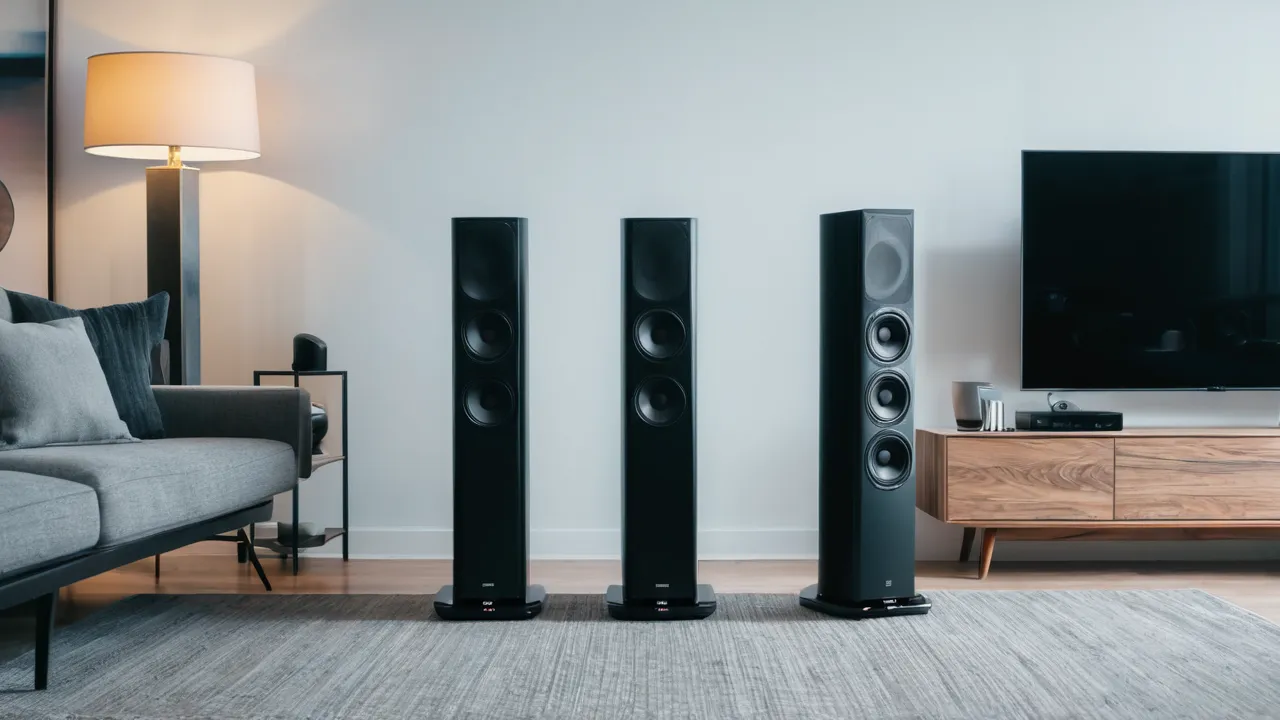
Wireless surround speakers receive audio over a radio link instead of speaker wire, though they still need a power cord, while wired surround speakers connect to the receiver with wire. Wireless suits rooms where running wire is hard and short ownership plans. Wired suits buyers who want durable parts that work with any receiver for many years.
What wireless surround actually means
The word wireless is misleading. A wireless surround speaker has no audio cable from the receiver, but it plugs into the wall for power, because it contains its own amplifier. A small transmitter connected to the receiver or soundbar sends the audio to the speaker over a radio link, often on a band shared with other household devices.
In practice, wireless surround falls into two groups. One group is a kit sold with a soundbar or a matching receiver, using the maker’s own radio module. The other group is a set of powered speakers that connect by a standard wireless method, with a transmitter. Compatibility is the point to watch, since many wireless modules work only with products from the same maker.
A wired surround speaker is a passive speaker. You run speaker wire from a receiver channel, and the receiver supplies power. It has no electronics inside, which keeps it simple and reusable.
The long term view
Wireless speakers contain amplifiers, radios and sometimes batteries or firmware. Those parts age faster than a passive speaker’s cone and cabinet. A radio standard can change, a maker can stop supporting a transmitter, and a failed module can leave the speaker unusable. A wireless set tied to one brand has no use after the matching soundbar or receiver is gone.
Wired speakers can be reused with any receiver that has the channels. They have few parts that age, so they may serve through several receivers and rooms. A pair of passive surrounds bought today can still work in a different house with a different brand of receiver.
| Question | Wireless | Wired |
|---|---|---|
| Works with any receiver | Often only the same brand | Yes, any receiver with free channels |
| Parts that can fail | Amplifier, radio module, power supply | Speaker driver and terminals |
| Support over time | Depends on maker firmware and modules | Not needed |
| Replacement | Whole set or module | Individual speaker |
| Resale | Limited to matching system | Broad |
| Setup | Power outlet and pairing | Wire run |
If you plan to keep the system for many years, the wired path tends to age better. If you expect to replace the system in a few years, wireless convenience can outweigh that.
Convenience and room constraints
Wireless wins on convenience. You place the speakers where you like, plug them into outlets and pair them. There is no wire along walls or under rugs. For a rental, a room with a hard to reach back wall or a seat in the middle of the room, wireless is attractive.
Wired speakers need wire, and the wire needs a path. In a finished room, that may mean running along baseboards, under a rug, through a wall or across a ceiling. Cable raceways and flat speaker wire help, and in wall work should use in wall rated cable and, where structural or electrical work is involved, a qualified installer. A single wire run for the rear pair is often a weekend project.
Wireless speakers still need power, so you need an outlet near each rear speaker, or you need to run power cords. A cord at the back of the room can be as awkward as a speaker wire. Count the outlets before you decide.
Latency, reliability and interference
A wireless link adds a small delay, and good systems compensate so that the surround sound stays in sync. A poor link can drop out or cause audible delay. Radio interference from other devices, thick walls or distance can affect the link. The risk is lower with a quality system, and it varies from home to home.
Wired speakers have no link to drop. The signal goes straight through the wire, with no delay and no pairing steps. Few things can go wrong once the wire is connected correctly.
If you choose wireless, check these points.
- Whether the speakers connect directly to a transmitter in a dedicated radio band or share the home network.
- Whether the maker states the range and what happens with a weak signal.
- Whether the speakers reconnect automatically after a power cycle.
- Whether firmware updates exist and who supplies them.
Cost and total price
Compare the full price, not the label. Wireless sets include amplifiers, so the speakers cost more than passive ones of similar size. Wired surrounds cost less per speaker, though they need a receiver with enough channels, speaker wire and perhaps a wall mount. If you already have a receiver with spare channels, wired is the lower cost route. If you must buy a receiver or amplifier to power them, the gap narrows.
Wireless kits sold with a soundbar are often priced as a bundle, and they cost less than buying matching speakers separately. If the soundbar is your main system, those kits are reasonable value. Check whether the rear speakers can be used with another product later.
Our AV receivers category lists models with enough channels to run wired surrounds.
Sound quality
Speaker quality depends on the drivers and the cabinet, and there is no inherent difference between wired and wireless drivers. Some wireless systems compress the audio before sending it, which can reduce detail, though surround channels carry mostly ambience and effects. Wired systems send the signal without compression, so they suit buyers who want the cleanest chain.
Room correction is another point. A receiver can measure and adjust wired speakers directly. Wireless speakers may have their own setup, which differs by maker. Check what correction is available. In practice, surrounds contribute less to overall sound quality than the front speakers, so spend most of your budget up front.
Hybrid approaches
Some systems offer a wireless link only for the rear pair, with a powered receiver module or amplifier. A second approach uses a small amplifier near the rear speakers, fed by a wireless audio link, so the speakers are passive and the amplifier is replaceable. If you want a mix, check that the parts follow common standards, so that you can swap them later.
Who should pick which
- Renters and rooms where wire cannot run: wireless.
- Buyers who plan to keep and expand the system: wired.
- Soundbar owners who want rear speakers from the same maker: the wireless kit.
- Buyers who own a receiver with spare channels: wired.
- Buyers who want the simplest long term option: wired.
See our home theater speakers category for options, and read our How We Review page for how we weigh long term factors.
Questions to ask before you buy a wireless set
Ask which products the speakers work with, and whether they work with a different brand’s receiver. Ask how long the maker supports the module and whether firmware updates exist. Ask whether the rear speakers need an outlet and how long the cord is. Ask what happens if one speaker fails: can you buy it alone? A clear answer to each question reveals how long you can keep the set.
Rear speakers and the home theater layout
Rear speakers add ambience and effects, and they matter less than the front three. If you can place surrounds at the sides, you may not need rear speakers at all. Position matters more than the connection type, so decide the layout first and then choose wireless or wired.
Resale, reuse and repair
Passive wired speakers hold value and are easy to resell. Wireless speakers tied to one system are harder to sell alone. For repair, a passive speaker can often be repaired by replacing a driver or terminals, while a wireless speaker with a failed amplifier may cost more to fix than to replace.
Frequently Asked Questions
Do wireless surround speakers need power cords?
Yes. They contain amplifiers, so each one must plug into an outlet or run on a battery, if the model has one. Only the audio cable is removed, so the cord still has to reach somewhere. Count the outlets near each rear speaker before you choose a wireless set.
Do wireless surround speakers work with any receiver?
Often not. Many wireless modules work only with products from the same maker, so a set sold with one soundbar may not pair with another brand’s receiver. Some powered speakers connect to any source through a separate transmitter. Check the compatibility list on the product page and in the manual before you buy.
Is there a delay with wireless surround speakers?
Good systems keep delay low and in sync, so you do not notice it. A weak link or interference can cause dropouts or audible lag. Place the transmitter and speakers with a clear path, and check the maker’s range and update notes.
Which lasts longer, wireless or wired surrounds?
Wired passive speakers generally last longer, since they have few parts that age and work with any receiver. Wireless speakers depend on amplifiers, radios and maker support. If you plan to keep the system for many years, wired is the safer choice.
Final Thoughts
Choose wireless for convenience, rentals and soundbar kits, and wired for long term value, reuse and the cleanest signal. Check compatibility and power needs, think about how long you will keep the system and decide the layout first. A wire run once can serve through several receivers.
Related buying guides
- Apartment Home Theater: Bass and Neighbor Guide
- Banana Plugs vs Bare Wire: How to Connect Speakers
- Bookshelf Speaker Placement: Distance, Height, Toe In
About the author

The BuyOnceChoice Editorial Team researches durable products worth buying once. Our guides compare published specifications, warranty terms, expert review consensus, and verified owner feedback. We do not conduct our own product trials. See How We Review and our Editorial Policy for our standards.