Speaker Stand Height and Weight Guide
Sit in your normal seat, measure ear height, subtract the speaker's tweeter offset, and choose a stand near that number with a safe weight rating.
 By BuyOnceChoice Editorial Team
Updated November 16, 2026
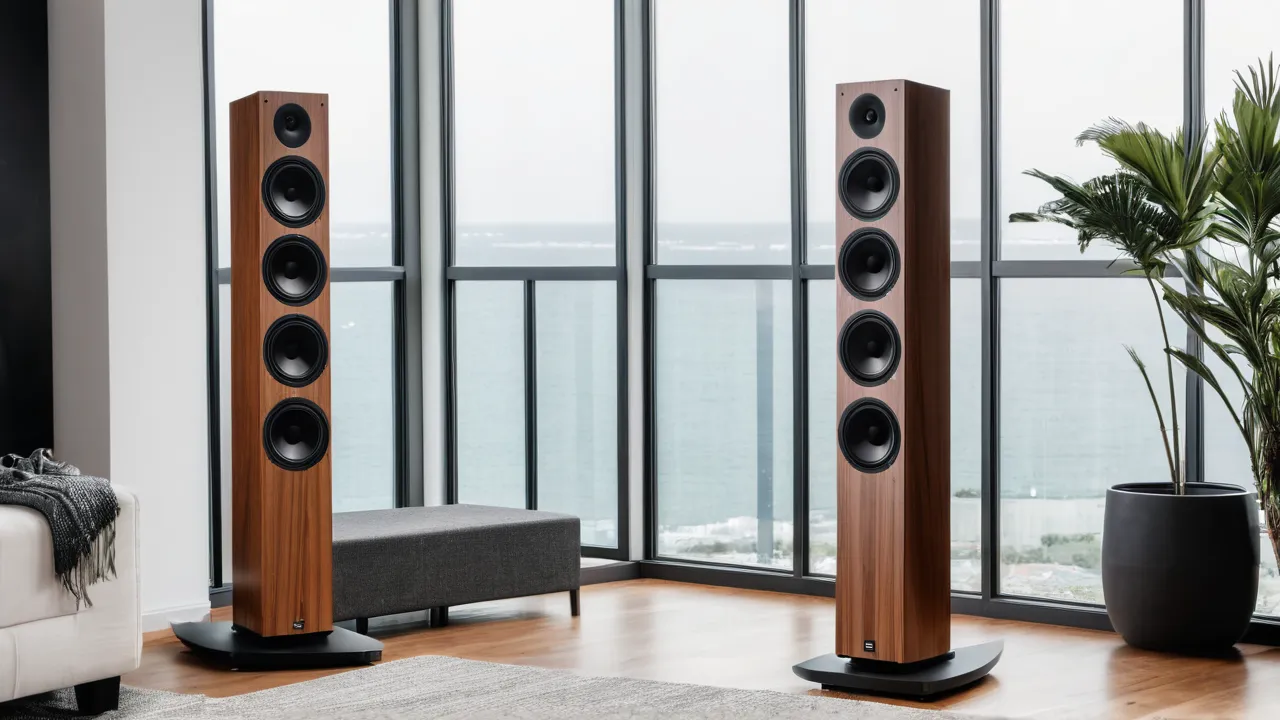
Speaker stand height should put the tweeter at ear level when you sit in your main seat. Measure from the floor to your ear, subtract the distance from the bottom of the speaker to its tweeter, and choose a stand close to that number. Then check the weight rating, the top plate size and the footprint, since an unstable stand is a safety problem.
The tweeter at ear height method
Speakers sound most balanced when the tweeter points near your ears, because high frequencies are directional. Follow these steps.
1. Sit in your normal listening seat, in a normal posture.
2. Have someone measure from the floor to the middle of your ear, or measure against a wall mark. A seated ear height often falls somewhere near the middle of the range between 35 and 40 inches, but bodies and seats differ, so measure your own.
3. Measure the speaker from its bottom edge to the center of the tweeter.
4. Subtract the tweeter distance from your ear height. The result is the stand height you want, including any pads or spikes.
5. Round to the nearest stand you can find, and adjust with feet or a shim.
For example, if your ear height is 38 inches and the tweeter sits 9 inches above the bottom of the speaker, a stand near 29 inches puts the tweeter at your ears. If a stand comes a couple of inches high or low, angle the speaker slightly toward your ears.
Seated versus standing listening
Most home theater listening happens seated, so use the seated ear height. If you stand a lot, for example in a kitchen or at a bar, or you listen from different places, pick a compromise. A stand that sets the tweeter a few inches above seated ear height gives a wider range of acceptable positions, and a slight downward tilt helps.
For a room where people stand and sit, favor the seated position if the system is for movies, and the standing position if it is for parties. Do not raise speakers so high that the tweeter points over your head, since the tone gets duller.
Weight rating, top plate and footprint
Three measurements decide whether a stand carries the speaker well.
- Weight rating: the stand’s rating should be higher than the speaker weight. Leave margin, because the rating assumes an even load and a fixed surface. If the maker lists a rating per stand or per pair, read which it is.
- Top plate: the plate should be as wide and deep as the speaker’s base, or close to it. A speaker that overhangs the plate by a lot is less stable.
- Footprint: a wider base is more stable. A narrow pole stand with a small base tips more easily than a wide one with a heavy plate.
Check the manual or product page for each figure. If the weight rating is missing, ask the maker, and do not assume.
Stability for kids and pets
Unstable stands can tip. Households with children or pets should use rated stands and secure them. Bookshelf speakers on tall stands can be pulled over by a tugged cable or a bump.
Use this checklist.
- Choose a stand with a wide base and a heavy plate.
- Attach the speaker to the stand with the supplied straps, putty or screws, as the manual states.
- Keep cables short and out of reach, and tuck them along the stand pole.
- Fill hollow stand columns only as the manual allows, since added mass lowers the center of gravity but must not overload the stand.
- Place stands away from walkways and play areas.
- Consider anchoring options such as wall straps if the speaker or stand allows it.
Push the speaker gently from the side after setup. If it moves more than a little, widen the base or lower the height. Re-check after you move anything.
Floors, spikes and pads
Stands usually end in feet that you can adjust. On carpet, spikes steady the stand. On hard floors, use pads or spike protectors to prevent marks. Level the stand, since a rocking stand rattles and is unsafe. Our home theater speakers category lists speakers with their weights, which helps when you plan the stand rating.
Stand height and placement relative to the room
Stand height is one variable, and placement is another. Place the stands so the speakers form a rough triangle with the seat. Keep them away from corners, with some distance from the wall behind them according to the manual if they have rear ports. Toe in slightly toward the seat if the speaker image sounds wide or hollow.
If a TV sits between the speakers, make sure that the stand height does not block the screen or the center speaker. In small rooms, shorter stands may be the only option, so tilt the speakers upward or downward toward your ears. Check the weight and the center of gravity again after any change.
Who should pick which
- Standard bookshelf speakers and a seat of normal height: a stand near your calculated height.
- Heavy bookshelf speakers: a stand with a high rating and a heavy base.
- Homes with children or pets: wide base, anchoring and tidy cables.
- Small rooms with limited space: a compact stand with a reasonable footprint and a firm top plate.
- Speakers with rear ports: a stand that leaves room behind.
If the receiver is also part of the upgrade, look at our AV receivers category. For our approach to claims and ratings, read the How We Review page.
Common stand mistakes
- Choosing height by looks and not by ear height.
- Ignoring the weight rating or the top plate size.
- Leaving the stand unlevel.
- Letting cables hang loose where a child can pull them.
- Placing stands where people walk.
- Filling the stand column beyond what the maker allows.
Center channels, surrounds and height
Center speakers sit above or below the screen, and may need a separate shelf or stand. Surround speakers on stands follow the same ear height idea, though many sit a little higher than ear level to the sides. Height speakers sit above the listener and need wall or ceiling mounts rated for their weight. Follow the mounting instructions and use a qualified installer when you drill into walls or ceilings.
Material and build notes
Steel stands are sturdy and common, and they can ring if the tubes are hollow. Wooden stands look better in many rooms but can be bulky. Glass tops need soft pads. Whatever the material, check the weld, bolts and plate for play before you load the stand, and tighten hardware again after a few weeks of use.
A worked example for a household with a toddler
Suppose the speaker weighs 12 pounds, and the stand’s rating is clearly higher than that figure. The top plate matches the speaker base, and the stand has a wide plate. You attach the speaker with putty or straps, run the cable along the pole with clips, and place the stands beside the TV unit instead of on the walkway. You push the speaker from the side and check that it does not shift. This takes a few minutes and removes the most common tipping triggers.
Adjusting when the numbers do not line up
Real rooms rarely match a calculation. If your seated ear height is lower than the stand you can find, tilt the speaker downward with the adjustable feet or a wedge, and confirm that it stays secure. If your ear height is higher, a taller stand is usually safer than stacking items under a short one. Avoid piles of books, boxes or loose platforms under a speaker, since they shift. If two family members sit at different heights, aim for the average and rely on the speaker’s dispersion to cover the difference.
What to check on the product page
Look for the stand’s listed height range, the weight rating, the top plate dimensions, the base dimensions and the hardware that attaches the speaker. Look for a statement about cable routing and column filling. Read reviews for reports of wobble, but remember that experience varies with the floor and the speaker. If the page lacks one of these figures, treat that as a reason to ask the maker before buying.
Frequently Asked Questions
How tall should speaker stands be?
Tall enough to put the tweeter at ear level when you sit in your seat. Measure your seated ear height, subtract the distance from the speaker bottom to the tweeter, and choose a stand near that number. Adjust with feet, and tilt the speaker slightly toward your ears if needed.
How do I know a stand can hold my speaker?
Check the stand’s weight rating and compare it with the speaker weight, leaving margin. Confirm that the top plate is close to the size of the speaker base, and that the stand has a wide footprint. If the rating is missing, ask the maker before you use it.
Are speaker stands safe around children and pets?
They can be, with care. Choose a wide base, attach the speaker with straps or putty, tuck the cables away and keep stands out of walkways. Push the speaker gently after setup to check stability, and follow the manual.
Should I fill speaker stands with sand?
Only if the manual says you can. Added mass lowers the center of gravity and reduces ringing, but it also adds weight that the stand and floor must carry. Follow the maker’s instructions and check the weight rating first.
Final Thoughts
Set the tweeter at ear height, check the weight rating, top plate and footprint, and treat stability seriously in homes with children or pets. Level the stand, secure the speaker and keep the cables tidy. A stand that fits the speaker and the room does more for sound and safety than a fancy finish.
Related buying guides
- Speaker Warranty and Parts Support: Buy Once Checklist
- Speaker Wire Gauge Chart: Match AWG to Run Length
- Speakers for a Turntable: What Else You Need
About the author

The BuyOnceChoice Editorial Team researches durable products worth buying once. Our guides compare published specifications, warranty terms, expert review consensus, and verified owner feedback. We do not conduct our own product trials. See How We Review and our Editorial Policy for our standards.