Up-Firing vs In-Ceiling Atmos Speakers
A flat, reflective ceiling of normal height suits upfiring modules. High, sloped or soft ceilings, or a permanent home, point to in-ceiling speakers.
 By BuyOnceChoice Editorial Team
Updated November 16, 2026
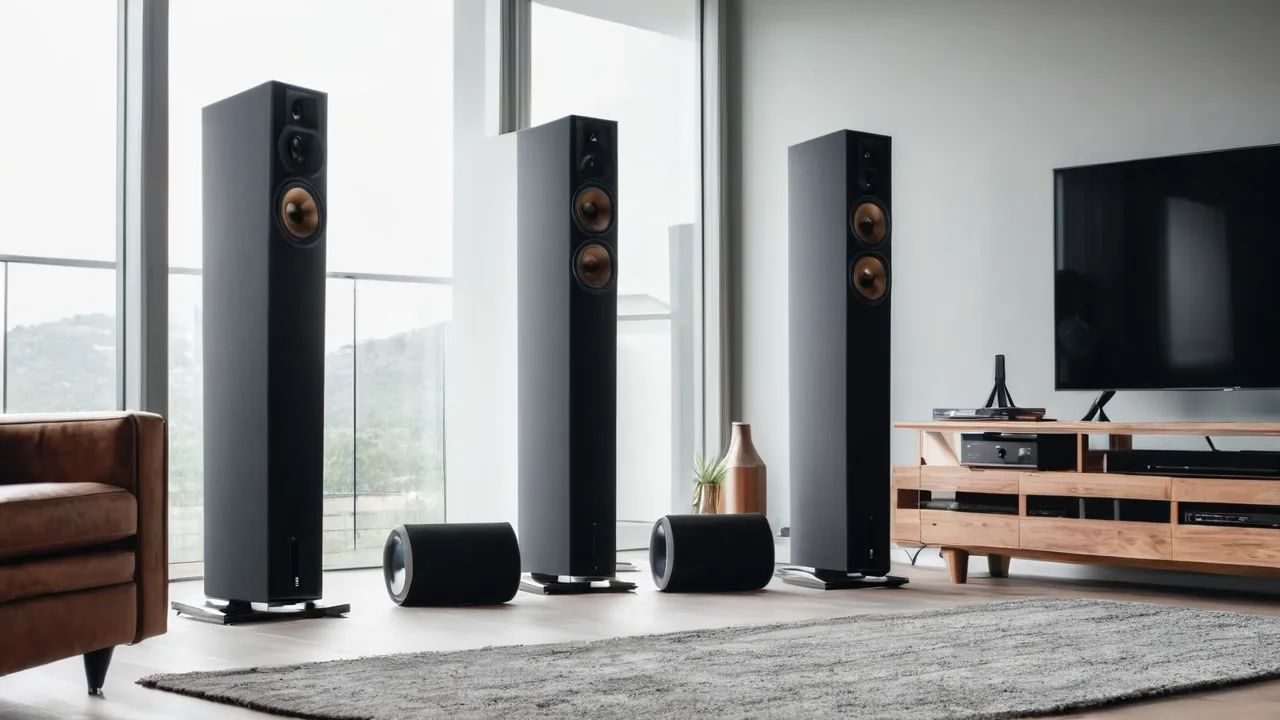
Upfiring Atmos speakers bounce sound off the ceiling from a speaker that sits on the floor or on top of another speaker, while in ceiling speakers are mounted in the ceiling and aim straight down. Upfiring modules suit a flat, hard, moderate height ceiling and renters. In ceiling speakers suit rooms with awkward ceilings and owners who can install them.
How each approach creates overhead sound
An upfiring speaker has a driver angled upward, so sound travels to the ceiling and reflects down toward the seat. Your ears hear the reflection and perceive sound from above. Some are separate modules that sit on top of a front speaker, and some are built into a floorstanding or bookshelf speaker.
An in ceiling speaker sits flush in the ceiling and points down at the listening area. It delivers sound directly, with no reflection step, so placement controls the overhead image. Many are designed for use as height speakers in Atmos layouts and have wide dispersion.
Both methods aim for the same result, which is a sense of sound above you. They get there by different physics, and each has strengths and limits that depend on the room. Note that most advice you will read comes from makers and sellers who sell one of the two, so this guide leans on the physical constraints instead.
The ceiling decision tree
Walk through these questions in order.
1. Can you cut into the ceiling, or does your lease or the structure prevent it? If not, choose upfiring.
2. Is the ceiling flat and made of a hard surface, such as drywall or plaster? If yes, upfiring can work. If it is heavily textured, acoustic tile, vaulted, beamed or sloped, in ceiling is a better fit.
3. How high is the ceiling? Makers commonly cite a moderate range, often around 8 to 12 feet, for upfiring speakers. Lower ceilings can make the reflection too close, and very high ones weaken it. Check the manual for the range your speaker supports.
4. Is the seat close to the ceiling speakers’ ideal position, directly under or slightly in front? In ceiling speakers allow you to choose that position precisely.
5. Do you want a cleaner, hidden look? In ceiling speakers disappear, upfiring modules sit visible on speakers.
| Ceiling | Leans toward |
|---|---|
| Flat, hard, moderate height | Upfiring works, in ceiling also works |
| Vaulted, sloped or beamed | In ceiling |
| Acoustic tile or heavy texture | In ceiling |
| Very high | In ceiling |
| Low | In ceiling, with shallow depth models, or skip height speakers |
| Rented room | Upfiring |
Installation and cost trade-offs
Upfiring speakers are easy to install. You place them on or in the front speakers, run speaker wire and set them up in the receiver. Some floorstanding speakers have upfiring drivers built in, which is the simplest of all.
In ceiling speakers require cutting holes, running wire through walls and ceilings, and often working near insulation, joists and electrical lines. Use in wall rated cable and follow local code. Hire a qualified installer for structural work or any work near electrical wiring. Check the depth the speaker needs and what lies above the ceiling.
On cost, upfiring modules often cost less to buy and nothing to install. In ceiling speakers can cost more once wiring and labor are added, though prices vary and the speakers may last for years. Compare the full cost, not just the price of the speaker.
Sound quality differences you can expect
Upfiring speakers rely on the ceiling, so results vary with the surface and height. When the room suits them, the effect can be convincing, with sounds that seem to come from above. In rooms with poor ceilings, the sound can seem diffuse or come from the speaker itself.
In ceiling speakers give a more direct overhead image that does not depend on a reflection. They can sound more precise and consistent from room to room, and give you control over position. A poor placement, such as too close to the wall or too far from the seat, can weaken the effect, so plan the layout.
Neither type replaces a well tuned front stage. Make sure the front speakers are in good condition first. Our AV receivers category lists models that support Atmos layouts.
Mixing with your existing speakers
Height speakers should match the tone of your front speakers so that effects move smoothly overhead. Pick a pair from the same brand and line when you can. For upfiring, choose modules designed for your speaker, or speakers with built in upfiring drivers. For in ceiling, pick a model with a similar tonal balance, and set the receiver’s crossover and levels.
Set the speaker configuration in the receiver to match what you installed, such as top front or top middle, and run room correction. Check the manual for which layouts your receiver supports, since not all combinations are allowed. Verify that the channel count suits the layout.
Who should pick which
Choose upfiring if you rent, if you cannot cut the ceiling or if the ceiling is flat and of moderate height. Choose in ceiling if you own the room, the ceiling is vaulted or textured, or you want the most direct image. See home theater speakers for options, and our How We Review page for how we weigh them.
Height speaker positions and what the format asks for
Atmos layouts use a number after the second dot to count overhead speakers. A 5.1.2 layout has two, and a 5.1.4 layout has four. For two overhead speakers, place them above and slightly in front of the main seat, or just ahead of it, according to the layout guidance in the receiver or speaker manual. For four, add a rear pair behind the seat.
In ceiling speakers should aim at the seat, and their spacing should resemble the spacing of the front speakers, so that the overhead image spans the same width. Upfiring modules should sit on or near the front speakers and have a clear path to the ceiling. Do not place objects over the top of the module.
A worked example
Imagine a living room with a flat, painted drywall ceiling at a normal height and a renter who cannot drill. Upfiring modules on top of the front speakers are the natural choice, with the receiver set to a 5.1.2 layout. Now imagine a family room with a vaulted wood ceiling that the owners can open up. Reflection will be unreliable, so in ceiling speakers aimed at the seat are better, with a qualified installer handling the wiring.
Living with the choice for years
Upfiring modules can move with you to a new home, and they work in any room with a suitable ceiling. In ceiling speakers stay with the house, unless you remove them, but they can last a long time and leave the room tidy. Think about how long you will stay and how often you move. If you may move soon, choose the portable option.
Questions to ask before buying
Ask what ceiling height the maker supports, whether the module needs a specific front speaker, what cutout size and depth the in ceiling model needs and whether the speaker has a rating for the room, such as a moisture rating for bathrooms. Ask what the receiver supports. A few minutes with the manual prevents wasted installation.
What to check on a ceiling before you decide
Stand in the room and look up. Note the surface, the height and any slope or beams. Tap the ceiling lightly to hear whether it is hard drywall or a softer material. Look for recessed lights, vents and ceiling fans that block a reflection or a cutout. Check the attic or the floor above for joists, wiring and insulation, if you can reach them safely. If a fan hangs where a height speaker should aim, an in ceiling speaker placed to the side of it may suit better than an upfiring module. These checks take a few minutes and often decide the question before you read a single product page.
Mistakes that weaken the overhead effect
Placing upfiring modules where a shelf or a cabinet blocks the sound. Setting the receiver to the wrong layout, so that height channels go nowhere. Mounting in ceiling speakers too far from the seat. Using speakers with different tone from the front stage. Skipping room correction after the installation. Each mistake is easy to fix, and the effect improves once the layout and levels are right.
Frequently Asked Questions
Are upfiring Atmos speakers as good as in ceiling speakers?
They can be, in a room with a flat, hard ceiling of moderate height. In ceiling speakers give a more direct overhead image and do not depend on the ceiling surface. If your ceiling is vaulted or textured, in ceiling is usually the better choice.
What ceiling height do upfiring speakers need?
Makers commonly cite a moderate range, often around 8 to 12 feet, for a flat ceiling. The exact range varies by speaker, so check the manual. Very low or very high ceilings weaken the effect, and sloped or textured ceilings scatter the reflection.
Can I install in ceiling speakers myself?
You can if you are comfortable with cutting drywall and running wire, but check local code and the speaker manual. Use in wall rated cable and avoid wiring and structure. For electrical or structural work, hire a licensed professional.
Do I need an Atmos receiver for height speakers?
Yes. The receiver must decode Atmos and have enough amplified channels for the layout, such as seven for a 5.1.2 layout. Check the manual for supported layouts and channel assignments before you buy any height speakers.
Final Thoughts
Choose upfiring for flat, hard, moderate height ceilings, renters and easy setup. Choose in ceiling for vaulted or textured ceilings, owners and a direct overhead image. Match tone to your front speakers, set the receiver layout and use a qualified installer for structural or electrical work.
Related buying guides
- Wireless vs Wired Surround Speakers
- Apartment Home Theater: Bass and Neighbor Guide
- Banana Plugs vs Bare Wire: How to Connect Speakers
About the author

The BuyOnceChoice Editorial Team researches durable products worth buying once. Our guides compare published specifications, warranty terms, expert review consensus, and verified owner feedback. We do not conduct our own product trials. See How We Review and our Editorial Policy for our standards.