Is Expensive Luggage Worth It? Cost Per Trip Math
A cost per trip method for budget, mid, and premium luggage using lifespan ranges and warranty value, to show when paying more actually saves money.
 By BuyOnceChoice Editorial Team
Updated November 16, 2026
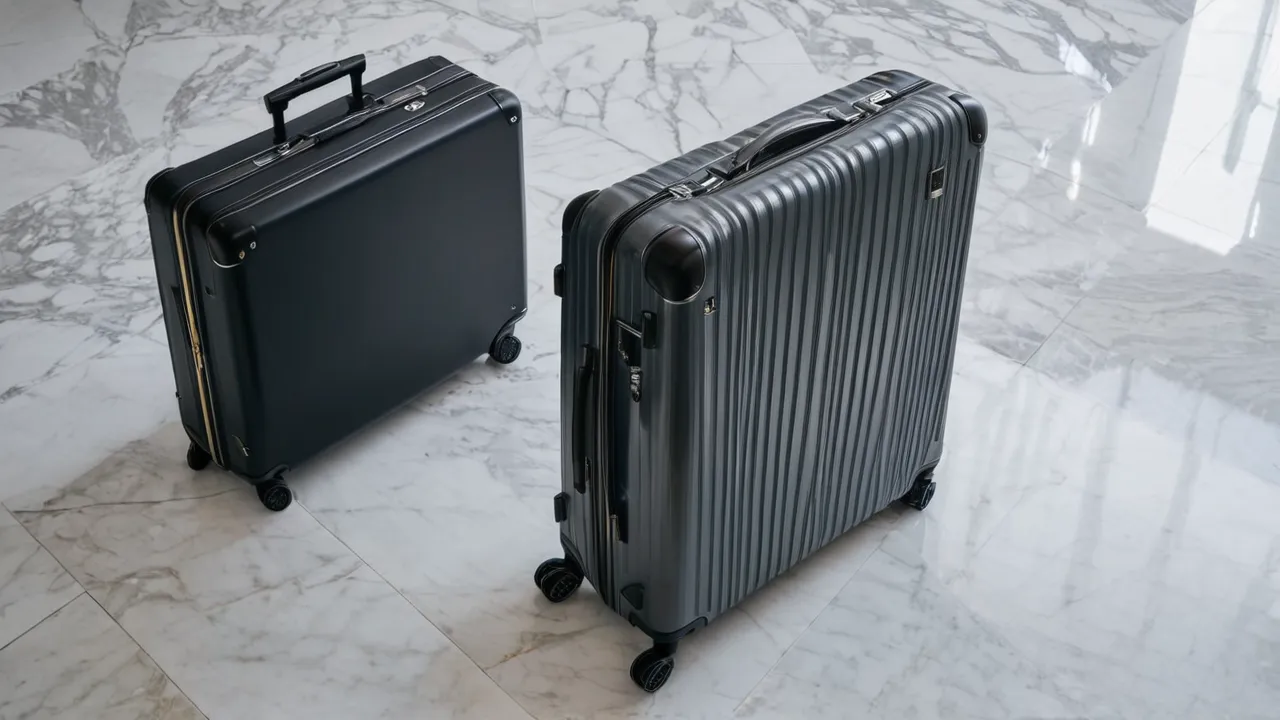
Expensive luggage is worth it when you travel often enough that a longer lifespan and repairable parts bring the cost per trip below that of a cheaper bag you would replace sooner. For an occasional traveler who takes one or two trips a year, a budget bag is usually the better value, because the premium bag will not be used enough to pay back its higher price. The answer depends on your trip count, the failure points of each tier, and how much the warranty is worth in practice. This guide shows the math with estimates, not promises.
The cost per trip method
Cost per trip is simple: the price you pay, minus any resale or repair value, divided by the number of trips the bag survives. A cheaper bag has a lower numerator but may have a lower denominator. A premium bag has a higher numerator and, if well built and repairable, a higher denominator.
You cannot know exact lifespans in advance, so use ranges and treat them as estimates. Owner reports vary widely, and no source offers a reliable number for a given model. Use the method to compare scenarios, not to predict a precise outcome.
Here is the structure of the calculation. Choose a number of trips per year. Multiply by the number of years you expect to keep the bag to get total trips. Divide the price by total trips. Repeat for each tier using different lifespans. Add the cost of replacing the bag when it fails, and subtract any value you expect from repairs or resale.
Three tiers and what usually changes
Prices vary by brand and sales, so use relative terms. A budget bag costs the least, a mid-range bag costs several times as much, and a premium bag costs more again. What changes as you move up the tiers is usually the quality of the parts that fail first, not the shell color.
- Budget: thinner shell or fabric, smaller wheels, lighter zippers, limited warranty.
- Mid-range: sturdier wheels and handles, better zippers, longer warranty, sometimes replaceable parts.
- Premium: robust frame or shell, replaceable parts, repair programs, stronger warranty terms.
These are tendencies, not rules. Some budget bags last for years and some premium bags fail early, so check specific features and warranty terms rather than relying on price alone.
A worked example with estimates
Suppose a traveler takes four trips a year. Over five years that is twenty trips. Imagine a budget bag that lasts for two years of this use, a mid-range bag that lasts for five, and a premium bag that lasts for ten. Treat those lifespans as illustrative.
| Tier | Assumed lifespan | Trips covered | Replacements over ten years | Cost per trip compared |
|---|---|---|---|---|
| Budget | Two years | Eight | Four to five bags | Highest if replaced often |
| Mid-range | Five years | Twenty | Two bags | Lower |
| Premium | Ten years | Forty | One bag | Lowest only if it lasts |
If the premium bag costs about as much as three or four budget bags, the cost per trip over ten years can end up close to the budget option, not far below. If the premium bag fails at the five year mark, the premium advantage disappears. If the budget bag lasts longer than assumed, the budget bag wins.
The lesson is that the break-even point depends on trip count. A traveler with one trip a year may never reach it. A traveler with ten trips a year reaches it quickly. Run the numbers with your own trips.
Here is the same logic in relative units, with no real prices. Say a budget bag costs one unit, a mid-range bag three units and a premium bag six units. Over ten years at four trips a year, five budget bags cost five units, two mid-range bags cost six units and one premium bag costs six units. In this example the budget path is the cheapest on paper, and the premium path only wins if it lasts longer than ten years, if repairs keep the budget bags out of the picture, or if a warranty replaces a bag for free. Change one assumption, such as a budget bag lasting three years instead of two, and the totals shift again. The method is useful because it shows which assumption your decision rests on.
A repair-or-replace rule helps once you own the bag: repair when the shell is sound and the quote is well under half the price of a comparable new bag, and replace when the shell cracks or several parts fail at once.
What warranty and repair add
Warranty and repair can change the math, but only if they are usable. A bag that can be repaired for a small fee extends the denominator at a low cost. A bag that is covered by a strong warranty may be replaced for free once. Both reduce the cost per trip.
Check what the warranty really covers; read the exact clauses on what is covered. Remember that airline damage is usually not covered by the maker. If you fly often and check bags, factor in repair costs for the wheels and handle even for a premium bag.
Spare parts matter too. A bag with replaceable wheels can last as long as the shell, while a bag with riveted, unavailable parts becomes waste when one part fails. When comparing tiers, ask whether parts are sold and how to order them.
Hidden costs on both sides
Cheap bags have hidden costs: time spent replacing them, the risk of failure on a trip, and the environmental cost of waste. Premium bags have hidden costs too: the risk of theft or loss, the temptation to baby the bag, and the sunk cost of a bag that no longer fits your needs.
Fashion and fit change as well. A bag that is perfect when you buy it may be too big or too small after a life change. A bag with a high price tag is harder to give up even when it no longer suits you. Think about resale value; some premium bags retain value, but many do not.
Consider your own handling. If you check bags often or travel on trains and buses, bags take more punishment and the cost of failure is higher. If you drive to hotels and carry your bag a short distance, even a mid-range bag can last a long time.
Who should pay more, and who should not
Pay more if you travel often, check bags, value repairable parts, and plan to keep the bag for a decade. Pay more if the premium bag has a documented repair program that you will use. Frequent business travelers often fall into this group.
Spend less if you travel once or twice a year, if your trips are short, or if you tend to change bag styles. Spend in the middle if you are unsure. A mid-range bag with good wheels and a clear warranty is a reasonable default for many people.
Skip any purchase based on brand prestige alone. Compare the features that matter, such as wheel type and replacement parts. See the luggage sets category for how makers position their tiers, and the best travel luggage set page for the sets we cover.
How to pick a tier in five minutes
- Count the trips you take per year and the number of years you will keep a bag.
- Decide whether you check bags often.
- List the parts that fail first and see whether each tier lets you replace them.
- Read the warranty and note airline damage exclusions.
- Choose the lowest tier that meets your durability needs, not the lowest price.
This approach turns a vague question into a short checklist. It also protects you from paying for features you will not use.
Frequently Asked Questions
Is expensive luggage worth the money?
It is when you travel often, check bags and keep the bag for years, because sturdier parts, repair support and a clear warranty lower the cost per trip. For one or two trips a year, a budget or mid-range bag usually gives better value.
How long does expensive luggage last compared with cheap luggage?
No reliable figure exists. Premium bags often use sturdier wheels, zippers and frames and offer repair programs, so they can last longer, but some fail early and some budget bags last for years. Judge by parts, warranty terms and how you travel.
Is a mid-range suitcase a good compromise?
Often yes. A mid-range bag with solid wheels, a good zipper and a clear warranty covers most travelers. Check that wheels and handles are covered and that parts are sold, since those features matter more than the label. Compare candidates by those features rather than by the label.
Final Thoughts
Expensive luggage is worth it when you use it enough and when the extra money buys repairable parts and real support. It is not worth it when the premium is mostly the label. Use the cost per trip method with ranges, treat the results as estimates, and revisit them as your travel changes.
For most people, a mid-range bag with sturdy wheels, a good zipper, and a clear warranty is the sweet spot. For frequent travelers, a premium bag with repair support can pay for itself over time. For occasional travelers, buy what you need and spend the savings on your trip. Read the how we review page if you want to see how we judge durability claims.
Related buying guides
- What a Lifetime Luggage Warranty Really Covers
- Luggage Buying Checklist: 12 Checks in the Store or Online
- Common Luggage Buying Mistakes and How to Avoid Them
About the author

The BuyOnceChoice Editorial Team researches durable products worth buying once. Our guides compare published specifications, warranty terms, expert review consensus, and verified owner feedback. We do not conduct our own product trials. See How We Review and our Editorial Policy for our standards.