What Size Air Compressor Do I Need: CFM, PSI and Tank
Size by CFM at 90 PSI, not horsepower or tank gallons. This worksheet walks a garage owner from tool list to the compressor spec that fits.
 By BuyOnceChoice Editorial Team
Updated November 16, 2026
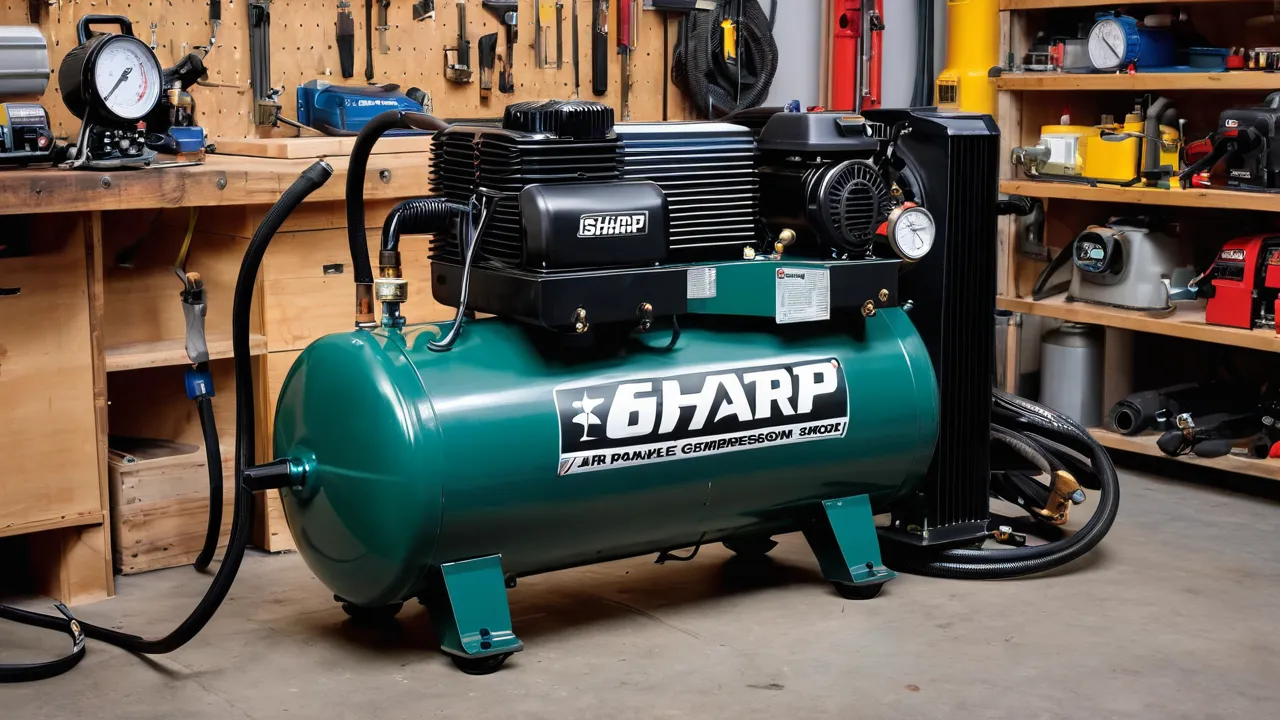
What size air compressor you need depends on the air flow your tools consume, measured in cubic feet per minute at 90 pounds per square inch (CFM at 90 PSI), and then on a tank large enough for how you work. Horsepower labels and peak numbers on the box are marketing, while CFM at 90 PSI is the figure that tells you whether the compressor can keep a tool running. For a garage that mixes tire inflation, nailers and the occasional sander, a worksheet gets you to the right range in ten minutes.
Why CFM at 90 PSI Is the Figure That Counts
Air tools are rated by the flow they consume while running, almost always at 90 PSI, the typical working pressure for handheld tools. Compressors are rated by the flow they deliver, and the best comparison is the same pressure for both. Some makers also list CFM at 40 PSI, which is a larger number and flatters the machine, so check which pressure the figure refers to. Horsepower is not an output figure, and peak horsepower on a label can mislead.
Tank size is the second number. A tank stores compressed air, which lets the pump rest between demands. It does not change how much air the pump makes. A big tank on a small pump gives a long wait to refill. A small tank on a strong pump can keep up with a continuous tool. This is why two compressors with the same tank can behave very differently.
The Worksheet, Step by Step
- List every air tool you plan to run. Write down the CFM at 90 PSI printed in each tool’s manual or on its label.
- Separate intermittent tools from continuous ones. A nailer fires in short bursts. A sander, a grinder, a paint sprayer and a die grinder consume air continuously.
- Pick the highest single-tool figure. This sets the minimum for the compressor.
- If you will run two tools at once, add their figures.
- Multiply by 1.5 as a margin. Hoses, fittings and long runs lose flow, the pump loses efficiency as it ages and a compressor that runs near its limit all day wears faster. Sources suggest margins from about 1.25 to 1.5, so treat 1.5 as the cautious end.
- Compare the result with the compressor’s CFM at 90 PSI, using the same pressure basis.
- Choose the tank size from the section below.
If a tool’s manual lists a range, use the higher figure. If it lists nothing, contact the maker rather than guessing.
A Garage Tool Table
These are typical ranges that vary by model, so treat them as a guide and replace them with your tool’s printed number.
| Tool | Usage pattern | Typical need |
|---|---|---|
| Tire inflator and blow gun | Short bursts | Low |
| Brad and finish nailer | Intermittent | Low |
| Framing nailer | Intermittent, fast cycling | Low to moderate |
| Impact wrench | Short bursts | Moderate |
| Ratchet wrench | Short bursts | Low to moderate |
| Die grinder, cut-off tool | Continuous | High |
| Random orbital sander | Continuous | High |
| Spray gun, paint | Continuous | High |
Notice the pattern: tools that run continuously need a compressor rated well above the consumption, while burst tools can be served by a small compressor with a decent tank.
Two worked examples
Example one is a homeowner who airs up tires, drives brad nails and runs a blow gun. Say the tools list 0.5, 1.0 and 2.5 CFM at 90 PSI. Burst tools do not run at the same time, so the highest figure, 2.5, sets the need. Multiply by 1.5 and the target is 3.75 CFM at 90 PSI. A small portable that delivers about that, with a modest tank, fits.
Example two is a hobbyist who adds a random orbital sander that lists 8 CFM and wants to run a die grinder at 5 CFM at a different time. The sander sets the need: 8 times 1.5 is 12 CFM at 90 PSI. That is above what most 120 volt garage compressors deliver, so the choice is a larger two-stage machine on 240 volts, or a different tool such as an electric sander. The numbers here are illustrations, not specifications for any product. Replace them with the figures from your own tool labels.
Choosing the Tank Size
For burst tools, a tank in the common small to mid range lets the compressor charge between shots. For tools that run continuously, the tank buys only a short buffer, and the pump flow decides what you can do. A bigger tank also takes longer to fill and weighs more. Sources disagree on a single tank rule, so use the arithmetic below with your own numbers instead of a fixed gallon target.
How long a tank can carry a tool
A tank holds a volume of air at high pressure, and the usable part is the air between the tank pressure and the pressure the tool needs. The free air available in gallons is roughly the tank gallons times the pressure drop in PSI divided by 14.7. Suppose a 20 gallon tank falls from 135 PSI to 90 PSI while a tool runs. That is 20 times 45 divided by 14.7, about 61 gallons of free air, or roughly 8 cubic feet. A tool drawing 5 CFM would use that in under two minutes if the pump added nothing, and the pump does add air, so real time is longer. The same arithmetic shows why a tank cannot rescue an undersized pump on a continuous tool.
Match the tank to your pattern. A homeowner who inflates tires and drives brad nails can be well served by a modest tank. A woodworker who runs a framing nailer on a whole deck wants a tank that keeps the nailer fed without constant restarts. A person who sands, grinds or sprays should favor high CFM over tank volume, and may need a larger machine than the common garage models offer. Noise and duty cycle also matter, so read the duty cycle and sound level in the manual.
Power Supply, Noise and Portability
A typical garage uses a 120 volt outlet on a 15 or 20 amp circuit. A compressor that draws more than the circuit supports will trip the breaker, which is a signal to take the circuit rating seriously. Check the compressor’s running amps and starting amps in the manual, and use the circuit it requires, not an extension cord of unknown gauge. Long, thin cords cause voltage drop and can burn out motors. Larger two-stage compressors often need a 240 volt circuit, installed by a licensed electrician, and that brings extra cost.
Compressors come in oil-free and oil-lubricated forms, and noise varies by type. If the compressor will live in an attached garage or a basement shop, ask for the sound rating and consider a quieter design. A portable pancake or hot dog style compressor is easy to carry but limited in flow. A stationary upright suits a shop with daily use. Weigh the footprint and your storage space as well as the flow.
Hoses, fittings and the last few feet
Even a correctly sized compressor can starve a tool through restrictive plumbing. A narrow, coiled hose or small quick-connect couplers create pressure drop at high flow, so use the hose diameter the tool maker recommends and keep the run as short as practical. Mismatched couplers leak. Drain moisture from lines and use a filter or regulator where paint or fine work demands dry air. These small details often fix a compressor that seems too small.
Safety with Compressed Air
Compressed air stores energy, and tanks can fail if neglected. Drain the tank after use, inspect it for rust and dents, and never weld or drill a tank. Use a pressure regulator and a safety valve that works, and keep the pressure setting at or below the tool’s maximum and the tank’s rated pressure. Wear eye and hearing protection, and never point a blow gun at skin. Do not use a compressor as a breathing air supply. Follow the manual and, for any electrical installation, consult a licensed electrician.
See the air compressors category for options, the best air compressor roundup for how we compare models, and the how we review page for our approach.
Frequently Asked Questions
How many CFM do I need for a nail gun?
Check the CFM at 90 PSI in the nailer’s manual. Brad and finish nailers typically need little air because they fire in short bursts, and framing nailers need somewhat more. Use the highest tool figure, multiply by a margin such as 1.5, and compare with the compressor’s rating at 90 PSI.
Is a bigger tank better on an air compressor?
Not by itself. A larger tank stores more air and gives longer bursts before the pump restarts, but it does not increase flow. Continuous tools such as sanders and spray guns depend on pump CFM at 90 PSI. Choose the tank for your pattern and the pump for your tools.
Can I run an air compressor on a regular household outlet?
Small and mid-size compressors usually can, on a 120 volt circuit sized to the amps listed in the manual. Larger two-stage machines often need 240 volts installed by a licensed electrician. Avoid long thin extension cords, which cause voltage drop and can overheat the motor.
What size compressor do I need for an impact wrench?
Read the wrench’s CFM at 90 PSI in its manual, since needs vary by model. Impact wrenches run in short bursts, so a compressor with enough CFM and a reasonable tank can serve them, but a larger wrench may call for more than a small portable delivers. Compare the numbers directly.
Final Thoughts
Add the CFM at 90 PSI of the tools you will run at the same time, multiply by 1.5, and pick a compressor that exceeds it on the same basis. Then choose the tank by how you work: burst tools tolerate small tanks, continuous tools demand flow. Check the circuit, noise and drain routine before you buy. When two tools disagree, size to the more demanding one and accept a little unused capacity as the cost of a machine that is not straining all day.
Related buying guides
- 12V vs 120V Air Compressor: Tires, Tools and Limits
- Air Compressor CFM vs PSI: What Actually Matters
- Air Compressor for Impact Wrench and Tire Work: Sizing
About the author

The BuyOnceChoice Editorial Team researches durable products worth buying once. Our guides compare published specifications, warranty terms, expert review consensus, and verified owner feedback. We do not conduct our own product trials. See How We Review and our Editorial Policy for our standards.