How to Choose a Portable Power Station
Pick capacity, output, chemistry and expandability in that order and you avoid two classic regrets: a unit too small for the job, or paying for unused extras.
 By BuyOnceChoice Editorial Team
Updated November 16, 2026
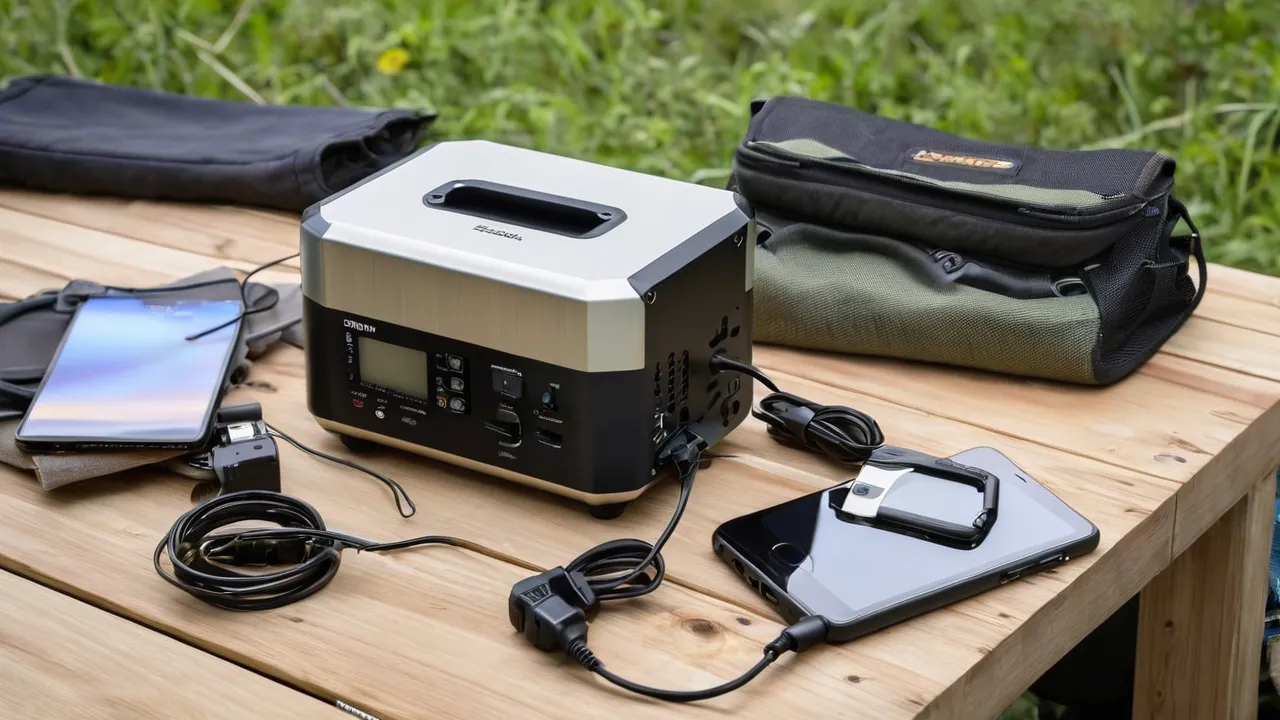
To choose a portable power station, list the devices you need to run, add up their watts and daily watt-hours, then pick a unit whose continuous output covers the watts and whose capacity covers the hours, with a battery chemistry, recharge method, and warranty that fit how long you want to keep it. Brand names and headline capacity numbers come last, not first.
This guide gives the criteria and shows how to judge each one on a product page. It takes a buy-once view, which favors longevity, repairability, and honest ratings over the biggest number on the box. Browse the portable power station category to compare models, read how we review for our approach to specifications, and see our portable generator category and solar generator guides if you are weighing alternatives.
Start With Loads, Not Marketing Names
Write down every device you want to power, find its running watts on the label or manual, and note how many hours a day it runs. Multiply watts by hours for watt-hours. A laptop at 60 watts for four hours is 240 watt-hours. A mini fridge averaging 50 watts over a day, since the compressor cycles, is on the order of 1,200 watt-hours. Phones, lights, and routers are small by comparison.
Then separate wants from needs. Anything with a heating element, such as a hair dryer, kettle, or space heater, draws a lot of power for little useful time and is the usual reason a unit shuts off. If your list contains one of those, either leave it off or plan for a much larger inverter.
Match Capacity to the Outage or Trip You Actually Face
Capacity is listed in watt-hours. Usable energy is less than the label, because the inverter and conversion lose some, so a common planning habit is to count on about eighty-five percent. Divide that by your daily watt-hours to see how many days you get before recharging.
- Phone and laptop top-ups for a weekend trip: a small unit in the few-hundred watt-hour range is usually enough.
- Refrigerator, router, and lights through a one-day outage: look for capacity well above your calculated daily total, plus margin.
- Longer outages: capacity matters less than whether you can recharge from solar or a vehicle each day.
Check Continuous Output and Surge Separately
Continuous output is what the inverter can supply all day. Surge, sometimes labeled peak, is a brief allowance for motor startup. Compare your largest single load to the continuous number, and any motor to the surge number. Refrigerators, pumps, and tools with induction motors can start at several times their running watts. If the manual lists a starting or locked-rotor figure, use it, and if it does not, ask the manufacturer rather than guessing.
Watch for modes that boost output by lowering voltage, often with a trade name. They help resistive loads like a kettle, but they do not help motors, and they can behave differently with sensitive electronics. Read the fine print on what the mode actually does.
Battery Chemistry Decides How Long It Lasts
Most stations use either lithium iron phosphate or a nickel-manganese-cobalt lithium-ion chemistry. Lithium iron phosphate is generally rated for more charge cycles, often in the thousands, and tends to tolerate heat better, while nickel-based packs are lighter for the same energy. Cycle ratings are given to a stated end point, commonly eighty percent of original capacity, so read which one the maker uses and compare like with like.
Warranty length is a practical signal. A longer term suggests the maker expects the pack to last, but read what it covers, whether the battery degradation is included, and who pays for shipping on a heavy unit. A brand with no clear service path is a risk if you plan to keep the unit for a decade.
Recharging Options Matter More Than Spec Sheets Admit
Check three charging paths: wall, vehicle, and solar. Wall charging time shows how quickly you are ready for the next outage. Vehicle charging through a twelve-volt socket is slow, and a unit that accepts more input from a car port is more useful on the road. For solar, find the maximum input voltage and watts in the manual, and match panels to those limits.
Also check whether you can charge and discharge at once. Some units allow it with limits, and some stress the battery when used as an always-on backup. If you want an uninterruptible setup, look for a stated switchover feature and read the manual on it.
A Worked Example You Can Adapt
Suppose you want to keep a refrigerator, a router, two phones, a laptop, and a few LED lights going through a one-day outage. The refrigerator might run around 150 watts while the compressor is on and use roughly 1,200 watt-hours over the day. The router adds a few hundred watt-hours, the laptop about 240, phones about 40, and lights a couple hundred. That is near 2,000 watt-hours in a day. Divide by 0.85 to allow for conversion loss and you land near 2,400 watt-hours of label capacity for one day with no margin.
Now check output. The refrigerator’s startup may briefly pull several times its running watts, so look for a continuous rating comfortably above the sum of everything running at once, and a surge rating above the refrigerator’s start figure. If the manual does not give the start figure, treat that as a reason to ask the manufacturer or to choose more headroom. Finally, look at recharging. If the grid will be down for days, the unit needs a way to refill, and a solar input that matches your panels is worth more than a few extra watt-hours of capacity.
This example uses rounded numbers to show the method. Your own appliances will differ, so read the labels and replace each figure.
Common Spec Sheet Traps
- Capacity quoted at the battery cells instead of at the outlets, which makes usable energy look larger.
- Output quoted with a boost mode that cannot run motors.
- Solar input quoted as a maximum that needs a specific panel voltage you may not own.
- Cycle life quoted to a lower end point than a competitor, which flatters the number.
- Weight listed without the charger or cables, which matters if you plan to carry it.
When a number matters to your decision, find it in the manual or on the rating label, not only in the marketing summary.
Expandability, Warranty, and the Buy Once Standard
Expansion batteries and higher solar input extend a station’s life as your needs grow. Ask whether extra battery packs are sold separately, whether they work with the same inverter, and whether the maker has a record of keeping accessories available. Replaceable parts, a user-accessible fuse or a documented service process, and a stated support period add value that a spec sheet rarely shows.
A simple buy-once rule: buy the smallest unit that meets your realistic peak need with room to grow through expansion, not the largest unit you can afford, and favor longer cycle ratings if you plan frequent use.
Who Should Choose What, and Who Should Skip
- Weekend campers: a compact unit, ports that match your devices, and light weight.
- Home outage backup for essentials: mid-size or larger capacity, higher continuous output, and a solar input you can use.
- Remote workers: clean power for laptops and a router, plus enough capacity for a full day.
- Skip a station if your main loads are a central air conditioner, an electric range, or a well pump with a large start current. A standby generator or a professionally installed battery system fits those better.
Owner regrets tend to fall into two groups. Some buyers pick a unit with plenty of capacity but a weak inverter, then find it trips on the first motor. Others buy for a rare worst-case event and carry a heavy unit they rarely use. Decide which situation is yours before you shop, and write the answer at the top of your list.
Before you plug in, follow the manual for placement, ventilation, and cord ratings. Do not run it in a closed space or connect it to a house circuit without a properly installed transfer device and a licensed electrician.
Frequently Asked Questions
What size portable power station do I need for a refrigerator?
Pick one whose continuous output covers the fridge’s running watts and whose surge rating covers its startup, then check capacity against roughly a day of use. Many standard refrigerators use on the order of a kilowatt-hour or more per day, so a unit in the one-kilowatt-hour range or larger gives a margin.
Is LiFePO4 better than other lithium chemistries?
For long-term ownership, usually yes, because it is generally rated for more cycles and handles heat better. The tradeoff is weight and size for the same capacity. If you travel light and charge occasionally, a nickel-based pack can be fine. Compare the stated cycle count and its end point before deciding.
How long will a portable power station last?
Lifespan depends on chemistry, how deeply you drain it, heat, and storage habits. Cycle ratings give an estimate, not a promise. Keep it out of high heat, avoid leaving it fully drained, and charge it periodically in storage. Read the warranty for what it says about capacity loss over time.
Final Thoughts
Start with your loads, check that the continuous and surge outputs cover them, size capacity to your real days of use, and favor chemistry, recharging options, and warranty terms that support keeping the unit for many years. If your loads are large or fixed in place, consider other equipment. The right unit is the one that matches your list, not the biggest one.
Related buying guides
- LiFePO4 vs Lithium Ion Power Stations: Which Lasts
- Pass Through Charging: What Matters on a Power Station
- Portable Power Station Cold Weather Guide
About the author

The BuyOnceChoice Editorial Team researches durable products worth buying once. Our guides compare published specifications, warranty terms, expert review consensus, and verified owner feedback. We do not conduct our own product trials. See How We Review and our Editorial Policy for our standards.